
Matrice 4T Best Practices for Dusty Field Inspections
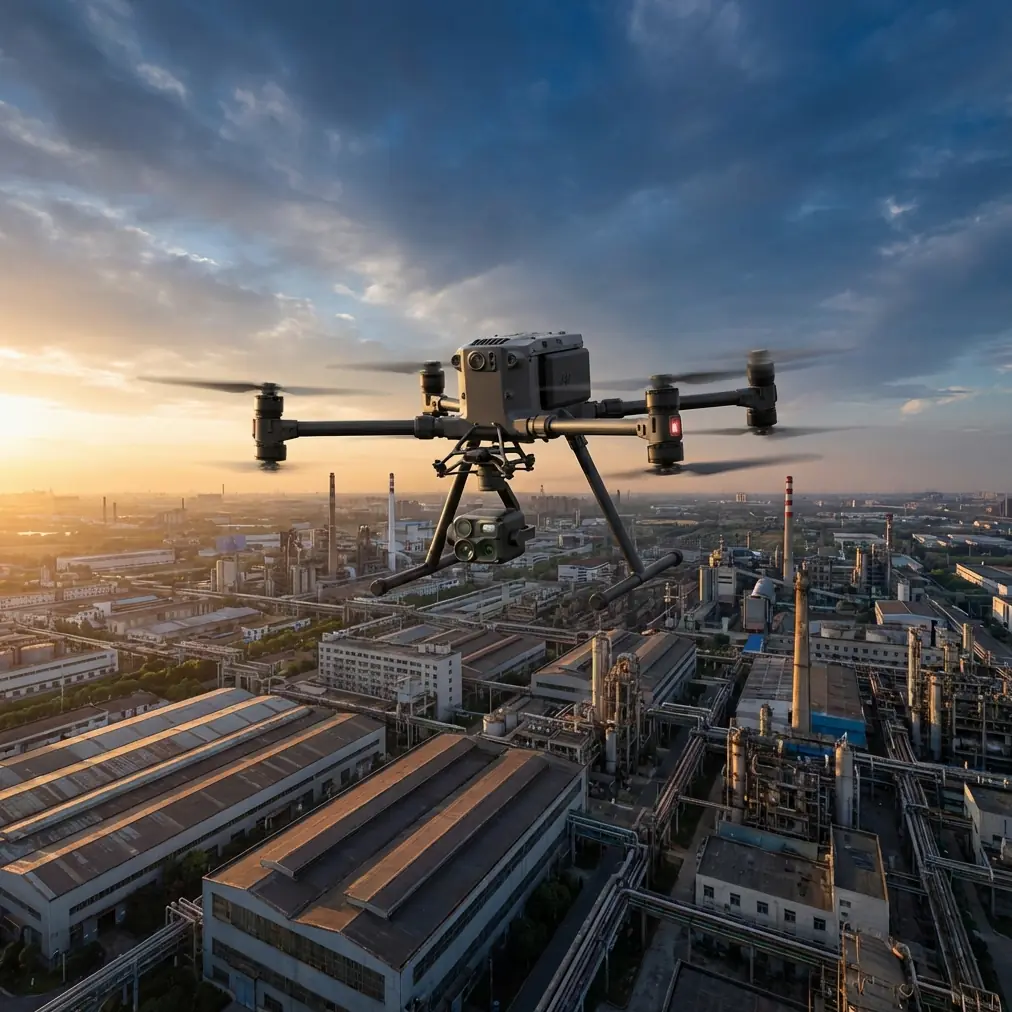
Matrice 4T Best Practices for Dusty Field Inspections: Altitude, Thermal Clarity, and Reliable Data
META: A field-focused Matrice 4T guide for dusty agricultural inspections, covering ideal flight altitude, thermal use, photogrammetry considerations, transmission reliability, battery workflow, and cleaner data capture.
Dust changes everything.
Not in an obvious, dramatic way. It creeps into the job by softening contrast, reducing visual confidence, heating the ground unevenly, and making a routine field inspection look inconsistent from one pass to the next. For teams using the Matrice 4T to inspect agricultural land, unpaved farm roads, dry irrigation edges, and open plots in dusty conditions, the aircraft’s value is not just in its sensor stack. It is in how you fly it.
That distinction matters. A sophisticated drone can still produce weak inspection results if the mission profile ignores what dust does to visibility, thermal interpretation, and mapping accuracy. The Matrice 4T is particularly well suited to this problem because it combines visible imaging, thermal sensing, and a transmission architecture designed for stable operations across broad work sites. But getting useful outputs from dusty fields requires deliberate choices about altitude, timing, battery handling, and data capture logic.
This article is built around that real operational question: how should you fly the Matrice 4T when inspecting fields in dusty conditions, and what altitude makes the most sense?
The real problem in dusty fields
Dust affects more than the image.
On the visible side, suspended particles flatten the scene. Crop edges look less crisp. Surface texture gets washed out. Tracks from machinery, stressed planting zones, and small drainage changes can become harder to distinguish unless the aircraft is low enough to recover detail but high enough to stay out of the worst particulate layer.
On the thermal side, dust and dry ground conditions create another challenge. Bare soil heats quickly. Tire paths and compacted sections may hold warmth differently from surrounding ground. If the mission is intended to spot irrigation anomalies, stressed vegetation, blocked flow paths, or livestock-related heat signatures near field infrastructure, the operator needs to separate actual thermal events from environmental noise.
This is where the Matrice 4T’s thermal signature capability becomes more than a specification line. It gives operators a second way to read the field when RGB images are partially compromised by haze and airborne debris. Yet thermal only helps if the aircraft is flown at an altitude that preserves enough pixel-level detail to make those temperature differences meaningful.
Optimal flight altitude: the practical answer
For dusty field inspections, a strong working range is often 40 to 70 meters above ground level, with the exact choice tied to the task.
That is the altitude band where the Matrice 4T typically balances three competing needs:
- Staying high enough to avoid the densest dust kicked up near roads, tractors, and dry soil surfaces
- Staying low enough to preserve visual and thermal detail for anomaly detection
- Covering enough area efficiently to keep battery cycles manageable over large plots
If the goal is general field condition review, around 60 meters is usually a smart starting point. It gives broad coverage while remaining close enough to identify irrigation inconsistencies, stand gaps, access path issues, and larger zones of crop stress.
If the mission is target verification, such as checking a suspected hot spot, water leak, damaged line, or stressed patch identified in an earlier pass, dropping to 30 to 40 meters often improves confidence. At that height, both thermal interpretation and visible confirmation become more reliable, especially when dust has reduced scene contrast higher up.
If the task is photogrammetry-oriented mapping, the altitude may need to be adjusted to meet ground sampling and overlap requirements. In dusty conditions, however, operators should be careful about pushing too high just to cover area faster. The resulting imagery can lose fine edge definition, and that directly affects model quality, orthomosaic consistency, and downstream analysis.
So the short version is this: start around 60 meters, then descend selectively for verification passes. In dusty agricultural inspections, that tends to produce cleaner and more actionable data than committing to a single low or high altitude for the entire mission.
Why that altitude band works with the Matrice 4T
The Matrice 4T is not just a flying camera platform. It is built for mixed-data inspection work. That matters in fields where one sensor alone may not tell the full story.
At roughly 40 to 70 meters, the aircraft can gather usable visible and thermal observations without spending the whole mission inside the most turbulent dust layer. This is where the aircraft’s transmission performance also becomes operationally important. With O3 transmission, operators can maintain a more stable live view over open farmland, which helps when visual conditions are uneven and decisions have to be made mid-flight. In practical terms, stable downlink quality means less guessing. If a thermal anomaly appears on the screen, the pilot can assess whether it deserves a lower pass instead of flying blind and sorting it out later.
Another detail that matters for field operators is AES-256 security. On paper, encryption may sound like an IT concern, not an agriculture concern. In reality, many commercial operators inspect leased land, contract-managed farms, research plots, and sites with yield-sensitive or infrastructure-sensitive information. Secure transmission helps protect location data, image streams, and operational records when missions are performed for third parties or as part of larger managed-service agreements.
Thermal is most useful when you stop treating it like a magic lens
Thermal can reveal what dust hides, but it also introduces its own interpretive traps.
Dry fields create strong background heat variation. Soil, stones, metal irrigation parts, standing water, and plant canopies all behave differently. If you fly too high, weak anomalies blend into the scene. If you fly too low over a large field, you lose efficiency and may spend too much battery time chasing normal temperature variation.
That is why a two-layer workflow works well on the Matrice 4T:
- Primary pass at about 60 meters to scan for broad thermal irregularities
- Secondary pass at 30 to 40 meters for closer diagnosis of suspicious zones
This is especially effective when looking for blocked irrigation segments, moisture distribution issues, overheating pumps or field equipment housings, and localized plant stress that presents as altered canopy temperature. The first pass finds patterns. The second pass determines whether those patterns are operationally significant.
Timing matters too. In dusty environments, midday flights can be productive for equipment-related heat issues, but early morning or late afternoon often produces better separation for plant and moisture interpretation because the thermal scene is less saturated by intense solar loading. The Matrice 4T gives you the flexibility to exploit both windows, but the operator must choose the right one for the inspection objective.
Dust and photogrammetry: not impossible, but less forgiving
Many field teams assume a thermal-capable aircraft can simply switch into mapping mode and deliver useful models under any condition. Dust punishes that assumption.
Photogrammetry depends on clean feature matching. If airborne dust lowers image clarity or reduces consistency between passes, the orthomosaic may still process, but the confidence level in edge boundaries, drainage patterns, and micro-topography can drop. This is where GCP strategy becomes valuable. Ground control points provide a reality anchor when surface detail is less consistent in the imagery. In a dusty field, well-placed GCPs can significantly improve positional trust in the final output.
The operational lesson is straightforward: if the mission requires thermal inspection and map-grade outputs on the same day, separate the goals mentally. Use the Matrice 4T for a diagnostic inspection first. Then, if the air is cleaner or the light improves, run the photogrammetry profile with proper overlap and control. Trying to force both outcomes during peak dust activity often weakens both.
Battery workflow matters more in dusty environments
Field work is rarely neat. Vehicles move. Equipment starts unexpectedly. Wind shifts. Dust plumes appear and disappear. These interruptions eat time, and time eats batteries.
This is one reason hot-swap batteries are operationally valuable with the Matrice 4T. On a large site, hot-swapping reduces downtime between sorties and helps maintain mission continuity. That may sound like convenience, but in dusty inspections it changes data quality. If you can resume quickly, you are more likely to complete adjacent passes under similar lighting and atmospheric conditions, which makes comparisons more reliable. Long delays between flights can mean one half of the field was captured in moderate haze and the other half after the dust settled, turning analysis into an apples-to-oranges problem.
A disciplined battery plan for dusty field inspection should include:
- Launching with a clear sequence of priority zones
- Reserving one battery set for low-altitude verification passes
- Cleaning and checking exposed surfaces between swaps
- Avoiding unnecessary hover time while debating targets on screen
That last point is often overlooked. Dusty jobs reward decisive pilots. Scan, mark, verify, move on.
Transmission reliability is not a luxury on spread-out properties
Open agricultural land can deceive new operators. Because it looks unobstructed, people assume connectivity will always be easy. In reality, long field edges, tree breaks, outbuildings, terrain undulation, and dust haze can all complicate situational awareness. When inspecting remote rows or irrigation corridors, a robust link matters because the pilot is constantly evaluating whether a suspicious visual cue is real enough to justify a closer look.
This is where O3 transmission earns its place in the conversation. It supports a more dependable control and viewing experience across broad civilian work sites. For teams planning recurring inspections, especially under managed operations that may one day expand toward longer-range workflows or regulated BVLOS structures where permitted, stable transmission habits and disciplined route design should be developed early. Even when flying strictly within visual line of sight today, building missions around reliable link performance reduces mistakes.
A field-ready inspection workflow for the Matrice 4T
For dusty agricultural inspections, the most reliable structure is not “launch and see what happens.” It is a staged process.
1. Start with a medium-altitude reconnaissance pass
Fly at roughly 60 meters AGL. Use this to identify dust concentration zones, visibility quality, thermal irregularities, and any areas where surface detail is still strong enough for later mapping.
2. Mark suspect areas instead of diving immediately
When the screen reveals possible stress, pooling, blockage, or unusual heat, note the location and continue the pattern unless the issue is urgent. This preserves mission efficiency.
3. Run lower verification passes
Descend to 30 to 40 meters over selected areas. Confirm with both visible and thermal views. This is where the Matrice 4T’s multi-sensor workflow pays off.
4. Decide whether photogrammetry is truly viable
If dust remains suspended and detail looks soft, postpone the mapping run or reinforce it with a solid GCP layout. Do not assume software will solve poor source imagery.
5. Keep sortie transitions tight
Use hot-swap battery discipline to maintain consistent conditions across the inspection block.
6. Protect the data chain
If the mission involves third-party land management, research plots, or sensitive operational infrastructure, secure handling practices matter. AES-256-backed transmission is one part of that bigger professional standard.
When to fly lower than 40 meters
There are moments when lower altitude is justified, but they should be targeted, not routine.
Fly below 40 meters when:
- verifying a small irrigation leak
- checking a pump enclosure or field-side electrical housing for overheating
- confirming localized crop stress near a drainage feature
- capturing detail around boundary erosion or access track damage
In these cases, lower altitude improves confidence. But for broad dusty field inspection, staying low the whole time is often counterproductive. You cover less ground, spend more time in disturbed air, and may actually reduce consistency if the drone is operating inside shifting dust layers.
The bottom line for dusty-field operators
The Matrice 4T performs best in dusty agricultural inspection work when it is treated as a layered decision tool, not just a sensor platform. Its value comes from combining thermal insight, visible confirmation, secure transmission, and efficient sortie management into one repeatable workflow.
If you need one altitude recommendation to start with, use 60 meters AGL for the first pass. It is the most practical baseline for balancing detail, coverage, and dust avoidance. Then move lower only where the data tells you to.
That approach gives you better thermal interpretation, more dependable inspection notes, and cleaner operational logic for repeat visits. It also makes the aircraft’s technical strengths count in the field instead of remaining abstract features on a spec sheet.
If you want help planning a field inspection profile around your terrain, dust level, and crop pattern, you can message a Matrice 4T specialist here.
Ready for your own Matrice 4T? Contact our team for expert consultation.