
How I Use the Matrice 4T for High-Altitude Field
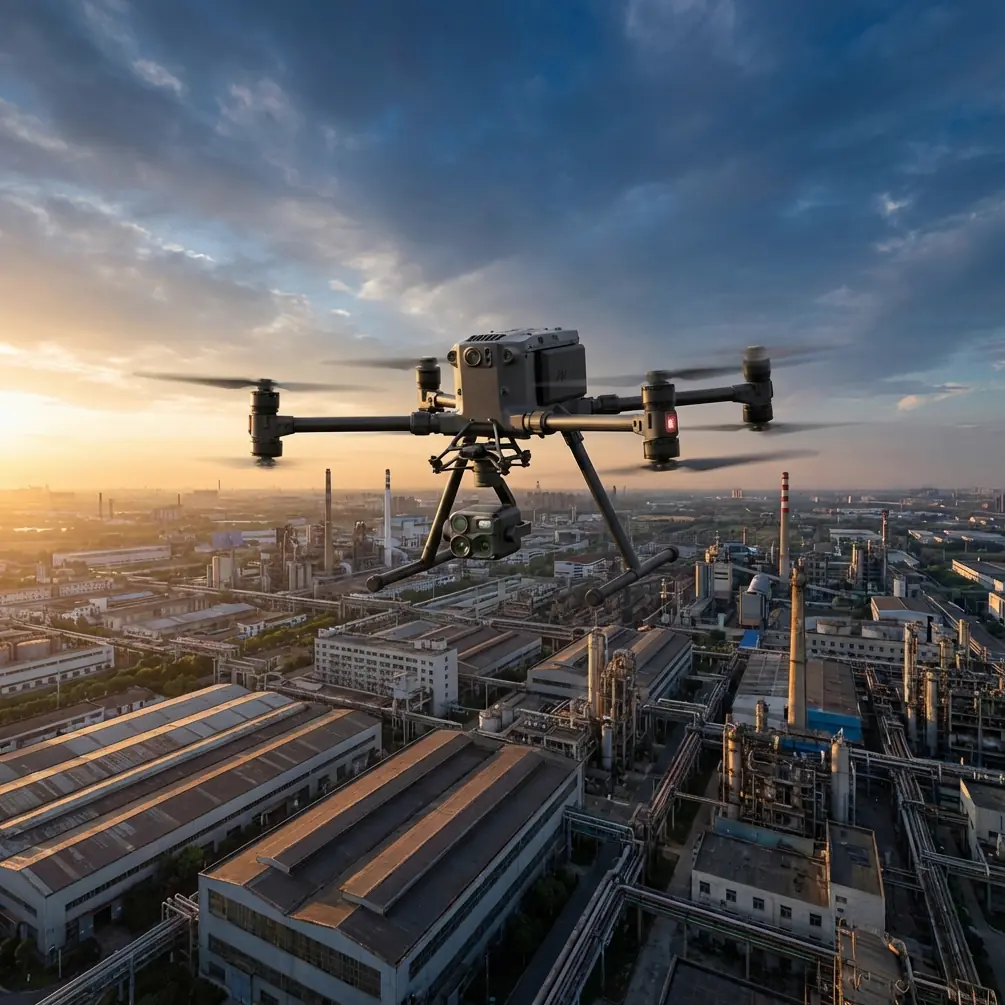
How I Use the Matrice 4T for High-Altitude Field Inspections Without Losing Thermal Confidence
META: A field-tested Matrice 4T case study for high-altitude inspections, covering thermal performance, data reliability, flight logging, and why disciplined cooling and maintenance workflows matter.
High-altitude field inspection sounds straightforward until the environment starts bending your assumptions.
I learned that the hard way on an upland agricultural survey where temperature swings were sharp, air density was lower than expected, and the window for useful thermal work was much shorter than the team planned. The aircraft could fly. That was never the real issue. The issue was whether the data coming back would still support decisions once we got home. With thermal work, that question matters more than the takeoff itself.
That is where the Matrice 4T earns its place.
Most discussions around the M4T drift toward headline features: thermal signature capture, long-range transmission, imaging flexibility, and field efficiency. Those are valid. But for high-altitude field inspections, the real story is not just capability. It is control. Control of temperature behavior, control of records, and control of how inspection evidence is preserved when conditions are not forgiving.
The problem high altitude creates for field inspections
When you inspect fields at elevation, two things happen at once.
First, air changes the way your aircraft and payloads shed heat. Second, the surface conditions you are trying to measure become more variable, especially early in the morning and late in the day when thermal contrast is strongest. That combination can produce useful results, but only if the platform and workflow are built around thermal stability and disciplined data handling.
That may sound abstract, but the engineering logic is old and very practical. One of the reference materials behind this discussion is a design handbook section focused on aircraft engine-bay ventilation and cooling. Buried inside it are iterative formulas for airflow and heat-transfer conditions, including expressions such as:
X2 = 0.000000149 * (N(1)^1.5) / (N(1) + 110)Q = X4*(N(5)-N(1))*A3 + X4*(N(2)-N(1))*A4
No, you are not going to type those into a Matrice 4T before a field mission. That is not the point. The point is what those equations represent operationally: cooling performance is not a fixed property. It shifts with temperature states, airflow behavior, and the relationship between internal and external conditions.
For a drone operator inspecting fields in high-altitude terrain, that matters because thermal interpretation is only as trustworthy as the system’s ability to maintain consistent sensor behavior. If the aircraft is moving between cold ambient air, sun exposure, and sustained hover or low-speed observation, thermal confidence depends on managing the aircraft like a measurement instrument, not just a camera in the sky.
Why the Matrice 4T made this easier for me
On that earlier upland job, our challenge was not simply finding irrigation inconsistencies or stress zones. It was doing so across uneven terrain with enough repeatability that agronomy staff could compare the imagery with follow-up observations on the ground.
The Matrice 4T simplified that work in three specific ways.
1. It let us treat thermal data as part of a repeatable inspection system
The M4T is often chosen because it combines visible and thermal sensing in one compact field platform. In high-altitude inspection, that pairing saves time, but more importantly, it reduces drift between what you think you saw thermally and what you can verify visually.
On one pass, we identified a narrow corridor where crop stress appeared along a slope transition. The thermal signature looked convincing, but mountain light can trick people into seeing patterns that collapse during verification. Because the M4T gave us synchronized visual context, we could tie the hotspot behavior to actual field conditions instead of guessing from heat alone.
This is where the older engineering reference becomes surprisingly relevant. The handbook’s cooling calculations include a coefficient written as 2.584 in one of the later terms tied to flow behavior and derived outputs. Again, the exact math is less useful than the lesson: once systems move through changing thermal states, small model assumptions affect downstream readings. That same mindset should guide M4T missions in thin air. You do not assume the first thermal anomaly is the truth. You stabilize, cross-check, and compare across passes.
That is exactly how we flew the site. Short observation segments. Controlled hover periods. Repeat tracks over suspect zones. Not glamorous. Very effective.
2. Transmission reliability mattered more than headline range
High-altitude farmland is rarely a clean rectangle. It folds, breaks, and hides behind terrain. In those conditions, O3 transmission is not just a convenience feature. It is part of inspection integrity. If the link is weak or unstable, operators rush decisions, skip confirmatory angles, or avoid terrain edges where useful anomalies often sit.
With the Matrice 4T, I was able to hold position and reframe inspections without constantly thinking about link fragility. That changes pilot behavior. It slows you down in the right way. You stop flying to avoid discomfort and start flying for evidence.
For teams planning BVLOS operations where regulations and local authorization permit, that same transmission confidence becomes even more meaningful. It supports a cleaner separation between mission planning and in-flight improvisation. I still prefer conservative routes in mountain environments, but the platform gives you room to stay methodical.
AES-256 also deserves mention here, not as a buzzword, but because agricultural and land-inspection work increasingly carries sensitive location, operational, and yield-related information. If you are documenting stressed plots, irrigation infrastructure, or access patterns on large holdings, secure transmission and secure handling are not luxuries. They are part of professional practice.
The hidden half of a good inspection: the data trail after landing
This is the part many drone articles skip.
A second reference source in the materials deals with aviation support systems and database discipline. At first glance, it seems far removed from a drone mission. It talks about structured information output, aircraft quantities, flight-time and landing statistics, engine working time, and fault reporting by interval, unit, model, and serial traceability. It also includes two details that struck me immediately:
- raw information should be entered into the database within one month
- computer-entered information should have a backup in case of machine failure
Those are not glamorous sentences. They are extremely useful.
When I inspect fields with the Matrice 4T, especially in remote highland areas, my workflow follows that same philosophy. Every mission gets organized flight logs, battery cycle records, image folders tied to plot IDs, and a backup before interpretation starts. If the job includes photogrammetry alongside thermal review, I also tie outputs to GCP notes so there is no confusion later about which thermal set matches which reconstructed section.
This is not bureaucracy. It is how you protect decisions from becoming anecdotes.
The handbook’s support-data model also emphasizes output by interval, unit, machine type, and fault category. That logic maps neatly to drone operations. For the M4T, I recommend reviewing your inspection history in four buckets:
Flight time and sortie count by site type
Upland terraces, broad flat fields, and mixed-elevation orchards stress planning differently.Battery history and hot-swap usage patterns
Hot-swap batteries are a field advantage, especially where daylight windows are narrow. But if you are not tracking cycle consistency and thermal conditions, you can create subtle differences between inspection legs.Sensor anomalies and repeat-flight causes
If you had to re-fly because of glare, thermal washout, or terrain masking, log it.Data handling and backup completion
The reference says to keep backups in case of machine failure. In drone work, that is still a hard rule.
One practical change I made after that first difficult mountain project was to treat every thermal sortie as incomplete until two things happened: primary files were mirrored, and a short mission note was written while the site was still fresh in memory. That alone has saved hours of confusion.
A real-world mission flow that works with the Matrice 4T
Here is how I now approach high-altitude field inspection with the M4T.
Pre-flight: plan for thermal behavior, not just coverage
I start by separating the mission into visual mapping intent and thermal diagnostic intent. If you try to blend them carelessly, one usually degrades the other. Thermal work wants timing discipline. Photogrammetry wants geometric consistency. The Matrice 4T can support both, but only if the operator knows which output is leading each flight segment.
I also review takeoff elevation, predicted surface warming, and any sheltered low-airflow pockets in the terrain. The old aircraft cooling formulas from the design reference are a reminder that temperature relationships are dynamic. Even a term like 0.000000149 * T^1.5 / (T + 110) shows how non-linear those relationships become. For field practice, that translates into a simple rule: do not assume a sensor or airframe behaves the same at all parts of the mission.
On site: keep short thermal loops
Instead of one long thermal orbit, I fly shorter loops with deliberate checks. The M4T makes this easy because repositioning is quick and the payload package is well suited to rapid comparison between thermal and visible views.
When a stress band appears, I do not immediately mark it as irrigation failure, disease pressure, or drainage imbalance. I first verify whether the pattern holds from another angle and another pass. High-altitude sites often generate false confidence because terrain shadows can mimic thermal structure.
Power management: use hot-swap intelligently
Hot-swap batteries are one of those features people praise without really explaining. In high-altitude field work, they matter because they preserve momentum. If your site requires hiking, repositioning vehicles, or crossing segmented plots, every restart costs time and thermal conditions shift while you wait.
With hot-swap support, I can keep the operation continuous enough to hold environmental comparability across sorties. That is much more valuable than simple convenience. It means the first block and the last block of the inspection are less likely to become apples-to-oranges datasets.
Post-flight: archive like an aviation support team
This is where the second source really earns its relevance. The reference framework emphasizes searchable outputs by aircraft identity, operating interval, and fault categories. I adapt that to the M4T by labeling each mission with site, elevation band, sortie number, thermal objective, and any data-quality concerns.
If the client needs a quick second opinion on setup or file structure before a remote field campaign, I usually point them to this direct WhatsApp line for practical coordination: send the mission details here.
That kind of simple communication matters because most failures in drone inspection are not airborne failures. They are planning failures, naming failures, and backup failures.
What makes the Matrice 4T especially suitable for field inspections at elevation
For this use case, the M4T stands out less because of any single specification and more because it supports disciplined inspection behavior.
- Thermal and visible correlation improves confidence when terrain complicates interpretation.
- O3 transmission reduces pilot hesitation in broken landscapes.
- AES-256 supports responsible handling of sensitive agricultural and site data.
- Hot-swap batteries help preserve comparability across narrow thermal windows.
- Support for structured mission workflows makes repeat inspections more credible over time.
The deeper lesson from the reference materials is that reliable aviation work has always depended on two things: understanding thermal system behavior and respecting information management. Those lessons transfer directly to the Matrice 4T.
One source gives us a technical glimpse into cooling logic through formulas and airflow-dependent calculations from an aircraft ventilation design chapter on page 312. The other outlines an operational discipline where flight time, engine work time, fault statistics, and backup practices are searchable and retained. Put together, they describe something that drone teams often forget: performance in the air and accountability on the ground are part of the same job.
That is exactly how I now think about the Matrice 4T in high-altitude field inspection.
It is not just a smart airframe with a thermal sensor. It is a field instrument that works best when flown with engineering humility and post-flight discipline. When the terrain is thin, cold, bright, and deceptive, that mindset is what keeps your thermal findings useful.
Ready for your own Matrice 4T? Contact our team for expert consultation.