
M4T for Urban Forests: Expert Inspection Guide
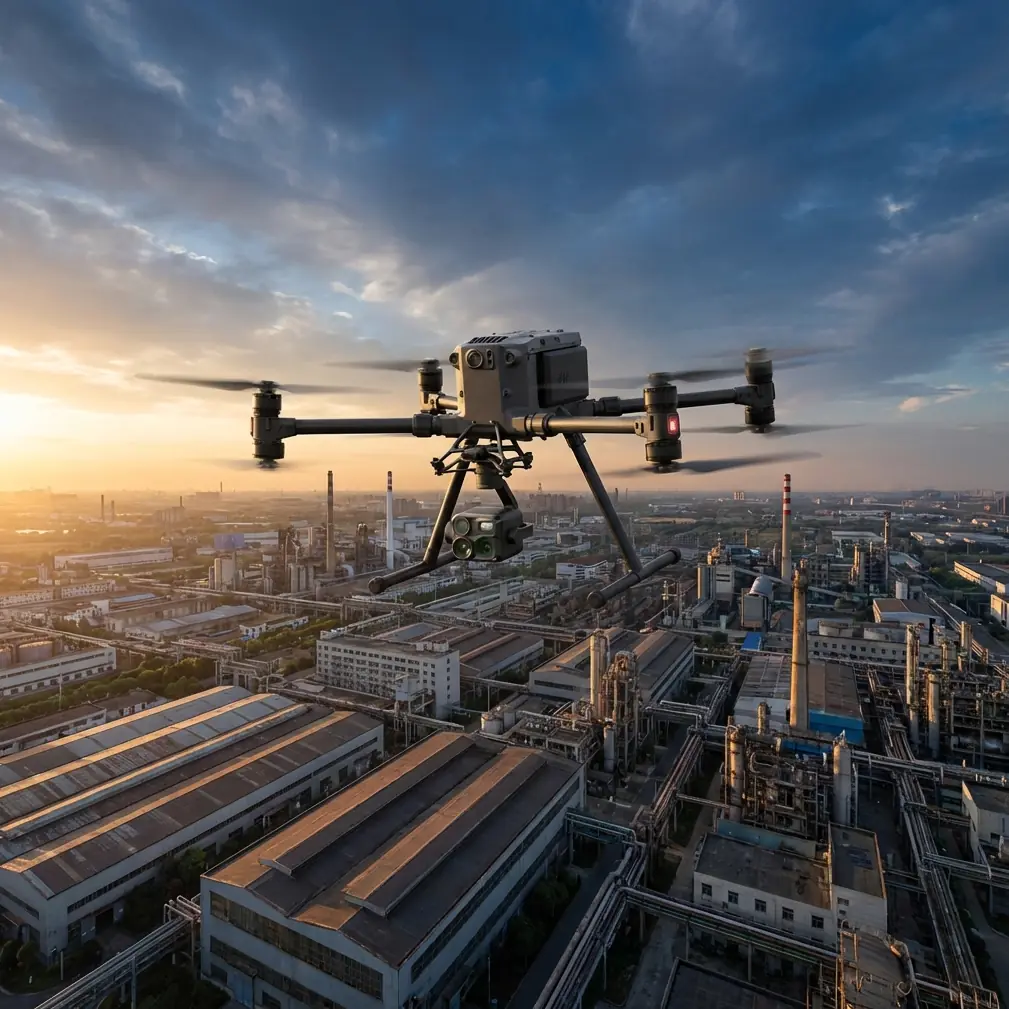
M4T for Urban Forests: Expert Inspection Guide
META: Discover how the Matrice 4T transforms urban forest inspections with thermal imaging and AI detection. Expert guide for forestry professionals.
TL;DR
- Thermal signature detection identifies stressed trees and wildlife before visual symptoms appear
- O3 transmission maintains reliable control through dense canopy up to 20km range
- Hot-swap batteries enable continuous 55-minute inspection cycles without returning to base
- AES-256 encryption protects sensitive urban forestry data and wildlife location information
The Urban Forest Challenge You're Facing
Urban forest inspections present unique obstacles that ground surveys simply cannot address efficiently. Dense canopy coverage, limited access points, and the need to assess thousands of trees across fragmented municipal zones create inspection backlogs that threaten public safety.
The Matrice 4T solves these challenges with integrated thermal and visual sensors that penetrate forest complexity. This guide breaks down exactly how to deploy the M4T for comprehensive urban forestry assessments—from disease detection to wildlife management.
Why Traditional Urban Forest Surveys Fall Short
Municipal forestry departments typically rely on ground-based visual inspections. Arborists walk designated routes, examining trees for obvious signs of disease, structural damage, or pest infestation.
This approach misses critical data:
- Subsurface root decay invisible from ground level
- Early-stage thermal stress preceding visible symptoms by weeks
- Canopy density variations indicating crown dieback
- Wildlife habitat locations requiring protection during maintenance
- Structural weakness patterns across large tree populations
Ground surveys also consume enormous time resources. A single arborist covers approximately 2-3 hectares daily under optimal conditions. Urban forests spanning hundreds of hectares face inspection cycles measured in months rather than days.
Expert Insight: Thermal signature analysis detects vascular dysfunction in trees 14-21 days before chlorophyll degradation becomes visible. This early warning window transforms reactive tree removal into proactive intervention.
Matrice 4T Sensor Integration for Forestry Applications
The M4T combines four distinct sensor systems into a unified inspection platform. Understanding each sensor's forestry application maximizes your data collection efficiency.
Wide-Angle Visual Camera
The 84° FOV wide camera captures contextual imagery essential for urban forest mapping. At 12MP resolution, individual branch structures remain distinguishable at 120m altitude.
This sensor excels at:
- Establishing tree inventory baselines
- Documenting canopy gap patterns
- Recording seasonal foliage changes
- Creating public-facing documentation
Zoom Camera Capabilities
The 56× hybrid zoom transforms the M4T into a precision inspection tool. From safe operational distances, operators examine:
- Bark fissures indicating boring insect activity
- Fungal fruiting bodies on trunk surfaces
- Deadwood accumulation in crown structures
- Mechanical damage from storm events
Thermal Imaging for Tree Health Assessment
Thermal signature analysis represents the M4T's most powerful forestry application. The 640×512 radiometric thermal sensor detects temperature differentials as small as ≤1°C NETD.
Healthy trees maintain consistent thermal profiles through transpiration. Stressed trees—whether from drought, disease, or root damage—display irregular thermal patterns hours after sunrise.
During a recent inspection of a 47-hectare urban park, thermal scanning identified 23 ash trees displaying early emerald ash borer infestation signatures. Ground crews confirmed 21 positive cases, enabling targeted treatment before population spread.
Laser Rangefinder Integration
The 3m-1400m laser rangefinder provides precise distance measurements for:
- Tree height calculations
- Canopy spread documentation
- Clearance assessments near structures
- GCP establishment for photogrammetry workflows
Wildlife Navigation: A Field Experience
Last autumn, while conducting thermal surveys over a municipal greenbelt, the M4T's sensors detected an unexpected heat signature cluster in a mature oak's crown structure. Initial thermal readings suggested 4-5 distinct signatures at approximately 38°C—significantly warmer than surrounding foliage.
Rather than approaching closer, I utilized the 56× zoom to investigate from 85m horizontal distance. The camera revealed a family of raccoons occupying a cavity den, including what appeared to be juvenile offspring.
The O3 transmission system maintained perfect video feed quality despite intervening branches. I documented the den location, adjusted the flight path to avoid disturbance, and flagged the tree for protection status in our municipal database.
This encounter demonstrated the M4T's capacity for non-invasive wildlife surveys. Traditional ground inspections would have required climbing or bucket truck deployment—both potentially displacing the animals.
Pro Tip: Schedule thermal surveys during early morning hours when wildlife thermal signatures contrast maximally against cooling vegetation. The 2-hour window after sunrise provides optimal detection conditions.
Operational Workflow for Urban Forest Inspections
Pre-Flight Planning
Urban forests present complex airspace considerations. Before deployment:
- Verify municipal flight authorizations
- Identify controlled airspace boundaries
- Map overhead utility corridors
- Establish emergency landing zones
- Coordinate with parks department staff
Flight Pattern Optimization
Systematic coverage requires deliberate flight planning. For comprehensive thermal surveys, maintain:
- Altitude: 80-120m AGL for canopy-level thermal resolution
- Speed: 5-7 m/s for adequate sensor dwell time
- Overlap: 75% frontal, 65% side for photogrammetry compatibility
- Gimbal angle: -60° to -75° for crown penetration
Data Collection Priorities
Structure each flight around specific objectives:
Primary thermal sweep: Identify anomalous signatures across entire survey area
Secondary visual documentation: Zoom investigation of flagged thermal targets
Tertiary mapping collection: Systematic photogrammetry for GIS integration
Technical Comparison: M4T vs. Alternative Platforms
| Feature | Matrice 4T | Enterprise Platform A | Consumer Thermal |
|---|---|---|---|
| Thermal Resolution | 640×512 | 320×256 | 160×120 |
| Zoom Capability | 56× hybrid | 23× optical | 4× digital |
| Transmission Range | 20km O3 | 15km | 8km |
| Flight Time | 55 min | 42 min | 31 min |
| Encryption | AES-256 | AES-128 | None |
| BVLOS Ready | Yes | Limited | No |
| Hot-swap Batteries | Yes | No | No |
The M4T's specifications translate directly into operational advantages. Extended flight time means fewer battery changes during large-area surveys. Superior thermal resolution detects subtle temperature variations invisible to lower-specification sensors.
Photogrammetry Integration for Forest Inventory
Beyond inspection, the M4T generates photogrammetry datasets supporting comprehensive forest inventory management.
Establish GCP networks using the integrated rangefinder for accurate georeferencing. Position ground control points at:
- Survey area corners
- Major trail intersections
- Permanent structures
- Distinctive landscape features
Process collected imagery through photogrammetry software to generate:
- Digital surface models showing canopy height variations
- Orthomosaic maps for tree count automation
- 3D point clouds enabling volumetric biomass estimates
- Change detection layers comparing seasonal surveys
BVLOS Operations for Extended Coverage
Urban forests often span areas exceeding visual line-of-sight limitations. The M4T's O3 transmission system and redundant positioning enable BVLOS operations where regulations permit.
Key BVLOS considerations:
- Obtain appropriate waivers from aviation authorities
- Establish visual observer networks for extended operations
- Configure automatic return-to-home parameters
- Maintain continuous communication with air traffic control
- Document all flights for regulatory compliance
Common Mistakes to Avoid
Flying during midday thermal equilibrium: Trees and surrounding surfaces reach similar temperatures between 11:00-15:00, eliminating useful thermal contrast. Schedule flights for early morning or late afternoon.
Ignoring wind effects on thermal readings: Wind cools exposed surfaces unevenly, creating false thermal anomalies. Limit operations to winds below 8 m/s for reliable thermal data.
Overlooking firmware updates before field deployment: The M4T receives regular updates improving sensor calibration and flight stability. Verify current firmware before each inspection campaign.
Collecting data without clear processing workflows: Raw thermal imagery requires radiometric calibration and environmental correction. Establish processing protocols before data collection begins.
Neglecting battery conditioning for hot-swap operations: Hot-swap batteries require proper storage temperatures and charge cycling. Maintain batteries between 20-80% charge during storage periods.
Frequently Asked Questions
Can the Matrice 4T detect specific tree diseases through thermal imaging?
Thermal imaging detects physiological stress rather than specific pathogens. However, characteristic thermal patterns often correlate with particular diseases. Vascular wilt diseases create distinct crown-to-trunk thermal gradients, while root rot produces irregular thermal mottling. Combine thermal findings with ground-truth sampling for definitive diagnosis.
What altitude provides optimal thermal resolution for individual tree assessment?
For individual tree health assessment, maintain 60-80m AGL. This altitude balances thermal pixel resolution against coverage efficiency. At 70m, each thermal pixel represents approximately 11cm ground sample distance—sufficient to detect branch-level thermal variations while covering meaningful survey areas per flight.
How does AES-256 encryption protect urban forestry data?
AES-256 encryption secures all data transmission between the M4T and controller. For urban forestry applications, this protection prevents unauthorized access to sensitive information including rare species locations, infrastructure vulnerability assessments, and municipal property conditions. Encrypted data storage on the aircraft prevents extraction if the drone is lost or stolen.
Transforming Urban Forest Management
The Matrice 4T represents a fundamental shift in urban forestry capabilities. Thermal detection, extended range, and integrated sensors compress inspection timelines from months to days while capturing data invisible to traditional methods.
Municipal forestry departments adopting drone-based inspection report 60-70% reductions in per-tree assessment costs. More importantly, early stress detection prevents catastrophic failures that endanger public safety and municipal budgets.
The technology exists today. Implementation requires only the decision to modernize your urban forest management approach.
Ready for your own Matrice 4T? Contact our team for expert consultation.