
Matrice 4T in Remote Forest Inspection: A Field Report
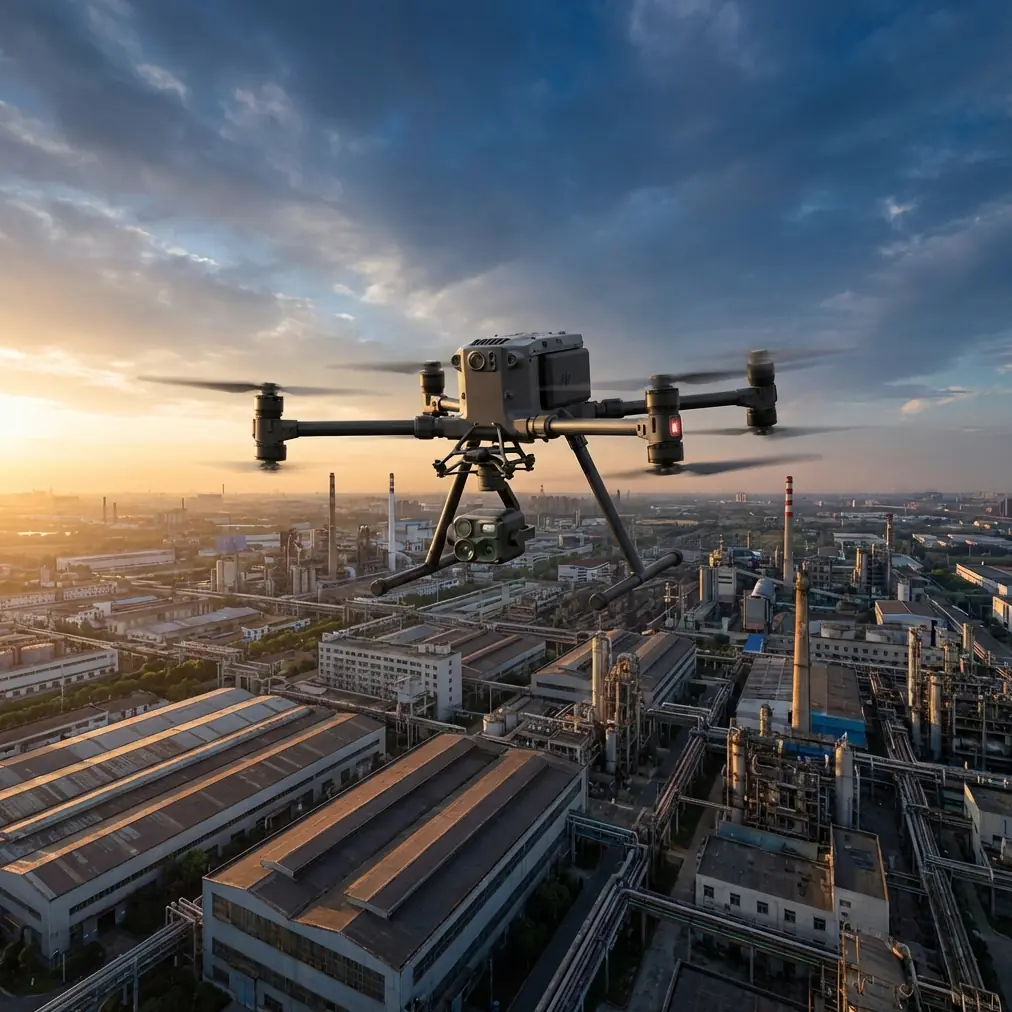
Matrice 4T in Remote Forest Inspection: A Field Report on What Actually Matters
META: Expert field report on using the DJI Matrice 4T for remote forest inspection, covering thermal detection, O3 transmission, AES-256 security, hot-swap battery workflow, and practical pre-flight safety steps.
Remote forest inspection is where spec sheets stop being useful and operational discipline starts paying for itself. Dense canopy, unreliable access roads, changing light, and the sheer size of the search area create a very different job from urban roof checks or corridor mapping near established infrastructure. If you are evaluating the Matrice 4T for this kind of work, the question is not whether it can fly over trees. The question is whether it can help you make defensible decisions when the terrain is difficult, the communications link is precious, and every battery cycle has to count.
I have spent enough time around woodland operations to know that the most expensive mistakes usually start before takeoff. One of the simplest examples is also the one crews skip when they are rushing: cleaning the aircraft’s sensing surfaces and payload windows before a sortie. On a platform like the Matrice 4T, that step is not housekeeping. It is risk management.
In remote forest work, fine dust, conifer pollen, moisture residue, and oily fingerprints can degrade what the aircraft is supposed to do best. If the visual lens is smeared, your zoom verification becomes less reliable when you need to confirm whether a heat spot is an animal, a person, a smoldering stump, or just sun-warmed rock. If the thermal window is dirty, contrast can flatten right when you are trying to separate subtle thermal signature differences under mixed canopy. And if the obstacle sensing surfaces are obscured, you have less margin when operating near trunks, broken snags, or uneven clearings used for launch and recovery. I insist on a deliberate wipe-down before every forest mission, especially around the vision system surfaces and the payload glass. It is a small ritual with outsized consequences.
That pre-flight discipline makes more sense once you look at what the Matrice 4T is really being asked to do in remote woodland. This aircraft sits in a category where one mission often has two competing objectives: detect heat anomalies quickly, and document conditions well enough that the data can support follow-up action. Those are not the same task. Thermal helps you find what the eye misses. Photogrammetry and high-detail visual capture help you explain what was found, where it was, and how it fits into the site.
For forest inspection, that dual role is the Matrice 4T’s real strength. You can use the thermal channel to scan for hotspots, distressed wildlife, occupied vehicles hidden under partial cover, or residual heat along access tracks after illegal activity. Then you can pivot to the visual system to build context around the target area. In practical terms, that means fewer blind handoffs between detection and documentation. One aircraft, one workflow, less field friction.
Operationally, thermal signature work in forests is rarely as dramatic as marketing footage suggests. The challenge is not seeing obvious heat. The challenge is correctly interpreting weak or partially obscured heat signatures in cluttered environments. Early morning flights often produce the cleanest separations because the ground has not yet equalized under sunlight. By midday, rocks, exposed soil, and even logging debris can produce confusing returns. Here the Matrice 4T’s thermal capability matters less as a headline feature and more as a disciplined search tool. You build your route design around terrain breaks, likely access routes, drainage lines, and canopy gaps. Then you confirm aggressively with the visible payload rather than trusting a single pass.
This is also where transmission reliability becomes central. In remote operations, the value of strong link performance is easy to underestimate until you are trying to inspect beyond a ridge line with heavy vegetation affecting line-of-sight. O3 transmission is not just a brochure acronym in that setting. It is part of your safety envelope. A stable feed lets the pilot and observer make real-time decisions without overcommitting the aircraft into degraded situational awareness. In forested terrain, where topography and tree density can punish weak links, robust transmission directly affects how far you can push an inspection while still maintaining command confidence.
There is another dimension to that link that deserves more attention from professional operators: security. When crews are inspecting sensitive forest assets, conservation areas, utility rights-of-way, or incident zones, the data moving between aircraft and controller is not trivial. AES-256 encryption matters because it reduces exposure during missions that may involve protected land, critical infrastructure adjacency, or incident response evidence. Many buyers focus on camera specs first and cybersecurity second. In enterprise work, that order should be reversed more often than it is. If your imagery and telemetry can influence compliance decisions, environmental reporting, or law enforcement follow-up, secure transmission is part of operational quality, not an IT footnote.
Battery management is another place where the Matrice 4T’s field value becomes obvious only after a few long days in the woods. Remote forest inspection punishes inefficient turnaround. If your team has to power down, cool off, repack, and rebuild its rhythm every time a battery changes, you lose more than minutes. You lose concentration and continuity. Hot-swap batteries are not glamorous, but in real conditions they preserve mission tempo. That matters when weather windows are narrow, daylight is shifting, or you are tracking a time-sensitive anomaly such as residual heat after a reported ignition source.
In practical terms, hot-swap capability changes how you stage a forest mission. Instead of treating each sortie as a self-contained event, you can run the aircraft as part of a rolling inspection sequence. One crew member prepares the next battery set while another logs observations, and the pilot stays mentally inside the mission rather than restarting from zero. Over multiple cycles, that translates into better area coverage and more consistent target verification.
For teams trying to do more than spot checks, the Matrice 4T becomes especially useful when combined with a structured mapping workflow. Forest inspections often need both incident-level detail and broader terrain understanding. That is where photogrammetry enters the picture. Even if the primary trigger for deployment is a thermal search, there is often a follow-on need to create an orthomosaic, assess canopy disturbance, document erosion near service roads, or record storm damage patterns. Ground control points, or GCPs, still matter here. Under tree cover and in variable terrain, precise georeferencing is not something you want to assume. If the site allows it, placing a measured set of GCPs can materially improve the usefulness of outputs for planners, foresters, and compliance teams.
That point is worth underscoring because forest operators sometimes split the world into “thermal missions” and “mapping missions” as if they belong to separate programs. On the ground, they often belong to the same decision chain. A thermal pass finds the problem. A mapping pass frames the consequences. If the Matrice 4T is being deployed by a utility contractor, environmental consultant, or land manager, the winning workflow is usually the one that reduces friction between those two stages.
There is also a reality check needed around BVLOS thinking. Many remote forest sites tempt crews into imagining that beyond visual line of sight is the natural answer to scale. Sometimes it is. Sometimes it is the wrong instinct. Forested environments are full of variables that make conservative mission design look smarter than aggressive range ambitions. Terrain masking, wildlife activity, patchy communications, and limited emergency landing options all tighten the operating picture. The Matrice 4T may fit into BVLOS-oriented programs, but the operational standard should remain disciplined route planning, clear lost-link procedures, and honest assessment of site-specific hazards. Stretching mission geometry without a mature framework is how good hardware gets blamed for weak field judgment.
One detail that rarely gets enough attention in these discussions is launch and recovery discipline in improvised forest clearings. The aircraft can be sophisticated, but your takeoff zone may still be a muddy turnout beside a logging road. That is why the pre-flight cleaning step I mentioned earlier is more than a nice habit. Remote sites throw contamination at the aircraft continuously. Mud splash from boots, airborne dust from vehicle tires, insect residue, moisture from low vegetation, even sap aerosols in some conditions. A quick, methodical cleaning of sensors, landing surfaces, and payload windows helps preserve the performance of collision avoidance features and image quality before those systems are asked to work in a visually complex environment.
My own standard field sequence for the Matrice 4T in forests is simple and repeatable. Clean the sensing and camera surfaces. Verify battery seating and swap readiness. Review terrain-driven route segments, not just waypoints on a map. Confirm return behavior against canopy and clearing options. Set expectations for thermal interpretation before launch so the observer is looking for patterns, not just bright spots. And once an anomaly is found, capture enough visual context that someone who was never on site can still understand the significance of the finding later.
That last point is where many inspection missions underperform. They find something interesting and then fail to document it in a way that survives the trip back to the office. A heat source without context can trigger debate instead of action. A properly documented anomaly tied to location, surrounding vegetation, access constraints, and visible confirmation becomes operational evidence. The Matrice 4T is well suited to producing that package when it is used as a field instrument rather than a flying camera.
For remote forestry teams, the aircraft’s value ultimately comes down to whether it shortens the distance between observation and decision. Thermal signature detection helps surface what would otherwise remain hidden. O3 transmission supports confidence in difficult terrain. AES-256 addresses a real enterprise concern around data security. Hot-swap batteries keep the mission moving when the site is far from ideal. Add a disciplined photogrammetry workflow with GCP support where accuracy matters, and the platform becomes more than a detection tool. It becomes part of a repeatable inspection system.
If you are planning a deployment and want to compare route design, sensor priorities, or field setup choices for woodland work, I’d recommend a quick operator-to-operator conversation through this direct WhatsApp link: https://wa.me/example. In my experience, a ten-minute discussion about canopy density, recovery zones, and target type is more useful than an hour of generic drone advice.
The Matrice 4T is not defined by any single headline feature in remote forest inspection. Its real advantage is that it lets a skilled crew move from search to confirmation to documentation without changing platforms or losing momentum. That is what matters when the site is hard to reach, the mission window is short, and the consequences of missing a detail are very real.
Ready for your own Matrice 4T? Contact our team for expert consultation.