
Matrice 4T in Dusty Highway Inspection: The Pre
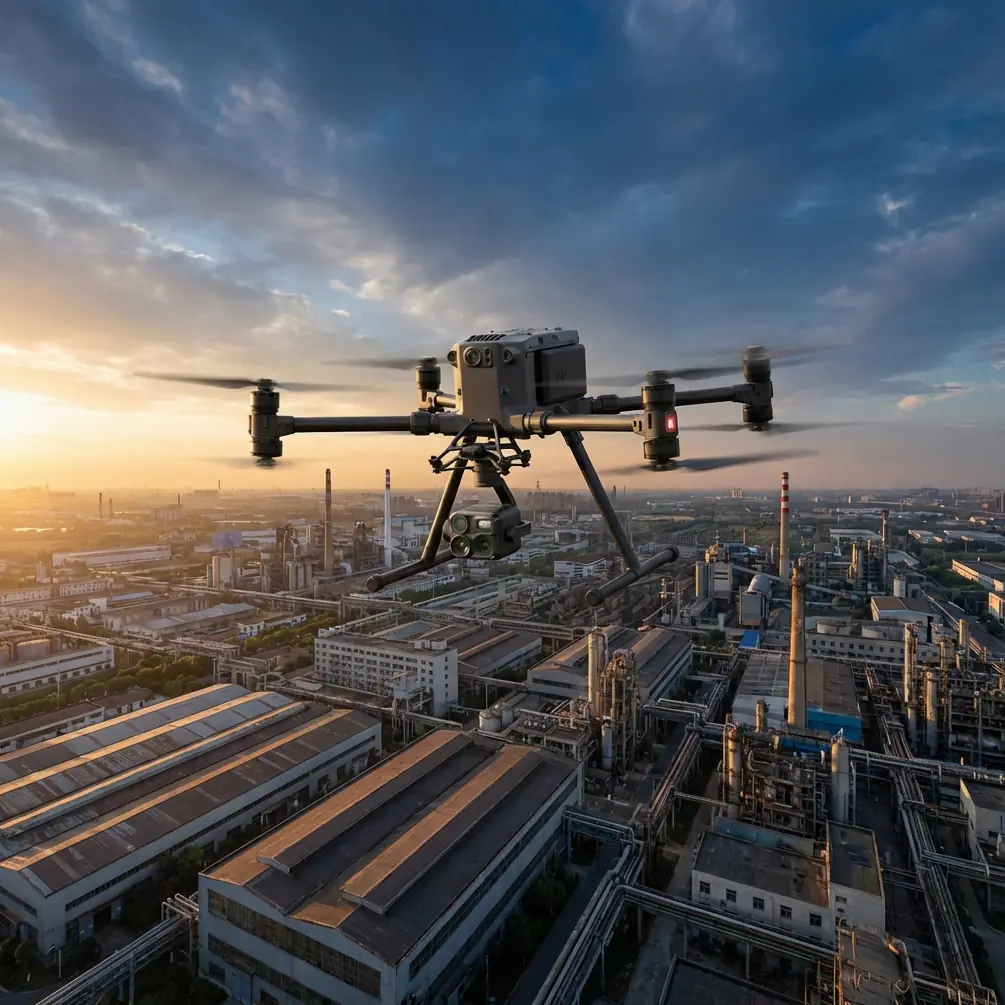
Matrice 4T in Dusty Highway Inspection: The Pre-Flight Step That Protects Your Data, Sensors, and Day Rate
META: A field-based Matrice 4T case study for dusty highway inspection, covering pre-flight cleaning, thermal use, O3 transmission, AES-256 security, hot-swap workflow, GCP support, and why these details matter on real jobs.
Dust changes the way a drone mission behaves.
That sounds obvious until you are standing beside a live highway corridor, trucks are pushing fine grit into the air, and the aircraft you rely on for thermal screening, visual inspection, and mapping has to keep performing flight after flight without turning a routine asset survey into a maintenance problem. On paper, the Matrice 4T looks like a flexible inspection platform. In a dusty highway environment, the real story is how small operational decisions determine whether that flexibility translates into usable, defensible field results.
I have seen crews obsess over payload settings and route plans while skipping the one step that protects almost everything downstream: a disciplined pre-flight cleaning check.
For highway inspection, especially in dry conditions, that is not housekeeping. It is risk control.
A dusty highway job is harder than it looks
Highway inspection is rarely just “fly, record, and report.” The corridor is long. Surface temperatures vary by material and sunlight angle. Vehicles kick up dust that settles on optics, cooling paths, landing gear, and battery contacts. And the operator often needs more than one output from the same deployment: visible imagery for defect review, thermal signature checks for heat anomalies, and georeferenced data that can support photogrammetry in selected sections.
This is where the Matrice 4T earns attention. It is attractive because teams do not need separate aircraft for visual and thermal passes. But multipurpose capability only pays off if each sensor is seeing clearly and each subsystem stays reliable through repeated launches.
In dusty work, contamination is cumulative. A lens does not have to look dirty to degrade image quality. A battery interface does not have to fail completely to create an avoidable interruption. That matters when you are inspecting long stretches of pavement, drainage structures, signage mounts, bridge approaches, or expansion zones where comparison between flights needs to stay consistent.
The pre-flight cleaning step most crews treat too casually
My preferred case-study example starts before takeoff.
A highway inspection crew arrives early, before traffic density peaks. Their Matrice 4T has already flown two days on nearby road assets. The temptation is to swap batteries, confirm GPS, and launch. Instead, the lead pilot pauses the team for a dust-specific pre-flight sequence.
Not a deep service. A focused field clean.
The sequence is simple:
- inspect the gimbal housing and camera windows for fine particulate
- clean visible dust from thermal and visual sensor surfaces using the right tools
- check air passages and body seams for buildup
- inspect landing gear and fold points for abrasive grit
- verify battery terminals and seating surfaces are clean before insertion
- confirm propellers do not carry embedded dust residue around the hub area
Why does this matter so much? Because every one of those points can distort the mission in a different way.
A dirty optical surface affects image sharpness and contrast, which weakens crack interpretation, surface condition review, and model quality if you are collecting images for photogrammetry. On the thermal side, a compromised sensor window can affect how clearly you interpret a thermal signature, particularly when you are trying to distinguish actual heat-related anomalies from environmental noise caused by pavement, shadows, and solar loading.
Even the battery check has outsized value. In dusty environments, crews often perform multiple sorties in sequence. If you are using hot-swap batteries to keep the aircraft cycling efficiently, clean contacts and secure battery seating are not a minor detail. They support continuity. On a linear corridor job, continuity is money, but more than that, it is data integrity. Fewer interruptions mean fewer mismatched environmental conditions between flight segments.
Why thermal is useful on highways, but only if you respect the environment
The Matrice 4T gets discussed mostly for its thermal capability, and rightly so. Yet thermal is often misunderstood in transport infrastructure work.
On a dusty highway inspection, thermal is not magic. It is a comparative tool. It helps the team identify areas that deserve closer attention: moisture intrusion zones below surface layers, overheated electrical components in roadside infrastructure, drainage issues affecting thermal behavior, or irregular heat retention patterns around patched asphalt and structural transitions.
That value rises when the operator understands the surface context. Highway materials heat and cool at different rates. Dust on the sensor can subtly flatten the distinction you are trying to observe. Dust in the atmosphere can also affect how cleanly you interpret the scene, especially when working lower during targeted passes.
This is why the pre-flight cleaning step is operationally significant, not cosmetic. If your thermal imagery is part of a maintenance recommendation, the chain of reliability starts with the sensor face. You cannot talk confidently about surface anomalies if the aircraft launched with compromised optics.
O3 transmission matters more on a road corridor than in a short-range site survey
Another detail that deserves more practical attention is O3 transmission.
Long highway inspections create a different communication profile from compact roof or tower jobs. You are moving along an elongated corridor with changing line-of-sight conditions, roadside vegetation, elevation changes, utility poles, signs, and passing vehicles. A robust transmission system matters because the mission depends on stable situational awareness, not just control authority.
With O3 transmission in the workflow, the Matrice 4T is better suited to maintaining dependable video and telemetry links across these shifting corridor conditions. For dusty inspection work, this has two practical benefits.
First, it reduces the temptation to over-position the team in unsafe or inconvenient roadside locations just to keep image monitoring comfortable. Second, it improves the operator’s ability to verify in real time whether the aircraft is capturing usable thermal and visible data before moving on.
That second point is huge. In a dust-prone environment, image quality can change faster than crews expect. A stable transmission link helps the team catch contrast loss, focus issues, or environmental interference early enough to correct the problem in the field rather than discovering it back at the office.
If a team is planning extended corridor operations or exploring future BVLOS-aligned workflows where regulations and approvals permit, dependable transmission behavior becomes even more relevant. Not because BVLOS should be treated casually, but because the discipline required for long linear missions starts with robust link performance and process control.
Security is not abstract when highway data includes critical infrastructure details
AES-256 encryption can sound like a line-item feature until you think about what highway inspection datasets often contain.
Even on civilian jobs, the mission may capture bridge access points, utility crossings, traffic management systems, maintenance yards, structural details, and geolocated thermal observations. That information may be shared across engineering teams, contractors, and asset owners. In that context, AES-256 is not a technical footnote. It supports responsible handling of inspection data in transit and in operational workflows where confidentiality matters.
For firms working under infrastructure contracts, this can shape client trust and internal policy compliance. A secure transmission and data management posture does not make the drone fly better, but it does make the operation easier to defend in professional procurement environments.
That is one reason the Matrice 4T fits serious inspection programs better than hobby-derived platforms. The conversation shifts from “can it collect footage?” to “can this aircraft sit inside a repeatable, governed, auditable inspection process?”
Photogrammetry on a thermal platform? Sometimes, yes
A lot of highway teams think of the Matrice 4T primarily as a thermal and visual inspection aircraft, not a mapping tool. That is mostly fair, but it misses a practical hybrid use case.
On dusty road projects, there are often localized zones where photogrammetry adds value: shoulder erosion, embankment changes, drainage deformation, stockpile encroachment, or post-maintenance documentation. In those cases, the same field team can capture targeted image sets that support surface modeling, especially when supported by GCP placement for stronger positional confidence.
GCPs matter here because corridor jobs often require credible spatial reference, not just attractive imagery. If the inspection escalates into engineering review, a model tied to field control is easier to trust than an unreferenced reconstruction.
This does not mean every Matrice 4T mission should become a mapping mission. It means the aircraft can support a mixed-output day when the crew plans properly. Thermal for anomaly screening. Visual for defect review. Photogrammetry in select sections where geometry matters. That blend is often more efficient than bringing separate systems for each task, particularly when site conditions are harsh and setup time should be kept tight.
A field-day rhythm built around hot-swap discipline
On a dusty highway corridor, battery management affects the quality of the whole inspection day.
Hot-swap batteries are one of those features that crews appreciate more after they have used them under pressure. The obvious benefit is reducing turnaround time. The deeper benefit is preserving mission rhythm. When the aircraft can get back in the air quickly, the crew maintains similar lighting conditions, thermal comparability, and traffic context across adjacent segments.
That consistency matters. If a morning section is flown in cool conditions and the next section waits too long, your thermal comparisons may become less meaningful. Fast, clean battery swaps help keep the survey window coherent.
But in dust, speed cannot be sloppy. The battery swap routine should include a quick visual inspection of terminals and latch areas every time. Fine debris in those contact zones is exactly the kind of small issue that can trigger delays no one budgeted for.
This is another reason I push the pre-flight cleaning story so hard. It sets the tone for the rest of the mission. Crews that clean with intent before launch usually swap batteries with the same discipline later. Crews that skip it often treat contamination as somebody else’s problem until they start losing time.
The case-study lesson: sensor confidence is earned on the ground
Let’s bring this back to the actual reader scenario: inspecting highways in dusty conditions.
A Matrice 4T team can absolutely perform well here. The aircraft’s mix of thermal and visual capability, O3 transmission, AES-256 support, and hot-swap workflow aligns with the reality of modern infrastructure inspection. It is a strong fit for crews that need one platform to do more than one job in one shift.
But the reason one team gets clean, actionable outputs while another comes home with inconsistent datasets often has less to do with the spec sheet than with field discipline.
The best result from the case study is not “the drone survived the dust.” It is this: the crew protected thermal clarity, preserved visual image quality, maintained secure and stable operations, and kept the sortie cadence tight enough to produce comparable inspection data across a long corridor.
That started with a brush, a cloth, a careful battery check, and five extra minutes before first launch.
If your operation is building a highway inspection procedure around the Matrice 4T, write that cleaning step into the checklist. Make it mandatory after transport, before launch, and during battery change intervals when dust exposure is obvious. Pair it with a live image review so the pilot and sensor operator confirm that the payload is seeing what they think it is seeing.
That is not glamorous. It is professional.
And in infrastructure work, professional habits are what make the final report believable.
If you are refining a dusty-corridor workflow and want to compare checklist ideas with a field-oriented team, you can message a Matrice 4T specialist here.
The Matrice 4T is not defined by a single headline feature. In highway inspection, its value comes from how its systems work together under pressure: thermal sensing for anomaly detection, visual capture for asset review, O3 transmission for stable corridor operations, AES-256 for data stewardship, hot-swap batteries for mission continuity, and optional GCP-supported photogrammetry where geometry needs to be documented properly.
Dust tests all of that.
Which is why the smartest place to start is not in the air. It is with the pre-flight clean that keeps the aircraft honest.
Ready for your own Matrice 4T? Contact our team for expert consultation.