
Matrice 4T for Urban Highway Inspection: What Actually
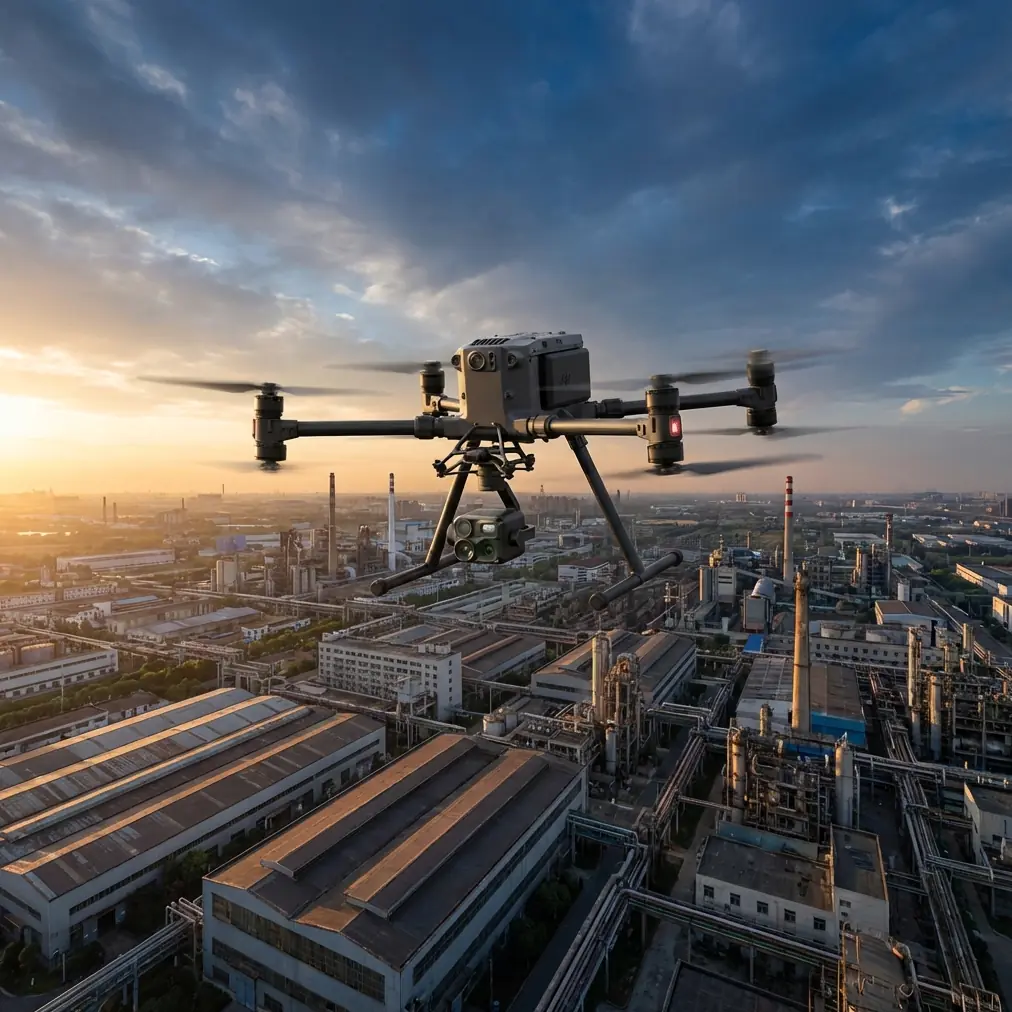
Matrice 4T for Urban Highway Inspection: What Actually Matters in the Field
META: Expert technical review of the Matrice 4T for urban highway inspection, with practical insight on EMI handling, thermal workflows, braking-system relevance, and reliable data capture.
Urban highway inspection is one of those jobs that looks straightforward until you’re standing beside six lanes of traffic, under power lines, near sign gantries, with wind bouncing off concrete barriers and RF noise chewing at your link margin.
That is where the Matrice 4T becomes interesting.
Not because it is simply “good for inspection,” which says almost nothing. The real value shows up when a platform has to do several difficult things at once: maintain stable transmission in a noisy urban corridor, capture usable thermal signature data on roadside assets, support photogrammetry where geometry is awkward, and do it all without wasting road-closure windows or forcing repeat flights.
For highway operators, engineering consultants, and inspection teams working in cities, the Matrice 4T sits in a useful middle ground. It is more deployable than a larger mapping aircraft, but far more operationally capable than a lightweight drone that starts to struggle once the environment becomes cluttered and electromagnetically messy.
Why urban highways are harder than they look
Highway inspection in dense city zones is not a simple linear flight. You are usually dealing with:
- reflective steel structures
- overhead utilities
- intermittent GNSS masking from overpasses and high-rise edges
- traffic heat sources that can pollute thermal interpretation
- short setup windows
- limited safe takeoff points
- high pressure to leave with complete, defensible data
That last point matters more than most teams admit. In asset inspection, the problem is rarely just flying. The problem is getting data that stands up to engineering review later.
A bridge deck joint, drainage outlet, retaining wall crack, delamination hotspot in an electrical cabinet, or overheating component in roadside infrastructure is only useful if the image set is stable, geospatially coherent, and captured under a repeatable workflow.
This is why the Matrice 4T’s appeal is not one single sensor headline. It is the combined workflow logic.
The transmission question: O3 matters most when the environment gets ugly
In open areas, many drones feel similar. In urban highway corridors, they do not.
O3 transmission is one of the more practical advantages in this class because highway inspections often force flights down long, constrained sight lines bordered by metal, concrete, and signal interference. In those conditions, link quality is not a brochure feature. It determines whether your inspection stays smooth enough to maintain consistent camera movement and positional awareness.
The common mistake is to treat interference as a software issue alone. In practice, antenna discipline still matters.
When I brief teams on Matrice 4T deployment near urban highways, I usually focus on a simple corrective habit: if EMI starts degrading the feed around utility corridors or gantry structures, do not immediately assume the site is unflyable. First, reassess controller orientation and antenna angle relative to the aircraft’s path. A small adjustment can materially improve link stability because the geometry of the corridor often creates partial shielding or multi-path reflection. If the aircraft is moving parallel to a steel barrier or beneath sign structures, keeping the strongest antenna pattern aligned with the intended route can restore margin without changing the mission.
That sounds minor. It isn’t. A cleaner link means fewer hesitations, fewer abrupt pilot corrections, and better inspection imagery.
For readers evaluating this platform for future BVLOS-style corridor workflows, the significance is even greater. Even where operations remain within visual line of sight under local rules, urban highway work often mimics BVLOS complexity because the aircraft may pass through visually and electromagnetically inconsistent sections in a single mission. A robust transmission backbone reduces operational friction long before you get to formal expanded operations.
Thermal is valuable on highways, but only if you know what not to trust
The “T” in Matrice 4T earns its keep on highways when teams stop treating thermal as a magic defect detector and start using it as a screening layer.
Urban highways produce a messy thermal scene. Asphalt retains heat. Vehicles introduce moving hotspots. Sun angle can distort apparent anomalies on concrete surfaces, barriers, expansion zones, and electrical housings. The right use of thermal signature analysis is to narrow attention fast, then verify with visual inspection and, where needed, closer reflight.
This is especially useful for roadside electrical infrastructure, drainage blockages that alter moisture retention, panel overheating, and certain maintenance checks on mounted equipment. In these jobs, the Matrice 4T helps because thermal and visual context can be captured in one deployment rather than forcing separate tools into the same traffic-sensitive environment.
Operationally, that translates to less time occupying a shoulder or service lane.
And time on-site is not just a labor concern. It is a risk variable.
Photogrammetry on a highway corridor is possible, but control matters
A lot of people assume a thermal inspection drone cannot also support serious spatial documentation. That is too simplistic.
For urban highway work, photogrammetry with the Matrice 4T can be useful when the objective is corridor condition recording, retaining wall documentation, drainage structure mapping, or localized incident assessment. But the method has to respect corridor geometry.
Linear infrastructure is unforgiving. If overlap, angle consistency, and ground control are weak, the model quality falls apart precisely where engineers need confidence: joints, edges, elevations, and transitions around ramps or embankments.
That is where GCP strategy still matters. Even with strong onboard positioning, urban environments can introduce enough GNSS inconsistency that well-placed control points become the difference between a model that is persuasive and one that is merely pretty. On a highway, GCP placement should support the actual engineering question, not just distribute points evenly by habit. Control near grade changes, drainage interfaces, wall ends, and critical assets usually does more for downstream accuracy than generic spacing alone.
The Matrice 4T is not replacing specialized large-area survey workflows in every case. But for mixed inspection assignments where thermal context, visual review, and localized reconstruction all need to happen inside one operational window, it can be unusually efficient.
What an old aircraft braking standard can teach highway drone operators
One of the more interesting reference points behind this discussion comes from traditional aircraft design literature focused on braking-system testing and landing-gear requirements. At first glance, that sounds unrelated to a highway inspection drone. It isn’t.
One cited procedure describes a 45-5 dynamic braking torque program split into 5 groups, each group containing 9 braking events at design landing gross weight, followed by 1 braking event at maximum landing gross weight. Another detail emphasizes that auxiliary braking energy values must be defined by technical agreement for each case. The source also notes emergency braking capability expectations, including average deceleration of at least 50% of the value corresponding to normal landing rollout length.
Now, the Matrice 4T is obviously not a manned aircraft with wheel brakes. But these facts are still operationally relevant because they reflect a mature engineering culture: systems exposed to repeated energy loading and degraded conditions should be evaluated for endurance, fallback behavior, and predictable performance under stress.
That mindset maps directly to highway drone operations.
In urban corridor work, your equivalent of “braking endurance” is not wheel-stop performance. It is repeatable reliability through repeated takeoff, hover, reposition, zoom, thermal scan, return, battery swap, and relaunch cycles under constrained field conditions. The lesson is not about copying the exact test. The lesson is about respecting duty cycles.
If you are inspecting several kilometers of highway with the Matrice 4T, hot-swap batteries are not just a convenience feature. They support mission continuity in the same spirit that redundancy and emergency performance matter in conventional aircraft design. When a team can rotate power quickly without tearing down the workflow, they preserve scene familiarity, maintain traffic-management coordination, and reduce the chance of data gaps between sorties.
That is the operational significance. A highway inspection rarely fails because the drone cannot technically fly. It fails because continuity breaks down.
Reliability is also a data-security issue
Urban infrastructure work often touches sensitive asset locations, maintenance records, and imagery of controlled transport corridors. That makes secure handling more than an IT checkbox.
AES-256 is part of the conversation because highway agencies and contractors increasingly need confidence that transmission and stored operational data are being handled under a defensible security posture. This does not make a workflow secure by itself, of course. Procedures still matter: device control, storage discipline, user permissions, and chain-of-custody protocols all matter. But on projects where inspection imagery can reveal vulnerabilities or maintenance conditions, encrypted handling is not optional background noise. It is part of contract credibility.
For firms building repeat urban inspection programs, this matters as much as optics and battery life.
Practical field workflow: how I’d run the Matrice 4T on an urban highway assignment
For a typical city-highway inspection block, I would not approach the Matrice 4T as a single-mission aircraft. I would structure the day in layers:
1. Corridor familiarization pass
Fly a conservative visual route to identify interference pockets, wind funnels, GNSS masking points, and thermal contamination sources such as heavy traffic queues or sun-loaded surfaces.
2. EMI refinement
Where the link degrades, test antenna orientation before rewriting the plan. Urban corridor reflections can make a poor setup appear to be a hard site limitation when it is really a geometry issue.
3. Thermal screening run
Use thermal signature review to isolate suspect roadside cabinets, drainage anomalies, or heat-irregular surfaces that merit closer inspection.
4. Visual confirmation
Return for detailed optical capture of flagged areas, keeping flight path and camera angle consistent enough to support comparison.
5. Localized photogrammetry
Where a structure or defect needs documentation for engineering review, collect a more disciplined image set with overlap and GCP support appropriate to the geometry.
6. Battery continuity planning
Use hot-swap cycles to preserve the inspection rhythm. Avoid long pauses that force traffic-control resets or site re-briefing unless conditions actually require it.
That layered structure fits the Matrice 4T well because the aircraft is strong when asked to combine reconnaissance, diagnosis, and documentation in one deployment.
The hidden advantage: less fragmentation between teams
One underrated reason the Matrice 4T works in highway inspection is organizational, not technical.
On many projects, thermal teams, visual inspection teams, and mapping teams operate with different tools and different deliverable standards. That fragmentation creates delays. Someone identifies an anomaly, someone else returns later, and by then traffic patterns, weather, and access constraints have changed.
A platform that can support thermal screening, optical verification, and useful spatial capture reduces that handoff problem. It does not eliminate specialization, but it narrows the gap between field detection and engineering interpretation.
That is where productivity actually comes from in urban inspection—not from flying faster in a vacuum, but from reducing the number of separate site visits needed to answer one asset question.
Where the Matrice 4T fits best
For urban highway operators, the Matrice 4T is strongest when the mission requires:
- mixed thermal and visual inspection
- repeated short-to-medium sorties in constrained access zones
- secure data handling
- dependable transmission in RF-challenging corridors
- occasional photogrammetric documentation without deploying a dedicated survey aircraft
It is less about replacing every other tool and more about covering the widest useful portion of the inspection stack with fewer compromises.
If your team is still planning highway inspections as isolated sensor tasks, you will underuse this aircraft. If you treat it as a corridor-intelligence platform—one that helps you detect, validate, document, and revisit efficiently—its value becomes much clearer.
And if you are preparing a real-world deployment plan for city highway assets and want to compare route design, EMI mitigation, or GCP strategy, it can help to discuss the workflow directly before the first field day.
The broader lesson from the reference material is simple but worth keeping. Good aerospace systems are not judged only by peak capability. They are judged by what happens after repeated cycles, degraded conditions, and fallback scenarios. The same standard should be applied to drone programs inspecting urban highways.
That is exactly the lens through which the Matrice 4T makes sense.
Ready for your own Matrice 4T? Contact our team for expert consultation.