
How to Inspect Power Lines with Matrice 4T at Altitude
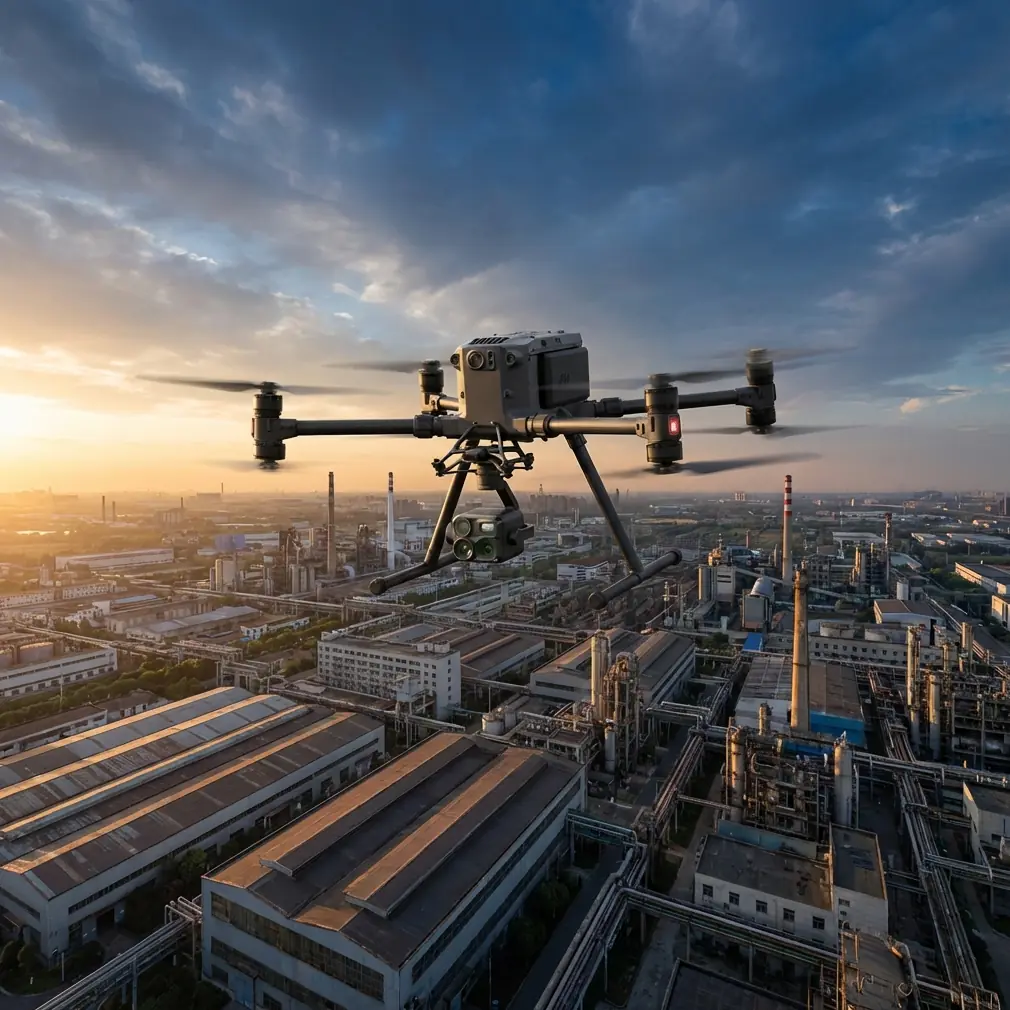
How to Inspect Power Lines with Matrice 4T at Altitude
META: Master high-altitude power line inspections with the DJI Matrice 4T. Learn expert techniques for thermal imaging, EMI handling, and efficient workflows.
TL;DR
- Electromagnetic interference (EMI) at high-voltage sites requires specific antenna positioning and transmission settings on the Matrice 4T
- Thermal signature detection identifies hotspots on conductors, insulators, and transformers before failures occur
- O3 transmission technology maintains stable video links up to 20 km even in challenging mountain terrain
- Hot-swap batteries enable continuous operations exceeding 4 hours on complex transmission corridors
Why High-Altitude Power Line Inspection Demands Specialized Equipment
Power line inspections at elevation present unique challenges that ground-based methods simply cannot address. Thin air reduces lift efficiency. Temperature extremes affect battery performance. Electromagnetic fields from high-voltage conductors disrupt communication links.
The DJI Matrice 4T addresses each of these obstacles with purpose-built engineering. Its wide-angle thermal camera captures thermal signatures across conductor spans while the 56× hybrid zoom isolates individual components from safe standoff distances.
Traditional helicopter inspections cost 10-15× more than drone operations. They also introduce significant safety risks when pilots navigate near energized lines in mountainous terrain.
Expert Insight: At altitudes above 3,000 meters, expect approximately 15% reduction in flight time due to decreased air density. Plan your missions with conservative battery reserves of at least 30% remaining capacity.
Understanding Electromagnetic Interference Challenges
High-voltage transmission lines generate powerful electromagnetic fields that interfere with drone control signals. The Matrice 4T's O3 transmission system operates on dual-frequency bands, automatically switching between 2.4 GHz and 5.8 GHz to maintain link stability.
Antenna Positioning for EMI Mitigation
When approaching energized conductors, antenna orientation becomes critical. The remote controller's antennas should remain perpendicular to the transmission lines rather than parallel.
Follow this positioning protocol:
- Maintain antennas in vertical orientation when flying parallel to conductor runs
- Rotate controller 90 degrees when approaching towers head-on
- Keep the drone upwind from your position to reduce signal path interference
- Position yourself at least 50 meters laterally from tower structures
The Matrice 4T's AES-256 encryption ensures secure data transmission even when operating near critical infrastructure. This military-grade encryption prevents unauthorized access to your video feed and flight controls.
Signal Strength Monitoring
Watch the transmission quality indicator continuously during high-voltage operations. Signal degradation often precedes complete link loss by 15-30 seconds, giving you time to increase altitude or adjust position.
Pro Tip: Before each mission near high-voltage infrastructure, perform a hover test at 50 meters altitude for 60 seconds while monitoring signal strength. This baseline helps you identify abnormal interference patterns specific to that site.
Thermal Imaging Techniques for Defect Detection
The Matrice 4T's thermal sensor detects temperature differentials as small as 0.03°C (NETD). This sensitivity reveals developing faults long before visible damage appears.
Critical Components to Inspect
Power line infrastructure contains multiple failure points requiring thermal analysis:
- Conductor splices: Temperature rise indicates increased resistance from corrosion or loose connections
- Insulator strings: Contamination or internal defects create localized heating
- Transformer bushings: Oil leaks and internal faults produce characteristic thermal patterns
- Corona rings: Damaged or missing rings cause ionization heating
- Guy wire anchors: Tension issues manifest as stress-related temperature variations
Optimal Thermal Capture Settings
Configure your thermal camera for maximum defect visibility:
| Parameter | Recommended Setting | Purpose |
|---|---|---|
| Palette | White Hot | Industry standard for reports |
| Gain Mode | High | Maximum sensitivity for subtle defects |
| Isotherm | Enabled, +10°C above ambient | Automatic hotspot highlighting |
| FFC Mode | Auto | Prevents image drift during long flights |
| Measurement Mode | Spot + Area | Quantitative temperature data |
The 640×512 thermal resolution captures sufficient detail for identifying Class 1 defects (immediate attention required) from distances up to 30 meters.
Flight Planning for Transmission Corridors
Efficient power line inspection requires systematic flight planning. The Matrice 4T integrates with DJI FlightHub 2 for automated corridor mapping and mission execution.
Pre-Mission Preparation
Complete these steps before arriving on site:
- Import GIS data for tower locations and conductor routing
- Establish ground control points (GCP) for photogrammetry accuracy
- Review NOTAMs and coordinate with utility operations center
- Check weather forecasts for wind speed and temperature conditions
- Verify BVLOS authorization if required for your jurisdiction
Waypoint Configuration
Set waypoints at each tower location with the following parameters:
- Approach altitude: 15 meters above highest conductor attachment point
- Standoff distance: 10-15 meters horizontal from tower structure
- Gimbal angle: -30 degrees for optimal thermal viewing angle
- Hover duration: 8-10 seconds per capture position
- Speed between waypoints: 5-8 m/s maximum for image quality
The aircraft's obstacle sensing system provides collision avoidance, but manual override capability remains essential near complex tower geometries.
Hot-Swap Battery Operations
Extended transmission corridor inspections exceed single-battery endurance. The Matrice 4T's TB65 batteries support hot-swap procedures that maintain continuous operations.
Battery Management Protocol
Organize your battery inventory for maximum efficiency:
- Bring minimum 6 battery pairs for half-day operations
- Charge batteries to 90% rather than 100% for optimal longevity
- Store spare batteries in insulated containers at high altitude to maintain temperature
- Track cycle counts and retire batteries exceeding 200 cycles
The 45-minute flight time per battery pair allows inspection of approximately 8-12 tower structures depending on complexity and access requirements.
Photogrammetry and Documentation Standards
Utility companies require standardized documentation for regulatory compliance and asset management. The Matrice 4T's 61 MP wide camera captures inspection-grade imagery suitable for photogrammetry processing.
Image Capture Requirements
Follow these specifications for compliant documentation:
- Overlap: 75% frontal, 65% side for 3D reconstruction
- GSD: Maximum 1.5 cm/pixel for defect identification
- Format: DNG raw files for thermal, JPEG for visual reference
- Naming convention: Tower ID + Date + Capture sequence
- Metadata: GPS coordinates embedded automatically
Process imagery through photogrammetry software to generate digital twin models of tower structures. These models enable remote engineering review and historical comparison.
Common Mistakes to Avoid
Flying too close to conductors: Maintain minimum 10-meter clearance from energized lines. Electromagnetic fields intensify dramatically within this zone.
Ignoring wind patterns: Mountain terrain creates unpredictable gusts. The Matrice 4T handles 12 m/s sustained winds, but turbulence near towers can exceed this threshold suddenly.
Skipping thermal calibration: Perform flat-field correction (FFC) every 10 minutes during operations. Temperature drift compromises measurement accuracy.
Inadequate documentation: Capture minimum 8 images per tower from cardinal directions. Missing angles create gaps in inspection records.
Neglecting battery temperature: Cold batteries deliver reduced capacity. Pre-warm batteries to 20°C minimum before flight in alpine conditions.
Frequently Asked Questions
What certifications are required for power line drone inspections?
Most jurisdictions require Part 107 certification (or equivalent) plus utility-specific safety training. BVLOS operations demand additional waivers and coordination with aviation authorities. Many utilities also require OSHA 10-hour electrical safety certification for personnel working near energized infrastructure.
How does the Matrice 4T handle rain during inspections?
The Matrice 4T carries an IP54 rating, providing protection against light rain and dust. However, water droplets on the thermal lens degrade image quality significantly. Suspend operations during precipitation and allow 30 minutes drying time before resuming thermal capture.
Can thermal imaging detect all types of power line defects?
Thermal imaging excels at identifying resistive heating defects including loose connections, corrosion, and overloaded conductors. However, mechanical defects like cracked insulators or damaged conductor strands may not produce thermal signatures until failure is imminent. Combine thermal inspection with visual zoom analysis for comprehensive assessment.
About the Author: Dr. Lisa Wang specializes in utility infrastructure inspection methodologies and has conducted over 500 high-altitude drone missions across transmission networks in challenging terrain.
Ready for your own Matrice 4T? Contact our team for expert consultation.