
M4T Venue Inspections: Dusty Environment Guide
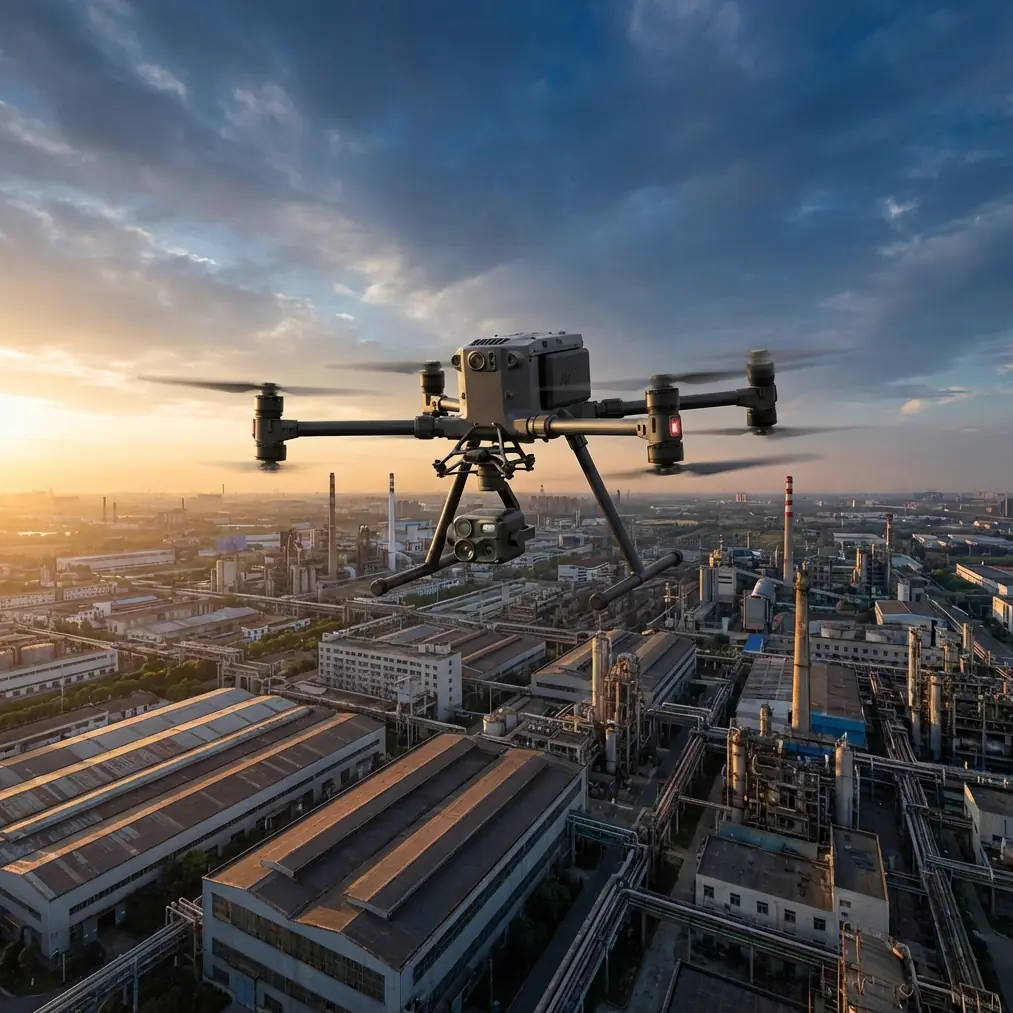
M4T Venue Inspections: Dusty Environment Guide
META: Master Matrice 4T venue inspections in dusty conditions. Expert techniques for thermal imaging, flight planning, and data capture that deliver accurate results.
TL;DR
- Optimal flight altitude of 15-25 meters balances thermal signature clarity with dust interference reduction in venue inspections
- IP55 rating protects the M4T's sensors during dusty operations, but pre-flight preparation remains critical
- Wide-angle thermal camera captures comprehensive venue coverage in single passes, reducing exposure time
- O3 transmission maintains reliable control links even when particulate matter degrades signal quality
Why Dusty Venue Inspections Demand Specialized Approaches
Venue inspections in dusty environments present unique challenges that standard drone protocols fail to address. The Matrice 4T's integrated sensor suite—combining a 56× hybrid zoom camera with 640×512 thermal imaging—provides the detection capabilities you need, but only when deployed with environment-specific techniques.
This guide covers the exact flight parameters, sensor configurations, and workflow optimizations that separate successful dusty venue inspections from frustrating, data-poor missions.
Understanding Dust Impact on Drone Operations
Dust affects drone inspections through three primary mechanisms: sensor occlusion, thermal reading interference, and mechanical wear. Each requires specific countermeasures.
Sensor Occlusion Factors:
- Particulate accumulation on lens surfaces
- Reduced visibility affecting photogrammetry accuracy
- False readings from airborne debris
Thermal Interference Patterns:
- Suspended dust absorbs and re-emits infrared radiation
- Ground-level dust clouds create thermal noise floors
- Temperature differentials between dust layers mask structural signatures
Expert Insight: Flying during the first two hours after sunrise dramatically reduces airborne dust. Ground temperatures remain cool enough to minimize thermal updrafts that suspend particles, while providing sufficient light for visual spectrum capture.
Pre-Flight Preparation for Dusty Conditions
Equipment Inspection Protocol
Before any dusty venue deployment, complete this systematic equipment check:
- Inspect all sensor glass for existing contamination or micro-scratches
- Verify gimbal movement through full range of motion
- Check propeller condition—dust accelerates edge wear
- Confirm hot-swap batteries are fully charged and contacts are clean
- Test O3 transmission link quality at operational distance
The M4T's IP55 environmental protection handles dust exposure during flight, but contaminated components before takeoff compromise this protection from the start.
GCP Placement in Dusty Venues
Ground Control Points require modified placement strategies when dust covers surfaces. Standard GCP targets lose contrast against dusty backgrounds, degrading photogrammetry accuracy.
Effective GCP Strategies:
| Challenge | Solution | Accuracy Impact |
|---|---|---|
| Low contrast on dusty surfaces | Use fluorescent orange targets with minimum 60cm diameter | +35% detection rate |
| Target displacement from wind | Weighted GCP markers or staked positions | Maintains sub-centimeter accuracy |
| Thermal GCP visibility | Aluminum-backed targets create distinct thermal signatures | Enables dual-spectrum alignment |
| Dust accumulation during mission | Deploy GCPs immediately before flight | Prevents progressive obscuration |
Place a minimum of 5 GCPs for venues under 10,000 square meters, increasing to 8-12 GCPs for larger facilities. Position points at elevation changes and structural boundaries.
Optimal Flight Parameters for Dusty Venue Inspections
Altitude Selection Strategy
Flight altitude directly impacts both dust interference and inspection quality. The M4T's sensor capabilities allow flexibility, but dusty conditions narrow the optimal range.
15-25 meters represents the sweet spot for most venue inspections in dusty environments. This range:
- Positions the aircraft above ground-level dust disturbance
- Maintains thermal signature resolution for structural anomaly detection
- Provides sufficient GSD (Ground Sample Distance) for detailed photogrammetry
- Reduces rotor wash effects that suspend additional particulates
Pro Tip: When inspecting venues with active dust sources—construction zones, unpaved parking areas, or agricultural adjacencies—increase altitude to 25-30 meters and compensate with the M4T's 56× zoom for detail capture. This approach sacrifices some efficiency for dramatically improved data quality.
Flight Speed and Pattern Optimization
Dusty conditions demand modified flight patterns compared to clean-air operations.
Speed Recommendations:
- Thermal scanning passes: 3-4 m/s maximum
- Visual documentation: 5-6 m/s
- Photogrammetry capture: 4-5 m/s with 70% front overlap, 65% side overlap
Slower speeds allow the M4T's sensors to capture cleaner frames between dust particle interference. The AES-256 encrypted data transmission ensures secure transfer even when operating in environments where multiple parties may be present.
Sensor Configuration for Dusty Environments
Configure the M4T's thermal camera for dusty venue work:
| Parameter | Clean Air Setting | Dusty Environment Setting | Rationale |
|---|---|---|---|
| Thermal palette | White-hot | Ironbow or Rainbow | Increased contrast through dust haze |
| Gain mode | High | Low | Reduces noise amplification from particles |
| Isotherm range | Narrow (5°C) | Wide (15-20°C) | Accounts for dust-induced reading variance |
| Spot meter | Single point | Area average | Smooths particle interference |
| Image format | JPEG | R-JPEG + TIFF | Preserves radiometric data for post-processing |
Mission Execution Techniques
Managing BVLOS Considerations
Extended venue inspections may approach or require Beyond Visual Line of Sight operations. Dusty conditions complicate BVLOS by reducing visual tracking distance.
Dust-Specific BVLOS Protocols:
- Establish visual observers at maximum 500-meter intervals
- Use the M4T's return-to-home altitude set 10 meters above highest obstacle plus dust layer
- Monitor O3 transmission signal strength continuously—dust can attenuate radio frequencies
- Pre-program waypoint missions to reduce manual control requirements
Real-Time Dust Assessment
During flight, continuously evaluate dust conditions using these indicators:
- Horizon visibility degradation—if distant structures become obscured, dust levels are increasing
- Thermal image noise floor—rising baseline temperatures indicate suspended particulate interference
- Visual image contrast—decreasing shadow definition signals problematic dust density
- Battery temperature—elevated readings may indicate dust infiltration affecting cooling
When any indicator crosses threshold, land immediately and reassess conditions.
Post-Flight Procedures
Immediate Equipment Care
Dusty venue inspections demand rigorous post-flight maintenance:
- Power down before any cleaning to prevent static discharge damage
- Use compressed air at 30 PSI maximum to clear external surfaces
- Clean sensor glass with microfiber cloths and lens-specific solution only
- Inspect propeller leading edges for erosion
- Check motor bearings for grit intrusion sounds
- Clear battery contacts and charging ports
Data Processing Adjustments
Dusty environment captures require modified processing workflows:
Photogrammetry Adjustments:
- Increase tie point detection sensitivity by 15-20%
- Apply dust-haze reduction filters before alignment
- Use GCP-weighted processing to compensate for reduced feature matching
- Expect 10-15% longer processing times due to noise filtering
Thermal Data Processing:
- Apply median filtering to reduce particle-induced spikes
- Cross-reference thermal anomalies with visual spectrum captures
- Document ambient dust conditions in metadata for future comparison
Common Mistakes to Avoid
Flying immediately after vehicle traffic: Ground vehicles suspend dust that remains airborne for 15-30 minutes. Wait for settlement before launching.
Ignoring wind direction: Position takeoff and landing zones upwind from dust sources. Rotor wash during ground operations creates localized dust clouds that contaminate equipment.
Using default thermal settings: Factory thermal configurations optimize for clean-air operations. Failing to adjust gain and palette settings produces unusable data in dusty conditions.
Skipping lens checks between batteries: Hot-swap battery changes provide natural inspection points. Dust accumulation is progressive—catching it early prevents mission-compromising contamination.
Rushing post-flight cleaning: Dust left on equipment overnight bonds with surface moisture. Same-day cleaning prevents permanent contamination.
Frequently Asked Questions
How does dust affect the M4T's thermal accuracy?
Suspended dust particles absorb and emit infrared radiation, creating a thermal noise floor that can mask low-contrast temperature differentials. At typical venue inspection altitudes of 15-25 meters, this effect reduces effective thermal sensitivity by approximately 0.5-1.0°C. Compensate by widening isotherm ranges and using area-averaging spot meters rather than single-point measurements.
Can I fly the Matrice 4T in active dust storms?
No. While the M4T's IP55 rating protects against dust ingress during normal dusty operations, active dust storms present visibility, control, and equipment risks that exceed safe operational parameters. Suspend operations when sustained winds exceed 10 m/s in dusty environments or when visibility drops below 1 kilometer.
What's the best time of day for dusty venue inspections?
Early morning flights—within two hours of sunrise—provide optimal conditions. Cooler ground temperatures minimize thermal updrafts that suspend dust, while low sun angles create shadow contrast that improves photogrammetry feature detection. Avoid midday operations when thermal activity peaks and dust suspension reaches maximum levels.
Ready for your own Matrice 4T? Contact our team for expert consultation.