
Matrice 4T for Remote Venue Inspection: Flight Altitude
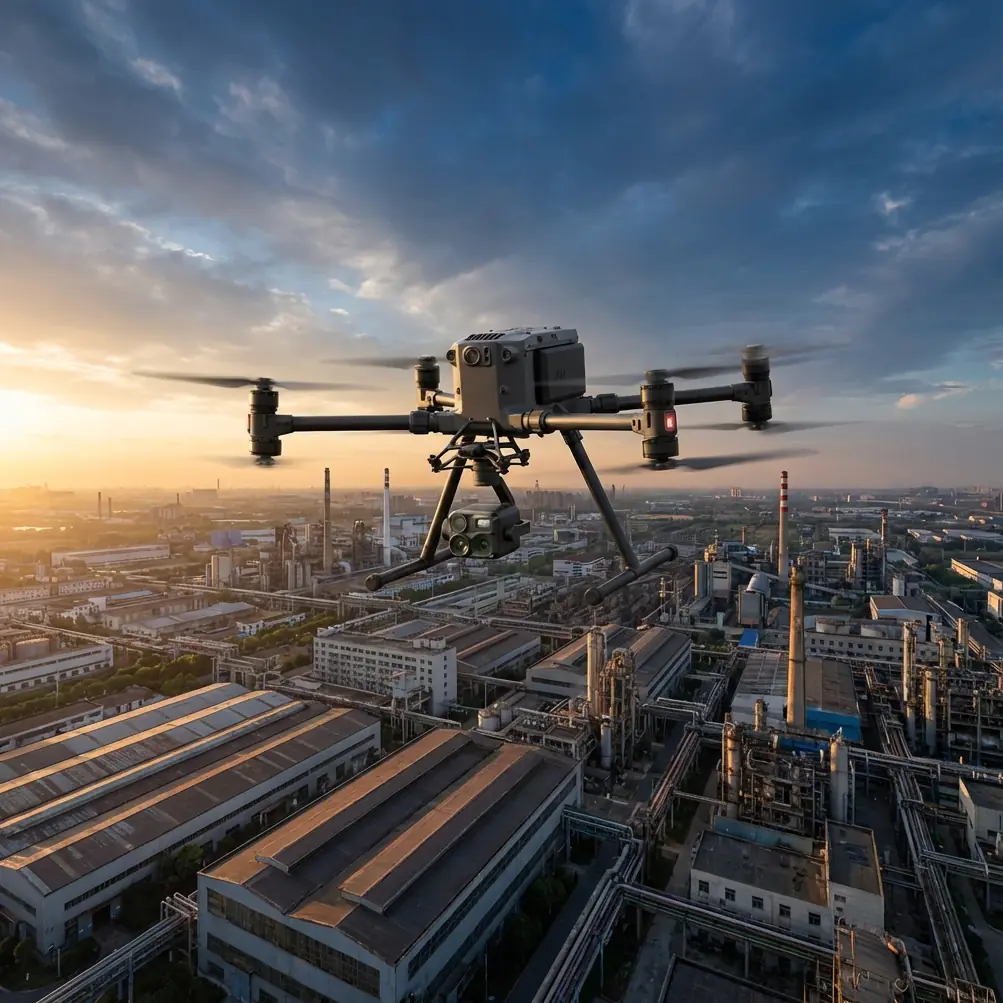
Matrice 4T for Remote Venue Inspection: Flight Altitude, Thermal Workflow, and Practical Setup
META: A practical tutorial for using the Matrice 4T to inspect remote venues, with altitude guidance, thermal workflow tips, transmission and battery planning, and mapping best practices.
By Dr. Lisa Wang
Remote venue inspection sounds simple until the site is large, wind exposure changes by the minute, and there is no easy place to relaunch if you miss a detail. Stadium outskirts, event grounds, mountain lodges, coastal amphitheaters, rural resorts, and temporary outdoor venues all create the same operational problem: you need broad situational awareness first, then close verification of defects, hazards, or heat anomalies, without wasting flight time.
That is where the Matrice 4T becomes especially useful. Not because it is just “a drone with thermal,” but because the platform supports a two-layer inspection method that fits remote work: cover the whole venue efficiently, then zoom in on the handful of areas that actually need attention. If you approach it that way, altitude becomes the most important planning variable.
This tutorial focuses on how to inspect remote venues with the Matrice 4T, with special attention to optimal flight altitude, thermal signature interpretation, transmission reliability, mapping support, and battery strategy.
Start with the real objective, not the aircraft
When people inspect a remote venue, they often think in terms of structures: roof, access road, power units, fencing, parking, lighting towers, drainage, HVAC enclosures, temporary seating. That makes sense. But from an aerial operations standpoint, the better way to think is in layers of risk:
- Areas where a failure could disrupt occupancy or operations
- Areas that are difficult to access on foot
- Areas where heat, moisture, or loading patterns reveal hidden issues
- Areas where terrain or distance make repeat inspection expensive
The Matrice 4T is best used when you divide the mission into three passes:
- High-level reconnaissance
- Mid-altitude thermal and visual confirmation
- Low-altitude detail capture only where needed
That order matters. It keeps the operation disciplined and prevents overflying every corner at low altitude, which is the slowest and least efficient method for a remote venue.
The best flight altitude is usually a range, not a single number
For this scenario, the most effective starting altitude is usually 60 to 90 meters above ground level, with adjustments based on terrain variation, structure height, and the size of the venue footprint.
Why this range works:
- At around 60 meters, you can usually detect meaningful layout issues, vehicle access obstructions, surface water patterns, and thermal irregularities on larger assets without giving up too much detail.
- At 80 to 90 meters, you gain stronger overall site context, which is valuable when the venue includes roads, outer fencing, service yards, overflow parking, utility corridors, or uneven terrain.
Operationally, that altitude range gives you a strong first-pass balance between area coverage and actionable image interpretation. Go too high, and thermal signatures begin to lose practical meaning for smaller targets. Go too low too early, and you spend battery life gathering close-up imagery before you even know where the real problem areas are.
A useful field rule is this:
- 60 to 70 meters for mixed structural inspection where roofs, utility pads, portable facilities, or perimeter assets matter most
- 80 to 90 meters for broad venue orientation, terrain review, drainage flow, crowd-route planning zones, and remote access infrastructure
- 30 to 50 meters only after the first pass identifies a specific concern that needs confirmation
That final low-altitude pass is where the Matrice 4T stops being a survey tool and becomes a verification instrument.
Why thermal changes the altitude decision
Thermal work is not just visual inspection in a different color palette. It behaves differently. A thermal signature can flatten or blend into the background when flown too high, especially in complex outdoor scenes where roofing materials, concrete, metal railings, vegetation, and shaded ground all radiate differently.
For remote venue inspection, thermal is particularly strong for:
- Identifying overheating electrical points near service buildings
- Detecting moisture-retention zones on roofs or surfaces
- Finding HVAC imbalance or venting anomalies
- Spotting generator, inverter, or equipment hotspots
- Revealing occupancy-related heat patterns in enclosed service areas
The Matrice 4T’s thermal capability matters most when you use altitude to preserve contrast. If your target is a broad roof membrane, 60 to 80 meters may still give a useful read. If your target is a compact electrical cabinet or isolated equipment cluster, descend once the first pass identifies the zone.
This is the operational significance of thermal signature management: the drone does not “find problems” automatically. You are really managing scene contrast, target size, and environmental interference. Altitude controls all three.
Early morning often gives cleaner results than midday, especially if you are trying to distinguish rooftop moisture, electrical hotspots, or uneven thermal loading. After strong sun exposure, surfaces can radiate so aggressively that the meaningful anomalies become harder to separate from background heating.
Use one reconnaissance pass to build your whole mission
At remote venues, distance punishes improvisation. If your launch area is far from the far side of the property, each unnecessary revisit costs time and battery margin. Start with a single reconnaissance orbit or grid at the higher end of your chosen range, usually near 80 meters, and answer these questions first:
- Where are the structures with the highest consequence of failure?
- Which surfaces show suspicious heat or moisture patterns?
- Which access roads or service paths are compromised?
- Where does terrain create line-of-sight challenges for transmission?
- Which sections would be risky or time-consuming to inspect manually?
This is where O3 transmission becomes operationally significant. On a remote venue, signal robustness is not just about convenience. It affects whether you can maintain a stable live view when terrain, trees, buildings, or utility structures interfere with line of sight. A stable transmission link allows you to make inspection decisions in real time rather than discovering after landing that one critical area was not captured cleanly.
That matters even more if your workflow touches future BVLOS planning or waiver-supported operations in civilian industrial contexts. Even when flying within visual constraints, a venue with ridgelines, service structures, or long perimeter runs can create practical communication challenges. Strong transmission performance reduces ambiguity during those long lateral inspection legs.
Security matters when venue data is sensitive
A remote venue inspection may involve more than maintenance. You could be documenting private infrastructure layouts, temporary event installations, utility positions, roof access points, and internal service zones. That information may not be public, and operators increasingly need to protect image files and transmission pathways.
This is why AES-256 is not a throwaway specification. Its significance is straightforward: if you are inspecting a private resort, remote performance venue, utility-linked event site, or high-profile commercial property, secure transmission and data handling become part of operational professionalism. The value is not abstract cybersecurity jargon. It is about controlling who can intercept or access sensitive inspection data.
For property managers, engineering teams, and third-party consultants, that can be a deciding factor when choosing whether to use drone-based inspection for a remote site.
Hot-swap batteries are not just a convenience feature
Remote venue work often includes broad grounds plus specific defect verification. That combination creates a hidden time trap. The first flight identifies issues, and the second or third flight confirms them from better angles or lower altitudes. If your aircraft requires a lengthy turnaround, the workflow breaks down fast.
This is where hot-swap batteries carry real field value. They reduce downtime between flights, which is especially useful when:
- Thermal conditions are changing quickly after sunrise
- Wind is increasing during the inspection window
- You need to complete a roof and perimeter sequence before site activity begins
- Your launch point is inconvenient and relocating would waste time
In practical terms, hot-swap capability helps preserve mission continuity. The operator can hold the site context in mind and relaunch while the inspection logic is still fresh, rather than restarting the whole interpretation process after a long pause.
For remote venues, that can mean the difference between a tight, coherent inspection and a fragmented one.
When to add photogrammetry to a thermal inspection
Not every remote venue needs a full mapping deliverable, but many benefit from one. If the site includes drainage issues, grading problems, repeated setup logistics, temporary infrastructure placement, or expansion planning, photogrammetry becomes more than a nice add-on.
A practical method is to separate mission goals:
- Use the thermal payload to detect heat-related or moisture-related anomalies
- Use a visual mapping run for orthomosaic or site-model generation
- Tie the map to GCP checkpoints if spatial accuracy matters for engineering or facilities planning
The operational significance of GCP is simple: if your client wants repeatable measurements, drainage comparisons, equipment placement validation, or a reliable before-and-after record, ground control makes the map more trustworthy. Without it, the imagery may still be useful, but less defensible for technical planning.
For a venue in remote terrain, that can help answer questions such as:
- Has runoff begun to undermine access roads?
- Are temporary structures shifting in relation to planned layout lines?
- Is the parking overflow area grading as expected?
- Have service corridors changed after weather events?
Thermal tells you where conditions look wrong. Photogrammetry helps explain how the site is physically changing.
A practical altitude workflow for remote venue inspection
Here is a field-ready sequence that works well with the Matrice 4T.
Pass 1: Site overview
Fly at 80 to 90 meters AGL if terrain and local operating conditions allow it.
Goal:
- Understand venue layout
- Identify priority structures
- Note access issues
- Mark areas for thermal review and close inspection
Use this pass to build your route for the rest of the mission. Do not chase details yet.
Pass 2: Thermal screening
Drop to 60 to 70 meters AGL over the most important assets.
Goal:
- Compare roof zones
- Check utility clusters
- Inspect service buildings
- Look for heat concentration or moisture-retention patterns
If a target is small, descend further only after you have isolated it.
Pass 3: Detail verification
Fly 30 to 50 meters AGL over selected problem areas.
Goal:
- Confirm thermal findings visually
- Capture close-angle imagery
- Document exact defect location
- Support maintenance handoff
This pass should be short. If it becomes your longest flight, the first two passes were not planned tightly enough.
Common mistakes at remote venues
The first is flying too low from the start. Operators do this because low-altitude imagery looks impressive. But remote venue inspection is not about cinematic detail. It is about extracting useful decisions from limited flight time.
The second is using thermal in the hottest part of the day and then overinterpreting noisy images. A warm surface is not automatically a fault. Context matters.
The third is treating transmission, data security, and battery turnover as secondary details. On paper, those sound like support features. In the field, they directly shape whether the inspection is efficient, secure, and repeatable.
The fourth is trying to combine every objective into one flight. Inspection, mapping, thermal review, and documentation each have their own ideal speed, overlap, angle, and altitude. Blend them intelligently, but do not force a single flight profile to do everything badly.
A note on remote communication and planning
Venue inspections in isolated areas often involve coordination with facilities managers, event planners, contractors, or maintenance teams who are not on site together. If you need to compare mission setup options or inspection workflow before deployment, I usually recommend settling launch position, altitude bands, and deliverable format in advance. For quick field coordination, you can message our flight planning desk on WhatsApp.
What makes the Matrice 4T well suited to this exact job
For remote venue inspection, the value of the Matrice 4T is not any single feature by itself. It is the way the platform supports a disciplined workflow:
- Thermal signature screening to narrow the search
- Reliable O3 transmission for long, complex site layouts
- AES-256 support where inspection data needs protection
- Hot-swap batteries that keep the mission moving
- Mapping compatibility for photogrammetry and GCP-based documentation
Those details matter because remote venues punish inefficiency. Every extra pass, weak signal moment, or delayed relaunch multiplies the difficulty of the job.
If you want one practical takeaway, use this: begin high enough to understand the venue, then descend only when the data tells you to. For most remote venue inspections with the Matrice 4T, that means starting around 60 to 90 meters AGL, then refining from there based on target size and thermal contrast.
That is how you get useful results without turning a straightforward inspection into a long day of avoidable rework.
Ready for your own Matrice 4T? Contact our team for expert consultation.