
Matrice 4T in Mountain Venue Inspections
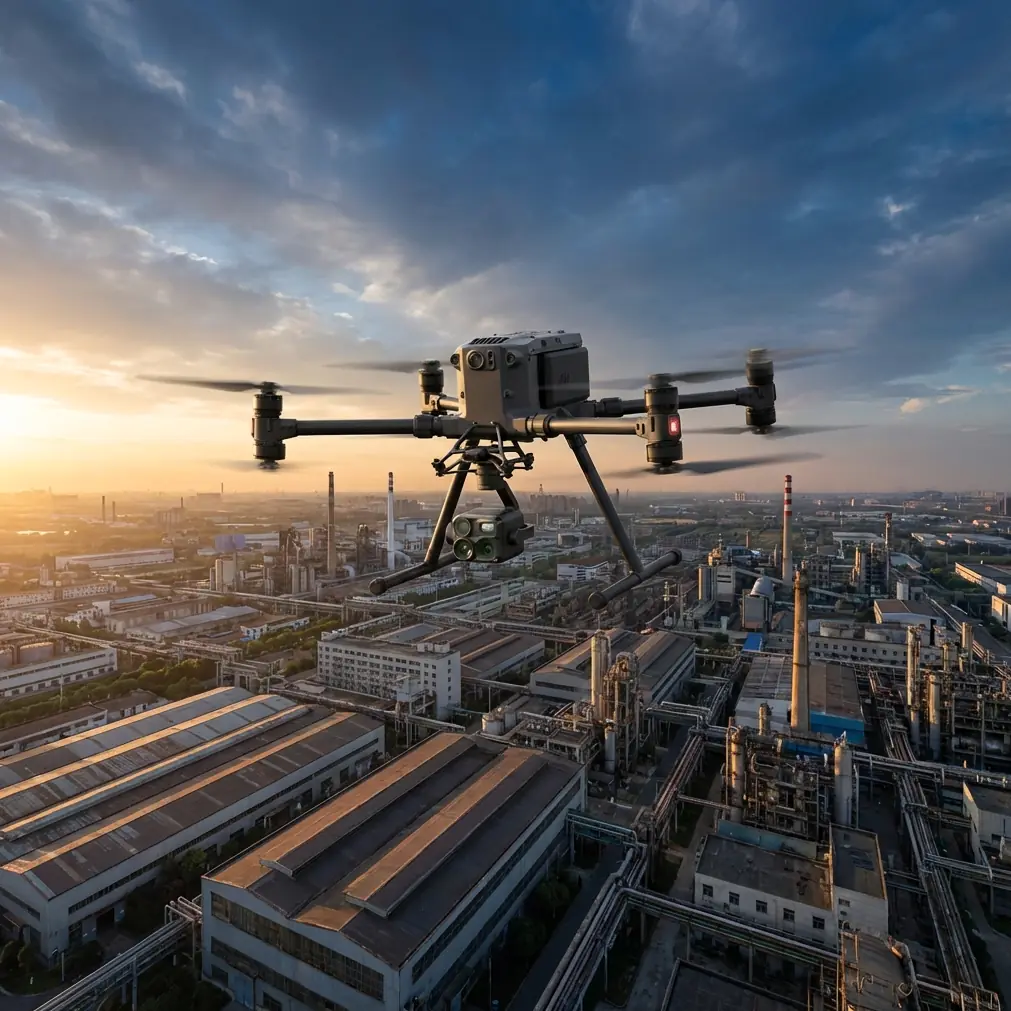
Matrice 4T in Mountain Venue Inspections: A Field Report on Range, Reliability, and What Small Engineering Details Change in the Air
META: A field-based Matrice 4T article for mountain venue inspections, covering antenna positioning, transmission stability, thermal workflow, cable resistance, and tolerance-driven payload reliability.
I spent the last season reviewing how the Matrice 4T fits mountain venue inspection work, and one lesson kept repeating itself: the aircraft’s headline features matter, but the outcome in the field is often decided by quieter engineering details.
That is especially true in mountain environments. A venue that looks straightforward on a desktop map becomes a different problem once you add ridgelines, sharp elevation changes, reflective roofs, damp morning air, and the awkward launch zones that usually come with remote sites. The Matrice 4T is well suited to this kind of inspection because it combines visible imaging, thermal signature analysis, stable transmission, and efficient deployment in one platform. But the difference between a clean survey and a half-finished sortie is rarely just the camera. It is how the airframe, signal path, power system, and payload installation hold up when the terrain starts working against you.
This report is written around that reality.
Why mountain venue inspections punish weak workflow
A mountain venue is rarely a single structure. It is a spread of roofs, service roads, utility boxes, retaining walls, cable runs, parking areas, temporary event infrastructure, drainage paths, and access corridors. Some are sunlit. Others stay in shadow until midday. Heat patterns move quickly. Wind funnels through saddles and openings. Visual inspection alone misses too much, but thermal inspection without disciplined flight planning can be just as deceptive.
With the Matrice 4T, the useful approach is not to think in terms of “one inspection flight.” Think in layers.
First, establish a broad visual and thermal pass to identify anomalies: warm electrical junctions, uneven roof heating, blocked drainage signatures after rain, delaminating surfaces, or utility cabinets showing thermal imbalance. Then run closer confirmation passes where the geometry supports safe standoff and a consistent viewing angle. If the site also needs updated mapping, a separate photogrammetry mission should be flown with proper overlap and, where accuracy matters, tied to GCPs rather than relying on imagery alone.
That sounds obvious. In practice, mountain venues pressure crews into combining too many goals into one sortie. The Matrice 4T can handle multi-role work, but the operator still has to resist the urge to improvise everything at once.
Transmission is not just a spec sheet issue
People love talking about O3 transmission as if it ends the conversation. In mountains, it starts the conversation.
The platform’s transmission capability is genuinely valuable because venue inspection often means the aircraft passes behind partial terrain, steel-framed structures, tree lines, or grandstand elements. But signal performance in these environments is shaped heavily by pilot position and antenna orientation. I have seen crews blame interference when the real problem was body shielding and poor controller alignment.
Here is the practical rule I give teams: treat the controller antennas as a directional tool, not decoration. Do not point the tips directly at the aircraft. Present the broad face of the antennas toward the aircraft’s expected flight path. If you are working a venue on a slope, reposition yourself before the drone drops behind terrain. A five-meter move uphill can matter more than any menu setting.
The other habit worth building is to launch from a location chosen for radio geometry, not convenience. Operators often stand near vehicles, metal railings, generator trailers, or building corners because that is where gear is staged. That is usually the wrong place. In mountains, your best control point is often a little exposed, slightly inconvenient, and much better for line of sight.
If your team wants a quick checklist for field setup and antenna positioning before a mountain inspection, I usually point them to this direct planning channel: https://wa.me/85255379740
Why a materials table from aircraft design still matters to a drone operator
One of the source references behind this article is not a drone brochure or a mission guide. It is an aircraft design manual page covering wires, cables, and non-metallic materials. That may sound remote from the Matrice 4T. It is not.
The extracted table lists conductor structures and DC resistance at 20°C, including values such as 19.3 Ω/km for a 1 mm² conductor, 9.50 Ω/km for 2 mm², and 6.53 Ω/km for 3 mm². It also shows how conductor construction changes with size—for example, 19 strands of 0.26 mm for a 1 mm² class and 37 strands of 0.32 mm for a roughly 3 mm² class.
Why should a mountain venue inspection crew care?
Because every add-on component around an enterprise drone system depends on current delivery and signal integrity somewhere in the chain. Ground charging setups, mobile power stations, relay cabling in field kits, payload integration harnesses, and maintenance repairs all benefit from understanding a simple truth: smaller conductors bring higher resistance, and higher resistance means more voltage drop and more heat under load.
In normal office conditions, that may stay invisible. In the mountains, teams often run long cable lengths from portable power systems, work in colder mornings and warmer afternoons, and rely on repeated charge-discharge cycles to keep aircraft rotating. If your field charging arrangement or accessory wiring is undersized, you do not just lose efficiency. You create instability exactly when turnaround speed matters most.
The conductor construction detail matters too. A multi-strand wire such as 19/0.26 or 37/0.32 is not trivia. Strand count and strand diameter affect flexibility, fatigue behavior, and suitability for repeated handling. Mountain inspection kits are unpacked on gravel, repacked in vehicles, dragged up access trails, and exposed to repeated bending. Cable failures in these conditions rarely announce themselves dramatically at first. They begin as intermittent voltage issues, fragile insulation points, or connectors that only misbehave when the line is flexed.
For Matrice 4T crews, the operational significance is straightforward: if your support equipment is professionally built but your field cabling is improvised, the whole mission inherits that weakness.
Thermal signature work only pays off when you respect timing
The “T” in Matrice 4T earns its keep in venue inspection because thermal anomalies reveal what visible cameras cannot. But thermal data in mountain environments is highly sensitive to timing.
A retaining wall warmed unevenly by the sun can mimic a subsurface moisture issue. A roof section transitioning from shadow to sunlight can create false contrast. Service enclosures may appear hotter simply because one side faces reflected radiation from nearby stone or metal surfaces. Morning flights often produce the clearest thermal separation for electrical and moisture-related inspection, but there is no universal schedule. Terrain orientation changes everything.
The best practice is to divide findings into three categories:
- Thermal-only observations that need re-checking under a different environmental condition
- Thermal-plus-visual confirmations where the visible payload supports the anomaly
- Persistent repeat anomalies that appear across multiple passes or time windows
This is where the Matrice 4T is especially practical. You can move quickly between broad-area thermal scanning and visual verification without changing platforms. In a mountain venue, that saves more than time. It reduces the chance that a weather shift or rising wind kills your second chance.
Tolerances sound like factory talk until a payload starts misbehaving
The second reference source comes from an aircraft standards volume on tolerances, specifically a table of basic deviations for holes in micrometers. The raw page is dense, but one point stands out: manufacturing limits are not abstract theory. They define fit, alignment, and repeatability.
On the page, values range into the hundreds of micrometers depending on size band and tolerance class, including examples like +320 µm, +180 µm, and +130 µm in one range. Those numbers are not directly telling you how to fly a Matrice 4T, but they do illuminate a critical operational issue: precise systems only stay precise when mating parts, mounts, and fasteners are controlled within fit limits.
In mountain venue work, crews often attach and remove accessories, transport aircraft over rough access roads, and subject mounting interfaces to vibration and temperature swings. When a bracket, gimbal guard, antenna fixture, RTK accessory mount, or third-party support hardware is built with sloppy tolerances, you may not notice it during setup. You notice it later as image blur, inconsistent horizon level, connector stress, or a creeping alignment issue that makes repeat passes harder.
For photogrammetry, that matters immediately. If you are collecting mapping data around a venue upgrade, roof survey, or slope stabilization project, repeatable geometry is the whole point. GCPs can improve global accuracy, but they cannot fix mechanical inconsistency inside the capture system. Tolerance discipline upstream supports data quality downstream.
That is the operational bridge between a standards table and a field drone: fit quality affects mission confidence.
Hot-swap batteries are not just about speed
One of the great practical advantages in enterprise inspection work is battery management. Hot-swap batteries reduce downtime, but crews tend to see that only as a convenience feature. In mountain venues, it is a continuity feature.
You may have a narrow weather window, a site manager waiting for access reopening, or a thermal condition that will change within minutes. Being able to land, exchange power quickly, and relaunch without rebuilding the mission flow preserves consistency across data sets.
That said, hot-swap discipline only works when the team’s ground process is clean. Label batteries by cycle history and field role. Do not mix “almost full” with “verified ready” packs in the same case. Rotate charging assets with the same care you apply to flight planning. The Matrice 4T can support a fast pace, but mountain inspection punishes confusion because every unnecessary delay compounds terrain, weather, and access constraints.
AES-256 and data handling matter more on infrastructure jobs than many admit
Venue inspections often involve sensitive layouts: utility rooms, roof access details, communications equipment, service corridors, and operational staging areas. While this is civilian infrastructure work, it still requires disciplined handling of flight records, imagery, and transmission security.
That is why secure transmission and storage practices, including AES-256 class protections in the wider workflow, are not paperwork features. They help keep inspection data controlled when teams are operating from temporary field locations, using mobile devices, or passing files between pilots, engineers, and asset owners. The Matrice 4T is often deployed by organizations that need exactly that kind of operational discipline.
BVLOS talk should stay grounded in actual site conditions
Mountain sites tempt people to talk loosely about BVLOS because line of sight disappears so easily behind terrain. But from an operational standpoint, the more useful discussion is not ambition. It is geometry and compliance.
Even where extended operations are part of a program, mountain venue inspections work best when routes are designed around predictable visibility, clear communications, and recoverable contingencies. The Matrice 4T gives crews capability, but terrain should still dictate mission architecture. You do not win by pushing blind behind a ridge. You win by selecting the right launch point, splitting the venue into sectors, and preserving signal quality throughout.
My preferred field method for mountain venues with the Matrice 4T
When I brief a crew for this kind of job, I use a simple sequence:
- Walk the terrain first, looking for radio-friendly pilot positions
- Choose launch points based on line-of-sight preservation, not parking convenience
- Set antenna faces toward the aircraft corridor, not antenna tips at the aircraft
- Run an initial visual-thermal reconnaissance lap
- Mark anomalies before committing to close verification passes
- Separate thermal inspection from photogrammetry collection when accuracy matters
- Use GCPs if the map output will support engineering or construction decisions
- Keep battery rotation and cable management as controlled as flight operations
- Inspect mounts, connectors, and transport-sensitive parts with tolerance awareness after every rough-access move
That last point is easy to skip. It should not be skipped. The two source references behind this piece—one on conductor resistance and wire construction, one on tolerance deviation—both point to the same broader truth. Drone performance in the field is built on engineering discipline that most people never see.
And that, really, is the Matrice 4T story in mountain venue inspection. Not just that it can fly, see, and transmit well. But that it rewards crews who understand the hidden variables: wire losses, connector fit, antenna orientation, thermal timing, and terrain-shaped radio geometry. The platform is capable. The mission outcome depends on whether the operator is equally precise.
Ready for your own Matrice 4T? Contact our team for expert consultation.