
Remote Venue Inspection With Matrice 4T: A Field Case Study
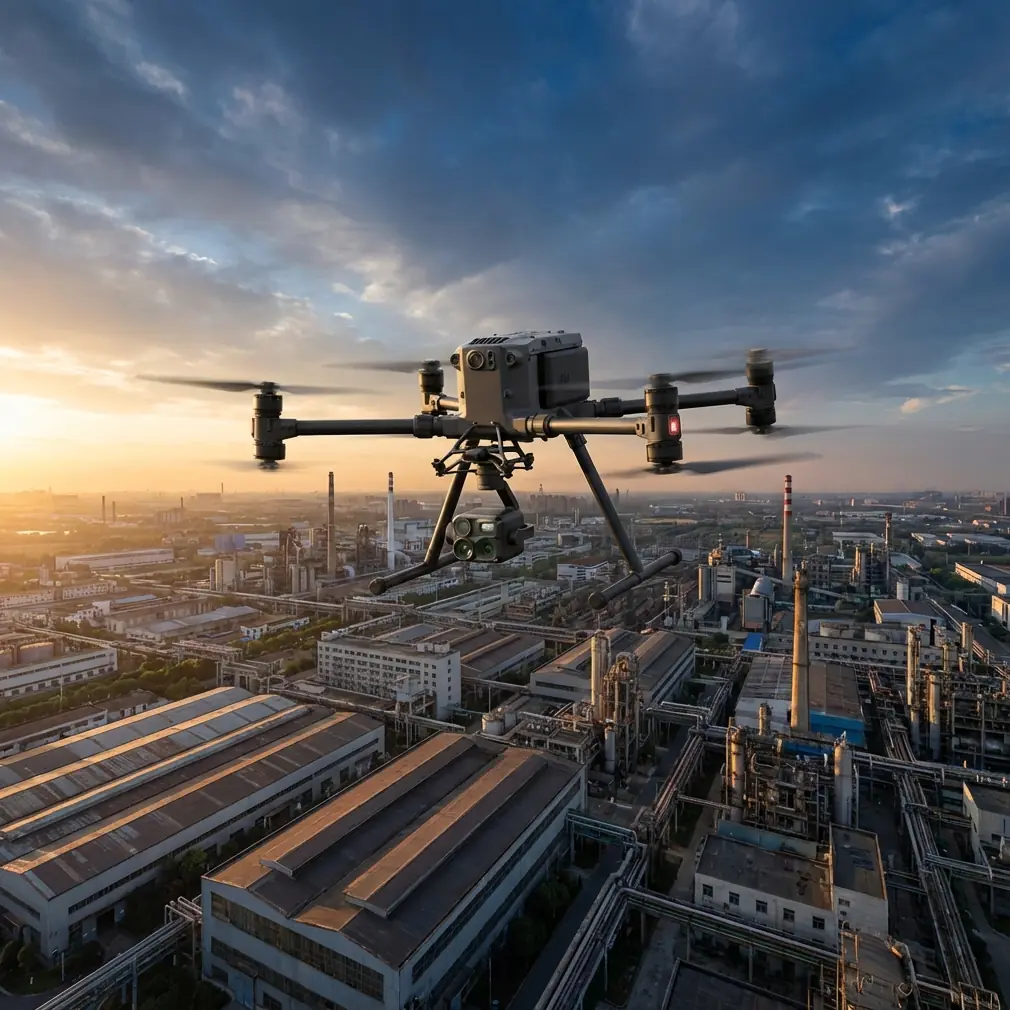
Remote Venue Inspection With Matrice 4T: A Field Case Study in Fatigue-Aware Flying and Mid-Flight Weather Shifts
META: A real-world Matrice 4T case study on remote venue inspection, covering thermal signature work, transmission reliability, changing weather, and why load history matters for safer, smarter UAV operations.
Remote venue inspections sound simple on paper. Fly out, collect imagery, scan for heat anomalies, come home. In the field, that tidy sequence usually falls apart.
The venue in this case sat well outside the city core: mixed roofing, steel walkways, light towers, temporary service structures, and a long access road cut through uneven terrain. The mission objective was straightforward enough—build a current visual and thermal record, identify maintenance risks, and verify whether several structurally stressed sections were showing early signs of deterioration. The aircraft was the DJI Matrice 4T.
What made this operation interesting was not just the drone. It was the way the mission had to be flown once the environment started changing, and the way good inspection practice depends on something many operators ignore: load history, not just a single moment of peak stress.
That idea comes straight from classical aircraft design logic. One of the source references makes a sharp distinction between static design and fatigue design. Static thinking looks at a few points on the flight envelope. Fatigue thinking looks at the full load–time history across actual use. That matters for manned aircraft, and it matters more than most people realize for professional drone inspection. A Matrice 4T sent repeatedly into remote sites, gust fronts, stop-start climbs, hover holds, and abrupt thermal transitions is living through a sequence of loads. If you only think about whether it survived one windy pass, you miss the real maintenance picture.
The mission setup: a remote site with no room for casual planning
The venue operator wanted two outputs from a single deployment.
First, a thermal signature survey of key infrastructure. Roof membrane inconsistencies, overloaded electrical boxes, and water ingress often appear as temperature differences before they become visible defects. Second, they needed a mapping-grade visual record to support maintenance coordination across contractors. That meant blending inspection instincts with photogrammetry discipline.
Before takeoff, we divided the site into three operational layers:
- Perimeter and access corridors for broad situational awareness
- Critical assets such as rooftop plant, distribution points, and elevated mounting systems
- Repeatable mapping lanes to create consistent visual coverage for comparison with later inspections
This is where the Matrice 4T fits well. It is not just a flying camera for one-off observation. It becomes more useful when you treat it as a repeatable data collection platform. For venue work, repeatability is everything. If you cannot revisit the same geometry, similar altitude bands, and comparable sensor angles, your future comparisons become guesswork.
We also preplanned GCP placement for the mapping portion, even though many teams skip that step on mixed inspection jobs. Ground control points are extra work, but on a large remote venue they sharpen accountability. If a client is going to compare drainage changes, pavement settlement, or repeated roof deformation patterns over time, stronger spatial consistency pays off fast.
Why fatigue thinking belongs in drone inspection
The most useful detail in the structural reference is not exotic at all. It says fatigue is tied to the entire load–time history, including the load spectrum, loading sequence, and duration. It also notes that fatigue failure begins from an undamaged state and ends when a crack becomes detectable, often around 0.5 to 1.5 mm for an engineering-visible crack.
That number is from conventional aircraft structure practice, not a Matrice 4T airframe spec. Still, the operating lesson is highly relevant. Drone teams often wait for obvious symptoms: looseness, vibration, degraded gimbal behavior, arm play, landing gear issues, or battery latch wear. By then, the problem has already matured. Remote venue inspection, especially with repeated hover and reposition cycles around structures, creates a highly variable loading pattern. Long hover segments, then acceleration, then braking into a side-facing visual check, then vertical climb to clear a mast—those transitions matter.
On this job, that fatigue mindset changed how we flew.
Instead of hammering one side of the aircraft with repeated identical crosswind holds, we rotated inspection directions where practical. We avoided unnecessary aggressive corrections near structural edges. We reduced stop-go maneuvering by cleaning up waypoint logic before launch rather than improvising every segment manually. Small decisions like that reduce cumulative stress on the platform and improve data consistency at the same time.
There is another detail from the source that deserves attention: the discussion of stress concentration around fastener holes, where one hole can become the fatigue-danger location and crack initiation often starts at specific edge points aligned with loading. Again, this is classic aircraft structural reasoning, but the operational significance for drone professionals is obvious. Real fatigue problems do not emerge “everywhere equally.” They appear first where stress concentrates—hinges, latches, mounts, connection points, folding interfaces, gimbal dampers, payload attachments. For a Matrice 4T operator inspecting venues in remote conditions, preflight should be less about generic checklist ritual and more about identifying likely concentration zones after recent missions.
Mid-flight, the weather turned
The forecast had already hinted at unstable conditions, but the shift arrived faster than expected. About midway through the second sector, the light flattened, surface contrast dropped, and the wind began moving across the venue from an angle that mattered more than the raw speed. On remote sites, terrain and built structures can create uneven flow. A drone may feel steady over one roofline and then encounter a different air mass near a grandstand edge, tower, or service block.
This is where people either trust the platform intelligently or start chasing the aircraft with bad inputs.
We held the mission because the Matrice 4T was still maintaining stable positioning and clean transmission. O3 transmission matters in this kind of work not because it sounds impressive on a spec sheet, but because remote venue inspection often forces the aircraft to move behind partial obstructions, around steel-heavy sections, and across broad open areas where signal behavior can change quickly. Reliable link performance buys time for better decisions. It reduces the temptation to rush a pass just because the pilot is uncertain about feed stability.
The cloud shift also changed the thermal picture. That is one of the underappreciated truths of thermal inspection: weather does not just make flying harder; it can alter the interpretation of what you are seeing. A roof section that looked like a meaningful hotspot under one set of surface heating conditions may flatten out once cloud cover changes. So we adjusted the mission logic. Instead of forcing all thermal work into the original sequence, we captured the most sensitive comparison targets first, marked several secondary anomalies for possible revisit, and finished the broader visual mapping passes while the ambient conditions stabilized.
That was the right call. One electrical enclosure showed a repeatable thermal signature even after the environmental shift, which made it a much stronger maintenance lead than a few early roof contrasts that faded once solar loading changed.
From steady-state assumptions to time-domain decisions
The second source reference, centered on unsteady aerodynamics, includes a practical insight that translates surprisingly well to professional drone operations: in real calculation, you can start from a steady state at t = 0 and then solve the changing flow field one moment at a time. In other words, you do not understand a changing system by pretending every instant is isolated. You model the transition.
That is exactly how an experienced Matrice 4T crew should think during a weather-affected inspection.
We launched under one stable assumption set—wind direction, surface contrast, flight path efficiency, thermal timing. Once conditions shifted, the mission was no longer a simple continuation of the original plan. It became a time-sequenced operational problem. We had to interpret what changed, decide which data retained integrity, and adapt pass order to preserve useful results.
This is also why pilots who rely only on broad “max wind tolerance” thinking often underperform in inspection work. The challenge is not just whether the aircraft can remain airborne. The challenge is whether the data quality remains valid while the flow environment, sensor conditions, and aircraft response are evolving.
The reference also notes that control systems are often represented with transfer functions, with numerator and denominator expressed as polynomials in the Laplace variable. That may sound far removed from a remote venue inspection, but the practical significance is simple: stable sensing and control are not accidents. They are products of dynamic system behavior. When a Matrice 4T holds a line, damps a disturbance, or lets the pilot maintain a clean thermal and visual workflow during changing conditions, that stability is operationally valuable because it preserves inspection credibility.
Data handling matters as much as the flight
Once the weather shifted, we tightened our data handling discipline.
Thermal clips and stills were tagged according to environmental phase: pre-shift, transition, and post-shift. Visual mapping segments were separated from anomaly-confirmation passes. This sounds administrative, but it prevents one of the most common client-side failures in drone inspection—mixing equally sharp-looking files that were captured under meaningfully different conditions.
For remote venue work, secure handling is not optional either. Many sites involve infrastructure layouts, utility positions, roof access routes, and contractor-sensitive maintenance records. AES-256 matters because it supports a more defensible chain for sensitive inspection data. No one wants to explain later why critical facility imagery was managed casually.
Battery planning also became more than a runtime calculation. With conditions shifting, hot-swap battery capability is operationally significant because it lets the crew preserve momentum without turning the mission into a rushed endurance test. When weather windows narrow, fast turnaround helps you keep continuity between data sets. The aircraft can get back up while the site conditions are still comparable enough for meaningful interpretation.
What the inspection actually found
By the end of the operation, the deliverables were stronger because we did not treat the mission as a rigid script.
The thermal survey isolated one electrical concern that remained consistent across changing ambient conditions. Several roof areas that initially looked suspicious were downgraded once cloud cover altered the heat pattern. Visual mapping with GCP support produced a cleaner reference layer for future comparison of access routes, drainage zones, and perimeter wear. The combined output gave the venue team not just “images from a drone,” but a ranked maintenance picture with traceable context.
Just as useful, the flight generated aircraft-side lessons. The repeated side-load exposures around a particular structure type were flagged for future route redesign. Post-mission inspection focused on likely stress concentration areas rather than a generic once-over. That is the fatigue-design mindset in practical form: learn from the mission’s load sequence, not just the success of the landing.
The real takeaway for Matrice 4T operators
The best Matrice 4T inspections do not come from throwing advanced sensors at a site and hoping the footage sorts itself out later. They come from treating the aircraft like a professional system operating in time, under changing loads, with data integrity riding on flight discipline.
Two ideas from traditional aircraft engineering sharpen that approach.
First, fatigue is governed by the whole service history, not a snapshot. The source reference’s emphasis on load spectrum, loading sequence, and duration is a reminder that drone reliability is cumulative. Repeated remote inspections in gusty, stop-start conditions deserve maintenance logic that reflects that reality.
Second, changing aerodynamic conditions should be understood as a sequence, not a series of disconnected moments. The reference discussion of starting from steady state and stepping forward in time mirrors the way real inspection teams must adapt when weather shifts mid-flight. Good crews do not just keep flying. They reinterpret the mission.
That is what happened here. The Matrice 4T handled the venue well, but the value did not come from the aircraft alone. It came from reading the site, respecting the weather, protecting data quality, and flying with an engineer’s memory instead of a hobbyist’s optimism.
If you are building a remote venue inspection workflow and want to compare mission design choices, thermal capture timing, or secure data handling, you can start the conversation here: message our field team directly.
Ready for your own Matrice 4T? Contact our team for expert consultation.