
How to Inspect Coastal Wildlife with the Matrice 4T
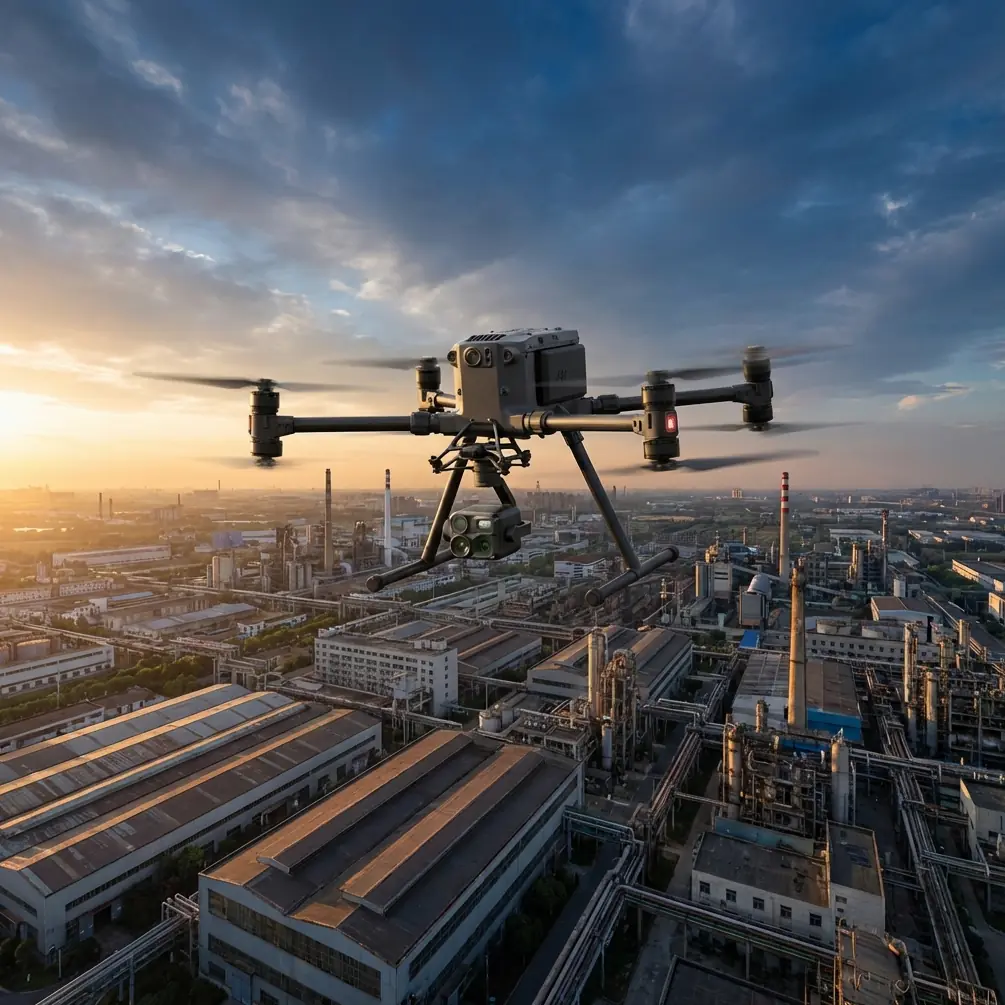
How to Inspect Coastal Wildlife with the Matrice 4T: Flight Height, Thermal Discipline, and Data You Can Trust
META: A practical Matrice 4T tutorial for coastal wildlife inspection, covering optimal flight altitude, thermal signature capture, transmission reliability, battery workflow, and mapping-grade field methods.
Coastal wildlife work punishes vague drone habits.
Salt haze softens contrast. Wind shear changes fast over dunes, cliffs, and tidal flats. Birds lift unexpectedly. Seals disappear into rock textures that look obvious to the eye but collapse into visual noise once you are a few dozen meters too high. If you are using the Matrice 4T in this environment, the aircraft is only part of the job. The real task is deciding how to fly so the data stays biologically useful without pushing the animals, the tide window, or the crew.
I approach this as a field-method question, not a spec-sheet exercise. The Matrice 4T makes sense in coastal wildlife inspection because it combines thermal imaging, visible zoom capability, stable long-range connectivity through O3 transmission, secure data handling with AES-256, and hot-swap battery workflow in one platform. Those details matter operationally. They change how long you can stay on station, how far you can work from a safe launch point, and whether the imagery can support repeatable counts or habitat records instead of one-off observations.
For this scenario, the single most useful planning decision is flight altitude.
Start with altitude, not the camera menu
When people first inspect wildlife with a thermal-capable aircraft, they often fly higher than they should. It feels safer and less intrusive. Sometimes it is less effective.
In coastal work, the optimal altitude for a Matrice 4T wildlife pass is often lower than many teams expect, but still high enough to avoid altering animal behavior. A practical starting band is around 50 to 80 meters above ground level for broad scanning of shoreline sections, mudflats, and dune edges, then adjusted upward or downward based on species sensitivity, wind, terrain relief, and the size of the thermal targets. That range is not magic. It is a field-tested compromise between disturbance control and target clarity.
Here is why this matters.
At very high altitude, small-bodied wildlife begins to lose thermal separation from the environment. Wet sand, sun-warmed rocks, tidal debris, and shallow pools can create confusing thermal patterns. A resting bird colony can flatten into an indistinct cluster. Young animals tucked near vegetation or drift lines may never stand out cleanly enough for reliable counting. You gain area coverage, but you lose confidence.
Drop too low, though, and the aircraft becomes part of the environment you are trying not to disturb. Rotor presence is not just a noise issue. In exposed coastal habitats, animals often react to overhead movement sooner than inland operators expect because there is less visual clutter and fewer masking sounds. The right altitude is the one that preserves a readable thermal signature while keeping behavior stable.
My recommendation for first-pass planning with the Matrice 4T is simple:
- Use 60 meters AGL as a default reconnaissance height for mixed coastal terrain.
- Move closer to 40 to 50 meters only when the species and site conditions allow it and you need stronger thermal separation.
- Climb toward 80 meters when the colony is especially sensitive, the ground is open, or you need a wider contextual pass before refining the search area.
That altitude discipline is more valuable than endlessly tweaking settings in the field. It gives you a repeatable baseline. Repeatability is what turns wildlife inspection into defensible monitoring.
Thermal works best when you respect the coast’s temperature logic
The Matrice 4T earns its place in wildlife inspection because thermal is not just for locating animals. It helps sort live targets from background clutter when visible imagery becomes deceptive.
On a coast, background temperature behavior shifts hour by hour. Dark rock can hold heat. Wet substrate often cools unevenly. Tidal retreat leaves temperature gradients that look dramatic on screen but tell you nothing biological. The operator who understands that pattern can use the Matrice 4T far more effectively than the operator who simply trusts the brightest object.
The practical move is to schedule flights when wildlife-to-background separation is strongest. Early morning is often productive because the environment is still relatively cool while animals retain a distinct thermal profile. Late-day sorties can also work, but only if sun loading has not turned the shoreline into a patchwork of false positives. Midday can be the hardest period in exposed coastal areas, especially over rock, sand, and man-made seawalls.
Operationally, that means thermal inspection on the Matrice 4T is not just about detection. It is about timing and contrast management. If you pair a smart launch window with the right altitude, the aircraft’s thermal payload becomes much more than a spotter. It becomes a survey instrument.
Use visible imaging to verify, not to lead
Many wildlife teams still default to the visible camera feed because it feels more intuitive. On the Matrice 4T, that can be backward in coastal conditions.
Thermal should often lead the search. Visible should confirm identity, posture, grouping, and habitat context. This sequence reduces unnecessary hovering and minimizes the temptation to keep descending just to “get a better look.” If the thermal layer already shows a clear target cluster, the visible payload can be used selectively to validate species distribution or nesting adjacency without turning the mission into a prolonged low-level observation.
This is especially useful along cliffs, marsh edges, and roosting zones where light angle can hide animals in shadows. Thermal reveals occupancy. Visible frames the ecological meaning.
That distinction sounds small, but it changes behavior in the field. Operators who search visually tend to chase image sharpness. Operators who search thermally tend to prioritize detection efficiency. In wildlife work, the second approach is usually kinder to the site and better for the dataset.
O3 transmission changes where you can launch safely
Coastal inspection is full of awkward launch points. You may be pinned to a car park above a bluff, a service track behind dunes, a harbor edge, or a narrow access road that is safer than the habitat itself. In those conditions, strong transmission is not a luxury.
The Matrice 4T’s O3 transmission capability matters because it supports stable situational awareness when the pilot cannot stand right next to the target zone. That can help teams choose launch sites that are safer for the crew and less disruptive to wildlife. It also reduces the pressure to reposition constantly just to maintain confidence in the live feed.
The significance is practical. Better link stability means fewer rushed decisions when wind shifts or glare interferes with your visual perspective. It also supports more orderly inspection patterns along linear shoreline routes, where maintaining orientation is often harder than it looks on a map.
If your operation involves approved BVLOS procedures under the relevant local framework, transmission reliability becomes even more meaningful. I am not suggesting BVLOS as a casual default. I am saying that for trained, compliant operators working within authorized programs, the communication backbone matters because wildlife inspections often happen in places where line-of-sight geometry is limited by terrain, access constraints, and sensitive habitat boundaries.
Hot-swap batteries protect the survey window
Coastal wildlife inspection rarely waits for you.
Tide cycles compress your useful time. Animal presence changes with feeding or roosting behavior. Weather windows close quickly. A platform with hot-swap batteries is valuable because it shortens downtime between sorties and helps preserve continuity across the exact period you planned to sample.
That is a major field advantage of the Matrice 4T. Instead of treating each landing as a long operational reset, the crew can cycle batteries and return to task faster. The payoff is not convenience for its own sake. It is consistency. If your methodology depends on surveying a defined shoreline sector during a narrow biological window, reduced turnaround can mean the difference between one complete pass and a stitched-together set of partial observations.
The best teams build their battery handling into the mission logic:
- One battery cycle for reconnaissance and target marking
- One cycle for verification passes and count refinement
- One reserve cycle in case changing weather, tidal movement, or relocation adds time
That structure works especially well when the site is remote and walking the shoreline is slower, noisier, or more disruptive than flying it.
Secure data handling is not a side issue
Wildlife inspection data can be sensitive even in civilian conservation contexts. Nest locations, breeding concentrations, and seasonal aggregation sites should not be treated casually. That is why AES-256 support deserves attention.
On the Matrice 4T, secure data handling is not just an enterprise checkbox. It matters if your workflow involves protected habitat records, contracted ecological surveys, infrastructure-adjacent monitoring, or multi-party review. Strong encryption helps reduce the risk that location-linked imagery and survey logs are exposed outside the project team.
For conservation contractors and environmental consultants, this has operational significance. It supports cleaner governance when working with landowners, environmental managers, utilities, or coastal infrastructure operators who share responsibility for habitat protection.
When photogrammetry helps, and when it does not
The Matrice 4T is often discussed through its thermal role, but wildlife inspection in coastal settings can benefit from photogrammetry too, provided you use it carefully.
If your objective includes habitat context rather than just animal detection, photogrammetric outputs can document dune erosion, nesting-surface change, vegetation encroachment, drainage patterns, or shoreline disturbance over time. In that case, using GCPs can improve spatial consistency between surveys, especially when comparing seasonal changes or linking observations to habitat management plans.
That said, photogrammetry is not always appropriate during active wildlife occupancy. Ground control placement can increase foot traffic in exactly the areas you are trying to protect. The method is strongest when used either outside sensitive periods or in adjacent habitat zones where disturbance risk is low.
This is the right way to think about the Matrice 4T in coastal work: not as a single-purpose thermal aircraft, but as a platform that can support both animal detection and habitat documentation when mission timing is chosen well.
A field workflow that actually holds up
For coastal wildlife inspection, I recommend this sequence with the Matrice 4T:
- Review tide timing, wind direction, sun angle, and known species sensitivity before launch.
- Begin with a broad thermal reconnaissance at roughly 60 meters AGL.
- Mark candidate groups or hotspots before making any lower verification pass.
- Use visible imagery only to confirm what thermal has already identified.
- Keep hover time short over occupied areas.
- If habitat mapping is part of the mission, separate that sortie from the primary wildlife pass whenever possible.
- Use consistent launch notes so the next survey can replicate altitude, timing, and route geometry.
That final point is often overlooked. Repeatability matters more than cinematic image quality. A wildlife inspection program succeeds when one flight can be compared honestly with the next.
When to adjust the “ideal” altitude
There is no single perfect height for every coastal mission, but there are clear triggers for changing your baseline.
Fly higher if:
- animals show alert posture or directional movement
- the habitat is open and targets remain thermally distinct
- wind gusts make lower-altitude precision harder
- you need a quick non-intrusive occupancy sweep
Fly lower, cautiously, if:
- targets are small and blending into complex shoreline textures
- thermal contrast is weak at your current height
- confirmation is necessary for count accuracy
- species response remains neutral and site policy allows it
The mistake is not choosing the wrong number once. The mistake is failing to connect altitude to animal behavior and data quality in real time.
Practical note for teams building a repeatable program
If you are setting up a coastal wildlife workflow around the Matrice 4T and want to compare battery planning, thermal settings, or safe launch layouts for your site, a quick field-method discussion can save wasted sorties. You can reach a specialist team here: https://wa.me/85255379740
That kind of planning is especially useful when the same aircraft is expected to handle both wildlife observation and mapping-related tasks, because those mission profiles ask for different tolerances, routes, and data outputs.
The real value of the Matrice 4T on the coast
The Matrice 4T is not valuable in coastal wildlife inspection simply because it carries thermal. Its value comes from how several features work together in the field.
Thermal helps detect animals that disappear into shoreline texture. O3 transmission supports safer launch positioning and steadier control from awkward access points. Hot-swap batteries preserve narrow survey windows. AES-256 strengthens handling of sensitive location-linked data. And when conditions permit, photogrammetry with well-managed GCP strategy adds habitat context that pure observation flights cannot provide.
Put those pieces together and the aircraft becomes more than a flying camera. It becomes a disciplined survey tool.
For most coastal wildlife teams, the smartest first adjustment is also the least glamorous: stop defaulting to very high passes. Start around 60 meters AGL, watch the thermal separation, monitor animal response, and refine from there. Get that right, and the rest of the Matrice 4T workflow begins to make much more sense.
Ready for your own Matrice 4T? Contact our team for expert consultation.