
Matrice 4T Inspecting Wildlife in Mountain Terrain
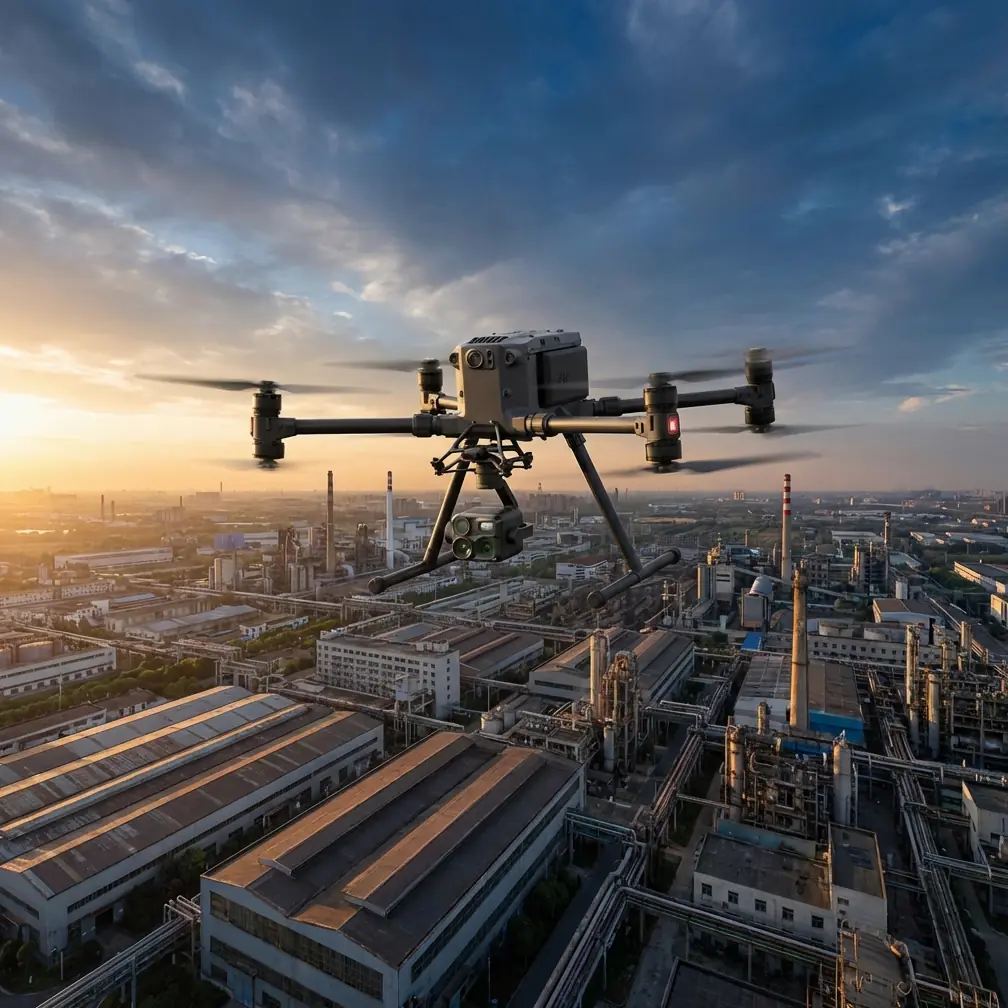
Matrice 4T Inspecting Wildlife in Mountain Terrain: Practical Field Tips That Actually Matter
META: Expert Matrice 4T wildlife inspection tips for mountain operations, covering thermal signature management, radio altitude awareness, EMI handling, antenna adjustment, image quality, and safer mission planning.
Mountain wildlife work exposes a drone in ways flatland operators rarely have to think about. A Matrice 4T can be excellent here, not because it magically solves everything, but because it gives you multiple sensing layers in one aircraft: thermal for detection, visual payloads for confirmation, mapping support for documenting habitat zones, and a transmission system that can stay useful when terrain starts breaking line of sight.
That said, mountains punish weak planning. Wind wraps around ridges. Cold affects batteries. Rock faces create odd thermal backgrounds at sunrise and sunset. And radio behavior gets messy fast when you are operating near communication towers, research stations, or metallic lookout infrastructure. If your mission is wildlife inspection rather than cinematic flying, the difference between a productive sortie and a frustrating one usually comes down to setup discipline.
I’ll walk through a field-ready method for using the Matrice 4T in mountain wildlife inspection, with special attention to thermal detection, antenna handling under electromagnetic interference, and altitude judgment near uneven ground.
Start with the real objective, not the aircraft
A wildlife inspection mission in mountains usually falls into one of three buckets:
- Detecting animals across a broad search area
- Verifying species, count, movement, or condition
- Recording location evidence for conservation, habitat management, or follow-up ground teams
Each goal changes how you should fly the Matrice 4T.
If detection is the priority, thermal signature quality matters more than pretty visible-light footage. If verification matters, you need stable hover positioning, careful zoom use, and a viewing angle that avoids false positives from sun-heated rock. If documentation matters, you need repeatability, timestamps, clear georeferencing, and often photogrammetry-friendly visible data supported by GCPs where practical and permitted.
Too many operators blend these tasks into one rushed mission. In mountain terrain, that usually reduces the quality of all three.
Build your plan around terrain-driven altitude errors
One overlooked lesson from manned aviation applies surprisingly well here: altitude information must be treated conservatively when the ground beneath the aircraft is changing quickly.
The reference material on radio altimeters states that airborne systems are designed so a displayed height should never exceed the aircraft’s actual height above ground, and that fault conditions must trigger a warning rather than optimistic readings. It also notes an indication range extending to 762 meters, with some displays covering -6 to 762 meters, and operation in the 4.2 to 4.4 GHz band. That is manned-aircraft design logic, not a direct Matrice 4T spec sheet, but the operational principle is highly relevant for mountain drone work: never let your workflow depend on a flattering altitude assumption.
Why this matters in the field:
- A drone crossing from a valley edge toward an upslope can lose terrain clearance much faster than the map view suggests.
- Wildlife observers often become target-fixated on thermal detections and forget how fast the ground is rising beneath the aircraft.
- Reflected surfaces, cliffs, and uneven forest canopy can distort your visual sense of separation.
So for the Matrice 4T, treat your displayed altitude as only one part of the picture. Cross-check it against terrain layers, visual line cues, and mission design. In practice, I recommend dividing a mountain inspection route into terrain segments instead of flying one continuous corridor at a single setting. A ridgeline pass, a sheltered drainage, and a cliff-side traverse are three different environments, and your vertical buffer should reflect that.
The conservative mindset from radio-altimeter design is simple and useful: if there is uncertainty, your operating choice should fail safe.
Use thermal first, but don’t trust the first hotspot
The M4T’s value in wildlife inspection begins with thermal scanning, especially in low-angle light, shaded ravines, conifer edges, and broken rock fields where animals blend into the visible scene. Thermal lets you detect presence long before you can identify details.
But mountain conditions create many false thermal stories:
- Sun-warmed boulders radiate after sunset
- Exposed soil patches can mimic resting animals
- Thin tree lines can hide intermittent heat traces
- Water runoff over dark rock changes apparent contrast
A better sequence is:
Wide thermal scan → pause → oblique reposition → visible confirmation
That pause matters. If a heat source remains stable through a small shift in aircraft position, you are more likely looking at a real subject rather than a reflective or transient artifact. Then use visible zoom for species-level clues without pushing too close and disturbing the animal.
Thermal signature interpretation is also affected by the mountain’s daily temperature cycle. Early morning often gives the cleanest separation between mammals and cooler surroundings. Midday can flatten contrast on exposed slopes. After sunset, terrain materials release stored heat at different rates, which can make some backgrounds deceptively “alive.”
When interference hits, adjust antennas before you blame the aircraft
This is where many operators waste time.
The narrative spark here is electromagnetic interference, and in mountains it is very real. Interference can come from telecom structures, utility sites, metal-roof shelters, repeater stations, and even your own position if you are operating too close to vehicles or equipment.
The temptation is to assume the aircraft or transmission system is underperforming. Usually, the first fix is simpler: adjust the controller’s relationship to the aircraft and clean up your antenna geometry.
Here is the field approach I use with the Matrice 4T and O3-class transmission logic in difficult RF environments:
1. Move yourself first
Take three to ten meters away from metallic railings, parked vehicles, hut walls, or tower bases. In mountain overlooks, the operator’s position can be half the problem.
2. Re-aim the controller antennas
Do not point the antenna tips directly at the aircraft. Present the broad side of the antenna pattern toward the drone. Small changes in angle can stabilize the link immediately.
3. Change your body orientation
If your torso or backpack is between the controller and aircraft, you may be attenuating your own signal path.
4. Climb or sidestep for fresher line of sight
A lateral shift can help more than additional altitude if the path is clipping a ridge shoulder or stand of trees.
5. Pause nonessential movements
Rapid repositioning while signal quality is already marginal makes it harder to diagnose whether the problem is obstruction, interference, or antenna alignment.
Operationally, this matters because wildlife missions are often quiet, slow, and observational. You are not racing through an action sequence. That gives you time to troubleshoot RF quality methodically.
The aviation reference also mentions fail-safe behavior under cable fault conditions and insists that faults should be flagged rather than hidden. That principle is useful on the ground: treat warnings as decision inputs, not annoyances. If signal quality degrades repeatedly at the same ridge location, document it and redesign that segment. Good wildlife work values repeatability more than bravado.
If you need a second set of eyes on mission setup or controller positioning strategy, you can message an operator who works through mountain inspection scenarios here.
Don’t let battery management get sloppy in the cold
Mountain wildlife sorties often involve waiting, glassing, repositioning, and launching again when animals move into openings. That pattern makes hot-swap batteries especially useful, but only if you handle them like operational components rather than generic spares.
Cold-soaked packs can produce disappointing performance even when state-of-charge looks healthy. Keep replacement batteries sheltered and temperature-managed before launch. More importantly, avoid stretching a mission because the target finally appeared. Animal confirmation is never worth pressing a battery into an uncomfortable reserve margin above uneven terrain.
Hot-swap workflow helps preserve continuity, but your team still needs a hard rule for minimum recovery threshold. In mountains, the return path may be less efficient than the outbound leg if wind has shifted or you need to climb over terrain to maintain a safe route home.
Capture evidence that can be used later
Wildlife inspection is rarely about one live screen moment. The mission has value only if the data stands up later for ecological review, land-management planning, or trend analysis.
For that reason, think in two layers:
Observation layer
- Thermal clips showing initial detection
- Visible zoom stills or video for confirmation
- Voice or written notes on behavior, count, and movement direction
Spatial layer
- Mapped habitat boundaries
- Repeatable waypoint structure
- Geotagged image sets where photogrammetry is needed
- GCP-supported reference if you need higher confidence for terrain-linked outputs
You won’t always use GCPs in steep wildlife zones, and sometimes access or environmental restrictions make them unrealistic. But when you are documenting denning areas, migration corridors, erosion around habitat edges, or human encroachment near sensitive zones, even a modest photogrammetry workflow can turn a sighting mission into a stronger management record.
The M4T is not just a detection tool. Used carefully, it becomes a bridge between live inspection and structured environmental documentation.
Fly the animal, not your assumptions
The best mountain wildlife operators avoid forcing the aircraft into a fixed script. Animals do not move according to your waypoint plan. Wind does not respect your neat grid. Thermal contrast changes as clouds roll in.
So use a layered decision model:
- Detect with thermal
- Verify with visible optics
- Contextualize with terrain awareness
- Document with repeatable data capture
- Exit before the aircraft, battery, or signal state becomes uncertain
This order sounds obvious until the field gets busy. Then people reverse it. They chase the best image first, drift into poorer radio geometry, descend into rising terrain, and only afterward realize they no longer have a clean safety margin.
A useful structural lesson from aircraft bonding design
One of the stranger but valuable references in the source material comes from aircraft structural bonding. It notes that structural adhesives often cure around 150 to 180°C, that aluminum components may face reduced corrosion stability after such processes, and that bonded parts generally need protective finishing afterward. It also notes that when bonded part thickness increases, the gains in strength taper off, and a thickness above about 2 mm is generally not preferred in that context.
Why bring that into a Matrice 4T wildlife article?
Because the lesson is not about repairing your drone in the field. It is about how aerospace systems achieve reliability: performance depends on controlled interfaces, not just strong materials. Surface prep matters. Uniformity matters. Protective finishing matters. More thickness is not automatically better.
Translate that into mountain drone operations and you get a very practical idea: mission reliability is built at the interfaces.
- Battery contacts must be clean and seated properly.
- Antenna orientation must match the real signal path.
- Sensor interpretation must be checked against another viewing mode.
- Route design must fit the terrain instead of overpowering it.
In other words, success is less about one heroic capability and more about a chain of small, stable decisions.
BVLOS thinking, even when you stay within line of sight
If your operation is strictly visual line of sight, you still benefit from BVLOS-style discipline. That means pre-identifying terrain blocks, communication dead zones, recovery points, visual observers, and contingency routes before takeoff.
In mountain wildlife work, the biggest trap is believing that visible contact with the drone equals full situational awareness. It doesn’t. You can see the aircraft and still miss:
- signal shadowing behind a shoulder,
- climbing terrain beneath the route,
- animal disturbance caused by your approach vector,
- or a battery return margin that no longer fits the terrain.
Adopting a BVLOS mindset sharpens your planning even for shorter local flights.
A sample mountain workflow for the Matrice 4T
Here is a realistic sequence that works well:
Pre-launch
Review topography, likely animal movement corridors, wind exposure, and known EMI sources. Set segment-based altitude buffers.
Launch and systems check
Confirm video, thermal, map orientation, battery health, home point logic, and transmission quality before committing beyond the nearest slope break.
Initial scan
Use thermal in wide search over shaded tree lines, ledges, and drainage edges.
Interference response
If the link degrades, stop advancing. Reposition yourself, adjust antenna orientation, and restore a cleaner path before continuing.
Verification pass
Use visible zoom from a respectful offset. Avoid repeated close approaches that could alter animal behavior.
Documentation
Capture stills, clips, annotations, and if required, supplementary imagery for mapping or habitat analysis.
Recovery
Return with reserve margin appropriate for wind, climb requirement, and route complexity, not merely battery percentage optimism.
What separates clean wildlife inspections from messy ones
With the Matrice 4T, the hardware is usually capable enough. The difference is operator judgment.
The strongest mountain inspections share a few habits:
- They use thermal as a screening tool, not a final verdict.
- They treat altitude conservatively over broken ground.
- They respond to EMI by fixing geometry before assuming failure.
- They preserve battery margin for terrain, not just distance.
- They collect evidence in a form that supports later decisions.
That is how the aircraft becomes useful beyond the flight itself. Not as a gadget in the mountains, but as a disciplined sensing platform that helps conservation teams see more while disturbing less.
Ready for your own Matrice 4T? Contact our team for expert consultation.