
Matrice 4T for Urban Wildlife Inspection
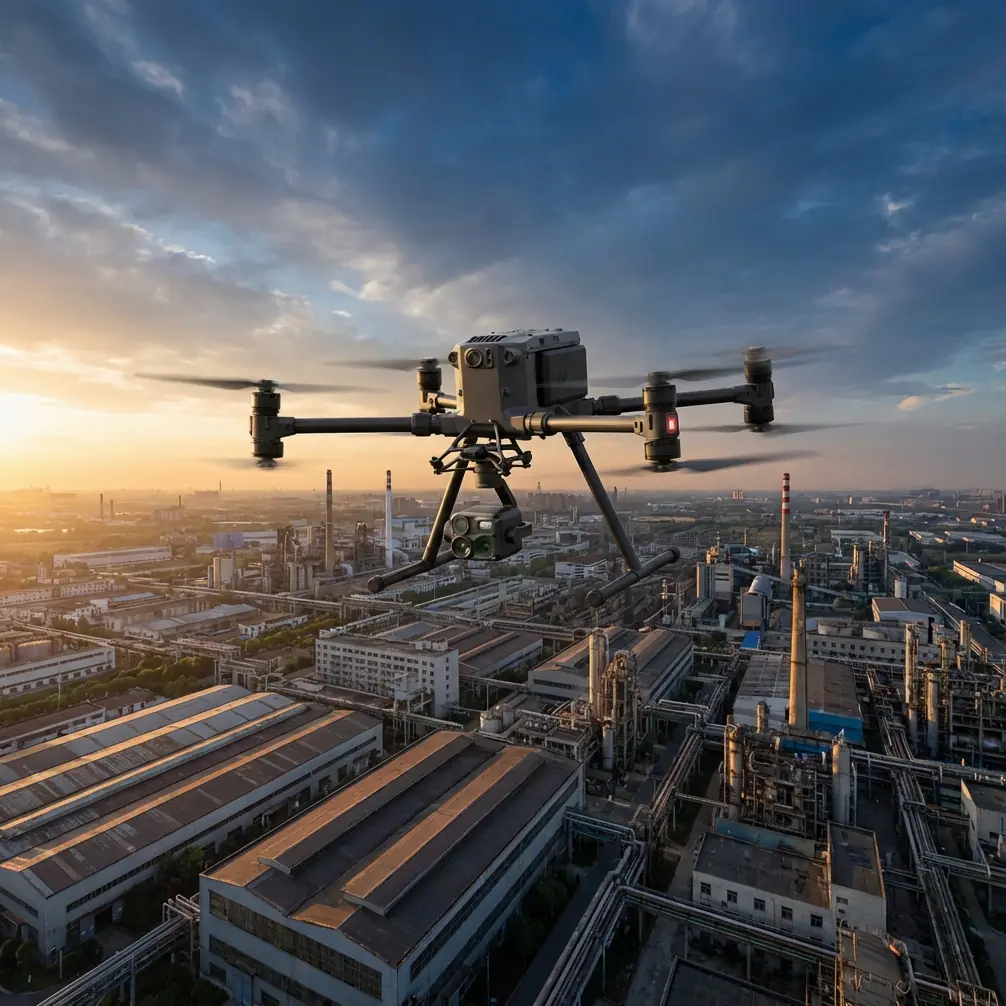
Matrice 4T for Urban Wildlife Inspection: A Technical Review Grounded in Materials Reality
META: An expert review of Matrice 4T for urban wildlife inspection, linking structural durability, environmental resistance, thermal workflow, and operational testing principles to real-world drone performance.
By Dr. Lisa Wang, Specialist
Urban wildlife inspection looks simple from the sidewalk. In practice, it is one of the more demanding civilian drone missions you can assign to a compact enterprise platform. You are not just looking for animals. You are separating faint thermal signatures from HVAC exhaust, wet concrete, rooftop mechanical clutter, reflective glass, tree canopies, bridge cavities, culverts, and utility corridors. You are often flying near salt-laden air, polluted runoff, intermittent moisture, and structures that radiate heat long after sunset.
That is why the most useful way to evaluate the Matrice 4T is not to start with marketing shorthand. Start with engineering logic instead: how a platform behaves when exposed to moisture, corrosive conditions, repeated loading, and long service cycles. The reference materials behind this review are not drone brochures. They are aircraft design handbook extracts dealing with adhesive-core material durability and rotorcraft strength validation. Odd pairing? Not really. Together, they frame the real question every serious Matrice 4T operator should ask:
Will this aircraft remain reliable when urban inspection stops being a demo and becomes routine work?
Why urban wildlife inspection stresses a drone differently
A Matrice 4T assigned to wildlife work in an urban setting has to deliver three things at once.
First, it needs thermal discrimination. Detecting a nesting site on a rooftop, heat loss around a wall void where birds may shelter, or warm-bodied movement along drainage edges is not the same as broad-area surveillance. The sensor has to reveal small thermal contrasts and hold image quality while the aircraft is dealing with turbulence around buildings.
Second, it needs positional discipline. If a team is documenting bat entry points, gull nesting density, or repeated animal movement patterns near infrastructure, georeferenced imagery matters. That is where photogrammetry, GCP workflows, and repeatable flight lines move from optional to operationally useful. Even on a thermal-first mission, visible-spectrum context is what lets you turn detection into a defensible report.
Third, it needs structural consistency over time. Many wildlife jobs are repetitive by nature. The same roofs, canals, embankments, rail edges, and service corridors get flown every week or every season. Repetition changes the risk profile. A one-off flight can hide weaknesses that only emerge under cyclic loading, moisture exposure, and contamination.
That last point is where the source material becomes surprisingly relevant.
What aircraft material data tells us about enterprise drone confidence
One source extract describes SYL-3 core material performance after exposure to harsh conditions. The details are highly specific: after 30 days of continuous salt spray testing, the observed surface showed no corrosion, while weight loss on exposed foil area was measured under a defined method. Another table tracks room-temperature node strength after immersion in various media, including water, ethanol, acetone, and oil. A long-duration set extends the discussion to one year of soaking in media and records the resulting strength values.
This is not Matrice 4T product documentation. But it does highlight the design culture that serious aerial platforms must inherit: environmental survivability is not a cosmetic feature. It is a measurable property. For urban wildlife inspection, that matters more than many operators realize.
Consider a coastal city deployment. Salt aerosol does not stay at the harbor. It drifts inland, settles on rooftops, and accumulates on exposed airframes and payload housings. Add humidity, rooftop condensate, and pollution, and you get a mild but persistent corrosive environment. If the materials and bonded structures inside an aircraft are not validated against this kind of exposure, long-term reliability becomes guesswork.
The SYL-3 data also shows another operational truth: different media degrade strength differently. In one table, a baseline room-temperature node strength of 1.95 kN/m for a 39 density sample shifts after immersion depending on the liquid involved. Water leaves the number close to its original level, while solvents such as acetone and ethyl ketone reduce it much more sharply. Operationally, that should shape how Matrice 4T teams think about field cleaning, storage, and contamination control. In urban inspection, crews often wipe aircraft down after contact with grime, oily residue, or rooftop deposits. The wrong chemical habits can age equipment faster than flight hours alone.
So when evaluating the Matrice 4T for wildlife work, one of the most practical questions is not just “How well does it image?” but “How disciplined is the operator’s maintenance environment?” The aircraft can be robust, but robust does not mean indifferent to chemistry.
Strength is not one number. It is a testing philosophy.
The rotorcraft design reference makes an even deeper point. Static testing, bench testing, and flight testing exist to verify real structural behavior, not theoretical strength alone. During production, sample-based bench testing is used for quality control. During service, operators monitor actual parameters and cyclic loads to estimate life consumption and revise service-life assumptions.
That logic transfers directly to enterprise drone operations.
A Matrice 4T used for urban wildlife inspection is exposed to repeated takeoff and landing cycles, transport vibration, gust loading near building corners, occasional abrupt braking, and thermal cycling from storage to deployment. One mission rarely breaks an aircraft. Hundreds of normal missions, if unmanaged, can quietly reshape reliability.
The handbook extract also distinguishes between static strength and fatigue strength. For some helicopter components, high-cycle fatigue is the dominant concern. For others, one-time load resistance matters alongside low-cycle fatigue. This distinction is operational gold for drone fleet managers.
Why? Because an enterprise drone can pass all preflight checks and still be trending toward reduced reliability if the operator only thinks in terms of obvious impact damage. A Matrice 4T flying short urban sorties every day may accumulate more meaningful cyclic stress than a unit that flies fewer, longer rural missions. Repeated folding, unfolding, packing, mounting accessories, and battery changes all belong to the fatigue story.
This is where hot-swap batteries become more than a convenience feature. In wildlife inspection, time on station matters when you are waiting for animal emergence at dusk or verifying recurring movement through a specific gap in a structure. Hot-swap capability reduces downtime and helps preserve mission continuity. But it also encourages higher sortie frequency. More sorties mean more cycles. More cycles mean maintenance records need to be treated as engineering data, not office admin.
What this means in the field with Matrice 4T
The Matrice 4T suits urban wildlife inspection best when flown as an evidence platform rather than a simple observation tool.
That means combining thermal signature detection with visible confirmation and map-grade repeatability where needed. If a colony is using roof voids across a block of mixed commercial buildings, thermal alone may identify activity, but photogrammetry can document access points, facade conditions, and distances to nearby hazards. Add GCP-backed control where precise repeat surveys are required, and the output becomes useful for consultants, facilities managers, and environmental compliance teams.
The communication side matters too. Urban canyons are hard on links. O3 transmission is valuable not because the spec sheet says so, but because urban wildlife work often requires clean video persistence while the aircraft briefly passes behind partial obstructions, changes altitude around structures, or works from less-than-ideal launch positions. Reliable transmission stabilizes decision-making. It reduces guesswork when identifying whether a hot spot is an animal, exhaust leakage, sun-loaded ducting, or residual heat from equipment.
AES-256 also belongs in this conversation for a practical reason. Wildlife inspection in urban settings often takes place near private buildings, service yards, rooftops, schools, or utility assets. Secure transmission and data handling are not abstract IT concerns. They support client trust and help operators structure responsible workflows when collecting sensitive visual and thermal data in populated areas.
A third-party accessory that genuinely improves capability
Most accessories sold into the enterprise drone space are incremental. One category is genuinely useful for this mission set: high-output auxiliary strobe and beacon systems designed for better visual conspicuity in cluttered urban airspace, especially during low-light wildlife activity windows.
In one recent deployment, a third-party anti-collision beacon package improved the Matrice 4T workflow more than expected. Not because it changed sensor performance, but because it improved crew coordination during dusk operations near rooftops and tree lines. The pilot maintained stronger visual awareness through transition phases, and spotters had a cleaner line on aircraft orientation when the platform was repositioning near dark facades. For teams working under tightly controlled civilian operating procedures, that is a real enhancement, not decoration.
If your operation includes extended visual observation points, temporary access restrictions, or a path toward more advanced approvals, small accessories that improve visibility and crew coordination can deliver more value than another carrying case or monitor mount.
Urban wildlife work is also an environmental durability test
Let’s return to the material tables for a moment, because they sharpen an operator mindset that fits the Matrice 4T well.
The one-year immersion results in the SYL-3 material data show that long-term exposure changes strength, and not uniformly. A sample listed at 1.77 kN/m before soaking drops to values such as 1.50, 1.47, or 1.14 kN/m depending on the medium, while another medium leaves it at 1.80 kN/m. The lesson is simple: environment is not background. It is an active variable.
For the Matrice 4T, that translates into routine discipline:
- log coastal and rooftop moisture exposure,
- separate approved cleaning processes from improvisation,
- inspect sealing points and payload interfaces after repetitive contamination,
- track vibration anomalies over time rather than only after incidents,
- review battery handling behavior in the context of repeated mission tempo.
This is exactly the kind of lifecycle thinking the rotorcraft handbook advocates when it describes monitoring actual use parameters and cyclic loads to understand service-life consumption. Even though the source discusses helicopters, the principle scales down elegantly to professional UAV fleets.
Where Matrice 4T stands out for this specific mission profile
The reason the Matrice 4T is compelling for urban wildlife inspection is not any single feature. It is the way the platform supports a layered workflow.
You can use thermal signature capture for first-pass detection. You can use visible imagery for species-context clues and structural interpretation. You can build repeatable route data for change detection. You can maintain secure transmission practices with AES-256. You can preserve mission tempo through hot-swap batteries. And if a project grows toward larger corridors or infrastructure-linked habitat review, the aircraft can fit into a more structured path toward BVLOS planning, subject to the relevant operational approvals and safety case.
What matters is whether the operator treats the aircraft as a precision field instrument.
That means grounding every mission in material reality, load reality, and environmental reality. The reference data makes this point better than any brochure could. Salt exposure was tested for 30 continuous days. Media exposure was tracked not just immediately, but up to 1 year. Rotorcraft strength was not assumed; it was verified through static, bench, and flight testing, then monitored in service through actual load history. Those are not random facts. They are reminders that serious aircraft operations depend on evidence.
The Matrice 4T deserves to be evaluated in that same spirit.
Final assessment
For urban wildlife inspection, the Matrice 4T is most effective in the hands of teams that think beyond capture quality. Image quality matters, obviously. But repeatability, contamination management, transmission reliability, battery-cycle awareness, and accessory discipline are what turn a capable drone into a dependable survey platform.
If your work includes rooftops, culverts, under-bridge voids, wet industrial edges, harborside structures, or heat-complex commercial zones, the Matrice 4T has the right profile to perform. The real differentiator is how rigorously you operate it.
If you want to discuss field setup choices, sensor workflow, or accessory pairing for this mission type, you can message a specialist here.
Ready for your own Matrice 4T? Contact our team for expert consultation.