
Matrice 4T for Coastal Wildlife Inspection: Altitude
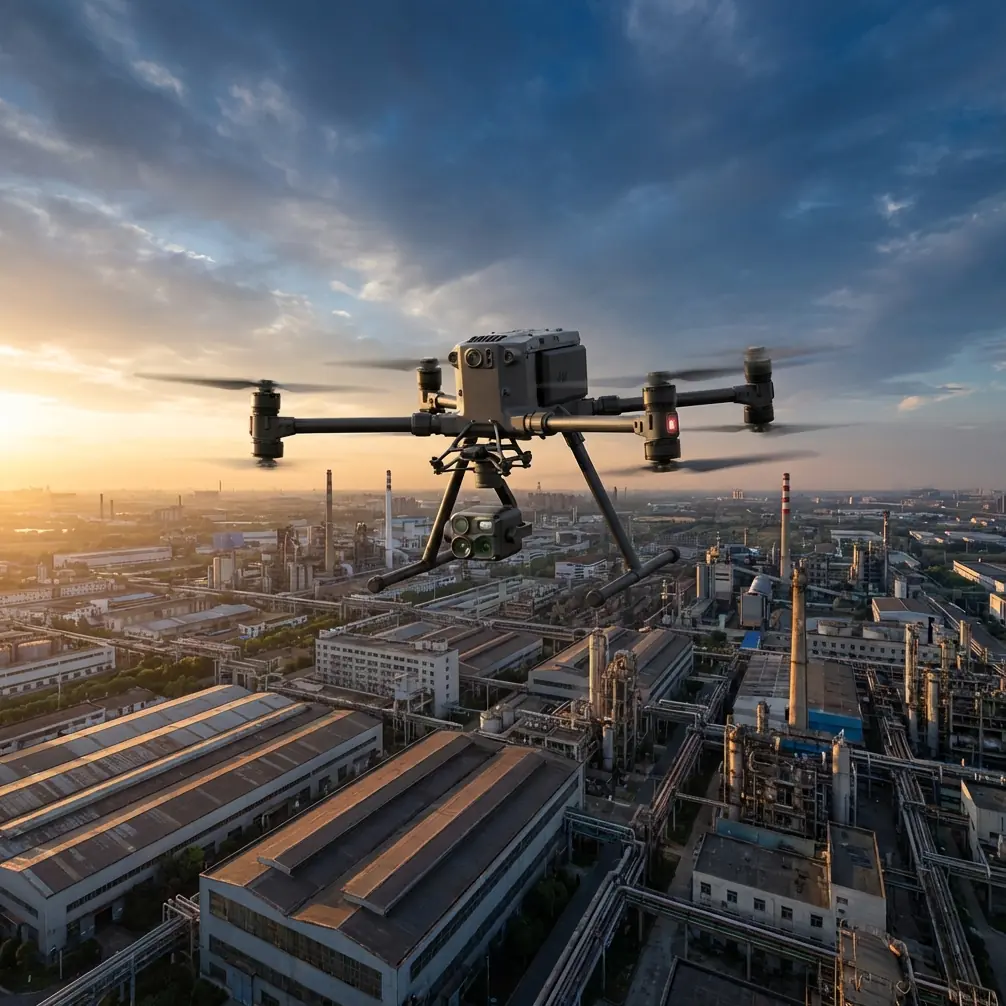
Matrice 4T for Coastal Wildlife Inspection: Altitude, Thermal Strategy, and Post-Fire Habitat Recovery
META: Expert how-to on using the DJI Matrice 4T for coastal wildlife inspection, with practical altitude guidance, thermal workflow insights, and lessons from drone-based forest restoration after wildfire.
Coastal wildlife inspection looks simple from the shoreline. It never is.
Salt haze softens contrast. Wind shifts faster over dunes and marsh than most preflight plans admit. Birds flush when the aircraft sits too low, while mammals disappear into reed beds the moment the sun starts warming the ground. If you are flying a Matrice 4T in this environment, the mission is not just about seeing animals. It is about detecting them early, classifying them without causing disturbance, and collecting evidence that still holds value after the flight.
That is where the right altitude matters more than most operators expect.
This guide focuses on a specific operating mindset for the Matrice 4T in coastal wildlife work, while drawing a practical lesson from a separate but highly relevant field application: drones are already being used in the United States to help restore forests destroyed by wildfires. That matters because millions of acres of U.S. forestland burn each year, and some of those damaged areas do not regenerate well on their own. The operational thread connecting post-wildfire restoration and coastal wildlife inspection is straightforward: both require drones to work above fragile terrain, cover broad areas efficiently, and document conditions without putting people on foot where access is slow or ecologically disruptive.
The Matrice 4T fits that kind of mission profile well when it is flown deliberately.
Why coastal wildlife inspection is a drone problem, not just a camera problem
A lot of wildlife operators talk about payloads first. In the field, flight geometry usually decides whether the payload helps or not.
On a coastal mission, you are often balancing four things at once:
- enough stand-off distance to avoid disturbing wildlife
- enough pixel density to identify species or count individuals
- enough thermal separation to pick out animals from wet ground, rock, or vegetation
- enough overlap and positional discipline to support mapping, reporting, or repeated seasonal comparisons
The Matrice 4T becomes useful here because it can handle more than one observational job in a single sortie. You may begin with a wider thermal search for a heat signature, transition to visual confirmation, then capture repeatable georeferenced imagery for habitat condition review. That is more valuable than treating wildlife inspection as a one-sensor exercise.
The same principle shows up in post-wildfire forest restoration. When drones are used to restore burned forestland, the aircraft is not just “flying over trees.” It is helping teams understand where natural regeneration is failing, where terrain is difficult to reach, and where intervention can be targeted. In both cases, drone value comes from turning inaccessible ground into structured information.
The best starting altitude for Matrice 4T in coastal wildlife inspection
If you want one practical starting point rather than vague theory, begin your search passes around 60 to 90 meters AGL, then adjust based on species sensitivity, vegetation density, and thermal contrast.
That range works because it usually gives you enough separation from wildlife to reduce behavioral disturbance while preserving enough scene detail for thermal scanning and visual follow-up. It is not a universal number, but it is a strong default.
Here is how to think about it.
Fly higher first when disturbance risk is your main concern
In nesting areas, mudflats, seal haul-outs, or marsh bird habitat, your first objective is not perfect image detail. It is avoiding a flush response. Starting near the upper part of that range, or slightly above it when regulations and mission design allow, lets you establish whether the area is occupied before stepping down in altitude.
This is where thermal signature becomes operationally useful. A mammal hidden near grasses or drift edges may show before the visual feed gives you confidence. If you descend too early, you may alter the very behavior you are supposed to observe.
Fly lower when identification matters more than presence/absence
If the task is not just detection but species confirmation, juvenile/adult distinction, or injury observation, you may need a lower follow-up pass. The key is to earn that descent. Start high, confirm location, observe any reaction to aircraft presence, then reduce altitude only if needed and only over a limited segment.
This “search high, inspect low” method is safer for wildlife and produces cleaner data than committing to one low-altitude grid.
Use tide, substrate, and sun angle to adjust
Coastal ground is thermally unstable. Wet sand, exposed rock, tidal pools, and vegetation all change contrast through the day. Early morning often gives better thermal separation between animals and background. Midday can flatten your thermal scene, especially on sun-heated surfaces. In practical terms, this means the same altitude can feel too high at dawn and too low by noon because target contrast has changed.
Altitude is never independent from timing.
A field workflow that suits the Matrice 4T
For coastal wildlife inspection, I recommend a four-phase workflow.
1. Stand-off reconnaissance
Launch from a point that keeps your noise footprint away from the primary habitat zone. Use broad thermal and visual scanning from the initial altitude band. Your goal is to find activity clusters, movement corridors, resting groups, and access barriers.
If your team is operating over long linear coastlines, stable video link quality matters. That is where O3 transmission earns its place in the workflow. Reliable transmission is not just a convenience feature. In wildlife inspection, it affects whether you can maintain observation quality while keeping the aircraft at a respectful distance from the habitat and from the field crew.
2. Target confirmation
Once thermal anomalies are spotted, slow down. Confirm with the visual sensor rather than diving straight toward the target. False positives are common on coastlines: warmed rocks, stranded debris, shallow water reflections, and dark vegetation edges all create ambiguity.
The Matrice 4T’s value here is that it lets you test assumptions in real time. A thermal spot is only useful if the operator can verify what it actually represents.
3. Habitat documentation
This is where many wildlife missions leave useful data on the table.
Do not stop at animal counts. Capture the surrounding habitat in a way that can be compared later. Shoreline erosion, storm wrack, standing water, dune breaks, fire scars, and vegetation patchiness all influence animal presence. If your client or conservation team needs repeatable site change analysis, structure at least part of the flight with photogrammetry in mind.
That does not mean every wildlife flight must become a full mapping mission. It means the operator should know when to transition from observation mode to document mode. If the site will be revisited, consistent flight height, overlap discipline, and carefully placed GCPs can dramatically improve the value of your records.
4. Repeatability and chain of custody
Environmental inspections often become longitudinal. You are not just asking what is present today; you are asking what changed from last month, last season, or before a storm event. Secure handling of imagery and logs matters. AES-256 is not just a technical spec to mention in passing. In commercial conservation work, it supports responsible management of sensitive location data, especially when nesting sites or protected species are involved.
What wildlife operators can learn from drone-based wildfire restoration
The CBS report on drones helping restore forests destroyed by wildfires points to a bigger truth about unmanned operations in environmental work.
When millions of acres burn each year and some landscapes struggle to regenerate naturally, restoration teams need ways to act at scale without waiting for full manual access. Drones answer that need by reaching damaged terrain quickly and repeatedly. They can support assessment, prioritization, and operational follow-through in places where walking every acre is unrealistic.
Coastal wildlife teams face a parallel challenge.
Marshes, estuaries, dunes, and tidal flats can be just as difficult to inspect thoroughly on foot, especially when access windows are constrained by tide, weather, or habitat sensitivity. A Matrice 4T mission should be designed with that same “scale without intrusion” philosophy. The aircraft is not there to replace field biology. It is there to make field biology more targeted.
That distinction matters.
The strongest drone programs do not fly because a drone is available. They fly because broad-area visibility changes the quality of decisions on the ground.
Battery planning for coastal sorties
Coastal inspection work often looks short on the map and long in the air. Wind drift, cautious search speeds, and repeated confirmation passes eat flight time fast. If you are covering multiple observation points in one tidal window, hot-swap batteries become more than a convenience. They reduce turnaround time between sorties and help you preserve mission continuity when animal movement or light conditions are changing quickly.
This has a direct operational payoff. If a seal group shifts location with the tide, or if birds begin using a newly exposed mudflat, you do not want a long reset interval breaking the observation sequence.
Battery planning should also reflect the return leg against onshore wind. Newer operators often budget endurance for the search phase and forget that the final segment may be the most power-hungry part of the flight.
BVLOS thinking, even when you are not flying BVLOS
BVLOS is often discussed as a regulatory category, but it is also a planning mindset. Coastal wildlife sites can stretch well beyond comfortable visual coverage, even in legal VLOS operations supported by observers. That means route design, communication discipline, contingency landing options, and telemetry monitoring should be handled with BVLOS-style seriousness.
This is especially relevant on barrier islands, estuary margins, and long shoreline reserves where access routes are limited. Even when the aircraft remains within the rules of direct observation, the mission complexity can resemble longer-range utility inspection more than a simple local drone flight.
How low is too low?
A useful rule in wildlife work: if your lower altitude produces a visible behavioral change, it was too low for that task.
That change may be obvious, like birds flushing. It may also be subtle: head lifting, group tightening, movement away from a resting area, or repeated orientation toward the aircraft. The best Matrice 4T operators treat these as mission feedback, not as background noise.
Altitude is not only an imaging setting. It is an ethical setting.
For that reason, I generally advise operators to establish the minimum effective altitude rather than chasing the maximum possible detail. Wildlife inspection is successful when the aircraft gathers enough information while leaving the scene as undisturbed as possible.
Building a stronger reporting package
If your output is going to ecologists, reserve managers, insurers, utilities with habitat obligations, or restoration planners, your report should combine:
- observation time and tide state
- flight altitude bands used
- thermal detection notes
- visual confirmation notes
- mapped habitat context
- repeat-visit comparability notes
- any disturbance indicators observed during flight
That turns the Matrice 4T from a viewing platform into a decision platform.
If you are refining your own coastal workflow or want a second opinion on mission setup, you can message a drone specialist here to compare payload and flight-planning approaches.
Final take
The Matrice 4T is at its best in coastal wildlife inspection when the operator uses altitude as a method, not a guess. Start with a stand-off search profile around 60 to 90 meters AGL, let thermal cues guide attention, descend only when confirmation requires it, and document habitat conditions in a repeatable way.
The lesson from post-wildfire forest restoration is worth keeping in mind. Drones prove their value in environmental work when the landscape is too large, too damaged, too sensitive, or too hard to access efficiently on foot. That applies to burned forests in the United States, where millions of acres are affected each year, and it applies just as clearly to coastal wildlife corridors where careful observation matters as much as coverage.
Fly high enough to stay invisible to the animals. Low enough to answer the question. That balance is where expert Matrice 4T work begins.
Ready for your own Matrice 4T? Contact our team for expert consultation.