
Matrice 4T for Wildlife Inspection in Extreme Temperatures
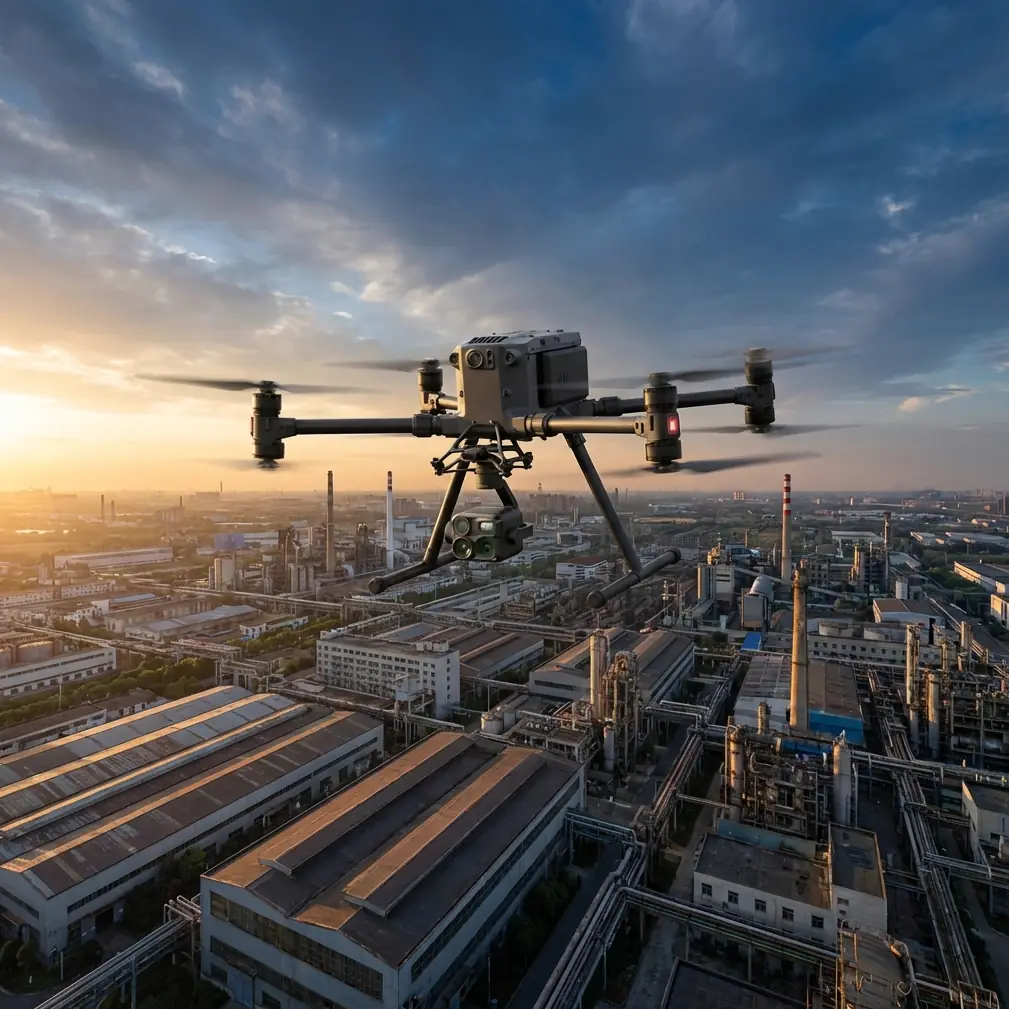
Matrice 4T for Wildlife Inspection in Extreme Temperatures: What Actually Matters in the Field
META: A field-focused Matrice 4T case study on wildlife inspection in extreme heat and cold, covering thermal signature management, flight altitude strategy, transmission reliability, battery workflow, and why aircraft design principles still matter.
Wildlife inspection sounds simple until temperature becomes the main variable. Then everything changes.
A herd that stands out perfectly at dawn can vanish into the background by late morning. A nesting area that looks obvious in visible imagery may flatten into visual noise once snow glare, dust, or ground shimmer enters the scene. And when you are operating a Matrice 4T in very hot or very cold conditions, small planning decisions start having outsized effects: flight altitude, sensor interpretation, battery rotation, and even how you think about aircraft stability over a long mission window.
I want to frame this as a real operational case study rather than a feature summary. The scenario: civilian wildlife inspection in extreme temperatures using the Matrice 4T, with the pilot team balancing animal disturbance, thermal detection quality, terrain coverage, and mission endurance.
The short version is this: the Matrice 4T is most effective for wildlife work in harsh environments when you stop treating thermal as a “find everything” sensor and start treating it as a sensor that is highly dependent on surface physics, distance, and timing.
The mission problem no one should ignore
In wildlife inspection, the goal is rarely just “spot animals.” You may be tracking movement corridors, identifying heat-stressed livestock-wildlife interactions, checking denning zones, counting individuals near water access, or documenting habitat use with enough consistency to compare one flight to the next.
Extreme temperatures complicate all of that.
In high heat, the ground itself becomes a thermal actor. Rocks, scrub, vehicle tracks, exposed soil, and man-made objects hold and release heat unevenly. In deep cold, you gain stronger separation between warm-bodied animals and the environment, but battery management and wind exposure become much less forgiving. The Matrice 4T helps because it combines thermal and visual collection in one platform, but the aircraft alone does not solve interpretation errors.
That is where disciplined flight design matters.
The best altitude for wildlife inspection is usually lower than teams expect
If you want one practical insight that improves results fast, it is this: for wildlife inspection in extreme temperatures, do not start high just because it feels safer or more efficient. Start by optimizing thermal signature clarity.
In most wildlife jobs, I advise teams to test an initial working band rather than commit to a single fixed height. For larger mammals in open terrain, a moderate altitude often gives the best tradeoff between area coverage and identifiable thermal separation. For smaller animals or cluttered terrain, you usually need to come lower to preserve shape, movement cues, and confidence in classification.
Why? Because thermal detection is not just about whether a warm object exists. It is about whether the sensor sees enough meaningful contrast to distinguish an animal from everything else that is also storing or shedding heat.
That is why “optimal altitude” is operational, not theoretical. In a frozen valley just after sunrise, you may comfortably scan wider from higher up because the animal’s heat stands apart. In hot scrubland at midday, even a strong thermal sensor can lose practical discrimination if you are too high and the background is full of competing signatures.
My field rule: fly high enough to avoid disturbance, but low enough that the thermal image still preserves behaviorally useful detail. For wildlife teams, that usually means validating altitude in the first minutes of the mission instead of trusting a prewritten template.
Timing often matters more than raw sensor capability
The Matrice 4T can only show what the environment allows it to separate.
In extreme heat, dawn and the early post-sunrise period are often the most productive windows. Animals still radiate distinctly, while the terrain has not fully built up competing heat signatures. Once the sun loads the ground, tree trunks, rocks, and bare earth can become distracting or misleading. In those conditions, the same flight path can produce dramatically worse interpretive confidence two hours later.
In extreme cold, the useful window can be longer, but the mission risk shifts to the aircraft system and crew exposure. That is where workflow matters as much as sensor use.
The Matrice 4T’s hot-swap batteries are particularly valuable here. In a wildlife inspection program, hot-swapping is not just a convenience feature. It protects continuity. You can keep the mission rhythm intact, maintain your search pattern, and reduce the delay that often causes thermal conditions to change before the next sortie even begins. In winter operations, those saved minutes can mean the difference between a stable count and a compromised one.
Why transmission reliability matters more in wildlife work than people assume
Many teams focus on optics first and transmission second. For wildlife inspection, that is backwards.
The Matrice 4T’s O3 transmission capability matters because remote terrain and temperature extremes both punish weak situational awareness. If your live feed becomes inconsistent in broken topography, or if latency degrades your ability to assess behavior in real time, your detection quality drops even if the recorded data is technically usable later.
This is especially relevant when observing animals at a stand-off distance. You often cannot reposition aggressively without risking disturbance. A stable downlink lets the crew make better decisions from where they are, instead of chasing a cleaner angle and potentially altering animal behavior.
There is also a data stewardship side to this. Wildlife operations increasingly involve sensitive location data around vulnerable species. AES-256 encryption is not a decorative spec in that context. It has operational significance because habitat observations, migration timing, and nest or den locations are not information you want casually exposed during transmission or handling. Secure links are part of responsible conservation workflow.
A surprising lesson from aircraft design manuals
Even though the Matrice 4T is a modern UAV platform, some old-school aircraft design principles still translate directly to field performance.
One reference point that stands out is the classic weight-and-balance logic from aircraft control manuals: a longitudinal proportional factor can be expressed in units of distance divided by weight, commonly m/kg. That sounds abstract until you apply the mindset to drone operations. The principle is straightforward: changes in mass distribution affect how an aircraft carries itself, responds, and stabilizes through different states.
For wildlife inspection crews, this matters less as a maintenance engineering exercise and more as an operational discipline. Every payload configuration, battery state, and environmental load has consequences for how precisely the aircraft holds altitude and position during a slow thermal scan. In gusty cold ridgelines or heat-driven convection over open plains, small stability losses become image-quality losses.
That is why experienced teams treat repeatability seriously. If one mission is flown with a different setup or different battery condition, the comparison may be weaker than it appears. Good wildlife data depends on aircraft consistency, not just camera capability.
The same reference material also discusses how aircraft balance tools use structured scales and state changes to track center-of-gravity effects across operating conditions. For UAV operators, the takeaway is practical: transitions in aircraft state matter. In manned aircraft the example might be landing gear movement; in drone work, it becomes changes like battery replacement, altered accessories, or thermal environmental loading across a long mission block. If your platform behavior changes mid-operation, your image interpretation workflow should account for that instead of assuming perfect uniformity.
Surface physics explains many false positives
Another useful bridge from aircraft engineering comes from surface roughness standards. One reference discusses not only roughness height parameters such as Rz and Ra, but also added evaluation parameters like the average spacing of profile irregularities and the profile bearing length ratio, with percentage series values including 5, 10, 15, 20, up to 90%.
Why does that matter for a Matrice 4T wildlife mission?
Because ground texture influences how surfaces absorb, retain, and release heat. You do not need to calculate roughness values in the field to benefit from the principle. What matters is understanding that terrain is not thermally uniform, even when it looks uniform from above. Gravel, scrub, cracked mud, dry grass, and rock faces all create different thermal patterns. Micro-texture changes alter heat behavior and therefore alter what the thermal sensor sees.
Operationally, that means a “hot spot” is not automatically wildlife. In extreme heat, patterned terrain can mimic thermal targets. In cold conditions, exposed surfaces with different roughness and moisture behavior may still create anomalies. Pilots who understand surface-function thinking make fewer mistakes because they read thermal imagery as a product of both biology and material behavior.
This is one reason I recommend pairing thermal passes with visible confirmation whenever feasible, and using repeated observation over a few seconds before tagging a target. Shape, motion, shadow relationship, and contextual habitat cues all help.
How I would structure a Matrice 4T wildlife inspection sortie
Here is the workflow I’d use in this scenario.
1. Start with a thermal timing decision, not a route decision
Choose the flight window based on surface-to-animal contrast. In heat, prioritize first light. In cold, prioritize battery-safe windows with manageable wind.
2. Use a short altitude ladder at the start
Run a quick comparison at two or three altitudes over a known area feature set. This gives you immediate feedback on target clarity, disturbance risk, and coverage efficiency. Do not assume the previous site’s altitude works here.
3. Fly slow enough to interpret behavior
Wildlife inspection is not only about locating a heat source. You want enough dwell time to distinguish resting, moving, grouped, or concealed animals. That usually means smoother, slower passes than teams use for basic perimeter work.
4. Build battery changes around thermal consistency
With hot-swap batteries, you can maintain search continuity. Keep replacements warm in cold environments and shaded in high heat. The point is not merely extending flight time; it is preserving comparable observation conditions.
5. Secure the data path
If the mission involves sensitive wildlife locations, keep secure handling front and center. O3 transmission helps maintain feed quality, and AES-256 supports stronger protection of what you are observing and storing.
6. Use photogrammetry only where it adds value
Photogrammetry and GCP workflows are useful when habitat mapping or terrain change documentation is part of the mission, but they should not be forced into every wildlife sortie. For active animal detection in extreme temperatures, thermal timing and altitude discipline usually matter more than map-grade reconstruction. When habitat baselining is required, then visible mapping passes can complement the thermal mission.
A field note on BVLOS thinking
For large reserves, long corridors, or remote habitat, teams naturally ask about BVLOS concepts. The right mindset is not “can the aircraft go farther,” but “can the detection quality, communication reliability, and safety oversight remain intact as range increases?” In wildlife operations, mission value drops quickly if added distance reduces your ability to verify what the thermal image is telling you.
So yes, range matters. But disciplined line planning, transmission confidence, terrain awareness, and target verification matter more.
Where the Matrice 4T really earns its place
The Matrice 4T is at its best in wildlife inspection when the crew understands three things at once:
- Thermal signatures are environmental events, not just animal events.
- Aircraft consistency affects image trustworthiness.
- Altitude should be chosen for interpretability, not convenience.
That combination is what separates a clean dataset from a folder full of ambiguous hotspots.
If your team is building a wildlife workflow for harsh climates and wants to compare altitude plans, sensor settings, or operational checklists, you can message a field workflow specialist here and discuss the mission profile directly.
The bottom line is simple. The Matrice 4T can be highly effective for wildlife inspection in extreme temperatures, but only if you fly it like an observation system rather than a generic drone. Read the terrain. Respect thermal timing. Validate altitude early. Protect your data. And keep the aircraft’s state as consistent as the mission allows.
That is where reliable wildlife insight starts.
Ready for your own Matrice 4T? Contact our team for expert consultation.