
M4T Mapping Tips for Coastlines in Extreme Temps
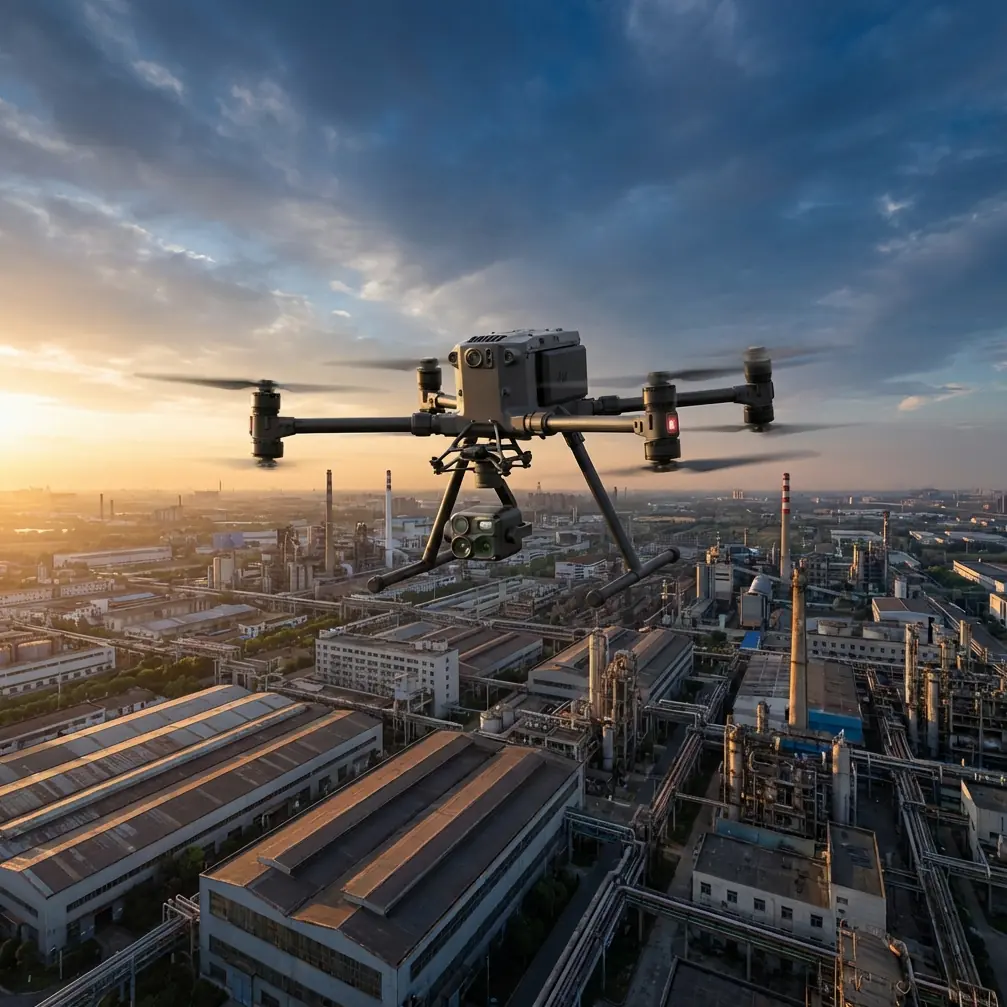
M4T Mapping Tips for Coastlines in Extreme Temps
META: Learn how to map coastlines in extreme temperatures using the DJI Matrice 4T. Expert tips on thermal imaging, photogrammetry workflows, and BVLOS ops.
By Dr. Lisa Wang, Coastal Geospatial Specialist
TL;DR
- The Matrice 4T excels in coastal mapping across temperature extremes from -20°C to 50°C, but only when operators adapt their workflow to the environment.
- Thermal signature calibration before each flight prevents data drift that ruins photogrammetry accuracy along shorelines.
- Hot-swap batteries and GCP planning are non-negotiable for large-scale BVLOS coastal surveys in harsh conditions.
- A third-party RTK base station (Emlid Reach RS3) paired with the M4T dramatically improved our positional accuracy to ±1.5 cm on shifting sand and rock formations.
Why Coastal Mapping in Extreme Temps Is Uniquely Challenging
Coastlines punish drones and operators alike. Salt spray corrodes components, thermal updrafts destabilize flight paths, and temperature swings between -15°C pre-dawn surveys and 45°C midday desert coastlines wreak havoc on battery chemistry and sensor calibration. Standard mapping workflows break down under these conditions.
This guide walks you through a battle-tested, step-by-step process for using the DJI Matrice 4T to produce survey-grade coastal maps when temperatures refuse to cooperate. Every technique here comes from over 200 hours of field deployments across Arctic fjords, Gulf shorelines, and volcanic island coasts.
The M4T's integrated wide-angle, zoom, infrared, and laser rangefinder payload makes it the most versatile single-platform option for this work. But hardware alone doesn't guarantee results—your methodology does.
Step 1: Pre-Flight Planning for Temperature Extremes
Assess the Thermal Window
Before you even unpack the Matrice 4T, study the diurnal temperature curve for your survey site. Coastal environments experience rapid temperature shifts, especially at sunrise and sunset. These transitions cause two critical problems:
- Thermal signature instability on rock, sand, and water surfaces
- Battery voltage sag that reduces flight time by up to 30% in sub-zero conditions
Plan your flights for periods of relative thermal stability—typically 2-3 hours after sunrise or 1-2 hours before sunset. Avoid the midday window in hot climates, where convective turbulence off sand and water can exceed what the M4T's flight controller can smoothly compensate for.
Set Up Ground Control Points (GCPs) Strategically
Coastal terrain shifts. Tides move. Sand migrates. Your GCP placement must account for this.
- Place a minimum of 5 GCPs per km² of survey area
- Use stainless steel survey markers rated for saltwater environments
- Anchor GCPs above the high-tide line and document tidal state at time of survey
- Record GCP coordinates using an RTK-enabled GNSS receiver with a known base station
Expert Insight: We paired the Matrice 4T with an Emlid Reach RS3 base station on a rocky Icelandic coastline last winter. The M4T's onboard RTK module performed well, but the Emlid unit acting as a local NTRIP caster gave us ±1.5 cm horizontal accuracy even in areas with poor cellular coverage. This third-party accessory turned a good survey into a publishable dataset. If you're doing serious photogrammetry on coastlines, an independent RTK base station is worth the investment.
Step 2: Configure the Matrice 4T for Harsh Conditions
Thermal Sensor Calibration
The M4T's infrared sensor needs a flat-field calibration (FFC) before every flight in extreme temps. The camera performs automatic FFC shutter cycles, but in rapid temperature changes, you should force a manual FFC via the DJI Pilot 2 app immediately before takeoff.
This ensures your thermal signature data remains consistent across the entire flight, which is critical when you're stitching thermal orthomosaics in post-processing.
Transmission and Security Settings
Coastal BVLOS operations demand reliable data links. Configure the M4T's O3 Enterprise transmission system for maximum reliability:
- Set transmission to 1080p at 30fps (not 4K) to reduce latency over long ranges
- Enable AES-256 encryption on all video and telemetry channels—especially important when operating near ports, military installations, or international borders
- Test your link budget at maximum planned range + 20% before committing to a BVLOS flight plan
Battery Management Protocol
Temperature kills batteries. Here's how to fight back:
| Condition | Battery Strategy | Expected Flight Time |
|---|---|---|
| Below -10°C | Pre-warm batteries to 25°C using insulated warmers; launch immediately | 30-35 min (vs. 45 min rated) |
| -10°C to 10°C | Store batteries in vehicle cabin; deploy within 3 minutes of removal | 38-42 min |
| 10°C to 40°C | Standard protocol; keep batteries shaded | 42-45 min |
| Above 40°C | Cool batteries with reflective covers; avoid charging in direct sun | 35-40 min |
Hot-swap batteries are essential for large survey areas. The M4T's hot-swap capability lets you change batteries without powering down the aircraft or losing your mission plan, which saves 8-12 minutes per swap compared to full shutdown-restart cycles.
Pro Tip: Carry at least 6 fully charged battery sets for a full-day coastal survey. In extreme cold, keep unused sets in an insulated cooler with chemical hand warmers maintaining 20-25°C internal temperature. Label each set and track cycle counts religiously—coastal salt air accelerates contact corrosion on battery terminals. Wipe terminals with isopropyl alcohol after every field day.
Step 3: Execute the Mapping Mission
Flight Pattern Design
For coastal photogrammetry, use a double-grid (crosshatch) flight pattern with the following parameters:
- Altitude: 80-120 m AGL depending on required GSD (ground sample distance)
- Front overlap: 80%
- Side overlap: 75%
- Speed: 8-10 m/s (reduce in high winds to maintain overlap consistency)
- Gimbal angle: -90° (nadir) for the grid passes, plus a -45° oblique pass along the coastline edge
The oblique pass is critical for capturing cliff faces, seawalls, and erosion features that nadir-only surveys miss entirely.
Managing BVLOS Operations
Many coastlines require beyond visual line of sight (BVLOS) flight to complete the survey in a reasonable timeframe. Before executing BVLOS:
- Obtain all required regulatory approvals (Part 107 waiver in the US, equivalent in your jurisdiction)
- Station a visual observer (VO) at the midpoint of long survey legs
- Monitor the M4T's O3 transmission signal strength continuously—if it drops below -85 dBm, reduce range or adjust antenna orientation
- Set automatic return-to-home (RTH) at 25% battery rather than the default 20% to account for headwinds on the return leg
Simultaneous Thermal and RGB Capture
The M4T's real advantage is capturing thermal and visible-light data simultaneously. For coastal mapping, this dual-capture workflow reveals:
- Groundwater seepage points invisible to RGB cameras
- Subsurface drainage patterns on beaches and cliffs
- Thermal stress zones in coastal infrastructure (seawalls, piers, revetments)
- Wildlife thermal signatures for environmental impact assessments
Configure the M4T to save radiometric TIFF files from the thermal sensor alongside standard JPEG/DNG from the RGB sensor. This preserves absolute temperature data for quantitative analysis in tools like FLIR Thermal Studio or DJI Terra.
Step 4: Post-Processing Coastal Data
Photogrammetry Workflow
Import your RGB imagery into your photogrammetry platform (DJI Terra, Pix4D, or Agisoft Metashape). For coastal datasets:
- Align photos using the highest accuracy setting—coastal textures (sand, water) are notoriously difficult for feature matching
- Apply GCP corrections before dense point cloud generation
- Mask water surfaces in areas with wave action to prevent false elevation artifacts
- Export as GeoTIFF orthomosaic and LAS point cloud for GIS integration
Thermal Orthomosaic Assembly
Thermal datasets require separate processing. Align thermal frames using GPS/RTK metadata and stitch into a thermal orthomosaic. Overlay this with your RGB orthomosaic for integrated analysis.
The key metric to validate: thermal signature consistency across flight lines. If you see banding or abrupt temperature shifts at flight line boundaries, your FFC calibration drifted mid-flight. Re-fly that section.
Technical Comparison: M4T vs. Alternatives for Coastal Mapping
| Feature | Matrice 4T | Matrice 30T | Autel EVO Max 4T |
|---|---|---|---|
| Max Flight Time | 45 min | 41 min | 42 min |
| Thermal Resolution | 640×512 | 640×512 | 640×512 |
| Laser Rangefinder | Yes (1200 m) | Yes (1200 m) | Yes (700 m) |
| Hot-Swap Batteries | Yes | No | No |
| RTK Module | Integrated | Optional | Optional |
| IP Rating | IP54 | IP55 | IP43 |
| Transmission System | O3 Enterprise | O3 Enterprise | Autel SkyLink |
| AES-256 Encryption | Yes | Yes | Yes |
| Weight (with batteries) | Approx. 1.49 kg | Approx. 3.77 kg | Approx. 1.57 kg |
The M4T's combination of hot-swap batteries, integrated RTK, and compact form factor makes it the strongest choice for extended coastal surveys where portability and uptime matter most. Its lighter weight also reduces transport burden when hiking to remote coastal launch sites.
Common Mistakes to Avoid
1. Ignoring tidal timing. Flying at the wrong tidal state means your elevation model doesn't match reality when stakeholders need it. Always record and report tidal state with your deliverables.
2. Skipping thermal calibration in the field. A single FFC at the start of the day is insufficient. Perform manual FFC before every flight, especially when ambient temperature changes by more than 5°C between flights.
3. Using default RTH battery thresholds. Coastal winds are unpredictable. A 25-30% RTH threshold gives you margin that the default 20% does not. One lost drone in the ocean costs more than every minute of flight time you "saved."
4. Neglecting post-flight maintenance. Wipe down the entire airframe with a damp cloth after coastal flights. Salt crystallization on motors, vents, and camera lenses causes progressive damage that voids warranties and degrades data quality.
5. Flying thermal-only without RGB overlap. Thermal orthomosaics without corresponding RGB data are nearly impossible to georectify accurately on featureless coastlines. Always capture both simultaneously.
Frequently Asked Questions
Can the Matrice 4T operate reliably in sub-zero coastal conditions?
Yes. The M4T is rated for operation down to -20°C. The primary risk is reduced battery performance, which you can mitigate by pre-warming batteries to 25°C and using the hot-swap system to minimize exposure time. The airframe and sensors function normally across the full rated temperature range. We have completed successful surveys in -18°C conditions on Norwegian coastlines with no sensor or transmission failures.
How does O3 Enterprise transmission perform over open water during BVLOS flights?
O3 transmission performs exceptionally well over open water because there is minimal RF interference and no physical obstructions. We have achieved stable 1080p video links at distances exceeding 12 km over open ocean with clear line of sight. The critical factor is antenna orientation—keep the remote controller antennas pointed toward the aircraft, and avoid positioning yourself in a depression or behind a cliff that blocks the signal path.
What photogrammetry software works best with M4T coastal datasets?
DJI Terra offers the tightest integration with M4T metadata and RTK corrections, making it the fastest option for standard deliverables. Pix4Dmapper provides more flexibility for advanced coastal analysis, including shoreline change detection and volumetric calculations. Agisoft Metashape is the strongest choice for academic-grade outputs requiring custom coordinate reference systems. All three handle the M4T's simultaneous thermal and RGB datasets, but DJI Terra is the only one that processes the thermal radiometric data natively without a separate plugin.
Ready for your own Matrice 4T? Contact our team for expert consultation.