
Matrice 4T on a Windy Coastline: A Field Report on Mission
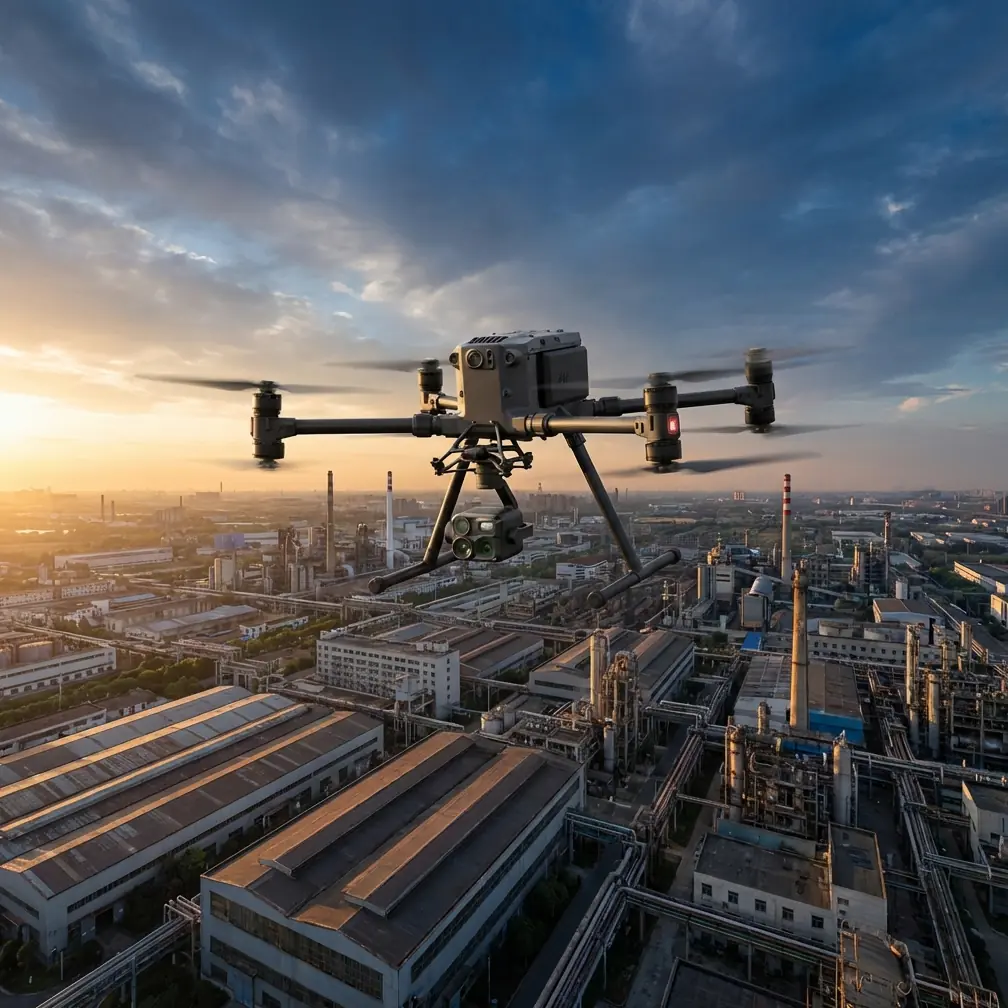
Matrice 4T on a Windy Coastline: A Field Report on Mission Discipline, Thermal Clarity, and Wiring Logic
META: Expert field report on using the Matrice 4T for windy coastline mapping, with practical insights on thermal work, photogrammetry, mission continuity, and why aircraft-grade valve and wiring design principles matter in real operations.
The most revealing drone flights are rarely the easy ones.
A calm inland survey can tell you whether a platform meets the brochure. A windy coastline tells you whether the aircraft, crew, and workflow are actually resilient. That is where the Matrice 4T becomes interesting—not as a spec sheet object, but as a working tool asked to hold position over uneven cliff faces, shifting surf lines, salt-heavy air, and weather that changes its mind halfway through the sortie.
I recently framed a coastal mapping exercise around that exact scenario. The brief was civilian and straightforward: capture overlapping visual data for shoreline change analysis, collect thermal signature references around drainage outlets and rock faces, and maintain a clean chain of documentation suitable for engineering review. No glamour. Just a mission where the aircraft had to keep producing usable information after the conditions got less polite.
What made the day notable was not a single dramatic moment. It was the way several quiet design disciplines—some of them borrowed from traditional aircraft thinking—showed up in the drone workflow and prevented small problems from becoming field failures.
The coastline changed before the plan did
We launched in manageable wind. The first legs were optimized for photogrammetry: deliberate track spacing, repeatable altitude, and enough overlap to preserve model integrity once we brought the imagery into processing. On a coastline, that sounds simple until you remember that water, reflective stone, foam, and oblique terrain all conspire against clean reconstruction. GCP placement helped where the terrain allowed it, but the real difference came from keeping the aircraft’s motion disciplined and the image capture pattern consistent.
That is where the Matrice 4T earns trust. In coastal work, you do not just need a drone that can fly. You need one that can keep your dataset coherent when the wind starts pushing laterally across a face or when a headland creates localized turbulence. If your lines wander, your model suffers. If your hover becomes sloppy, your inspection references lose value. If your pilot is spending too much attention compensating for the platform, the mission tempo collapses.
About a third of the way in, the weather turned exactly how coastal weather tends to turn: not catastrophically, just inconveniently. The air stiffened. Gusts became less predictable. Light shifted. Surface contrast changed as spray and shadow moved across the rocks. None of that ended the mission, but it forced a change in how we prioritized the remaining passes.
Instead of chasing the entire original block in one push, we broke the task into mission-critical sections. First came the sections where topographic consistency mattered most for photogrammetry. Then we collected thermal views while the environmental contrast still gave us usable separation. That sequencing matters because thermal signature work near coastlines can degrade quickly as sun angle, wet surfaces, and wind-driven cooling change the apparent scene.
Thermal is only useful when it is interpreted in context
A lot of operators talk about thermal payloads as if they are magic. On the coast, they are not. They are context-sensitive instruments.
The Matrice 4T’s thermal capability was useful here not because it made anomalies appear out of nowhere, but because it let us compare suspicious temperature differences against the visual scene in real time. A wet rock face cooling under gusts can present one pattern. A drainage path entering the shore can present another. An infrastructure surface exposed differently to wind can look unusual until you line it up with the visible image and the site notes.
That pairing is operationally significant. Thermal alone can tempt crews into overcalling meaningless contrast. Visible imagery alone can miss flow behavior that is not obvious from texture or color. Together, they help a civilian survey team build a more defensible interpretation for engineers, asset managers, or environmental reviewers.
On this flight, we used thermal passes as a secondary layer, not the primary map product. That distinction kept the dataset honest. The photogrammetry pass gave us the geometric backbone. Thermal added investigative value around specific shoreline features and discharge points. If you reverse those priorities without a clear reason, you often return with dramatic-looking imagery that is weak in documentation terms.
Wind exposes weak mission architecture
The more time I spend with commercial UAV teams, the more I believe that mission success has less to do with headline drone specs than with architecture: power continuity, data continuity, link stability, and documentation discipline.
For the Matrice 4T, that architecture includes the practical things crews feel immediately in the field. O3 transmission stability matters when you are working a broken coastline where terrain geometry can interfere with line-of-sight assumptions. Secure links matter too; AES-256 is not a talking point for most pilots in the moment, but it matters for commercial teams handling infrastructure imagery, client-sensitive site data, or pre-publication survey results.
Then there is battery workflow. Coastal jobs often punish indecision. If weather windows are narrow, hot-swap batteries are not just convenient—they are how you preserve operational rhythm. You land, rotate power, verify aircraft state, and get back into the air without rebuilding the whole mission mindset from scratch. That keeps your overlap strategy intact and reduces the temptation to rush later legs.
I have seen many mapping days degrade after a slow battery turnaround. The crew loses the weather window, the shadows move, the tide changes the scene, and the second half of the dataset no longer matches the first. Hot-swap capability helps prevent that kind of drift.
Why an aircraft valve standard has something to teach a drone crew
This is where the reference material from conventional aircraft design becomes unexpectedly useful.
One of the source documents outlines fuel-system valve requirements, including the expectation that a valve must reliably open and close 6 × 10^4 times under high-temperature conditions, while also remaining operable at -55°C for at least 1000 cycles. Another detail specifies that, under defined conditions, valve discharge flow should be no less than a required value G (kg/h), while leakage at the exhaust port in normal conditions should stay within a very small limit such as 2 L/min.
No, the Matrice 4T is not a crewed aircraft fuel system. But those numbers express a mindset that matters directly to drone operations: reliability is not a vague claim. It is cycle-based, temperature-based, and performance-based. A component either continues to function after repeated stress, or it does not.
For windy coastal mapping, that mindset changes how you plan and how you trust the system. You stop asking, “Can this drone fly today?” and start asking better questions:
- Can the platform maintain stable output after repeated thermal loading from battery swaps and sustained operation?
- Can the mission stay within acceptable performance margins after gust exposure and environmental variability?
- Are we evaluating field readiness through repeated cycles, or just one clean demonstration flight?
The operational significance is simple. Coastline work is repetitive by nature. You revisit the same corridors, often in unfriendly air. Repeatability matters more than isolated performance peaks. Traditional aircraft engineering has long understood that a mechanism is only as good as its behavior after thousands of real actions, not its first successful movement on a bench. Commercial UAV teams should think the same way.
Wiring logic matters more than most drone teams realize
The second reference document, focused on electrical system drawings, may look far removed from a Matrice 4T field report. It is not.
It makes a sharp point about system integration: if too many subsystems are combined into one harness arrangement, the bundle becomes too complex and too heavy, making production, inspection, and installation harder. If systems are split too aggressively, connector count rises and complexity reappears in another form. That balance is not theoretical. It is the difference between an aircraft that is serviceable and one that becomes a maintenance trap.
The same document also specifies that wiring layouts should reflect actual installed relative positions, using the aircraft’s heading as the orientation reference—effectively preserving a spatial logic between the diagram and the machine. It adds that connector identities, terminal numbers, and wire numbers must stay consistent across drawings, and that interfaces across multiple pages must be marked clearly to ensure correct coordination.
For UAV teams operating the Matrice 4T in demanding environments, these principles have immediate value.
When you start building a serious mission kit—aircraft, controller, charging setup, RTK accessories, data devices, thermal reporting workflow, GCP logs, external monitors, vehicle power arrangements—you are building an electrical and information system whether you admit it or not. If your field setup lacks clear cable routing, connector discipline, labeling consistency, and interface clarity, then windy coastal conditions will expose the weakness fast.
Loose logic in a sheltered office becomes a real delay on a cold shoreline.
The operational significance of this reference is enormous: keep systems integrated enough to remain efficient, but not so tangled that troubleshooting becomes slow. Label consistently. Preserve spatial logic. Make handoffs obvious. That is how you shorten setup time, reduce preventable faults, and keep the crew focused on flying rather than cable archaeology.
I have watched highly capable aircraft lose productive time because the support ecosystem around them was improvised. The Matrice 4T can be a reliable aerial tool, but mission reliability includes everything connected to it.
Mid-flight adjustment is where crews separate themselves
When the wind increased, we did not simply “push through.” We adjusted lens priorities, shortened exposure to the roughest edge sectors, and used return points that reduced unnecessary crosswind transit. That gave us a cleaner and safer collection sequence without sacrificing the core deliverables.
This is the part of drone work that clients rarely see. They see the map or the report. They do not see the in-flight decision to collect the leeward rock face before the shadow line shifts. They do not see the choice to pause a thermal pass because surface cooling has changed too quickly for meaningful comparison. They do not see the judgment call that says a partial, high-integrity dataset is better than a complete but inconsistent one.
The Matrice 4T supports those decisions well when the crew already has a method. It gives you enough situational confidence to adapt, but it does not replace field judgment. Nothing does.
BVLOS discussions mean little without process maturity
Many teams interested in shoreline operations eventually ask about BVLOS pathways. That conversation is valid, especially for long corridor inspection and environmental monitoring. But I would caution against treating BVLOS as a shortcut to efficiency.
If your current visual-line operations are weak on battery rotation, image consistency, cable organization, handoff notation, or weather-triggered replanning, extending the distance will not fix those issues. It will magnify them. The engineering mindset found in the reference materials—clear interfaces, appropriate subsystem integration, validated repeat-cycle performance—is exactly the mindset teams need before they pursue more complex operational profiles.
A mature Matrice 4T operation is not defined by how far it can go. It is defined by how consistently it can produce defensible results under changing conditions.
What this flight actually proved
By the end of the session, the coastline had given us the usual reminders. Wind is never just wind; it affects hover quality, overlap consistency, surface appearance, battery tempo, and pilot workload all at once. Thermal imagery is only as useful as the crew’s ability to interpret it against the visible scene and environmental timing. Mapping quality depends as much on workflow discipline as on aircraft capability.
The Matrice 4T handled the mission the way a professional platform should: not by making the weather irrelevant, but by giving us enough stability, payload usefulness, and mission continuity to keep extracting good data after conditions shifted.
And the older aircraft design references turned out to be surprisingly relevant. A valve standard requiring 60,000 reliable switching actions and low leakage thresholds is really a lesson in measurable trust. An electrical drawing standard warning against overcomplicated harness integration is really a lesson in operational maintainability. Applied to a modern drone program, both ideas point in the same direction: robust field results come from disciplined system design, not wishful flying.
If your team is planning similar coastal work with the Matrice 4T and wants to compare workflow notes, battery rotation strategy, or payload sequencing, you can message our field team here.
That is the real story from the shoreline. Not that the aircraft flew in wind. Many aircraft can do that. The real story is that the mission stayed coherent when the environment started to unravel it—and that is what professionals should care about.
Ready for your own Matrice 4T? Contact our team for expert consultation.