
Mapping Mountain Construction Sites with the Matrice 4T
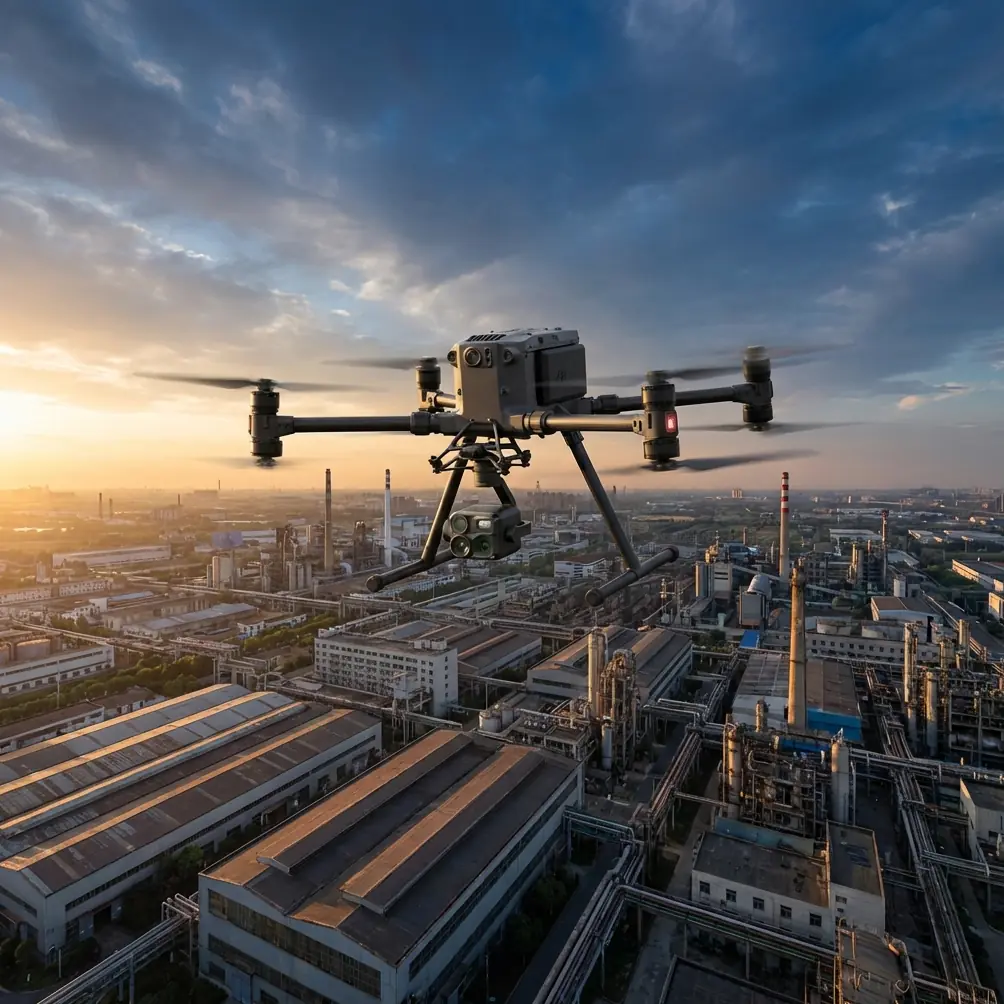
Mapping Mountain Construction Sites with the Matrice 4T: What Actually Matters in Wet, Harsh Conditions
META: A technical review of the Matrice 4T for mountain construction site mapping, with field-focused guidance on moisture, corrosion risk, thermal workflows, battery handling, and reliable data capture.
Mountain construction mapping looks clean on a project brief. In the field, it rarely is.
You deal with steep grade changes, shifting light, damp mornings, cold battery behavior, and equipment that gets loaded in trucks, unpacked on gravel, then flown above concrete, rebar, fresh cut slopes, and drainage corridors. If the site sits near coastal air or sees long wet seasons, the problem gets tougher: moisture is no longer a comfort issue. It becomes a reliability issue.
That is why a useful discussion of the Matrice 4T for mountain construction sites should not start with a feature parade. It should start with survivability and repeatability. Can the aircraft produce dependable mapping and thermal data day after day when the environment is actively trying to degrade connectors, housings, and operator discipline?
A useful clue comes from an older helicopter design reference, specifically page 1246 of 飞机设计手册 第19册 直升机设计, which outlines “three-protection” design principles: protection against humid heat, salt fog, and mold. At first glance, that sounds far removed from a modern compact enterprise UAV. It isn’t. The engineering logic applies directly to how serious operators should evaluate and use a Matrice 4T on mountain projects.
Why old aircraft corrosion logic still matters to a Matrice 4T mission
The source material makes a blunt point: aircraft intended for challenging environments need deliberate design attention to humid heat, salt exposure, and biological degradation, not just basic performance. It also stresses that the mechanism of corrosion must be understood in context, including mission environment, service life environment, and even the “microclimate” around where components are installed.
That last detail matters more than many drone teams realize.
A mountain construction site creates microclimates everywhere. The launch pad may be dry while the cut slope below still holds morning condensation. One face of the site gets direct sun and thermal uplift, while the opposite side stays cool and damp. Storage cases may sit in a humid vehicle overnight, then be opened in warmer air, causing condensation on lenses and contact points. If a project is near marine influence, salt-laden moisture can accelerate the problem.
For Matrice 4T users, the operational lesson is simple: do not think about “weather” only at the site level. Think at the component level. Battery terminals, gimbal cavities, air paths, landing gear joints, payload surfaces, and case foam all experience different exposure profiles. The drone may be fine statistically, yet still develop avoidable reliability drift because one repeated moisture trap was ignored.
The helicopter reference also warns against enclosure shapes that encourage water retention, seepage, sharp corners, and recessed pockets where contaminants collect. That is a powerful reminder for field handling. Even if the aircraft itself is well designed, your workflow can recreate those problems externally through how you store accessories, route cables, or pack damp equipment. A wet landing mat folded into a sealed case is a corrosion experiment. So is putting a drone back into foam immediately after a cold morning sortie.
The Matrice 4T is strong for mountain site work, but workflow discipline is what unlocks it
The Matrice 4T earns attention because it combines visible imaging and thermal capability in a platform compact enough for fast deployment. For mountain construction work, that combination is practical rather than flashy.
The visible payload supports photogrammetry tasks such as progress mapping, haul road monitoring, stockpile review, and slope documentation. The thermal side becomes useful when site managers need to identify water ingress paths, inspect drainage performance after rain, compare curing behavior across surfaces, check overheating equipment, or spot thermal irregularities in temporary electrical infrastructure. Thermal signature data is not a replacement for a survey-grade visible dataset, but it can reveal conditions a standard orthomosaic misses.
On mountain sites, the other advantage is transmission reliability. O3 transmission is not just a marketing line in this environment. Terrain interrupts line-of-sight, and reflective surfaces plus elevation changes can complicate signal quality. A robust link helps keep framing, altitude control, and return planning predictable while operating around ridgelines and partial obstructions within legal and procedural limits. If your workflows include approved BVLOS operations, link stability and mission planning discipline become even more critical, though the governing rule set always comes first.
Data security deserves mention too. Construction mapping often includes commercially sensitive site layouts, progress status, and infrastructure details. AES-256 support matters because not every drone discussion should be limited to airframe performance. Secure handling of imagery, especially on contractor-heavy jobs with multiple stakeholders, is part of professional operations.
A mountain mapping workflow that suits the Matrice 4T
For construction mapping in steep terrain, the Matrice 4T is most effective when you stop trying to force one flight into doing everything.
I prefer splitting missions by purpose.
One flight is dedicated to photogrammetry. That means consistent overlap, stable speed, controlled altitude behavior relative to terrain, and clean lighting if possible. If the project needs survey-grade confidence, GCP placement still matters. Too many teams assume a capable aircraft eliminates ground control thinking. It does not. In mountains, elevation shifts and irregular surfaces can expose weak control distribution very quickly. Good GCP spacing across upper and lower site zones helps hold the model together where terrain complexity tries to pull it apart.
The second flight is dedicated to thermal interpretation. Different speed, different timing, different objective. Early morning can be useful for detecting retained moisture, runoff pathways, or thermal contrast across disturbed earth and retaining features. Midday can flatten useful differences. Late afternoon may reveal other patterns depending on materials and sun angle. Thermal data becomes much more useful when the mission profile is built around the thermal question rather than treated as a side product.
That separation also helps battery planning, which is where many long mountain days are won or lost.
My field battery tip: never hot-swap straight back into a cold mission rhythm
The narrative prompt asked for a battery management tip from field experience, and this is the one I give most often.
Hot-swap batteries are excellent for keeping workflow moving. But on mountain construction sites, operators often misuse that convenience. They land, swap immediately, relaunch immediately, then repeat across a damp and cold morning without giving enough attention to temperature equalization and contact inspection.
That is a mistake.
A battery that came off a hard climb profile or a windy return leg carries its own thermal history. A fresh pack taken from a cold vehicle has another. If you hot-swap purely for speed, you can stack small inconsistencies into a full day of uneven endurance estimates. The aircraft still flies, but your planning margin gets less honest.
My rule is simple: use a rotation board and track not only charge status, but state on removal and state before install. I want each pack visually checked for moisture around contact surfaces, then staged so I am not moving the coldest pack directly into the most demanding uphill leg of the day. On wet mornings, I also leave the battery bay open briefly after landing when conditions permit, just long enough to let obvious condensation risk dissipate before the next insertion. Not forever. Just deliberately.
This sounds minor. It isn’t. In mountain operations, honest battery behavior is part of data quality. If endurance assumptions drift, teams start compressing flight lines, cutting overlap, rushing return-to-home decisions, or skipping a second pass they should have flown. A bad battery routine can end up looking like a mapping problem when it was really a field discipline problem.
Moisture and corrosion prevention are not maintenance chores; they are mission assurance
The helicopter reference also emphasizes two practices that belong in every Matrice 4T program used in harsh construction environments.
First, it calls for analysis of exposure intensity, duration, frequency, and alternating cycles. This is exactly how drone teams should think about field deployment. One dramatic rain event is not always the main threat. Repeated cycles of damp transport, cold setup, sun-warmed operation, and sealed storage can do more long-term damage than a single obvious soaking.
Second, it highlights a FRACAS approach: fault reporting, analysis, and corrective action across testing, production, storage, transportation, use, and maintenance. That is a serious aviation concept, but it scales well to enterprise drone fleets.
If your Matrice 4T is supporting recurring mountain site mapping, keep a simple reliability log. Not just crash events. Record fogging incidents, battery contact contamination, recurring compass warnings in certain cases, thermal lens cleanup frequency, unexplained image anomalies, arm or landing gear grime accumulation, and any connector discoloration. Patterns appear fast when you write them down. Teams that do this usually solve their own repeat failures before they become expensive.
This is especially valuable for projects near sea air or in regions with long humid seasons. The source reference specifically treats salt fog and mold as design threats. Civilian drone operators should translate that into practical habits: dry equipment before casing, isolate desiccant usage by case section, inspect metal interfaces routinely, and do not let organic debris or wet fabric remain packed against the aircraft.
Ventilation, EMC, and protection: a tradeoff construction teams should respect
Another detail in the source says enclosure design must balance ventilation, heat dissipation, electromagnetic compatibility, and environmental protection. That balance matters in the drone world too, especially when crews start adding third-party accessories, external mounts, improvised shade hoods, or modified case systems.
Mountain construction sites tempt people into field modifications. A small sun hood here, a cable reroute there, a tightly wrapped storage method to save space. Sometimes harmless. Sometimes not.
Anything that changes airflow, traps moisture, or increases contamination retention can undermine reliability in subtle ways. The same goes for sloppy accessory integration around radios, tablets, and external power systems. A clean enterprise setup is usually better than a clever improvised one.
Where the Matrice 4T fits best on mountain construction jobs
The aircraft makes the most sense when the site needs more than one kind of answer.
If you only want a standard orthomosaic under easy conditions, other platforms can do that. The Matrice 4T becomes more interesting when the construction team needs visible mapping plus thermal context, quick deployment between work fronts, secure data handling, and the ability to repeat missions through uneven environmental conditions.
Typical examples include:
- tracking slope stabilization progress while checking for moisture anomalies after drainage work
- documenting haul road changes and identifying thermal patterns from water retention or equipment stress
- reviewing retaining structures, concrete pours, and temporary site utilities with both visual and thermal context
- maintaining frequent progress capture in sites where terrain makes ground-based inspection slow and inconsistent
Its value is not that it replaces every survey method. Its value is that it compresses inspection and mapping cycles into something a site team can actually sustain.
A final practical view
For mountain construction mapping, the Matrice 4T should be judged less like a gadget and more like a compact aviation tool. The most relevant lesson from the helicopter reference on page 1246 is not about nostalgia or theory. It is about respecting environmental exposure as a design and operational variable.
Humid heat, salt, trapped water, poor inspection access, and untracked corrosion are not abstract threats. They are the hidden reasons why two identical drone programs can produce very different results over a season.
If you want the Matrice 4T to perform well on these jobs, build the workflow around that reality. Use the visible payload for disciplined photogrammetry. Use thermal flights with a purpose. Treat GCP planning seriously in steep terrain. Respect O3 transmission, but do not let confidence outrun procedure. Keep AES-256 in mind when the dataset is commercially sensitive. And manage hot-swap batteries with more thought than speed alone.
If you are comparing mission setups for your own mountain project, I’m happy to discuss practical field configurations here: message Dr. Lisa Wang directly
Ready for your own Matrice 4T? Contact our team for expert consultation.