
Matrice 4T for Remote Field Mapping: A Technical Review
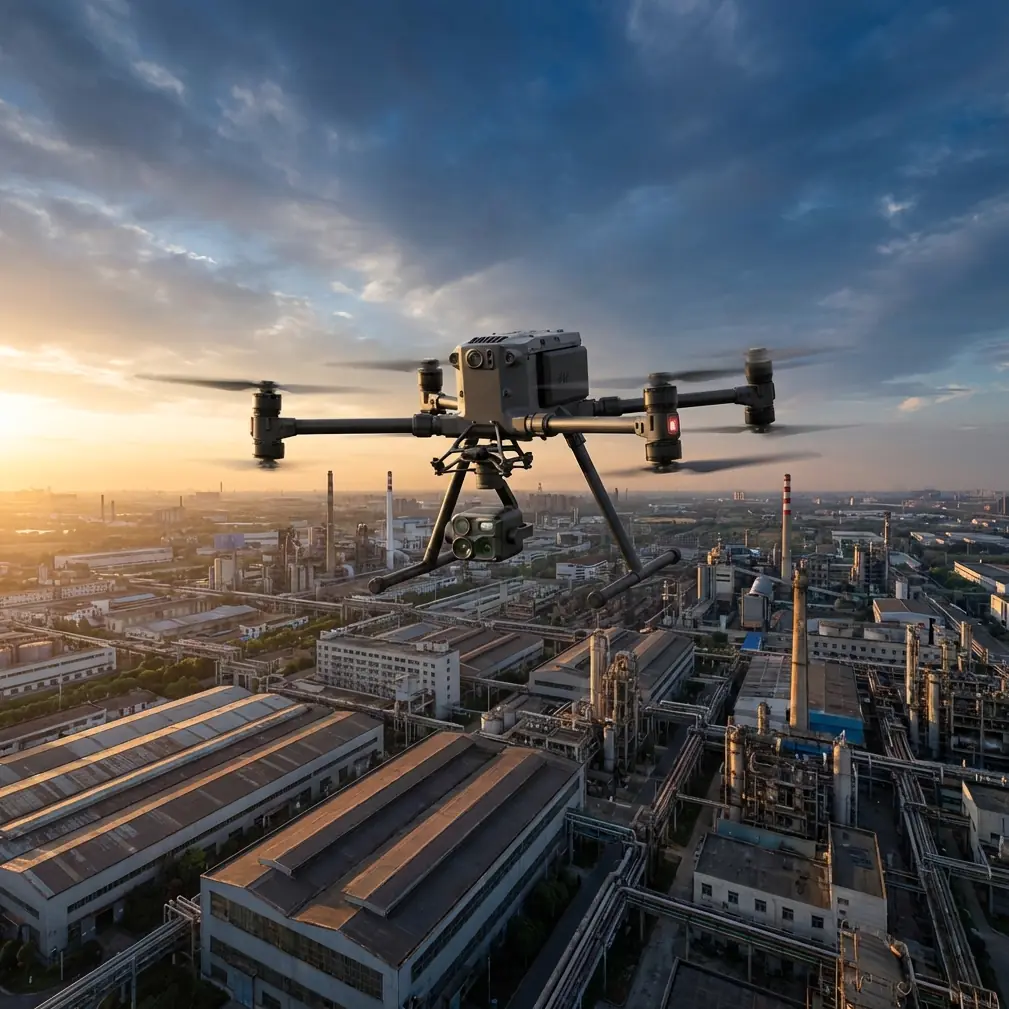
Matrice 4T for Remote Field Mapping: A Technical Review from the Farm Edge
META: Expert review of the DJI Matrice 4T for remote field mapping, covering thermal workflow, photogrammetry, O3 transmission, AES-256 security, hot-swap batteries, GCP strategy, and real-world field performance.
Remote field mapping is where drone specifications stop being marketing and start becoming logistics. A drone can look excellent on paper, then fall apart the moment the worksite sits beyond easy road access, mobile coverage drops, wind builds over open ground, and the survey window narrows to a few usable hours. That is the lens I apply to the Matrice 4T.
This is not a generic overview. It is a technical review centered on one job type: mapping fields in remote areas where you need clean data, reliable transmission, repeatable workflows, and enough flexibility to switch from pure photogrammetry to thermal interpretation without dragging a second aircraft into the truck.
The Matrice 4T stands out because it compresses several field roles into one platform. In practice, that matters more than headline specs. Remote agricultural and land-management work often blends boundary verification, drainage assessment, irrigation troubleshooting, stand-count estimation, wildlife checks, and post-event documentation. A drone that can collect visible-spectrum mapping data and also read thermal signature changes across a field gives operators a wider operational envelope on the same deployment day.
Why the Matrice 4T fits remote mapping better than many “mapping-only” setups
A lot of field teams begin with a simple assumption: if the mission is mapping, buy a mapping drone. That works until the terrain starts asking more questions than a single RGB payload can answer.
The Matrice 4T is better understood as a field intelligence platform than a narrow photogrammetry tool. For remote work, that distinction matters. You may launch for orthomosaic capture in the morning, then use thermal imaging to examine irrigation irregularities before temperatures equalize, then switch to targeted visual inspection around culverts, access tracks, or livestock fencing. One aircraft, one battery ecosystem, one transmission stack, one training burden.
That efficiency compounds over time. In remote operations, the most expensive part of the job is often not the flight itself. It is travel time, weather risk, crew downtime, and the cost of returning because the first dataset answered only half the question.
The real value of thermal signature data in field mapping
Thermal is often misunderstood in agricultural and land-management workflows. People hear “thermal camera” and think of search tasks or one-off anomaly spotting. On real field jobs, thermal signature data can serve as a decision layer that complements photogrammetry rather than replacing it.
If an RGB map shows geometry, crop spacing, wheel tracks, ponding, and visible stress patterns, thermal can reveal how the field is behaving energetically. Temperature differences can indicate uneven irrigation performance, drainage bottlenecks, soil moisture variation, heat stress, and equipment-related impacts that are not yet obvious to the naked eye. On remote properties, where sending teams across every hectare is slow and disruptive, this changes the inspection model. You do not start with boots on the ground. You start with a thermal and visual screening pass, then dispatch people only where the data suggests a problem.
Operationally, that makes the Matrice 4T more useful than a platform built only for textbook photogrammetry. You are not collecting one clean orthomosaic and hoping the office can infer the rest. You are building a layered interpretation of the site.
There is another practical advantage. Wildlife interference is real in remote mapping, especially near water sources, shelter belts, and field margins. On one early-morning flight over a mixed-use agricultural block, a small group of kangaroos moved out from the shadow line near a drainage channel just as the aircraft began a lower-altitude pass along the field edge. The thermal view made them immediately obvious as warm, distinct shapes against cooler ground. That mattered for two reasons: it prevented a low, unnecessary approach that could have disturbed the animals, and it let the pilot adjust the flight line while preserving the mapping run. Good sensors do not just gather more data. They help you make better decisions in real time.
Photogrammetry: still the backbone of usable field maps
None of that reduces the importance of photogrammetry. If the deliverable is an orthomosaic, digital surface model, contour output, or area measurement package, flight discipline still rules the job. The Matrice 4T earns its place when operators treat it like a precision data-capture platform first and a flexible inspection tool second.
For field mapping, the visible-spectrum workflow must be planned around overlap, altitude, lighting, wind, and terrain consistency. This is where GCP strategy becomes decisive. Ground control points are not glamorous, but they remain one of the clearest separators between “a nice aerial picture” and mapping data you can stand behind. In remote properties, GNSS conditions, surface monotony, and long flight corridors can all create drift or alignment challenges in post-processing. A disciplined GCP layout gives the resulting map a defensible spatial framework.
That is the operational significance of combining a platform like the Matrice 4T with proper photogrammetry practice. The aircraft gives you flexibility. GCPs give you trust. Without that trust, the prettiest map in the project folder may still be the wrong one to make land-use decisions from.
O3 transmission matters more in remote environments than many operators admit
Remote field mapping is often transmission-limited before it becomes battery-limited. Once the aircraft moves far beyond the easy comfort zone of a nearby launch point, link quality becomes a workflow issue, not just a technical checkbox.
This is where O3 transmission deserves more respect. Reliable downlink and command integrity are not luxuries when mapping large fields or fragmented agricultural properties. They affect how confidently a pilot can maintain situational awareness, verify framing, monitor aircraft behavior, and respond to obstacles or changing conditions. In open country, the temptation is to assume that line of sight makes everything easy. In reality, terrain undulations, tree stands, utility corridors, and atmospheric conditions can all degrade consistency.
The significance of O3 in this context is simple: stable transmission protects mission continuity. It reduces the chances of compromised passes, aborted runs, or preventable repositioning. For survey teams trying to capture fields during narrow weather windows, that consistency can be the difference between finishing the block and returning another day.
AES-256 is not a brochure footnote
Security rarely gets the same attention as camera capability in drone reviews, but for agricultural enterprises, land managers, consultants, and infrastructure-adjacent operators, it should.
AES-256 encryption matters because field mapping data is often more sensitive than it appears. Property boundaries, crop health patterns, irrigation layouts, road access points, storage areas, and operational routines can all be inferred from aerial datasets. For a contractor managing data on behalf of multiple clients, secure transmission and handling are part of professional competence, not IT trivia.
The Matrice 4T’s support for AES-256 is operationally significant because it helps align the aircraft with the data-governance expectations of serious commercial users. If you are surveying a remote farm today and a utility easement tomorrow, you want the same platform to fit both the technical job and the security posture that comes with it.
Hot-swap batteries and why they change mission planning
Many drone discussions treat batteries as a range statistic. Field crews know better. Batteries define tempo.
Hot-swap batteries are especially useful in remote mapping because they reduce the dead time between sorties. If your workflow involves multiple field sections, repeated grid missions, or a sequence of RGB and thermal flights, every minute spent waiting on restart cycles or fiddling through preventable delays chips away at the useful weather window.
That operational significance is easy to understand on a real job. Let’s say morning conditions are ideal for thermal interpretation because temperature contrast is still pronounced. You complete one drainage-focused pass, swap batteries, and launch again quickly for the next field section before solar heating flattens the thermal differences. Later, as the light improves for visible-spectrum mapping, the same fast turnaround helps you move efficiently into photogrammetry runs. The aircraft is not merely staying airborne longer over a single battery set. The whole mission architecture becomes more fluid.
For remote teams, that also reduces crew fatigue. Smooth battery turnover sounds minor until you have spent enough days launching from uneven ground in changing weather while trying to keep tablets, controllers, field notes, and target markers all aligned.
BVLOS conversations need discipline, not hype
BVLOS is one of those terms that attracts too much noise. For remote field mapping, the practical takeaway is straightforward: beyond visual line of sight operations may expand coverage and reduce repositioning, but they are not a shortcut around planning, regulation, crew competence, or risk management.
The Matrice 4T has the kind of transmission and mission capability that naturally enters BVLOS discussions. That does not make every remote mapping task a BVLOS task. What matters is that the platform fits into advanced operational frameworks when the operator has the approval, procedures, and technical controls to support them.
From a review standpoint, the significance is this: the Matrice 4T is not boxed into small-property workflows. It scales into more demanding mission concepts. For larger agricultural estates, utility corridors crossing field systems, or broad land-monitoring programs, that gives the aircraft a longer service life within a professional operation.
Where the Matrice 4T earns trust in the field
Trust in a drone platform comes from reducing friction across the full workflow, not excelling in one isolated feature.
The Matrice 4T earns trust when:
- the thermal feed reveals field behavior that RGB alone would miss,
- the photogrammetry workflow remains structured and repeatable,
- O3 transmission holds up across remote operating areas,
- AES-256 aligns with client data expectations,
- hot-swap batteries keep the sortie schedule moving,
- and the aircraft adapts from mapping to inspection without requiring a separate deployment plan.
That combination is why it suits remote field mapping so well. You are not always solving a single problem out there. Often you are walking into a stack of overlapping unknowns: water movement, crop inconsistency, access damage, animal activity, drainage performance, and whether your client needs a clean map, a thermal interpretation, or both.
If you are comparing deployment strategies or trying to shape a workflow around your acreage, it helps to discuss the mission profile before choosing settings or payload priorities; you can do that directly here: https://wa.me/85255379740
What I would watch before deployment
No aircraft erases the fundamentals. If I were preparing the Matrice 4T for a remote field mapping assignment, I would focus on five things before takeoff.
First, define whether the primary output is measurement-grade photogrammetry, thermal interpretation, or a combined dataset. That choice affects timing, altitude, overlap, and whether GCP placement must be treated as non-negotiable.
Second, build the flight schedule around environmental conditions, not convenience. Thermal work often wants a different window than RGB mapping.
Third, protect transmission quality with disciplined launch positioning. O3 is strong, but antenna orientation, terrain, and route geometry still matter.
Fourth, plan battery turnover as part of the mission, not an afterthought. Hot-swap capability pays off only when the crew is organized enough to exploit it.
Fifth, treat data security and file management seriously from the beginning. AES-256 is valuable, but secure operations also depend on how teams store, transfer, label, and process what they collect.
Final assessment
For remote field mapping, the Matrice 4T is compelling because it closes the gap between survey work and operational inspection. That is the real story. It is not merely a drone that can map fields. It is a platform that helps field teams understand them.
The thermal signature capability broadens what you can detect. Photogrammetry and GCP discipline preserve what you can measure. O3 transmission supports continuity across difficult sites. AES-256 adds a layer of confidence for professional data handling. Hot-swap batteries keep the mission moving when timing actually matters.
That mix gives the Matrice 4T practical relevance for agricultural consultants, estate managers, land survey teams, environmental operators, and infrastructure professionals working across remote rural properties. In the right hands, it is not just a camera in the sky. It becomes a faster way to see the field as a system.
Ready for your own Matrice 4T? Contact our team for expert consultation.