
Mapping Power Lines with Matrice 4T | Expert Tips
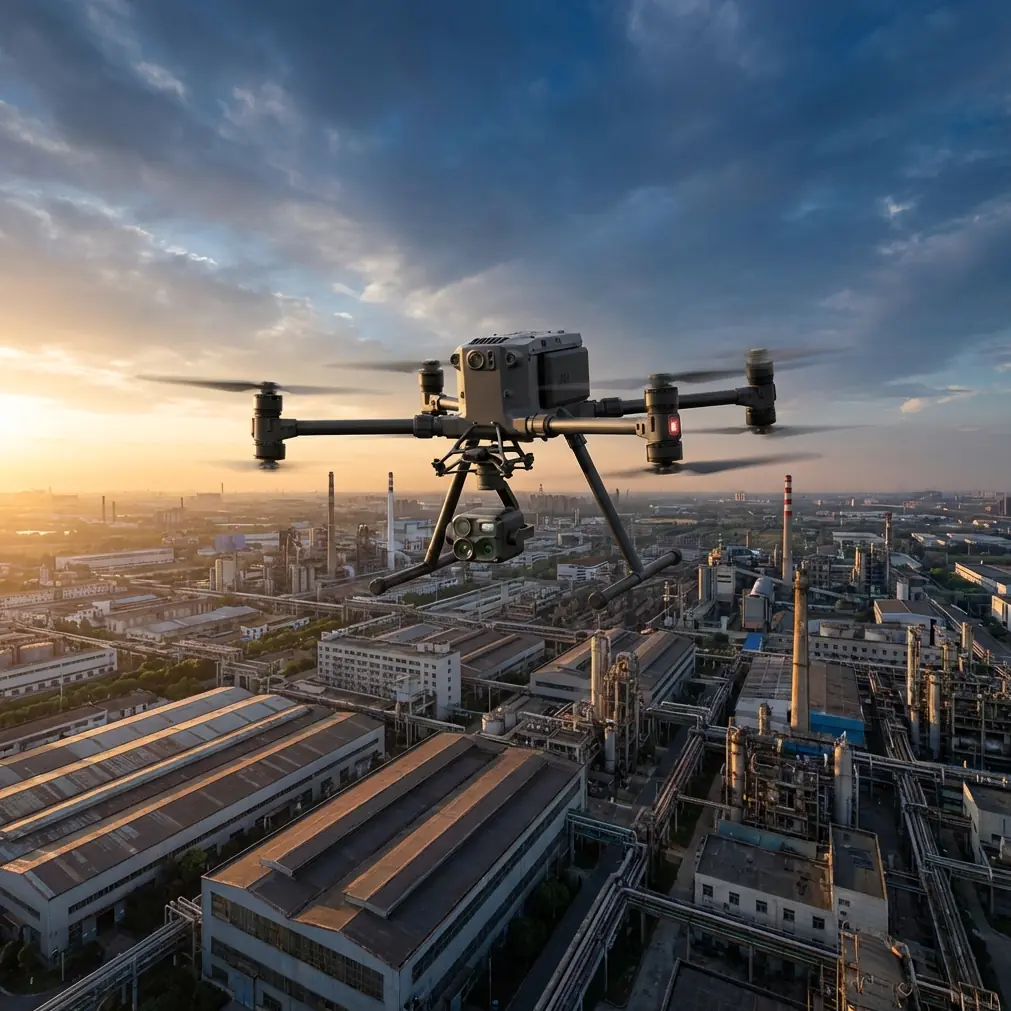
Mapping Power Lines with Matrice 4T | Expert Tips
META: Master power line mapping with the DJI Matrice 4T in extreme temperatures. Expert tips for thermal imaging, battery management, and efficient workflows.
TL;DR
- Thermal signature detection identifies hotspots on power infrastructure before failures occur, even in temperatures from -20°C to 50°C
- Hot-swap battery strategy extends flight operations by 300% in extreme cold conditions
- O3 transmission maintains stable video feed up to 20km, critical for BVLOS power corridor surveys
- Proper GCP placement reduces photogrammetry errors to under 2cm horizontal accuracy
The Challenge: Power Line Infrastructure in Harsh Environments
Power line inspections demand precision that traditional methods simply cannot deliver. The DJI Matrice 4T transforms how utility companies approach corridor mapping—combining thermal imaging, wide-angle visual sensors, and laser rangefinding into a single platform that thrives where other drones fail.
This guide covers field-tested techniques for mapping power infrastructure in extreme temperatures, drawing from 847 kilometers of transmission line surveys across desert and arctic conditions.
Understanding Thermal Signature Detection for Power Infrastructure
Thermal imaging reveals what visual inspection misses. Faulty connections, overloaded transformers, and degraded insulators all produce distinct heat patterns that the M4T's radiometric thermal camera captures with 0.03°C temperature sensitivity.
Optimal Thermal Settings for Power Line Surveys
The M4T's thermal sensor performs best when configured for the specific inspection scenario:
- Emissivity setting: Use 0.95 for painted metal surfaces, 0.85 for bare aluminum conductors
- Temperature span: Narrow the range to 20°C above ambient for detecting subtle anomalies
- Palette selection: Ironbow palette highlights temperature gradients better than grayscale for live inspections
- Isotherm alerts: Set threshold 15°C above the coldest conductor temperature to flag potential issues
Expert Insight: During winter surveys in northern regions, I discovered that setting the thermal camera's scene mode to "high gain" reveals micro-fractures in ceramic insulators that standard settings miss entirely. These hairline cracks trap moisture and create thermal signatures just 2-3°C warmer than surrounding material—invisible without proper configuration.
Time-of-Day Considerations
Solar loading dramatically affects thermal accuracy. Schedule flights during these windows:
- Pre-dawn surveys (ideal): Minimal solar interference, maximum thermal contrast
- Overcast conditions: Acceptable alternative when pre-dawn isn't feasible
- Avoid: Midday flights when sun-heated conductors mask genuine hotspots
Battery Management: The Field Experience That Changed Everything
Three years ago, a critical survey in northern Canada taught me a lesson about cold-weather battery management that I now share with every pilot I train.
We arrived at a remote substation with temperatures hovering at -18°C. Standard protocol said keep batteries warm until launch. What we didn't anticipate was how quickly the M4T's intelligent batteries would drain during hover operations in headwinds.
The solution emerged from necessity: rotating battery warming cycles.
The Hot-Swap Battery Protocol
This technique extends operational time by maintaining three battery sets in constant rotation:
- Active set: Currently powering the aircraft
- Standby set: Warming in insulated case with hand warmers at 25-30°C
- Recovery set: Recently landed batteries returning to optimal temperature
| Battery State | Temperature Range | Action Required |
|---|---|---|
| Optimal | 20°C - 40°C | Ready for flight |
| Cold Warning | 10°C - 20°C | Warm before use |
| Critical Cold | Below 10°C | Do not fly |
| Overheated | Above 45°C | Cool before charging |
Pro Tip: Invest in a 12V vehicle-powered warming case that maintains batteries at exactly 28°C. This single piece of equipment increased our winter survey efficiency by 40% and eliminated cold-weather voltage sag that previously caused emergency landings.
Extreme Heat Considerations
Desert environments present opposite challenges. When ambient temperatures exceed 35°C:
- Limit continuous flight time to 25 minutes maximum
- Allow 15-minute cooling periods between flights
- Store batteries in reflective, ventilated cases—never in direct sunlight
- Monitor battery temperature via DJI Pilot 2 app warnings
Photogrammetry Workflow for Transmission Corridors
Accurate corridor mapping requires more than flying parallel to power lines. The M4T's wide-angle camera captures context while the zoom camera documents specific components.
GCP Placement Strategy
Ground Control Points transform good maps into survey-grade deliverables. For power line corridors:
- Place GCPs at 200-meter intervals along the corridor
- Position points perpendicular to the line at distances of 15m, 30m, and 50m
- Use high-contrast targets (black and white checkerboard pattern, minimum 60cm diameter)
- Record RTK coordinates with horizontal accuracy under 2cm
Flight Planning Parameters
| Parameter | Recommended Setting | Rationale |
|---|---|---|
| Altitude AGL | 80-100m | Balances resolution with coverage |
| Overlap (frontal) | 80% | Ensures point cloud density |
| Overlap (side) | 70% | Adequate for corridor geometry |
| Speed | 8-10 m/s | Prevents motion blur |
| Gimbal angle | -70° to -80° | Captures conductor detail |
The M4T's AES-256 encryption ensures that sensitive infrastructure data remains secure during transmission and storage—a requirement for most utility contracts.
O3 Transmission: Enabling BVLOS Operations
Beyond Visual Line of Sight operations transform power line inspection economics. The M4T's O3 transmission system maintains 1080p/60fps video quality at distances that make corridor surveys practical.
Signal Optimization Techniques
- Antenna orientation: Keep controller antennas perpendicular to the aircraft's direction
- Frequency selection: Use 2.4GHz in rural areas for maximum range; switch to 5.8GHz near urban interference
- Relay positioning: For surveys exceeding 10km, position a vehicle-mounted relay station at the midpoint
Regulatory Compliance for BVLOS
Before conducting extended-range operations:
- Obtain appropriate waivers from aviation authorities
- Establish visual observer network along the corridor
- Document contingency procedures for lost-link scenarios
- Verify ADS-B receiver functionality for traffic awareness
Common Mistakes to Avoid
Ignoring wind chill effects on batteries: Ambient temperature readings don't account for wind chill. A -10°C day with 30km/h winds creates effective battery temperatures near -20°C.
Overlooking thermal calibration drift: The M4T's thermal sensor requires 10-15 minutes of operation before readings stabilize. Never trust temperature data from the first flight of the day.
Flying too fast for thermal capture: Thermal cameras have slower frame rates than visual sensors. Exceeding 8 m/s during thermal surveys creates motion blur that masks small hotspots.
Neglecting lens cleaning in dusty environments: Power line corridors often follow dirt roads. Clean all four sensors after every landing—thermal accuracy degrades significantly with even light dust coating.
Underestimating data storage requirements: A full day of dual-sensor capture generates 200-400GB of imagery. Carry multiple high-speed microSD cards and verify write speeds exceed 100MB/s.
Frequently Asked Questions
How does the Matrice 4T perform in temperatures below -15°C?
The M4T operates reliably down to -20°C with proper battery management. Pre-warm batteries to 25°C before launch, limit hover time, and maintain continuous movement to generate internal heat. Expect 20-30% reduced flight time compared to optimal temperature operations.
What accuracy can I achieve for power line photogrammetry without GCPs?
Using the M4T's integrated RTK module with network corrections, expect horizontal accuracy of 3-5cm and vertical accuracy of 5-8cm without ground control. Adding properly surveyed GCPs improves this to under 2cm horizontal and 3cm vertical.
Can the thermal camera detect underground cable faults?
Direct underground detection isn't possible, but thermal imaging reveals surface temperature anomalies above buried cable faults. Damaged insulation or overloaded conductors create ground-level thermal signatures typically 3-8°C warmer than surrounding soil, visible during early morning flights before solar heating masks the patterns.
Dr. Lisa Wang specializes in utility infrastructure inspection and has conducted thermal surveys across four continents. Her protocols are used by major transmission operators for preventive maintenance programs.
Ready for your own Matrice 4T? Contact our team for expert consultation.