
Matrice 4T in the Mountains: A Field Report on Remote Power
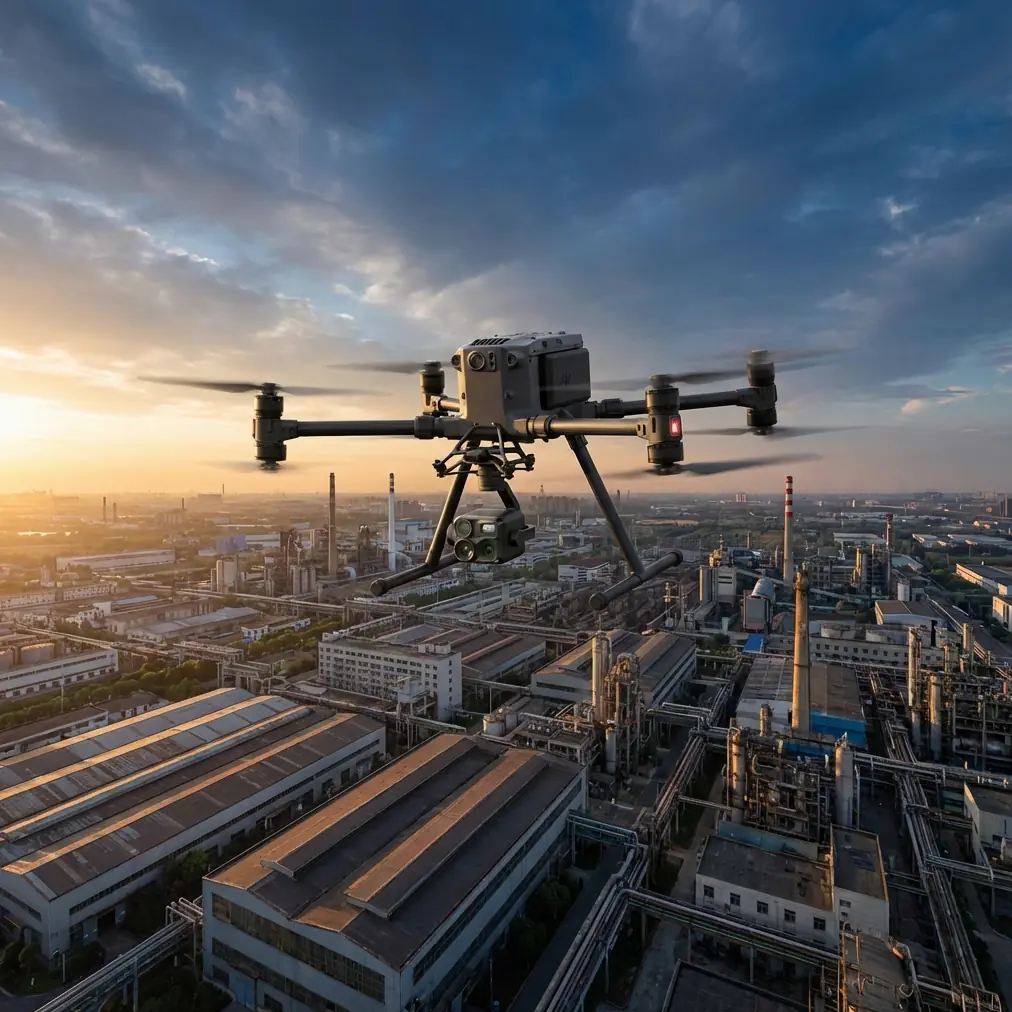
Matrice 4T in the Mountains: A Field Report on Remote Power-Line Mapping
META: Expert field report on using the DJI Matrice 4T for remote power-line mapping, covering thermal signature capture, photogrammetry workflow, O3 transmission, AES-256 security, GCP strategy, hot-swap batteries, and BVLOS planning.
Remote power-line mapping sounds straightforward until you are standing on a ridgeline with patchy access roads, shifting wind, and a transmission corridor that refuses to follow terrain politely.
That is where the Matrice 4T starts to make sense.
This is not a generic drone overview. It is a field-driven look at how the platform fits a real utility workflow: documenting poles, conductors, vegetation encroachment, and thermal irregularities across remote sections of line where traditional inspection methods are slow and expensive. If your job blends mapping, asset condition awareness, and operational resilience, the value of the M4T is less about one headline feature and more about how several systems work together under pressure.
The real problem with remote power-line mapping
Utilities do not just need pretty orthomosaics. They need location accuracy, repeatable data, and the ability to catch issues that normal visual imagery can miss.
Remote corridors add friction to every step:
- access can be limited by terrain or weather
- crews may have narrow weather windows
- signal reliability matters more once the aircraft is beyond easy visual reference
- battery changes become a logistics problem, not a minor inconvenience
- a single missed hotspot or leaning structure can trigger a return trip measured in hours, not minutes
The Matrice 4T sits in that gap between pure survey aircraft and pure inspection drone. For power-line work, that matters because utility teams rarely want separate flights for every objective. They want one deployment to support photogrammetry, thermal review, visual inspection, and decision-making back at the office.
Why the thermal payload changes the mission
The “T” in Matrice 4T is not a branding flourish. For power infrastructure teams, the thermal camera is often the reason the aircraft gets selected in the first place.
A standard RGB map will show conductor spacing, tower geometry, access tracks, and vegetation proximity. It will not directly reveal abnormal heat patterns. Thermal signature data can. That distinction is operationally significant because overheating connectors, imbalanced loads reflected at components, or developing hardware issues may present as temperature anomalies before they become obvious in visible imagery.
In practical field use, thermal is not there to replace mapping. It sharpens the inspection layer inside the mapping mission.
That matters most in remote sections where sending a ground crew back for verification is costly. If the aircraft identifies an unusual thermal signature during the same sortie that captures the corridor model, the utility team can prioritize follow-up work based on evidence rather than suspicion.
This is one of the strongest reasons the Matrice 4T fits power-line operations better than a camera-only platform. You are not collecting just a map. You are collecting context.
Photogrammetry still does the heavy lifting
Even with thermal onboard, photogrammetry remains the structural backbone of a corridor survey.
For power-line mapping, the aim is usually not just to make a visually clean mosaic. The real deliverables tend to include corridor alignment, pole and tower positioning, conductor clearance review, vegetation encroachment analysis, and terrain relationships across long linear assets. Good photogrammetry makes these measurable rather than anecdotal.
The Matrice 4T supports this workflow well because the platform is built for repeatable mission planning rather than ad hoc flying. That becomes more useful in remote line segments where consistency matters. If your team needs to revisit the same corridor after storm events, vegetation management, or repair work, a repeatable flight path gives cleaner before-and-after comparisons.
GCPs also remain relevant. Even a capable aircraft with strong onboard positioning benefits from a disciplined ground control strategy when a utility needs corridor data that can stand up to engineering review. In rugged terrain, carefully placed GCPs improve confidence in the final model, especially where elevation changes can challenge reconstruction consistency.
That is a point many teams learn the hard way. Remote flight capability is not the same thing as survey-grade methodology. The M4T gives you the airborne platform, but output quality still depends on how well the mission is built.
O3 transmission is not a luxury in the backcountry
One of the least glamorous but most consequential details for remote operations is transmission reliability.
On paper, people tend to focus on cameras first. In the field, pilots often become obsessed with link quality, because if your live view degrades or command confidence drops in a mountain corridor, your entire mission slows down. DJI’s O3 transmission system matters here because stable video and control links reduce uncertainty during long corridor runs and inspection passes.
That operational significance is easy to underestimate. A strong transmission system does three things at once:
- It improves pilot confidence during route execution.
- It supports better decision-making when evaluating a suspect pole, connector, or encroachment area in real time.
- It reduces the temptation to fly overly conservative, fragmented sorties that waste daylight.
For remote power lines, efficiency is not about racing. It is about completing useful work without unnecessary breaks in the mission. O3 helps preserve that rhythm.
This becomes even more relevant when teams are planning operations under BVLOS frameworks where permitted and properly approved. I am not suggesting anyone shortcut regulations. Quite the opposite. For legal BVLOS-style utility operations, communication reliability and operational planning become foundational. A platform that supports strong situational awareness is an asset from the very beginning of the risk assessment.
Data security matters more than many utilities admit
Utilities and infrastructure operators are becoming more serious about data handling, and rightly so.
The Matrice 4T’s AES-256 support is not a checkbox feature for procurement teams to glance at and ignore. It has practical significance in workflows where imagery, thermal findings, infrastructure layouts, and maintenance records are part of a broader operational data environment. Power-line maps can reveal access routes, substation relationships, and vulnerable asset locations. Even if the mission is entirely civilian and routine, the data is still sensitive from a commercial and infrastructure standpoint.
AES-256 matters because security is now part of mission planning, not just IT policy. If the platform is going to be used across distributed utility teams, contractors, and asset managers, encryption support helps keep field collection aligned with modern data governance expectations.
That may not change how the aircraft flies. It absolutely changes how confidently an organization can deploy it at scale.
Battery strategy is where long corridors are won or lost
Remote line work punishes sloppy battery planning.
This is why hot-swap batteries deserve more respect than they usually get in marketing material. On a long inspection day, especially in isolated areas, the ability to swap power quickly without dragging out turnaround time has a direct impact on sortie count, daylight use, and crew fatigue.
The significance is simple: power-line corridors are linear, repetitive, and often far from ideal launch points. Every minute spent awkwardly rebooting workflow or rebuilding mission readiness chips away at usable field time. Hot-swap capability reduces those gaps.
For a utility contractor covering multiple disconnected line segments in one day, this can be the difference between finishing the planned assets and leaving one section for another trip. That is not a minor convenience. That is margin.
It also changes the cadence of thermal work. Thermal inspection often benefits from timing discipline, whether that means catching assets under certain load conditions or working within a useful environmental window. Faster battery turnover helps keep that timing intact.
A third-party accessory that genuinely helped
On one remote corridor project, the most useful upgrade was not a dramatic payload change. It was a third-party high-visibility landing pad and anchor kit used at improvised launch sites along uneven ground.
That may sound almost trivial until you have to launch repeatedly from dusty clearings, rocky access tracks, or scrubland beside utility easements. A stable, visible takeoff zone reduces debris ingestion risk, gives the pilot a cleaner visual reference, and speeds handover between crew roles. In rough terrain, simple accessories often do more for mission consistency than flashy add-ons.
I have also seen teams benefit from rugged third-party RTK/GNSS field kits to support faster GCP deployment and check-point verification, but if I had to name one accessory that improved the day in a direct, repeatable way, it would be the landing pad system. Remote operations reward practical thinking.
If you are sorting out field setups for corridor work, this is the kind of detail worth discussing with an experienced deployment partner: message a Matrice specialist here.
Building a power-line workflow around the M4T
The strongest Matrice 4T operations are usually the ones that avoid treating it as a single-purpose aircraft.
A productive remote utility workflow often looks like this:
1. Pre-mission corridor planning
The team defines the section length, terrain profile, access options, weather exposure, and communication constraints. GCP placement is planned before anyone starts improvising in the field. BVLOS considerations, if relevant and legally authorized, are built into the risk model from the start rather than patched in later.
2. Mapping pass
The aircraft flies a structured route to generate corridor imagery suitable for photogrammetric processing. The goal is complete overlap and repeatability, not artistic flying.
3. Targeted visual and thermal inspection
Once baseline coverage is secured, the team conducts closer review on structures, joints, insulators, and vegetation pressure points. This is where the thermal signature layer becomes valuable, especially when a component looks ordinary in visible imagery but behaves differently in heat.
4. Data QA in the field
Before leaving the site, the crew checks image completeness, thermal usefulness, and any obvious reconstruction risks. In remote environments, this step saves entire return journeys.
5. Office processing and asset interpretation
Orthomosaics, 3D models, and thermal observations are then tied back to pole IDs, maintenance history, and vegetation management needs.
The M4T does not eliminate the need for a disciplined workflow. It rewards one.
Where it fits best, and where teams should be realistic
The Matrice 4T is especially well suited to power-line projects where the operator needs both mapping output and inspection-grade situational detail. That combination is common in remote utility work because one visit to the corridor must often answer several questions at once.
It is a strong fit for:
- mountainous or remote line segments
- post-weather event corridor reviews
- vegetation encroachment monitoring
- thermal screening of selected components
- recurring asset documentation over time
Teams should still be realistic about expectations. If the mission is pure high-accuracy surveying across very large territories, there may be cases where a dedicated fixed-wing mapping platform has endurance advantages. If the mission is extremely close technical inspection in dense structure environments, specialized workflows may still be needed. The M4T earns its place by bridging missions that usually get split apart.
That is exactly why it works for remote power lines.
What stands out after repeated field use
Three details keep resurfacing in real utility operations.
First, the thermal camera changes prioritization. It helps crews separate ordinary visual wear from issues that deserve immediate engineering attention.
Second, O3 transmission improves field confidence in places where terrain and distance make weak links unacceptable. It is not just a convenience feature; it protects mission continuity.
Third, hot-swap batteries preserve momentum. In remote corridor work, momentum is a resource.
Add AES-256 for data security and a disciplined GCP-backed photogrammetry workflow, and the Matrice 4T becomes more than a drone with multiple sensors. It becomes a practical infrastructure tool that respects the realities of utility fieldwork: distance, terrain, limited access, and the cost of missing something the first time.
For teams mapping remote power lines, that mix is what gives the aircraft its value. Not hype. Not spec-sheet theater. Just capability aligned with the way infrastructure work actually happens.
Ready for your own Matrice 4T? Contact our team for expert consultation.