
Matrice 4T Field Report: Mapping Urban Venues When the Real
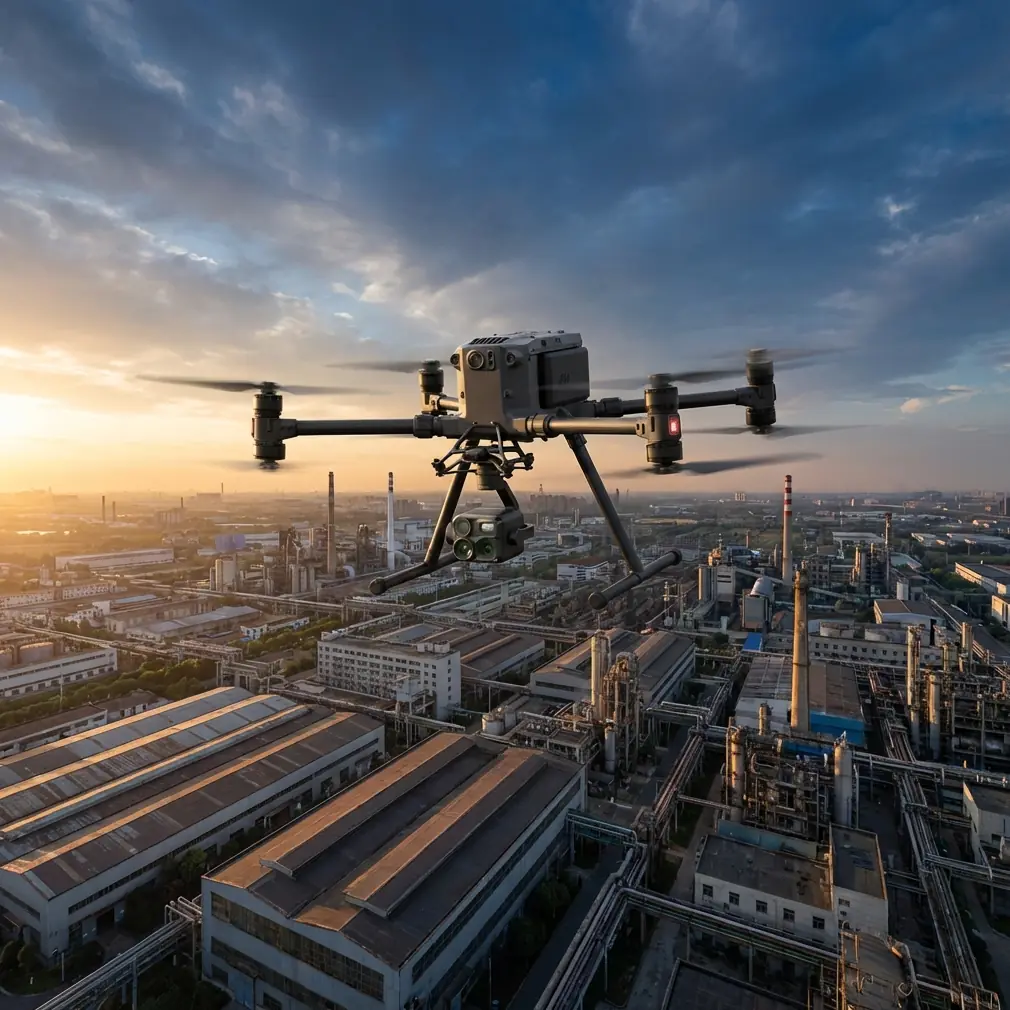
Matrice 4T Field Report: Mapping Urban Venues When the Real Challenge Isn’t the Map
META: A field-tested look at using the Matrice 4T for urban venue mapping, with practical insight on thermal signature detection, display readability, photogrammetry workflow, and why lighting and data architecture matter in the field.
The most revealing part of an urban venue mapping mission usually isn’t the final orthomosaic. It’s the sequence of small operational decisions that either keep the data clean or quietly degrade it.
I was reminded of that on a pre-dawn survey of a mixed-use event venue bordered by service roads, reflective glass, rooftop HVAC clutter, and a narrow landscaped corridor that management wanted modeled before renovation. The assignment sounded straightforward: generate current site geometry for planners, document rooftop assets, and verify pedestrian circulation zones without interrupting morning setup crews. Typical city work. Tight airspace logic, compressed timeline, too many surfaces that throw light and heat in odd ways.
The Matrice 4T handled the site well, but not for the reasons most casual buyers focus on. In dense urban mapping, capability is less about a headline spec and more about how the aircraft’s sensing, transmission, display readability, and data discipline work together under imperfect conditions.
That distinction matters.
Why urban venue mapping stresses a platform differently
A venue in a city is not an open agricultural block or a clean industrial yard. You’re dealing with layered materials, varied elevations, transient people, reflective façades, signage, shadows, ventilation exhaust, and often a patchwork of GNSS conditions depending on where the aircraft is relative to nearby structures. Even before you think about photogrammetry, the site itself is trying to confuse your sensors.
For a Matrice 4T operator, this means the mission is rarely just “fly a grid and process later.” It is a live interpretation exercise.
The 4T’s value in this setting is tied to sensor fusion and operator awareness. Thermal signature review can help separate temporary heat anomalies from fixed rooftop infrastructure. Visual payload data supports geometry capture. Stable transmission matters because urban venue work often forces the pilot to reposition repeatedly to maintain clean sightlines around structures, lighting trusses, or roof parapets. Features like O3 transmission and AES-256-secured data links aren’t just checklist items in this context. They support continuity and confidence when you’re operating around commercially sensitive sites where signal reliability and data protection are both operational concerns.
A venue owner doesn’t care that the aircraft has a sophisticated stack on paper. They care that the final deliverables reflect the actual site instead of a distorted one.
The wildlife moment that changed the sortie
This mission also had one of those moments that reminds you why broad-area sensing matters even on a commercial job.
We were running an early perimeter pass along the landscaped pedestrian edge before the venue opened to contractors. On visible imagery, the shrub line looked static. On thermal, there was a compact heat source tucked beneath a low ornamental hedge near a service access point. It turned out to be a fox that had settled into a warm pocket beside a retaining wall after the night. In a normal urban mapping workflow, that detail might sound irrelevant. It wasn’t.
We adjusted the low-altitude segment and delayed one corridor run rather than pressure the animal into moving unpredictably across the service lane. That prevented both unnecessary disturbance and a likely gap in the capture sequence. It also kept ground staff from walking into the area during setup.
This is where “thermal signature” stops being a buzzword and becomes practical field intelligence. On venue projects, thermal isn’t only for roof moisture hints or equipment checks. It can reveal occupancy, heat leakage, and transient conditions that affect how you safely and efficiently complete a mapping task. In urban environments, those transient conditions include wildlife more often than people expect.
A good map starts with what the pilot can actually read
One of the least glamorous truths in drone operations is that readability drives quality. If the pilot or payload operator cannot interpret on-screen information cleanly and quickly, mission quality suffers long before the aircraft itself reaches its limits.
The reference material behind aircraft display and lighting design makes this point with unusual precision. One source defines contrast in instrument and illuminated marking systems as a function of the luminance relationship between the mark and its adjacent background. That isn’t abstract engineering trivia. It’s directly relevant to any operator staring at a controller screen in mixed light, trying to distinguish map overlays, thermal edges, obstacle cues, and exposure detail.
The same source warns that when contrast is too high, markings can appear to “float,” creating a visual illusion that slows or distorts interpretation. In practical drone terms, this matters during urban venue mapping where the operator is bouncing between visible imagery, thermal views, telemetry, and mission geometry. Too little distinction and fine details disappear. Too much and edge perception becomes deceptive, especially in low-light transitions.
Another detail from the reference stands out even more: the recommended uniformity should not exceed a range of about 1:3 to 1:5. That guidance was developed for illuminated aircraft instrumentation, yet the operational lesson transfers surprisingly well. Consistent display presentation helps the eye maintain speed and accuracy. In the field, that means carefully managing screen brightness, map layer styling, and thermal palettes so that the operator isn’t constantly re-adapting to visual imbalance.
When mapping venues at dawn, dusk, or under patchy urban lighting, these human-factors issues become mission issues.
This is one reason experienced Matrice 4T crews often produce better data than less disciplined teams flying equivalent hardware. They treat readability as part of aviation practice, not as a convenience setting.
The hidden relevance of legacy aircraft system architecture
At first glance, a traditional aircraft design handbook with chapter sections like 27-90-00 flight control data recording, 33 lighting systems, and 34-70 satellite navigation seems far removed from a modern drone workflow. It isn’t.
Those chapter structures reflect a systems mindset: aircraft are managed as interdependent functions, not isolated features. For Matrice 4T urban mapping, that same mindset is the difference between merely capturing images and running a professional survey operation.
Take 27-90-00, flight control data recording. In drone work, detailed logs are often treated as afterthoughts until something goes wrong. But in venue mapping, recorded flight data has operational significance even when everything goes right. It supports repeatability for phased redevelopment surveys, helps explain coverage anomalies, and creates traceability when project teams compare one dataset against another months later.
Then consider 33, the lighting system category. While a drone operator isn’t designing cockpit lighting, the principle of controlled illumination still applies in preflight setup, landing zone management, and payload interpretation. Uneven or poorly managed visual conditions can affect takeoff checks, screen readability, and even the consistency of visual data review after landing.
And 34-70, satellite navigation, may be the most obvious bridge to urban mapping work. In dense venues, satellite geometry and local obstruction patterns affect confidence in automated path execution, hover stability, and geospatial consistency. That is why serious operators don’t rely on GNSS alone. They support the workflow with disciplined GCP placement where appropriate, validate alignment in processing, and keep a sharp eye on where structure-induced positional drift may appear.
The handbooks come from a different era and platform category, but their systems logic still holds. Good drone operations borrow heavily from that discipline.
Building a cleaner urban venue dataset with the Matrice 4T
For a venue project, the Matrice 4T performs best when used as part of a layered capture plan rather than a one-pass machine.
My preferred sequence looks something like this:
First, a high-level reconnaissance orbit to identify thermal outliers, transient vehicles, rooftop exhaust plumes, and public movement patterns. This isn’t just situational awareness. It helps decide whether the primary photogrammetry block should begin on the roof plane, outer perimeter, or pedestrian frontage.
Second, a structured visual capture pass for photogrammetry. In urban sites, geometry suffers when operators let the software dictate everything. Tall edges, overhangs, façade interruptions, and rooftop clutter often need supplemental obliques. If the venue includes signage bands or decorative canopies, add manual acquisition while light is still consistent.
Third, targeted thermal review. This is where the 4T can add more than a map. A thermal layer can help distinguish active plant from passive rooftop elements, identify heat-affected zones around mechanical systems, and flag areas where apparent geometry in visible imagery may be complicated by environmental conditions. Even if thermal data isn’t part of the final client package, it can improve interpretation of the visual set.
Fourth, control and verification. Urban venues often tempt operators to skip GCPs because access is awkward. That is a mistake when the output will be used for planning, design coordination, or phased comparison. Even modest GCP support can materially improve confidence in the final model, particularly when the venue has repetitive hardscape or vertical features that complicate alignment.
This is where the Matrice 4T earns its place. It gives you rapid context switching between mapping logic and inspection logic without changing aircraft.
Transmission, battery rhythm, and why continuity matters
Urban venues compress time. Access windows close. Delivery trucks arrive. Setup staff appear. A roof that was empty at 6:15 may be crowded by 7:00.
That makes continuity critical.
O3 transmission helps in ways that are not always obvious from a product page. In real urban work, stable link performance reduces the need to abandon a planned track just because the aircraft passes behind partial visual clutter for a moment. It also cuts the cognitive load on the operator, who already has enough variables to manage. Clean link behavior supports cleaner data capture.
Battery workflow matters just as much. If you’re running sequential venue blocks before operations start on site, hot-swap batteries are not about convenience. They preserve momentum. A long interruption between passes can change shadow angles, surface occupancy, and thermal conditions enough to complicate merging or comparison. The best mapping windows in cities are often short. Keeping the aircraft moving inside that window has direct data value.
And yes, data security is part of professionalism here. Many urban venues host private events, manage controlled infrastructure, or sit inside commercially sensitive districts. AES-256-secured handling is relevant because mapping is rarely just geometry anymore. It can expose roof layouts, access patterns, equipment placement, and operational flow. That information deserves protection.
BVLOS talk misses the real point for venue operators
BVLOS often gets pulled into any serious drone discussion, but for urban venue mapping the more useful conversation is operational readiness for constrained environments. Even if a project remains strictly within visual line of sight, the discipline associated with more advanced operations still improves results.
That means route planning with contingencies, communication protocols for ground teams, pre-identified emergency landing options, and thoughtful sequencing around pedestrian activation. The Matrice 4T is capable, but capability without process is how people end up with incomplete datasets and messy reruns.
A well-run venue mission looks calm from the outside because all the complexity has been resolved before takeoff.
What the Matrice 4T does best in this niche
After enough city projects, I’ve come to see the Matrice 4T less as a “thermal drone” and more as an urban site intelligence platform. For venue mapping, that distinction matters.
It handles the overlap between survey capture, rooftop observation, thermal context, and operational awareness with unusual efficiency. It lets one crew answer multiple questions during the same air window: What is the geometry? What is temporary versus fixed? Where are the access conflicts? Are there heat anomalies that explain what we’re seeing in visible data? Is the site truly clear for the next pass?
That broad capability reduces repeat visits, and repeat visits are often where cost, delay, and data inconsistency creep in.
If your team is refining an urban venue workflow around the Matrice 4T and wants to compare notes on control strategy, sensor setup, or processing logic, you can message James directly here.
Final field takeaway
The biggest mistake I see with the Matrice 4T is treating it like a single-purpose capture tool. In urban venue mapping, it works best when the pilot thinks like a systems engineer and a field surveyor at the same time.
The old aircraft design references behind lighting, navigation, and flight data recording still have something to teach modern drone crews. Contrast affects perception. Uniformity affects speed and accuracy. Navigation is only one part of positional confidence. Data logging is part of quality assurance, not just incident review. Those aren’t academic ideas. They shape whether a venue map is dependable enough to build decisions on.
And sometimes, if you’re paying attention, they also help you spot a fox before the city wakes up.
Ready for your own Matrice 4T? Contact our team for expert consultation.