
Matrice 4T for Windy Venue Mapping: A Technical Review
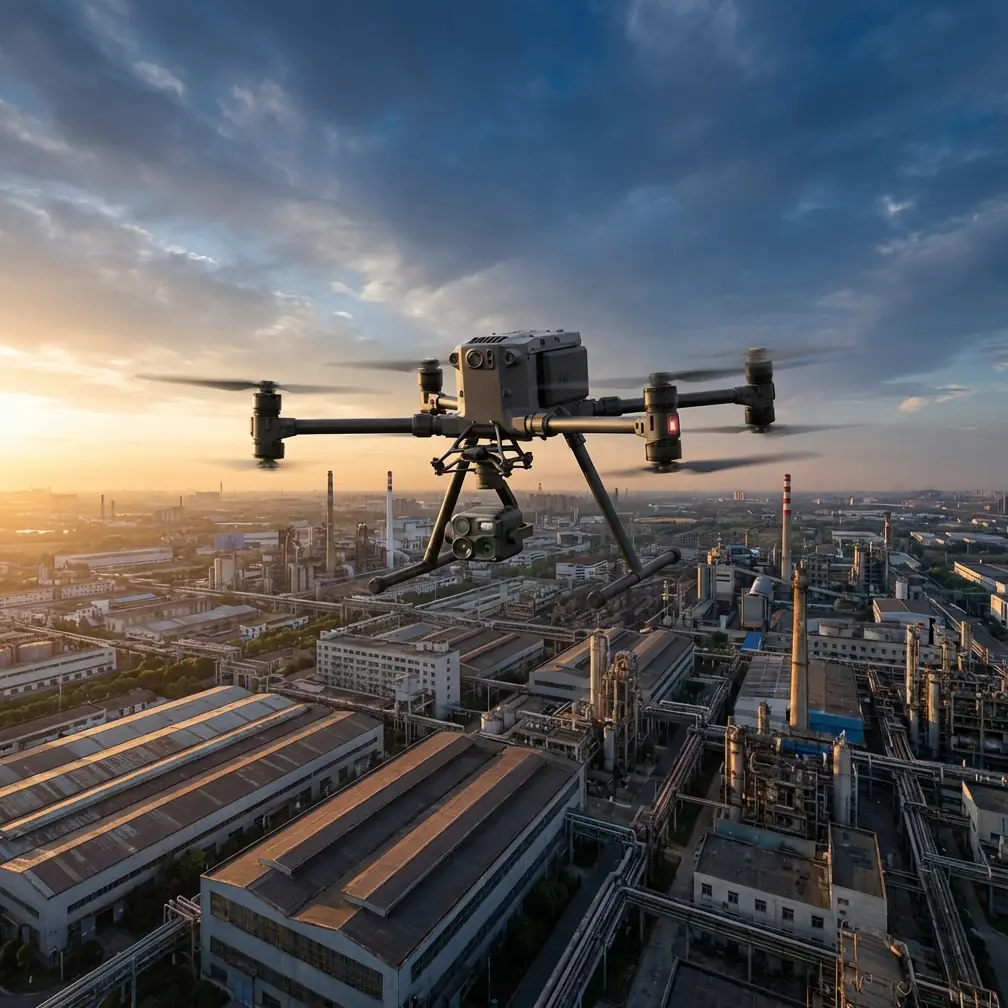
Matrice 4T for Windy Venue Mapping: A Technical Review from the Field
META: Expert review of the Matrice 4T for mapping large venues in windy conditions, with practical insight on stability, thermal workflows, transmission, and why small mechanical tolerances still matter.
I’ve had more venue mapping jobs disrupted by wind than by rain.
That usually surprises people outside flight operations. Rain is obvious. Wind is deceptive. A large stadium, racecourse, fairground, or outdoor event site can look manageable from the parking lot, then turn into a turbulence trap once you’re above rooflines, lighting masts, grandstands, and heat-radiating concrete. The aircraft is not just dealing with a steady crosswind. It is dealing with shear, rotor wash-like eddies around structures, and repeated small attitude corrections that can quietly degrade image consistency.
That is why the Matrice 4T is interesting for this kind of work. Not because it magically cancels weather, but because it changes how much operational friction the crew has to absorb when conditions are less than ideal.
For venue mapping in wind, the real question is not whether a drone can fly. Many can. The question is whether it can hold a clean, repeatable data collection pattern while still giving the pilot enough confidence to make good decisions, especially when the mission mixes photogrammetry, thermal signature review, and quick situational checks around complex structures.
Where venue mapping actually gets difficult
A windy venue mission rarely stays inside one neat category.
You may start with photogrammetry for a site model, then need oblique passes around seating structures, then a thermal check on rooftop assets, then a visual confirmation of temporary installations or utility runs. If the venue is active or on a tight prep schedule, downtime matters. Battery swaps matter. Link stability matters. So does the operator’s confidence in how the aircraft responds when air becomes messy around built structures.
This is where I think many “spec-first” reviews miss the point. Aircraft performance on paper is only part of the story. The workflow has to stay coherent when the environment becomes unstable.
The Matrice 4T fits that reality well because it is built for mixed-sensor, high-consequence commercial work rather than single-purpose hobby capture. For venue teams, that matters more than raw marketing language ever will.
Why wind punishes mapping quality before it punishes flight safety
A lot of crews think about wind in terms of whether the aircraft can remain airborne. That’s the wrong threshold for mapping.
Long before a drone approaches a true control issue, wind can already be degrading output:
- overlap becomes inconsistent
- camera angle variations increase
- repeated micro-corrections change the image set’s uniformity
- thermal interpretation becomes less straightforward around heated or shaded surfaces
- operators shorten missions prematurely to stay conservative
If you are building a venue model for planning, maintenance, drainage analysis, or temporary infrastructure design, those small inconsistencies can create expensive downstream cleanup.
This is why stable transmission and responsive control matter just as much as airframe strength. The Matrice 4T’s O3 transmission stack is operationally significant here because in gusty environments, confidence in the link affects pilot behavior. When the signal path remains solid around steelwork, roofs, and broad event structures, the pilot is less likely to overcorrect or abandon useful geometry too early. That translates into cleaner data, not just a less stressful flight.
Add AES-256 into the conversation and it becomes more relevant for venue operators than some people assume. Stadiums, transport hubs, and private event sites often involve sensitive layouts, utility routes, or temporary security-adjacent infrastructure that clients do not want casually exposed. Encrypted transmission is not a luxury feature in those environments. It is part of responsible data handling.
Thermal isn’t just a bonus sensor on venue work
The “T” in Matrice 4T matters more on venue mapping jobs than many teams expect.
A pure photogrammetry mission might satisfy a design consultant, but facilities managers often need more than geometry. They want to know whether rooftop HVAC zones are behaving oddly, whether electrical clusters are showing suspicious heat patterns, or whether water intrusion areas are creating thermal anomalies under certain conditions. On a large venue, those questions can be folded into the same operation if the aircraft supports that workflow natively.
That is where thermal signature review earns its place. Not as a cinematic extra, but as a practical second layer of inspection while the crew is already on site.
I’ve seen this become especially useful on windy days because return visits are harder to justify once access windows close. If the aircraft can gather mapping data and support thermal interpretation in the same field session, the crew gets more value from every battery cycle and every weather opening.
What my older field notes taught me about “small” mechanical details
Years ago, on a different platform and a very different project, we spent far too much time chasing what looked like random inconsistency in flight behavior and image repeatability. The root cause was not dramatic. It was cumulative. Small mechanical tolerances, surface treatments, and wear conditions in fastening interfaces were affecting reliability more than the team wanted to admit.
That lesson came back to me while revisiting aircraft design references on fastener coatings and control systems.
One reference states that for coated threads, cylindrical plating increases diameter by 2 times the coating thickness, while the thread pitch diameter effectively increases by 4 times the coating thickness because of how the flanks are measured. That sounds like a tiny manufacturing note, but it has real operational significance. On an aircraft that lives through transport, setup, teardown, vibration, and repeated maintenance, thread treatment is not cosmetic. If tolerances are not properly accounted for before coating, fit and preload consistency can drift. On equipment used for precision capture, that can show up as looseness, premature wear, or uneven assembly behavior over time.
Another detail from the same source is even more revealing: if nominal or minimum coating thickness is specified without a tolerance, a positive deviation of 50% is recommended in one case, while another condition references a 30% positive deviation for accommodating coating allowance. Again, not glamorous. But this is how serious aerospace hardware is thought about. Margins are engineered. Surface finishing is treated as a dimensional event, not decoration.
Why bring that up in a Matrice 4T review?
Because professionals mapping venues in windy conditions should care whether the platform lineage and design culture come from an ecosystem that respects these details. In rough air, repeated corrections travel through every structural and mounting interface on the aircraft. The reliability you feel in the field often starts with engineering discipline that users never see.
The hidden value of control-system thinking
The second reference, focused on helicopter control design, sounds far removed from a multirotor at first glance. It isn’t.
One passage describes how longitudinal, lateral, and collective control inputs are combined through a compound control linkage, with three control nodes arranged in triangular geometry on the stationary ring of the swashplate. Another notes that hydraulic dampers may be introduced to limit excessive motion speed, preventing overly abrupt manual inputs or over-speed outputs from high servo voltage conditions.
Why does that matter for a venue mapping operator using a Matrice 4T?
Because it points to a broader truth: stable aerial work depends on how intelligently control inputs are blended, moderated, and translated into aircraft response. In wind, the best aircraft do not merely react quickly. They react cleanly. They avoid turning every gust and every pilot correction into a visible disturbance in the dataset.
That same helicopter reference also discusses artificial feel systems, where modern boosted controls need simulated force feedback because the direct aerodynamic feel is no longer naturally present. The commercial drone equivalent is not a literal spring-loaded force system in the same form, but the operational principle is familiar: the pilot’s interface has to support precise, non-oscillatory control rather than encouraging overcorrection.
Anyone who has mapped around grandstands in gusting air knows the danger of pilot-induced oscillation in miniature. Not a true loss of control. Just enough unnecessary correction to spoil consistency. Good aircraft and good human-machine interface design reduce that tendency. The Matrice 4T feels built with that kind of professional restraint in mind.
Why this platform is practical for venue teams
For venue mapping specifically, I see five reasons the Matrice 4T makes sense.
1. It supports mixed-output missions
You are not limited to pretty orthos. A single deployment can support visual documentation, thermal signature review, and broader site awareness. For venues managing maintenance, tenant turnover, event infrastructure, or insurance-related documentation, that combination matters.
2. O3 transmission helps preserve mission discipline
In windy conditions, pilots become conservative for good reason. A robust transmission link reduces uncertainty when working around complex structures, temporary towers, roof equipment, and broad open spaces with interference sources. Better link confidence often leads to better grid discipline and fewer broken runs.
3. AES-256 fits sensitive commercial environments
Large venues are often private operational spaces with network infrastructure, plant equipment, restricted access routes, and temporary layouts that clients prefer to keep controlled. Secure transmission is part of professional practice, not an afterthought.
4. Hot-swap batteries save weather windows
This is one of those features that sounds ordinary until you are racing a shifting forecast. In windy mapping work, especially at large venues, mission continuity matters. Hot-swap batteries reduce interruption and help crews preserve setup state and momentum. When usable conditions open for only a short period, that efficiency is not trivial.
5. It can support more advanced operating models
For larger sites, BVLOS planning may become relevant where regulations, waivers, and local procedures allow it. I’m not suggesting crews stretch beyond legal limits. The point is that the Matrice 4T sits in the class of aircraft that belongs in serious operational planning, not just ad hoc capture.
Photogrammetry in wind: the Matrice 4T mindset
If you’re mapping venues in gusty conditions, the aircraft alone won’t save the mission. The workflow still has to be disciplined.
I’d approach the Matrice 4T like this:
- establish GCP strategy before launch, especially where wind may reduce confidence in edge geometry
- separate “must-have” nadir capture from “nice-to-have” obliques
- use thermal opportunistically rather than as a completely separate mission when site conditions align
- preserve battery continuity so you don’t lose the day to repeated resets
- review transmission behavior around high-structure zones early, not halfway through the job
That’s the sort of planning where this platform earns its keep. It reduces friction across the full mission rather than excelling only in one isolated feature.
If you’re working through venue-specific mission planning and want to compare setup options, this direct WhatsApp line for field workflow questions is a practical place to start.
The bigger takeaway
What impressed me about the Matrice 4T in the context of windy venue mapping is not one headline feature. It is the way the platform aligns with how real commercial operations behave when conditions are imperfect.
Wind exposes weak assumptions. It punishes shaky links, clumsy battery workflows, poor sensor integration, and aircraft that force the pilot to fight for smoothness. It also reminds us that precision begins long before takeoff, in the engineering culture behind the machine. The reference details on coated-thread allowances — where pitch diameter can shift by 4 times coating thickness and pre-coating dimensions must be adjusted accordingly — and the helicopter control-system emphasis on damping and blended input paths point to the same underlying principle: aerial reliability is built from disciplined control of small things.
That is exactly why the Matrice 4T stands out for venue work.
It is not merely capable of flying over a stadium in a breeze. It is better suited to turning a difficult, mixed-purpose, wind-affected mission into a usable dataset with fewer compromises. For mapping professionals, that distinction is everything.
Ready for your own Matrice 4T? Contact our team for expert consultation.