
Matrice 4T on Broken Ground: A Construction Monitoring Case
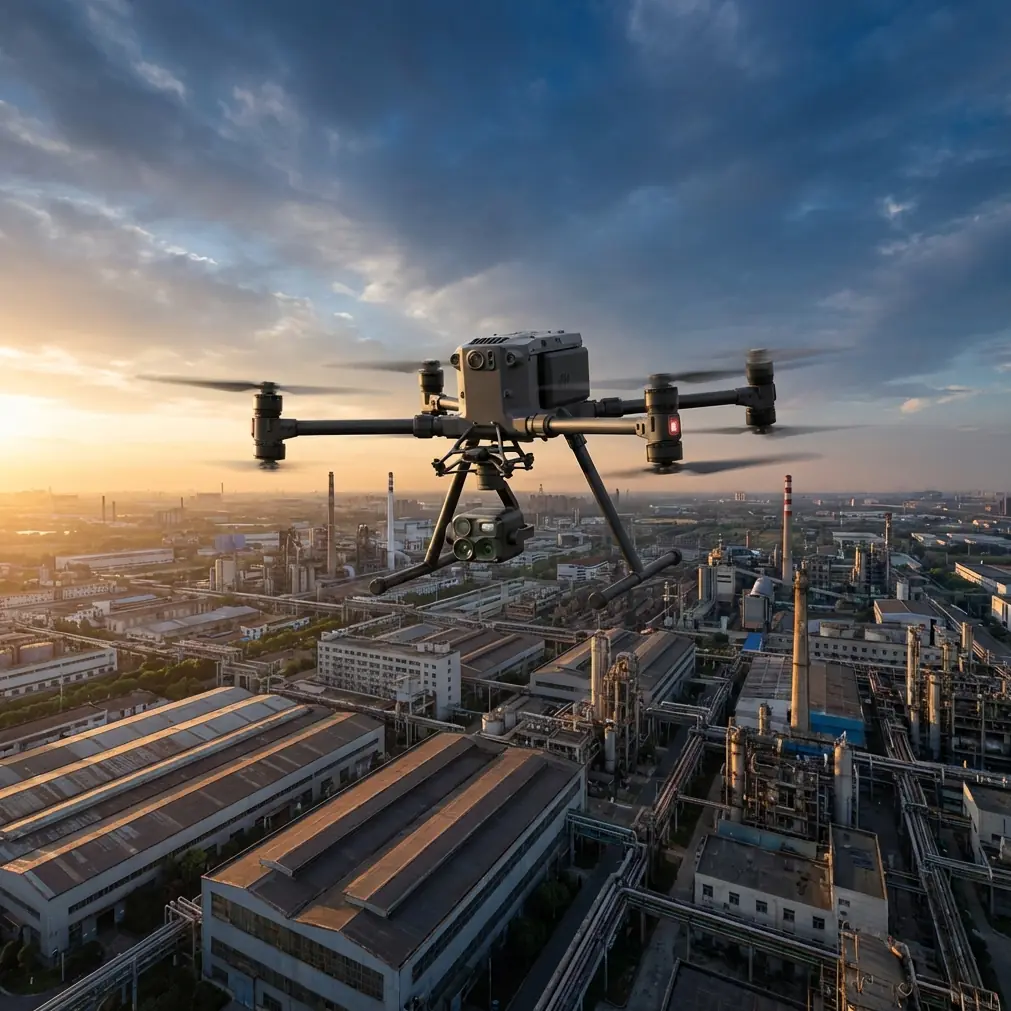
Matrice 4T on Broken Ground: A Construction Monitoring Case Study from Complex Terrain
META: Expert case study on using Matrice 4T for construction site monitoring in complex terrain, with thermal workflows, photogrammetry planning, transmission reliability, and field safety insights.
By Dr. Lisa Wang, Specialist
A drone does not care whether a jobsite sits on a neat industrial pad or on a steep, fractured piece of ground where haul roads twist around cut slopes and fog hangs low over the valley floor. The people managing the site care very much. Complex terrain punishes blind spots, delays, and weak data discipline. That is where the Matrice 4T becomes useful—not because it is fashionable, but because it helps compress uncertainty into something operators can actually work with.
This case study looks at a civilian construction monitoring workflow built around the Matrice 4T in a terrain-challenging environment: uneven grades, narrow access corridors, changing light, and mixed vegetation around active earthworks. The point is not to repeat a specification sheet. It is to show how sensor choice, flight planning, and field procedure combine when the drone is expected to support real site decisions.
The Site Problem Was Not Distance. It Was Geometry.
The project involved a hillside construction zone with staggered work fronts. One crew was excavating near a retaining structure. Another was moving material along a temporary access track that disappeared behind ridgelines. A third was preparing a drainage section where water runoff changed the ground conditions almost daily.
On paper, the site looked manageable. In practice, it behaved like several separate sites stitched together by poor visibility.
Traditional observation from the ground kept missing key transitions: slope saturation after rain, stockpile creep at the edge of haul routes, and heat irregularities from temporary electrical equipment positioned near material storage. The client did not simply need aerial photos. They needed a repeatable way to connect visual context, thermal signature, and map-grade site records.
That is where the Matrice 4T made sense.
Why the Matrice 4T Fit This Job
For construction monitoring in difficult terrain, the best platform is usually the one that reduces handoffs. Every extra device, every battery swap that interrupts a sequence, every separate thermal tool, and every delayed map export creates room for missed conditions.
The Matrice 4T let the team work from a single aircraft across three parallel tasks:
- visual progress tracking
- thermal inspection of temporary infrastructure and disturbed ground
- photogrammetry capture for terrain-aware documentation
That combination mattered because the site changed faster than reporting cycles. A slope cut that looked acceptable in a daytime RGB pass could show a different pattern after sunset when retained moisture and temperature variation became easier to see. A haul route that seemed open from one angle could reveal rutting and edge breakdown in a gridded reconstruction.
The value was not “more data.” It was better alignment between data types.
A Wildlife Moment That Changed the Morning Flight
On the second week of monitoring, the team launched at first light to capture low-angle imagery over a newly cut bench above the drainage line. Before the aircraft reached the far edge of the survey box, the thermal view revealed an unexpected hotspot cluster near scrub cover just outside the active work zone.
It turned out to be a small group of wild boar moving across the slope.
That matters for two reasons. First, the thermal payload saw them before visual observers on the ground did, because vegetation and contour hid the movement. Second, the operator adjusted the flight path immediately to avoid stressing the animals while also warning the site supervisor that a crew should not enter that section yet.
This is one of the underappreciated strengths of thermal capability on construction sites in mixed natural terrain. It is not only about equipment heat or building envelope work. It can help crews avoid accidental interactions with wildlife at dawn, dusk, or in brush-heavy areas where line of sight is poor.
Thermal Was More Than a Nice Add-On
Construction managers often underestimate thermal until they see what it catches in context. On this site, thermal was used for three practical checks.
The first was temporary power equipment. Portable distribution points and generator-related components do not need to fail completely to become a problem. A rising thermal pattern can indicate uneven loading, restricted ventilation, or placement issues long before a shutdown.
The second was water movement. In complex terrain, moisture does not spread evenly. It channels. After rain, the thermal sensor helped distinguish sections of fill and cut where retained moisture suggested drainage inefficiency or localized saturation. That kind of early signal is useful when site teams are trying to prevent edge softening, vehicle instability, or material loss.
The third was nighttime perimeter awareness around stored materials and idle machinery. This was not a security operation in any sensitive sense. It was routine asset and safety awareness on a civilian site where visibility changes dramatically after dark.
The operational significance is simple: thermal reduces the chance that a visual-only workflow will miss unstable or high-risk conditions created by terrain, weather, or temporary infrastructure.
Photogrammetry Only Works When the Planning Is Honest
Many construction teams say they want photogrammetry when what they really want is a pretty orthomosaic. Those are not the same thing.
On steep or broken ground, photogrammetry becomes unforgiving. Shadow, elevation change, inconsistent overlap, and occlusion from equipment can degrade outputs quickly. The Matrice 4T was therefore used with a disciplined capture routine tied to GCP placement and repeatable flight geometry.
Ground control points were positioned where they could survive site traffic and still represent the elevation shifts that mattered. This was critical. Without solid GCP strategy, the terrain model would flatten important transitions or introduce positional uncertainty right where engineers needed confidence.
The team captured repeated datasets over the same sectors so that volumetric changes and cut/fill progress could be compared over time, not guessed from memory or from inconsistent camera angles. On steep sites, that repeatability matters more than people admit. One poorly aligned mission can make later comparisons noisier than the actual change on the ground.
The result was a site record that combined visual change detection with terrain-aware documentation. Managers could review not only where work had progressed, but how the ground was evolving around that work.
Transmission Reliability Becomes a Safety Tool in Terrain
Complicated terrain is hard on signal paths. Ridge breaks, tree cover, and elevation differences can disrupt situational awareness even at modest ranges. That is why O3 transmission was not just a convenience in this workflow. It was part of risk management.
A stable live link allowed the remote pilot and visual support team to maintain confidence during transitions near slope edges and around partially obscured work areas. On a site where line of sight can change from one waypoint to the next, transmission resilience helps operators make conservative decisions early instead of scrambling after a degraded feed.
This also affected mission pacing. With a reliable link, the team could hold position, inspect details, and reframe without unnecessary repositioning. That reduced wasted battery time and made repeat passes more consistent.
For readers working in high-interference or topographically awkward environments, this is one of the practical distinctions that separates a smooth field day from a stop-start operation.
Data Handling Mattered as Much as the Flight
Construction monitoring generates political as well as technical data. Progress images, thermal observations, and terrain records often feed into contractor coordination, engineering review, and client-side reporting. That means secure handling is not an abstract IT preference.
AES-256 support mattered here because the site owner wanted stronger assurance over flight records and collected imagery. When a drone program scales beyond ad hoc flights, data trust becomes part of adoption. Supervisors, project managers, and external stakeholders are more willing to integrate aerial monitoring into formal workflows when they know the information pipeline is being treated seriously.
This is not glamorous, but it is often what separates a pilot’s useful hobby from a site-wide operational tool.
Battery Strategy Decided Whether the Dataset Stayed Clean
The terrain created long walking loops between safe launch points, observation positions, and the sectors needing capture. In a flatter environment, a pause between flights might only cost a few minutes. Here, stopping a mission could mean losing the same lighting window, ground activity pattern, or thermal contrast you were trying to document.
Hot-swap batteries were therefore more than a comfort feature. They protected continuity.
When the team was collecting a multi-phase dataset across excavation, drainage, and stockpile zones, battery exchange without a full operational reset helped preserve sequence logic. That made downstream analysis cleaner. Instead of patching together disconnected flights with different environmental conditions, the operators could maintain a more coherent capture block.
On terrain-sensitive photogrammetry jobs, continuity is quality.
Borrowing a Lesson from Manned Aircraft Design
One of the more interesting lessons from traditional aircraft design is that layouts are governed by flow and capacity, not by convenience. The reference material behind this article, though written for manned aircraft, captures that principle sharply.
One source discusses emergency-exit distribution in a 160-passenger aircraft configuration and notes that a given arrangement allowed a maximum capacity of 179. It also highlights a design rule that seating in the first or last cabin zone must not exceed 75% of the nearby exit evacuation capability when seats are placed before the first exit or after the last one. Another source describes cargo handling systems that automatically limit winch loads to 24,500 to 39,200 N, with cable traction loads of 7,350 to 14,700 N and electric retrieval speed of at least 6 m/min.
At first glance, these numbers seem far removed from a Matrice 4T flying above a construction site. They are not.
They express an engineering mindset: distribute load according to real throughput, and constrain operations before instability appears. That same thinking improves drone operations in complex terrain.
For example, the “75%” concept translates neatly into flight planning margins. On a site with uncertain visibility and changing ground conditions, do not plan missions right up to the theoretical edge of communication, battery use, or observer coverage. Build a buffer. If a sector looks manageable on paper, operate it below its apparent limit so the team can absorb surprises—weather shifts, moving machinery, wildlife, or unexpected access restrictions.
Likewise, the winch-load reference is a reminder that serious systems are designed around controlled limits rather than heroic assumptions. In drone monitoring, the practical analogue is conservative mission design: capped speed in complex sections, disciplined altitude changes near relief breaks, and data capture settings chosen for consistency rather than haste.
These older aircraft references matter because they reinforce a truth many drone teams learn late: elegant operations are usually the result of deliberate constraints.
What the Client Actually Changed
After several monitoring cycles, the site team made three noticeable adjustments based on Matrice 4T outputs.
They altered drainage intervention timing because thermal patterns and map updates showed water retention developing earlier than expected in one slope segment.
They revised haul route use in a narrow section where repeated overflights documented edge degradation that was less obvious from cab height.
They changed the timing of morning field entry in vegetation-heavy areas after the wildlife encounter demonstrated how thermal could reveal movement before crews stepped in.
None of these changes required dramatic interpretation. That is the point. Good drone data should make decisions easier, not more theatrical.
The Bigger Takeaway for Complex-Terrain Construction Monitoring
The Matrice 4T proved valuable on this project because it unified observation modes that are usually fragmented: thermal awareness, visual inspection, and structured site documentation. In simple terrain, teams can often compensate for weak aerial workflows with easy access and abundant sightlines. In broken terrain, those crutches disappear.
What matters most is not whether a drone can fly the site. Many can. The real question is whether the platform helps a team maintain confidence when the terrain complicates visibility, timing, and interpretation all at once.
On this project, the answer was yes.
The aircraft’s thermal capability caught both infrastructure anomalies and a wildlife presence that could have created a field safety issue. The photogrammetry workflow, anchored by GCP discipline, gave the client something more reliable than periodic snapshots. O3 transmission supported stable operations in areas where the landscape itself worked against continuity. AES-256 aligned the data pipeline with stakeholder expectations. Hot-swap batteries preserved mission coherence in a place where interruption had a real quality cost.
If your team is planning a similar deployment and wants to compare workflow options for steep or obstructed sites, you can message a drone specialist directly here.
Construction monitoring in difficult terrain rewards systems thinking. The Matrice 4T is most effective when treated that way—not as a flying camera, but as a field instrument that ties observation, documentation, and operational judgment together.
Ready for your own Matrice 4T? Contact our team for expert consultation.