
Matrice 4T in Mountain Agriculture: What Actually Matters
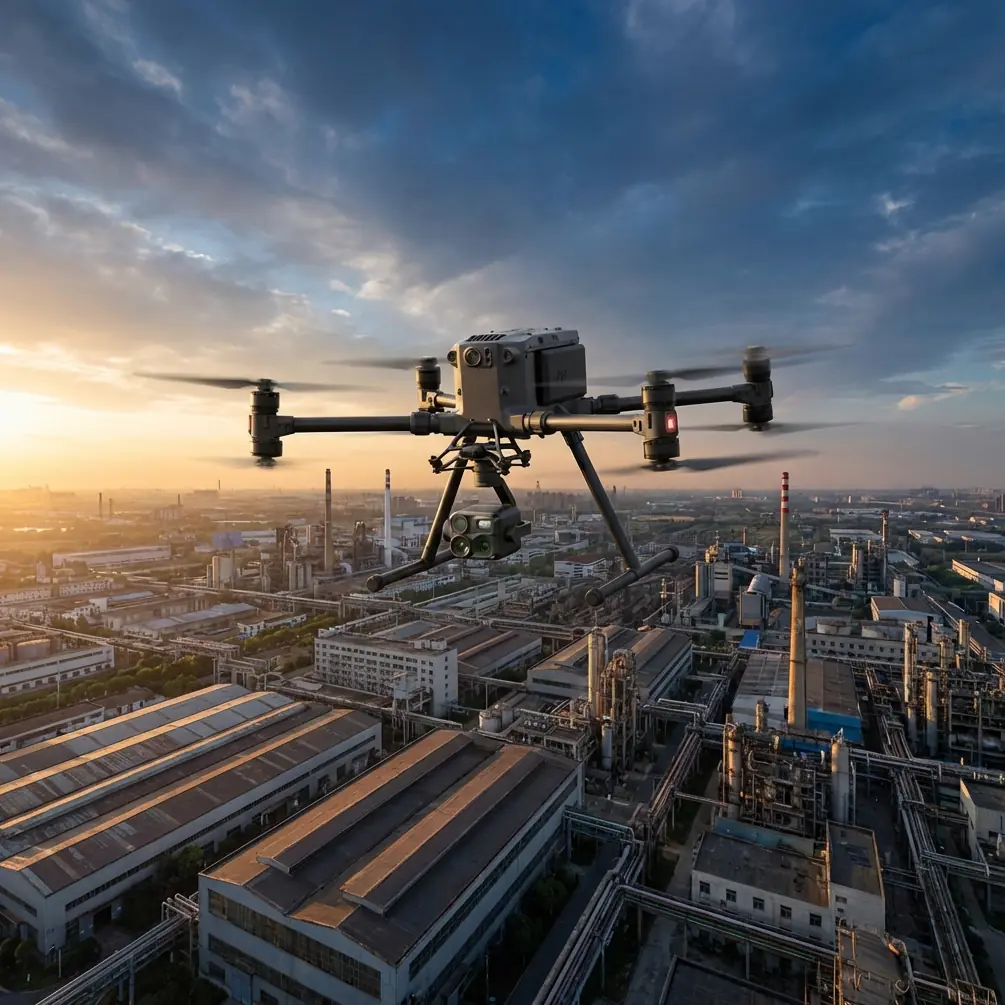
Matrice 4T in Mountain Agriculture: What Actually Matters in the Field
META: Expert technical review of the DJI Matrice 4T for mountain field monitoring, with practical advice on thermal signature reading, antenna positioning, transmission stability, photogrammetry, and battery workflow.
Mountain agriculture exposes weak drone workflows fast. Signal fades behind ridgelines. Sloped terrain distorts mapping results. Temperature swings can make a thermal image look convincing while telling the wrong story. If you are evaluating the Matrice 4T for field monitoring in steep ground, the useful question is not whether it is a capable platform. It is whether its strengths line up with the operational realities of mountain work.
They do, but only if the aircraft is used with a mountain-specific method.
The Matrice 4T stands out because it combines thermal sensing, visible imaging, secure data handling through AES-256, and long-range O3 transmission in one inspection-oriented airframe. That mix matters more in mountain agriculture than it does on flat land. In a valley system, you often need one aircraft to do three jobs in the same sortie: scan for irrigation anomalies, document crop stress on visible imagery, and gather usable visual references for follow-up measurement or photogrammetry. Swapping platforms wastes weather windows, and mountain weather rarely waits.
What makes the Matrice 4T especially practical is not a single headline feature. It is the way its systems reduce compromise when the terrain is actively working against you.
A thermal camera over mountain fields is only as good as the operator’s interpretation. This is where many deployments go sideways. People expect thermal imagery to “show problems.” In practice, thermal signature is contextual. A cold band across a terraced slope might indicate healthy moisture retention in one crop stage and blocked distribution in another. A warm strip near a retaining edge could signal plant stress, exposed soil, reflective rock, or simply a changing sun angle on an incline.
The Matrice 4T’s value here is speed of confirmation. With thermal and visual payload capability on the same aircraft, you can spot a heat anomaly, pause, reframe, and verify with standard imaging before sending a crew uphill. On a mountain property, that can save hours. It also reduces false positives, which matter more than people admit. One unnecessary vehicle dispatch on steep access roads is not just inefficient. It adds safety exposure and chews through labor that should be spent on actual field work.
This becomes even more relevant at daybreak and late afternoon, when mountain growers often prefer to fly. Those windows can produce stronger thermal contrast, but they also exaggerate terrain-driven temperature variation. South-facing slopes and shaded cuts will behave differently even within the same parcel. The Matrice 4T gives you the flexibility to compare thermal and visual data quickly enough to avoid overreacting to terrain effects masquerading as agronomic issues.
Transmission reliability is the next make-or-break factor, and this is where antenna positioning deserves far more attention than it usually gets. O3 transmission is a serious advantage, but mountains do not care what the specification sheet says. A ridge between pilot and aircraft is still a ridge.
For maximum range and a cleaner link, the first rule is simple: do not point the tips of the controller antennas at the drone. The broad face of the antenna pattern should be oriented toward the aircraft. In practical terms, that means keeping the flat sides aimed at the flight path and adjusting your body position as the aircraft shifts laterally across a hillside. Small mistakes here cost more in mountains because signal degradation compounds quickly when the aircraft drops behind contour lines.
The second rule is site selection. On mountain jobs, the best launch point is not always the closest point to the field block. It is the point with the most persistent line of sight through the mission. A modest knoll with clear visibility into two terraces often outperforms a lower launch area parked right next to the first field. Operators who chase convenience usually pay for it with video breakup and interrupted task flow.
Third, altitude is not just a sensing variable; it is a transmission tool. If you are monitoring fields that step down a slope, climbing slightly to preserve line of sight can be smarter than hugging the terrain for the entire run. Yes, low-altitude passes improve detail in some situations. But if that profile repeatedly puts the aircraft behind orchard rows, stone walls, or fold lines in the terrain, the mission becomes fragile. Stable command and video often produce better data than an idealized low pass that you cannot maintain.
If you need a second opinion on link planning or site layout for your fields, this quick Matrice 4T operations chat fits naturally into pre-mission prep.
Security is another point that deserves attention in agricultural operations, especially when flights document high-value specialty crops, water infrastructure, access roads, and facility layouts. AES-256 matters because field monitoring data is not always just agronomy data. It can reveal storage areas, pumping systems, worker movement routes, and weak points in perimeter access. In large mountain estates, those layers become operationally sensitive. A drone platform that treats transmission and data protection seriously is not an abstract corporate benefit. It is a practical safeguard for growers, contractors, and land managers who increasingly handle digital records across multiple stakeholders.
Then there is battery workflow. Mountain flights are deceptively expensive in energy terms. Climb segments, wind exposure along ridges, repeated repositioning, and conservative return margins all push operators to burn more reserves than they would over flat, open fields. That is why hot-swap batteries are more than a convenience feature. They change the tempo of a real field day.
With hot-swap capability, crews can land, replace packs, and resume work without stretching downtime into a full operational reset. On a mountain property where weather and lighting conditions move quickly, those saved minutes matter. A thermal pass done twenty minutes later can tell a different story if cloud shadow rolls in or sun exposure shifts across terraces. Fast turnaround keeps datasets comparable. That is critical when you are trying to confirm whether a warm irrigation line is consistently underperforming or simply reacting to changing surface conditions.
Photogrammetry is where expectations need calibration. The Matrice 4T can support mapping-related workflows, but mountain operators should not assume standard flat-land mission logic will deliver accurate outputs. Terrain relief introduces scale variation, oblique distortion, and inconsistent overlap if the mission is not planned around elevation changes. If you are building surface models or documenting erosion patterns, GCP placement becomes much more important than many teams expect.
Ground control points in mountain fields should be distributed across elevation bands, not clustered near easy access points. A set of GCPs placed only along a road at the base of the property might look tidy, but it can leave the upper terraces poorly constrained. That reduces confidence in any measurements tied to drainage shifts, retaining-wall movement, or regrading work. In other words, the aircraft can collect the imagery, but the usable accuracy still depends on disciplined field control.
For growers monitoring mountain fields, that distinction matters because the end goal is usually not a pretty map. It is a decision. Should a crew inspect the upper drip line? Has runoff altered a service road shoulder? Is a frost-prone section showing a recurring temperature pattern worth acting on? The Matrice 4T supports those decisions best when its imagery is tied to repeatable workflow, not one-off flights.
Wind deserves its own paragraph because it changes how the Matrice 4T should be flown in upland environments. Ridge lift, rotor zones, and channeling through cuts can create uneven flight behavior even when conditions at the launch point feel manageable. A common mistake is to evaluate weather from the operator’s position and assume the same profile exists 80 meters above a neighboring slope. It often does not. The better habit is to treat each ridgeline crossing as its own microenvironment and leave margin for the aircraft to hold position, reframe, and return without rushing the battery envelope.
This is also where the aircraft’s integrated sensing package helps the operator work smarter. Instead of running separate flights for thermal scouting and visual verification, the Matrice 4T lets you identify a suspect patch, zoom your attention, and decide whether the anomaly is agronomic, structural, or environmental. In mountain farming, where access is slow and labor is expensive, compressing the time between detection and interpretation is often the real operational win.
A brief word on BVLOS: mountain agriculture is one of the scenarios that makes people want it immediately. The land is expansive, the terrain blocks direct access, and parcels can stretch around folds where repositioning the pilot is inconvenient. But the desire for BVLOS should not distract from the fact that many mountain monitoring gains can be captured first through better launch placement, smarter relay of observation points, battery discipline, and cleaner antenna use. BVLOS may expand coverage when regulations and infrastructure support it, yet many operators leave a large amount of performance unused inside standard visual-line workflows simply because their fieldcraft is poor.
That is the theme running through the Matrice 4T as a mountain monitoring platform. It is not a magic answer to difficult terrain. It is a well-matched tool whose real value appears when the operator understands how terrain affects signal, heat, energy, and mapping geometry.
If your work involves irrigation diagnostics, slope stability observation, crop stress checks, or documenting hard-to-reach blocks, the Matrice 4T makes a strong case for itself because it reduces the number of compromises per mission. O3 transmission helps maintain control when launch sites are chosen intelligently. AES-256 supports secure operations where farm data carries broader sensitivity. Hot-swap batteries keep sorties consistent during narrow weather windows. Thermal and visual imaging together cut down on wasted field dispatches. And when photogrammetry is handled with proper GCP discipline, the aircraft can contribute to measurement workflows that are actually defensible.
For mountain field monitoring, that combination is what matters. Not hype. Not generic feature lists. Repeatable, interpretable data from a platform that respects the realities of steep ground.
Ready for your own Matrice 4T? Contact our team for expert consultation.