
Matrice 4T in Extreme Temperatures: A Field Report
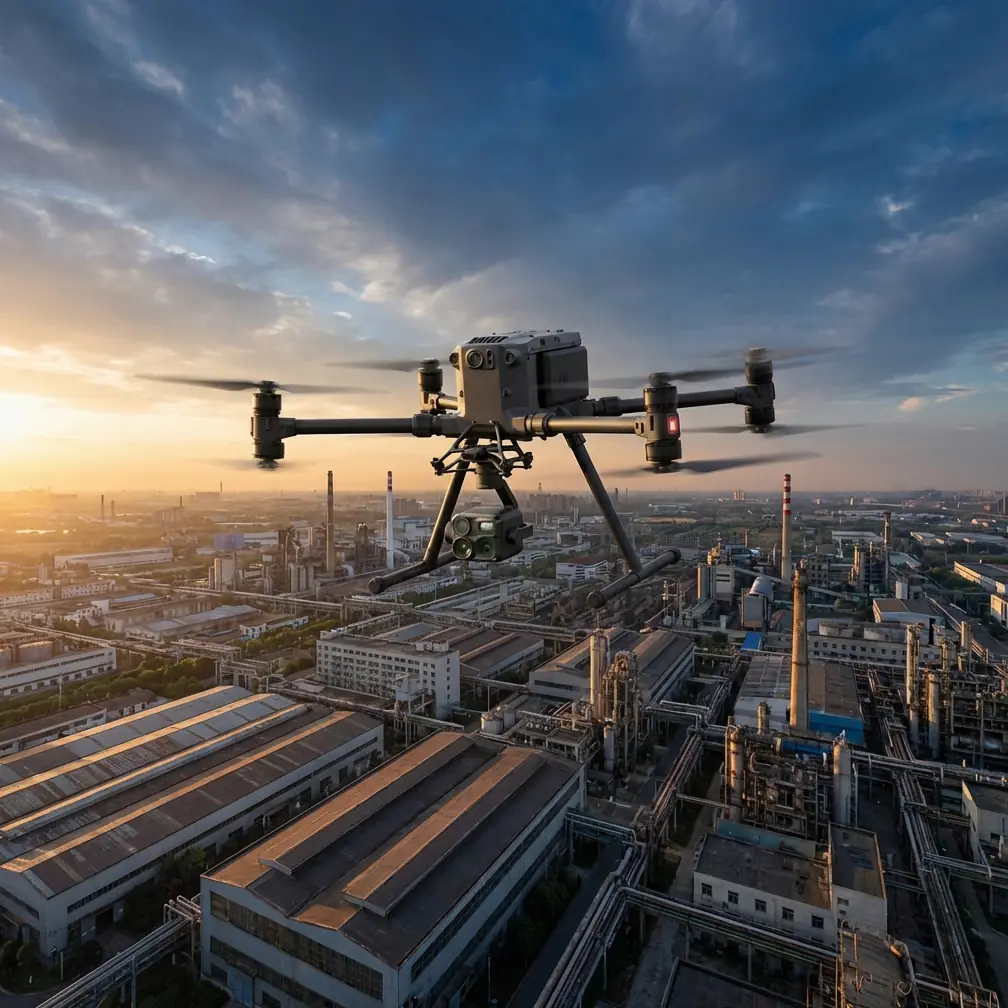
Matrice 4T in Extreme Temperatures: A Field Report for Smarter Crop Monitoring
META: Expert field report on using the DJI Matrice 4T for crop monitoring in extreme temperatures, with practical advice on thermal signatures, antenna positioning, O3 transmission, hot-swap workflow, and mapping accuracy.
When growers ask whether the Matrice 4T makes sense for field monitoring in punishing heat or hard winter mornings, the real answer is not about the brochure. It comes down to how the aircraft behaves when the environment starts distorting data, draining batteries faster than expected, and pushing transmission links to their limits. That is where an expert workflow matters.
I have spent enough time around agricultural drone operations to know that “extreme temperatures” is too broad to be useful. A midday inspection over sun-baked irrigation corridors is a different mission from a dawn thermal sweep looking for stressed plants after a cold snap. The Matrice 4T can handle both, but only if the pilot understands what the sensors are truly seeing and how field conditions interfere with those readings.
This is not a generic overview of the platform. It is a practical field report built around a specific use case: monitoring fields in temperature extremes, where thermal signature interpretation, transmission reliability, and battery discipline all affect the quality of decisions made on the ground.
Why the Matrice 4T fits temperature-stressed field work
The Matrice 4T earns its place in agricultural operations because it combines thermal sensing with visible imaging in one deployable system. That combination matters. In crop environments, a thermal camera alone can point you toward an anomaly, but it often cannot tell you whether the issue is irrigation failure, compacted soil, disease onset, standing water, or simply a difference in canopy density. Pairing thermal imagery with a visual payload gives the operator a second layer of evidence while still staying efficient in the field.
For temperature-driven inspections, the phrase to focus on is thermal signature. Every field has one. The challenge is that crops, soil, irrigation hardware, access roads, and even fence lines all radiate differently depending on time of day, moisture content, and recent weather. A Matrice 4T mission done at the wrong hour can still produce sharp imagery, yet tell the wrong story.
That is why operators working in extreme temperatures should stop thinking in terms of “flying when convenient” and start thinking in terms of contrast windows. Thermal contrast is what turns the sensor from a passive camera into a decision tool. In hot conditions, the field often reveals the clearest differences either early, before solar loading flattens the scene, or later when stressed zones retain heat differently than healthy vegetation. In cold conditions, the opposite may be true depending on what you are trying to isolate. Frost-affected rows, blocked emitters, and uneven drainage can become easier to identify when the ground and crop canopy warm at different rates.
The aircraft is only half the equation. The real value appears when the operator understands what makes a thermal signature operationally meaningful.
Extreme heat changes more than the battery gauge
Most people assume the biggest challenge in summer operations is shorter flight endurance. That is part of it, but not the full problem. High ambient heat also changes how the field presents itself to the camera. Bare soil can become a dominant thermal feature. Metal irrigation components can bloom hot. Gravel lanes may read like faults even when the crop is fine. If you launch too late in the day, the thermal scene can become saturated with competing heat sources, making subtle plant stress harder to separate from background noise.
This is one reason I advise agricultural teams to treat thermal collection and photogrammetry as related but separate mission types. If your objective is precision scouting for heat stress or irrigation irregularities, plan around thermal contrast first. If your objective is map-grade field documentation, stand counts, drainage modeling, or change detection over time, then photogrammetry takes priority and should be flown with its own light and overlap standards.
Trying to do both perfectly in one rushed sortie usually compromises both.
In extreme heat, another overlooked detail is turnaround discipline. Hot-swap batteries are not just a convenience feature in field work. They are a workflow stabilizer. When crews can land, replace packs quickly, and relaunch without long delays, they keep the thermal dataset closer to the same environmental window. That improves comparability across blocks. In practical terms, it means the north field flown at 7:10 and the south field flown at 7:35 are still part of a coherent thermal story. Stretch that sequence too long and changing sun angle or warming surfaces begin to contaminate your comparisons.
That operational significance is easy to miss until you review a stitched dataset and realize the changing environment introduced more variability than the crop itself.
Cold-weather scouting has its own traps
Growers dealing with freezing nights or harsh shoulder-season mornings often assume thermal flight is simpler because the scene looks cleaner. Sometimes it is. But cold-weather field monitoring introduces a different set of interpretation risks.
A cold morning can exaggerate contrasts that matter and contrasts that do not. Standing water, wheel ruts, exposed soil, and shaded edges may dominate the image. Those are useful clues, but they can also distract from the actual agronomic question. If the mission is to assess whether irrigation lines are recovering uniformly after a cold event, then the key is not merely finding cold zones. It is verifying whether those zones correlate with crop rows, emitter spacing, topography, or known problem sections.
This is where GCP-backed mapping can become more than a surveying preference. Ground control points help align imagery more reliably when you want to compare the same field area over multiple flights. If a team is tracking temperature-related stress progression after repeated extreme weather, that repeatability matters. A field manager cannot make confident decisions from loosely aligned imagery that shifts a few feet between sorties. With proper GCP use, the Matrice 4T can support more defensible time-series analysis, especially when thermal observations need to be matched against irrigation maps, soil conductivity layers, or prior orthomosaics.
Photogrammetry, when done carefully, gives the thermal data context. Thermal tells you where something is different. Accurate mapping helps explain where that difference sits in the field system.
The O3 transmission link is only as good as your antenna discipline
When operators talk about range, they often talk like the aircraft alone determines it. It does not. Transmission reliability is a fieldcraft issue. The Matrice 4T platform benefits from O3 transmission, and that is a serious advantage in large agricultural environments where long linear flights are common. But range in an open field still depends on how the pilot manages line of sight, controller orientation, and body position.
Here is the advice I give crews when they want maximum range without compromising link quality: do not point the tips of the antennas at the aircraft. The stronger radiation pattern comes off the broad face, not the end. That means you should orient the flat sides of the controller antennas toward the drone’s flight path. In practice, for a long outbound run over fields, keep the controller steady at chest level, adjust your stance as the aircraft changes azimuth, and avoid letting your torso or vehicle block the signal path.
This sounds basic. It is not. Poor antenna positioning is one of the most common self-inflicted causes of weak links in agricultural missions.
A few additional habits make a measurable difference:
- Launch from a slightly elevated spot when possible, especially if the field undulates.
- Do not stand beside a truck cab or metal equipment trailer if you can help it.
- Reposition yourself during long corridor flights instead of insisting on flying the entire route from one poor location.
- Keep the aircraft’s path as clean as possible from tree lines, grain bins, and shelter belts that can interrupt the signal.
That matters even more when fields are large enough that operators are thinking about BVLOS frameworks. Even where BVLOS is not part of the immediate mission, long agricultural flight lines benefit from BVLOS-style planning discipline: route assessment, communication procedures, terrain awareness, and conservative link management. The platform may support strong transmission, but good operations are built on margin, not hope.
If your team is refining agricultural workflows and wants a second opinion on field layout or transmission planning, this is the kind of problem worth discussing directly: message an operations specialist.
Security matters more in agriculture than many teams admit
Agricultural drone operations are often treated as low-risk from a data perspective. That is a mistake. High-value crop imagery, irrigation infrastructure, treatment areas, and seasonal yield patterns can all be sensitive. On larger operations, aerial data can expose more than field stress. It can reveal logistics patterns, storage areas, access routes, and operational timing.
That is why AES-256 in the transmission and data handling conversation is not just a technical footnote. It is a meaningful security detail for operators handling proprietary farm information or working under service agreements with commercial growers. In a market where trust determines who gets called back next season, secure handling of field data is part of professionalism.
This becomes especially relevant when thermal datasets are being used for more than crop health. The same flights may incidentally capture perimeter activity, equipment movement, or water infrastructure details. An operator who understands security as part of mission planning, not an afterthought, is already ahead of much of the field.
Building a reliable extreme-temperature workflow
A strong Matrice 4T field routine for temperature-stressed crop monitoring usually looks less dramatic than people expect. It is built on consistency.
Start with a clear mission objective. Are you looking for irrigation failure, frost damage, drainage issues, plant stress, or a map product for later analysis? Do not launch until that question is fixed. It determines timing, altitude, overlap, and how you interpret the thermal signature.
Then standardize your environmental window. If you want meaningful comparisons across days, fly at roughly the same time and under similar conditions whenever possible. This is especially critical in extreme temperatures, because thermal scenes shift fast. A field that looks uniform at one hour can split into multiple apparent problem zones later for reasons that have nothing to do with crop health.
Battery management comes next. Use hot-swap discipline to keep the mission continuous, but also protect pack performance by storing and staging batteries sensibly for ambient conditions. In heat, do not leave them baking in a vehicle. In cold, avoid exposing them longer than necessary before launch. Battery handling is not glamorous, yet it directly shapes mission continuity and safety.
Finally, verify with ground truth. Thermal imagery is excellent for prioritizing where to inspect. It should not replace boots-on-the-ground confirmation. The best agricultural drone teams use the Matrice 4T to shrink uncertainty fast, then send agronomy or irrigation staff to the exact rows, valves, or drainage breaks that matter.
What separates useful data from expensive noise
The Matrice 4T is capable enough that many teams will get decent-looking outputs on day one. That is not the same as getting reliable agronomic intelligence. The difference comes from operational discipline.
Two details from the platform ecosystem illustrate this clearly. First, O3 transmission gives operators the ability to maintain a stable link over large fields, but only when antenna positioning and line-of-sight habits are sound. Operational significance: better link stability means fewer interruptions, more consistent mission execution, and less risk of incomplete datasets over large acreage.
Second, hot-swap battery workflow allows crews to keep collection within the same environmental window. Operational significance: when thermal scenes are highly time-sensitive, reducing delays between sorties protects data consistency and improves the comparability of anomalies across sections of the field.
Add GCP-supported mapping where repeatability matters, and the Matrice 4T becomes more than a flying camera. It becomes a field intelligence tool that can help growers diagnose temperature-related problems with far less guesswork.
For operators monitoring fields in extreme temperatures, that is the real takeaway. The aircraft does not solve the problem by itself. It gives a disciplined crew the ability to see stress patterns at the right moment, hold a reliable connection across large agricultural spaces, and return with imagery that can actually support a decision.
That is what makes the Matrice 4T useful in the real world. Not the spec sheet. The quality of the judgment behind the flight.
Ready for your own Matrice 4T? Contact our team for expert consultation.