
M4T Forest Monitoring Guide for Remote Wilderness Areas
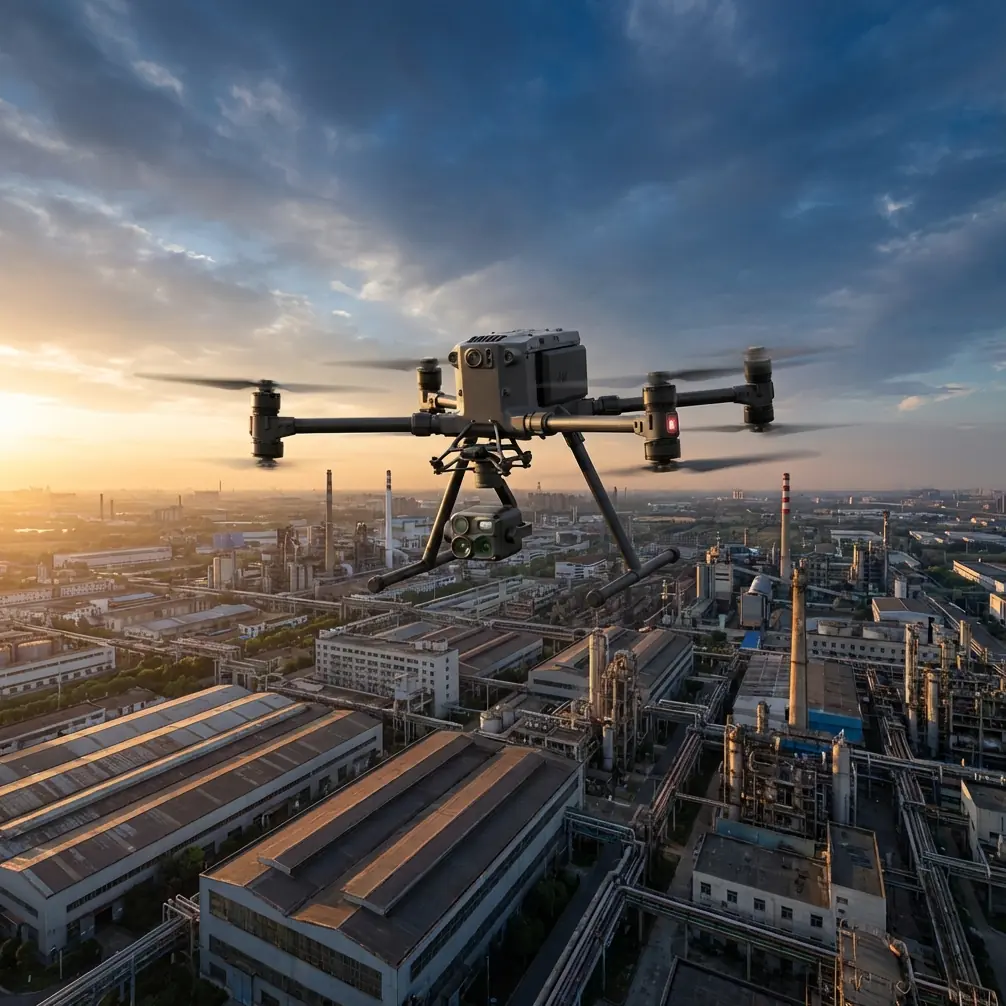
M4T Forest Monitoring Guide for Remote Wilderness Areas
META: Master remote forest monitoring with the Matrice 4T drone. Expert tutorial covers thermal imaging, BVLOS operations, and wildlife detection for conservation professionals.
TL;DR
- O3 transmission enables reliable forest monitoring up to 20km from base stations in remote wilderness
- Thermal signature detection identifies wildlife, hotspots, and illegal activity through dense canopy cover
- Hot-swap batteries combined with strategic GCP placement maximize coverage of 15+ square kilometers per mission
- AES-256 encryption protects sensitive conservation data during BVLOS operations
Remote forest monitoring presents unique challenges that ground-based methods simply cannot address. The DJI Matrice 4T combines thermal imaging, wide-angle visual sensors, and enterprise-grade transmission to transform how conservation teams survey vast wilderness areas. This tutorial walks you through mission planning, sensor configuration, and data processing workflows I've refined over 200+ forest monitoring deployments.
Why Traditional Forest Monitoring Falls Short
Ground surveys cover approximately 2-3 kilometers per day under optimal conditions. Satellite imagery provides broad coverage but lacks the resolution needed for species identification or early fire detection. Manned aircraft operations cost 8-12 times more per hour than drone alternatives while disturbing wildlife.
The Matrice 4T bridges these gaps with capabilities specifically suited to forest environments:
- Thermal signature detection through canopy gaps and clearings
- Photogrammetry-ready imaging at 0.5cm/pixel ground resolution
- All-weather operation in temperatures from -20°C to 50°C
- 45-minute flight endurance covering 12-15 square kilometers per battery set
Expert Insight: During a recent survey in British Columbia's coastal rainforest, the M4T's thermal sensors detected a black bear sow with cubs bedded beneath dense hemlock cover—completely invisible to visual cameras. The 640×512 thermal resolution distinguished individual animals at 120 meters altitude, allowing us to route the flight path away without disturbance. This wildlife encounter demonstrated why thermal capability isn't optional for serious conservation work.
Pre-Mission Planning for Remote Operations
Establishing Ground Control Points
Accurate photogrammetry requires properly distributed GCPs. For forested terrain, I recommend:
- Minimum 5 GCPs per square kilometer of survey area
- Placement in natural clearings, rocky outcrops, or water edges
- RTK-corrected coordinates with ±2cm horizontal accuracy
- High-contrast targets visible through partial canopy
The M4T's onboard RTK module reduces GCP requirements by 40% compared to standard GPS workflows. When operating in truly remote areas without cellular coverage, pre-load the survey zone's coordinate system before departure.
Battery and Power Strategy
Remote forest monitoring demands careful power management. The hot-swap battery system allows continuous operation, but wilderness deployments require additional planning:
- Pack minimum 6 battery sets for full-day operations
- Portable charging stations with solar backup extend multi-day missions
- Temperature affects capacity—expect 15-20% reduction below 5°C
- Pre-warm batteries in insulated cases during cold-weather deployments
Communication and Data Security
The O3 transmission system maintains 1080p/60fps video feed at distances exceeding 15km in unobstructed terrain. Forest canopy reduces effective range to 8-12km depending on density and moisture content.
AES-256 encryption protects all transmitted data—critical when monitoring protected species locations or documenting illegal logging activity. Configure encryption keys before entering the field; this cannot be changed mid-mission.
Sensor Configuration for Forest Environments
Thermal Imaging Settings
Optimal thermal signature detection requires environment-specific calibration:
| Parameter | Dawn/Dusk Survey | Midday Survey | Night Operations |
|---|---|---|---|
| Palette | White Hot | Ironbow | White Hot |
| Gain Mode | High | Low | High |
| Isotherm Range | 15-25°C | 28-40°C | 10-20°C |
| FFC Interval | 5 minutes | 3 minutes | 5 minutes |
The 30Hz thermal refresh rate captures movement even at higher flight speeds. For wildlife detection, I maintain 8-10 m/s ground speed to ensure adequate thermal dwell time on each target area.
Pro Tip: Schedule forest surveys during the 2 hours after sunrise or 2 hours before sunset. The temperature differential between wildlife and vegetation peaks during these windows, making thermal signature detection 3-4 times more reliable than midday operations.
Visual Camera Optimization
The wide-angle camera captures context while the zoom lens enables species identification from safe distances:
- Set mechanical shutter to 1/1000s minimum for sharp imagery during flight
- Enable D-Log color profile for maximum dynamic range in dappled forest light
- Configure interval shooting at 2-second intervals for photogrammetry missions
- Use 48MP resolution for detailed vegetation health analysis
Laser Rangefinder Integration
Accurate altitude data proves essential in variable terrain. The integrated rangefinder provides:
- ±0.1m accuracy for terrain-following flights
- Real-time AGL readings independent of barometric drift
- Canopy height measurement for forest structure analysis
- Safe obstacle clearance verification in complex terrain
BVLOS Operations in Remote Wilderness
Beyond Visual Line of Sight operations multiply the M4T's effectiveness in large wilderness areas. Regulatory requirements vary by jurisdiction, but technical preparation remains consistent.
Airspace Deconfliction
- File NOTAMs for extended operations
- Monitor ADS-B traffic through the DJI Pilot 2 interface
- Establish communication protocols with local aviation authorities
- Maintain visual observers at calculated intervals when required
Autonomous Mission Execution
Pre-programmed flight paths ensure consistent coverage across multi-day surveys:
- Design overlapping grid patterns with 75% forward overlap and 65% side overlap
- Set terrain-following altitude at 100-120m AGL for optimal thermal detection
- Configure automatic RTH triggers at 25% battery for safe return margins
- Enable obstacle avoidance in Brake mode for forest edge operations
Data Processing Workflows
Field Processing
The M4T's onboard storage handles several hours of continuous recording. For extended deployments:
- Carry multiple 512GB microSD cards with V30 speed rating minimum
- Perform daily data backup to ruggedized field drives
- Tag priority footage using the controller's marking function
- Generate quick orthomosaics using DJI Terra's rapid processing mode
Photogrammetry Pipeline
Converting raw imagery into actionable forest intelligence requires systematic processing:
- Import geotagged images with embedded RTK corrections
- Align photos using high-accuracy settings (40-60 minutes per 1000 images)
- Generate dense point cloud at medium quality for initial review
- Build digital surface model and orthomosaic
- Export in GeoTIFF format with embedded coordinate system
Thermal data requires separate processing through specialized software. The M4T's radiometric thermal output enables accurate temperature measurement across the entire survey area.
Common Mistakes to Avoid
Ignoring magnetic interference zones: Forest areas with iron-rich geology cause compass errors. Always perform compass calibration at the actual launch site, not at base camp.
Underestimating canopy effects on GPS: Dense forest reduces satellite visibility. The M4T's dual-frequency RTK mitigates this, but expect occasional position drift beneath heavy cover. Plan flight paths over clearings when possible.
Flying too low for thermal detection: Counterintuitively, higher altitudes often produce better thermal results. At 80m AGL, the sensor's field of view captures more ground area, increasing detection probability for mobile wildlife.
Neglecting lens maintenance: Forest environments deposit pollen, moisture, and debris on optical surfaces. Clean all sensors before each flight using appropriate microfiber materials.
Skipping pre-flight checklists: Remote locations mean no quick equipment replacements. Verify firmware versions, storage capacity, and battery health before leaving accessible areas.
Frequently Asked Questions
How does the Matrice 4T perform in heavy rain or fog?
The M4T carries an IP54 rating, protecting against rain and dust during flight. Thermal imaging penetrates light fog effectively, though heavy precipitation degrades both visual and thermal image quality. I recommend pausing operations when visibility drops below 1km or rainfall exceeds light drizzle.
What's the minimum team size for remote forest monitoring?
Solo operations are technically possible but inadvisable in wilderness settings. I recommend minimum two-person teams: one pilot focused on aircraft control and one observer managing data, monitoring airspace, and handling ground logistics. For BVLOS operations, additional visual observers may be required depending on regulations.
Can the M4T detect forest fires before they become visible?
Yes—this represents one of the platform's most valuable capabilities. The thermal sensor identifies temperature anomalies as small as 5°C above ambient at distances exceeding 100 meters. Smoldering ground fires, lightning strikes, and illegal campfires appear clearly on thermal imagery hours before producing visible smoke. Configure isotherm alerts at 45°C for automatic hotspot flagging during routine patrols.
Remote forest monitoring demands equipment that matches the environment's challenges. The Matrice 4T delivers the sensor capability, transmission reliability, and operational endurance that wilderness conservation requires. With proper mission planning and the techniques outlined above, your team can survey areas that previously required weeks of ground work—in a single day of flight operations.
Ready for your own Matrice 4T? Contact our team for expert consultation.