
Matrice 4T for Remote Forest Monitoring: A Practical Field
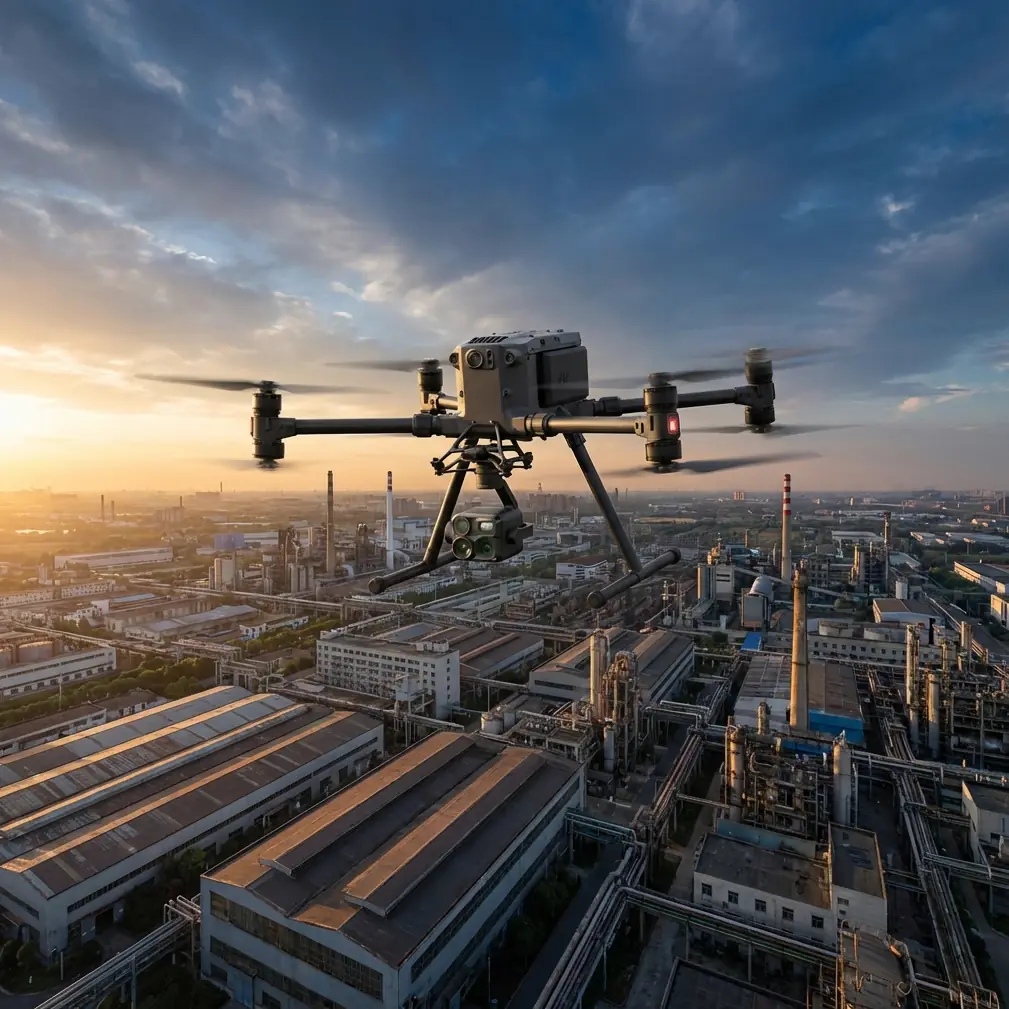
Matrice 4T for Remote Forest Monitoring: A Practical Field Playbook
META: Learn how the DJI Matrice 4T can be used for remote forest monitoring, from thermal signature detection and O3 transmission planning to battery strategy, secure workflows, and mission setup in difficult terrain.
Remote forest monitoring punishes weak aircraft. Dense canopy kills visibility, terrain blocks signal, weather turns quickly, and long travel times mean every mistake costs real field hours. That is exactly why the Matrice 4T deserves a serious look. Not because it is the newest thing in the sky, but because its feature mix lines up unusually well with the actual demands of remote woodland operations.
If your job involves finding heat anomalies under changing light, documenting storm damage, tracking illegal activity at the edge of coverage, or building repeatable survey routines far from paved access, the Matrice 4T is not just another thermal drone. It is a platform that makes more sense the farther you get from infrastructure.
This guide is built around that reality: how to use the Matrice 4T effectively for forest monitoring in remote areas, where endurance, signal reliability, thermal usefulness, and workflow discipline matter more than spec-sheet theater.
Why the Matrice 4T fits remote forest work
Remote forest missions usually require two things at once: you need to see the broad pattern, and you need to verify the detail. Many aircraft can do one of those jobs reasonably well. Fewer can do both without forcing the pilot to swap tools, land repeatedly, or compromise on timing.
The Matrice 4T stands out because it combines thermal sensing, visual inspection capability, secure data handling, and long-range transmission architecture in one deployable system. In practical terms, that means a team can leave a trailhead, reach a remote launch point, and handle thermal scans, visual overwatch, and site documentation without building the mission around multiple airframes.
That matters more in forests than in open industrial sites. Tree cover hides temperature differences until you hit the right angle. Ravines and ridgelines interfere with control links. Wildlife surveys often happen around dawn or dusk, when light is difficult but thermal contrast can be excellent. Fire-watch missions need rapid confirmation, not elegant theory. The Matrice 4T is built for those messy, overlapping demands.
One area where it tends to outperform many competing thermal platforms is signal resilience during complex terrain work. Forest monitoring is rarely flown over clean, unobstructed lines. O3 transmission is especially useful here because the challenge is not headline distance alone; it is maintaining a usable link while the aircraft moves around terrain and vegetation that degrade communication. A stronger transmission backbone gives crews more freedom to position safely while preserving stable situational awareness.
Start with the mission, not the drone
Before deploying the aircraft, define the monitoring objective with more precision than “check the forest.” That phrase creates vague flights and weak outputs.
For most remote forestry teams, Matrice 4T missions fall into five clear categories:
- Heat source detection
- Wildlife or human activity identification
- Post-event damage assessment
- Corridor and boundary surveillance
- Mapping support for planning and recovery
Each one changes how you fly.
If you are looking for a thermal signature tied to a possible smoldering hotspot, your route planning should favor low-angle passes across suspect zones during the coolest stable portion of the day. If you are mapping storm damage, photogrammetry discipline becomes more important than thermal contrast. If the mission is perimeter protection or anti-poaching surveillance, you need to balance quiet standoff observation with secure data handling and efficient redeployment.
The Matrice 4T supports that range well, but only if you configure the mission around the target problem.
How to use thermal intelligently in the forest
Thermal is powerful in woodland environments, but it is easy to misuse. Operators often assume the camera will simply reveal whatever matters. In reality, the forest is full of false positives.
Sun-warmed rocks, exposed deadwood, metal debris, shallow water edges, and recently disturbed ground can all present misleading signatures. The value of the Matrice 4T is not that it removes interpretation. It reduces the time needed to move from anomaly detection to verification.
A practical field workflow looks like this:
- Fly a first pass designed to identify temperature outliers rather than classify them immediately.
- Mark suspicious locations by relative terrain reference, not memory.
- Revisit with a slightly altered angle or altitude.
- Use visible imaging to confirm structure, movement, and context.
- Log whether the anomaly is persistent, transient, or likely environmental clutter.
This is where a thermal payload becomes operationally significant instead of merely interesting. In remote monitoring, you often cannot send a ground team immediately. A better airborne verification loop saves time, reduces unnecessary foot access, and helps prioritize where limited field resources should go first.
For wildlife monitoring, the same principle applies. A thermal signature near a game trail at dawn may be useful. A warm patch beside a sun-exposed rock face at mid-morning may not. The aircraft helps, but disciplined interpretation does the real work.
O3 transmission matters more in forests than on paper
A lot of drone buyers overfocus on camera resolution and underweight transmission quality. In forests, that is backwards.
When your operation is in remote terrain, the control link is not just a convenience. It determines how confidently you can inspect edges, follow irregular terrain, and maintain safe standoff from difficult launch locations. O3 transmission is a meaningful advantage because it supports more stable control and video feedback in conditions where line-of-sight geometry is rarely perfect.
That has direct operational consequences:
- The pilot can launch from safer clearings instead of forcing a risky relocation closer to the target area.
- The observer can make better callouts when visual conditions are inconsistent.
- The team spends less time breaking and rebuilding the setup because signal quality collapses around terrain transitions.
Competitor aircraft may offer thermal capability, but if they are less dependable once hills, tall timber, and vegetation begin to interfere, the mission slows down. The Matrice 4T is especially well suited to remote forestry because the aircraft is not only about sensing. It is about preserving control confidence when geography works against you.
Build your battery plan around distance from support
Remote work exposes one of the biggest differences between recreational thinking and professional UAV practice: battery strategy is not an accessory decision.
Hot-swap batteries are a major field advantage for forest operations because remote teams rarely have the luxury of a short walk back to a vehicle. A hot-swap workflow reduces idle time between sorties and keeps crews focused on the task area instead of repeatedly rebuilding mission momentum after every landing cycle.
That matters in several common scenarios:
- Tracking a moving thermal anomaly before conditions change
- Re-flying a grid after cloud cover alters contrast
- Capturing a second pass over a landslide or washout before light fades
- Maintaining presence over a corridor where timing matters
The operational significance is simple: less downtime means more continuity. In remote forests, continuity often beats raw endurance claims. A drone that returns quickly to the air with minimal interruption can outperform a nominally capable rival that creates too much friction between flights.
My recommendation is to plan battery use in thirds. One third for outbound work and initial tasking, one third for adaptive follow-up, and one third reserved for contingencies shaped by terrain, wind, or retrieval constraints. Dense forests are poor places to discover that your margin was theoretical.
Use photogrammetry only when the question requires it
Not every forest mission should become a mapping mission. That mistake wastes time and storage. But when you need repeatable terrain documentation, canopy-edge change tracking, washout analysis, or infrastructure context around remote access roads, photogrammetry becomes highly valuable.
The Matrice 4T can support these workflows well when you treat mapping as a separate evidence layer rather than a background checkbox. If your aim is measurable reconstruction, bring structure to the mission:
- Establish consistent flight height and overlap
- Define the exact area of interest before takeoff
- Use GCPs where access and safety allow
- Document weather, shadow conditions, and date/time for repeat missions
GCP use is especially important if the output will support planning, environmental reporting, or comparison across multiple visits. In forest environments, small geospatial inconsistencies can distort the interpretation of road degradation, erosion spread, or clearing expansion. Ground control points help anchor the model to something stronger than airborne estimation alone.
This is one area where crews sometimes misuse thermal-equipped enterprise drones. They assume the same flight can serve thermal search, visual inspection, and survey-grade reconstruction with equal quality. Sometimes it can. Often it cannot. Separate the objectives when needed. The Matrice 4T gives you flexibility, but mission discipline still wins.
Secure workflows are not optional in sensitive areas
Remote forest monitoring often touches sensitive domains: conservation enforcement, critical watershed protection, wildfire prevention, infrastructure corridors, or restricted land management zones. In those environments, security is not a side note.
AES-256 encryption is operationally relevant because it protects transmitted data in the field, especially when teams are working in contested or sensitive regions where observation alone can create exposure. If your mission logs reveal patrol patterns, wildlife positions, fire-watch routes, or restricted-area anomalies, protecting that information matters.
This is not abstract compliance language. It changes field behavior.
A secure workflow should include:
- Encrypted transmission during live operations
- Controlled media handling after landing
- Clear chain-of-custody for incident footage
- Segregation of routine survey files from sensitive thermal evidence
The Matrice 4T is stronger than many lighter-duty competitors here because it fits into a professional operational model rather than a hobby-derived workflow stretched beyond its limits.
A practical mission template for remote forest monitoring
Here is a simple, repeatable structure that works well for Matrice 4T deployments in remote forests.
1. Define the detection target
Choose one primary outcome: hotspot confirmation, wildlife movement, storm damage, unauthorized access, or mapping support.
2. Select the right launch point
Do not chase proximity if it sacrifices visibility or safety. In forest terrain, a clean launch and stable link often beat the closest possible takeoff site.
3. Fly an initial reconnaissance pass
Use the first sortie to understand environmental interference, thermal clutter, and signal behavior.
4. Re-task based on actual findings
Once anomalies appear, switch from broad scanning to focused inspection. Do not keep flying the original route if the mission has changed.
5. Preserve continuity with hot-swap turnaround
Land, swap, relaunch, and verify while conditions are still comparable.
6. Capture visual context
Thermal without context creates weak reporting. Pair anomalies with visible reference imagery and terrain notes.
7. Map only when it adds value
If a site needs repeatable reconstruction, conduct a structured photogrammetry flight with GCP support where practical.
8. Lock down the data
Export, label, and secure footage and logs according to sensitivity.
If you need help designing a field-ready workflow for your own terrain, this direct WhatsApp line is a simple way to discuss mission setup without forcing a generic support process.
Where the Matrice 4T clearly excels against competitors
Competitor platforms in the thermal UAV category often split into two camps. One group offers decent sensing but weaker enterprise workflow integration. The other offers solid ecosystem support but compromises field flexibility in remote terrain.
The Matrice 4T is compelling because it balances the pieces that forestry crews actually feel in daily use:
- Thermal signature detection for early anomaly spotting
- O3 transmission for more dependable field control in broken terrain
- Hot-swap battery practicality for faster redeployment
- AES-256 security for sensitive monitoring work
- Strong crossover between inspection and mapping workflows
That combination is rare. A rival may match one or two of those elements, but forest operations expose weaknesses quickly. If signal performance drops around ridges, if battery handling slows the team, or if the security model feels like an afterthought, the aircraft becomes harder to trust in the places where trust matters most.
This is why the Matrice 4T is particularly well suited to remote monitoring. Not because every feature is unique in isolation, but because the package holds together under field pressure.
The real test: what happens when conditions stop being neat
The best drone for forest work is not the one that looks strongest in perfect light above open ground. It is the one that still helps when canopy density changes, the launch site is compromised, and your first thermal hit turns out to be ambiguous.
That is where the Matrice 4T earns its reputation.
It gives forestry teams a credible way to search, verify, document, and return quickly to the air. It supports both immediate response and structured follow-up. It handles sensitive missions more professionally than lighter platforms. And in terrain where communication reliability can make or break the sortie, its O3-based transmission approach is not a background spec. It is one of the reasons the mission remains manageable.
For remote forest monitoring, those are not nice extras. They are the difference between collecting useful intelligence and coming home with a folder full of uncertainty.
Ready for your own Matrice 4T? Contact our team for expert consultation.