
How I’d Use the Matrice 4T for Urban Forest Monitoring Witho
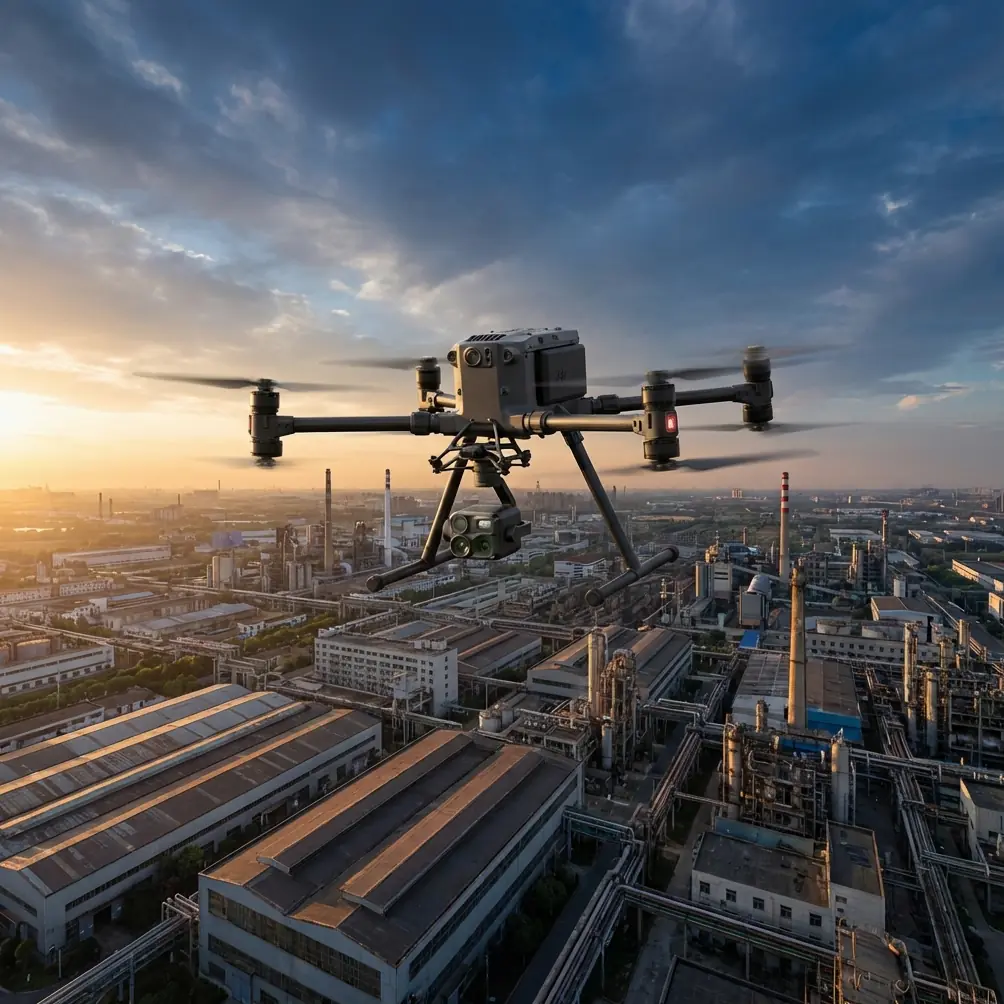
How I’d Use the Matrice 4T for Urban Forest Monitoring Without Missing the Small Failures
META: A practical expert guide to using Matrice 4T for urban forest monitoring, with thermal workflow insights, power-system reliability lessons, and sensor-led field strategy.
Urban forest monitoring sounds simple until you actually try to do it well.
Trees sit next to roads, substations, rooftops, drainage corridors, school grounds, and construction sites. Heat blooms off concrete. Wind tunnels form between buildings. GNSS conditions change block by block. A healthy canopy can hide a stressed trunk, and a cold dawn can make thermal interpretation look cleaner than it really is by mid-morning.
That’s where the Matrice 4T becomes interesting—not because it is a “do-everything” aircraft, but because urban forestry demands a platform that can observe, cross-check, and keep working when conditions get messy.
If I were building a practical monitoring program around the Matrice 4T, I would not start with the camera specs alone. I would start with reliability logic: what has to keep working, what failure needs to be isolated fast, and how sensor information can be interpreted without fooling the operator. Oddly enough, two older aerospace design principles are still the right backbone here: keep critical functions simple where possible, and make fault response coordinated and fast. Those ideas come straight out of aircraft electrical design thinking, where the goal is to disconnect a faulty section immediately and keep the rest of the system alive. For an urban forestry drone mission, that mindset matters more than most people realize.
Step 1: Define what “monitoring” actually means
A lot of urban forest teams say they want monitoring, when they really mean one of three different tasks:
- Routine canopy condition surveying
- Targeted thermal investigation of stressed trees
- Post-event assessment after storms, heat waves, or irrigation failures
The Matrice 4T fits all three, but not with the same flight pattern.
For routine work, you are usually collecting repeatable visual and thermal baselines. For targeted investigation, you are looking for anomalies: bark temperature differences, root-zone stress, irrigation leakage, moisture inconsistency near planted corridors, or heat signatures that don’t match surrounding vegetation. For post-event assessment, speed matters. You need to identify which blocks need ground crews first.
That distinction changes everything: altitude, overlap, timing, and whether photogrammetry is even the main deliverable.
Step 2: Build around simple, reliable mission logic
One line from aircraft power-system design has aged extremely well: keeping functions simple improves reliability. That is just as true in drone operations.
With a Matrice 4T workflow for urban forests, I would avoid stacking too many objectives into one flight. Do not ask one sortie to be a thermal health survey, a high-accuracy photogrammetry mission, a public-facing media capture, and an ad hoc habitat scan. That creates decision clutter. In the air, clutter becomes missed evidence.
Instead, separate missions into clean operational types:
- Thermal reconnaissance runs
- Visual documentation runs
- Mapping runs with photogrammetry and GCP-backed control
- Rapid revisit flights for anomaly verification
The reason is operational, not academic. When aircraft electrical systems are designed for reliability, timing and sequencing are analyzed carefully so the right action happens in the right order. The same principle applies in drone fieldwork. If your thermal pass depends on a delayed visual confirmation pass, and your battery change, sun angle, and airspace window are all shifting at once, the sequence breaks down. Good monitoring is often just disciplined sequencing.
Step 3: Use thermal as a screening tool, not a verdict
The most common mistake with any “T” platform is treating thermal output like a diagnosis.
In urban forests, thermal signature is powerful because it helps you see patterns hidden by visible foliage: canopy stress pockets, irrigation irregularities, retained heat around root zones, or branch sections that are physiologically diverging from the rest of the crown. But thermal doesn’t explain why on its own.
A Matrice 4T workflow should use thermal to narrow the field.
For example, on one early-morning survey along a green corridor bordering apartment blocks and a bus route, a patch of plane trees showed an uneven crown temperature spread that looked at first like water stress. A closer visual pass changed the interpretation. One tree was hosting a large cluster of roosting fruit bats tucked into the shaded side of the canopy. Their body heat had altered the local signature enough to stand out. That is exactly the kind of urban wildlife encounter that makes mixed-sensor interpretation essential. The drone didn’t “solve” the anomaly; its sensors helped us avoid a wrong maintenance call.
That’s why I always recommend a two-stage read:
- First, identify thermal outliers.
- Then verify them with visual context and, if needed, a ground inspection.
This is especially important in cities, where HVAC exhaust, reflective glass, warm façades, buried infrastructure, and vehicle heat can all distort what a tree appears to be doing.
Step 4: Time flights like an inspector, not a photographer
If your objective is urban forest health, flight timing should follow thermal contrast and operational stability, not aesthetics.
The best windows are often:
- Early morning, when ambient conditions are more stable and surfaces have not yet equalized under direct solar loading
- Consistent repeat windows, so data from week to week or month to month can actually be compared
Aerospace electrical design guidance also emphasizes precise timing and coordination where protective functions are involved. That may sound far removed from forestry, but it translates surprisingly well. If you want valid trend analysis, your mission timing has to be coordinated deliberately. Randomly flying one site at 7:00 a.m. and another at 1:30 p.m. invites false conclusions.
For municipal and campus operators, this matters because urban forest budgets are usually allocated based on pattern evidence. If you are going to justify watering changes, pruning schedules, or targeted arborist visits, your data collection routine has to be defensible.
Step 5: Treat power continuity as mission continuity
Here’s the part many articles skip: the practical success of a Matrice 4T urban monitoring program depends heavily on electrical continuity and fault management.
The source material on aircraft power systems highlights a few principles that are highly relevant here:
- control and protection should be coordinated,
- fault sections should be disconnected quickly,
- the rest of the system should remain operational if possible,
- self-check and fault memory improve maintenance and troubleshooting.
Even though we’re talking about a drone rather than a crewed aircraft, the operating lesson is obvious. Before every urban forestry block mission, the aircraft and payload stack need a consistent preflight logic:
- battery health check,
- sensor status confirmation,
- transmission verification,
- thermal calibration awareness,
- storage and logging confirmation.
If a subsystem starts behaving abnormally, the operator should not improvise endlessly in the air. Isolate the issue. Land. Swap what needs swapping. Relaunch only when the mission chain is clean again.
This is also where hot-swap batteries become operationally valuable—not as a convenience feature, but as a way to preserve survey rhythm across multiple urban sectors. Urban tree monitoring is often a stop-start job with constrained launch sites. The less disruption you create between sectors, the more consistent your data becomes.
Step 6: Use transmission and data security as part of the workflow
Urban monitoring usually means dense signal environments. Residential Wi‑Fi, offices, transit infrastructure, and utility equipment can all complicate mission confidence.
Reliable transmission matters because thermal interpretation often requires real-time decisions: do you continue the grid, break off for closer inspection, or flag the site for return? A stable O3-class transmission workflow helps the pilot and visual observer stay ahead of uncertainty instead of guessing through dropouts.
Then there is data handling. Tree health assessments around hospitals, schools, private developments, and utility corridors can create legitimate sensitivity concerns even when the mission is entirely civilian. That is where secure handling standards such as AES-256 encryption matter. Not because forestry itself is secretive, but because operational datasets often overlap with sensitive urban infrastructure and private property lines.
For teams building an internal SOP, I would treat link integrity and data security as standard mission requirements, not optional extras.
Step 7: Decide when photogrammetry actually adds value
Not every Matrice 4T forestry mission needs a full mapping output. But when urban forest managers need measurable canopy change, slope interaction, drainage context, or repeatable asset documentation, photogrammetry becomes very useful.
The key is to avoid using it casually. If the output needs to support planning decisions, use proper overlap discipline and bring in GCPs where site conditions demand stronger spatial confidence. A tree inventory tied to poor spatial control can create long-term headaches, especially when maintenance contractors, GIS teams, and environmental planners are all using the same layer differently.
I like to separate the deliverables:
- Thermal anomaly layer for shortlisting attention areas
- Photogrammetric base map for spatial context and measurement
- Ground validation notes for biological interpretation
That combination gives municipalities and facility managers something they can actually act on.
Step 8: Build fault tolerance into the human process too
The older aircraft design reference does not just emphasize protection hardware. It also points to monitoring, memory, storage, and self-diagnostic functions in more intelligent control systems. That same philosophy should shape the field team.
For Matrice 4T urban forest work, a good crew workflow includes:
- a repeatable checklist,
- a standard anomaly classification method,
- a record of environmental conditions,
- and a way to recreate what happened on a problematic flight.
Why? Because most recurring mistakes in drone inspection are not dramatic crashes. They are interpretation errors and procedural drift. A crew member forgets that one block was flown under higher humidity. Another changes altitude for convenience. A thermal outlier gets tagged as root stress, but nobody records the adjacent steam line access cover.
Memory and traceability are what keep the program honest.
If your team is setting up a city-scale or campus-scale workflow and wants a second set of eyes on mission design, a direct field-ops discussion often solves more than another software demo. You can reach out here: https://wa.me/85255379740
Step 9: Think carefully before promising BVLOS scale
BVLOS is one of those terms that gets thrown into every discussion about large-area monitoring. For urban forestry, the real question is not whether BVLOS is theoretically attractive. It’s whether the site, regulatory framework, and risk controls make it the right fit.
In many city environments, short, disciplined sector flights with rapid battery rotation and clean observation geometry can outperform an overextended concept of scale. The Matrice 4T is at its best when the data collected remains interpretable and operationally useful. Expanding beyond visual line of sight only helps if it preserves that standard.
So yes, BVLOS may become part of a mature program. But it should follow validated workflows, not substitute for them.
What makes the Matrice 4T genuinely useful here
For urban forest monitoring, the Matrice 4T stands out when you use it as a decision tool rather than a flying camera.
Its value is not only in seeing a hot spot. It is in helping a team sort signal from noise:
- distinguishing stress from environmental interference,
- preserving mission continuity through disciplined power management,
- documenting repeatable visual and thermal baselines,
- and turning field observations into a maintenance sequence that a city, utility, campus, or property manager can actually use.
The two most useful technical lessons from the reference material are surprisingly timeless.
First, simple functional design improves reliability. In drone terms, that means cleaner mission objectives, tighter checklists, and fewer overloaded sorties.
Second, faults should be isolated quickly while keeping the rest of the system working. In practice, that means strong preflight checks, sensor verification, battery discipline, and a workflow that does not collapse because one pass needs to be repeated.
Those are aircraft-grade ideas. They transfer beautifully to serious commercial drone work.
And if you are monitoring trees in an urban environment, where every block introduces new thermal clutter, signal complexity, and logistical friction, that kind of discipline is what turns the Matrice 4T from an interesting platform into a dependable one.
Ready for your own Matrice 4T? Contact our team for expert consultation.