
Monitoring Highways in Remote Terrain With the Matrice 4T
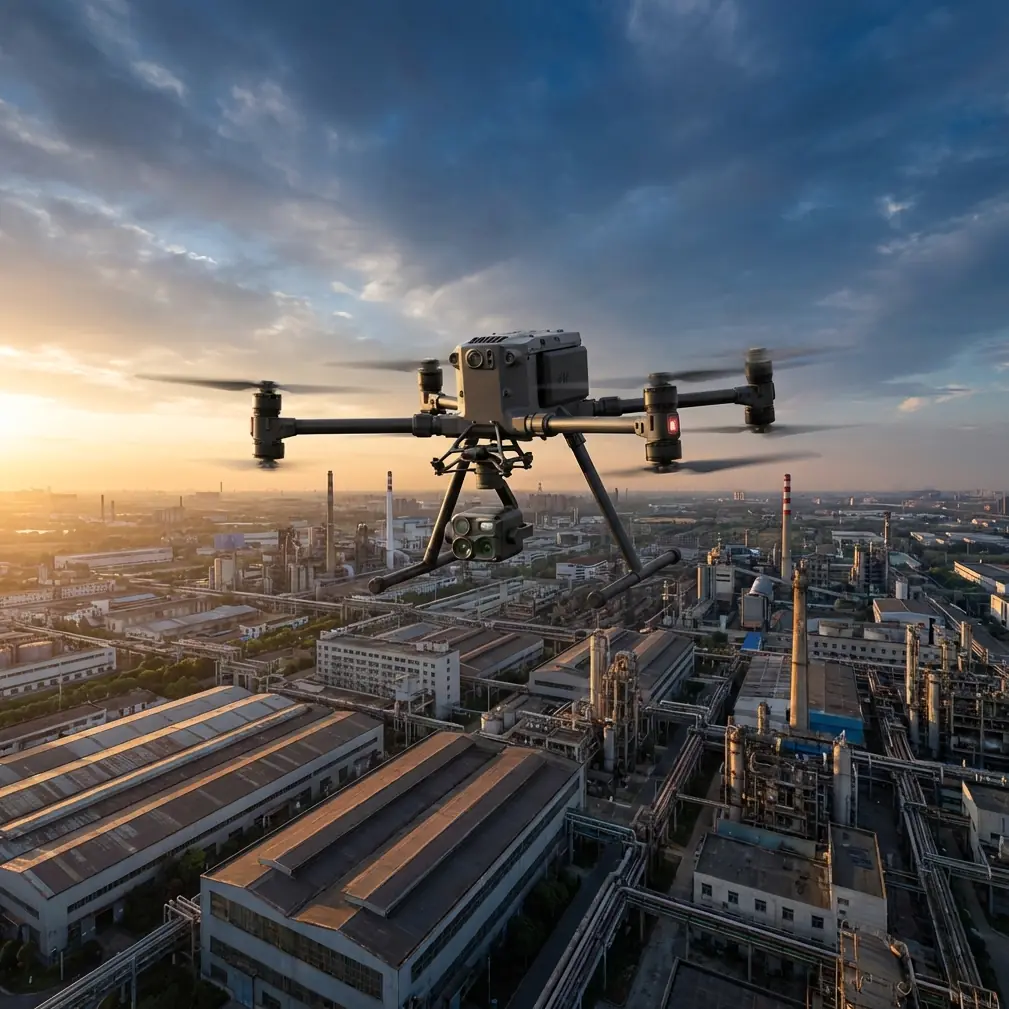
Monitoring Highways in Remote Terrain With the Matrice 4T: Practical Field Tips That Actually Matter
META: Expert how-to guide for using the DJI Matrice 4T to monitor remote highways with thermal imaging, secure transmission, battery strategy, and mapping workflow tips.
Remote highway monitoring is a different job than urban inspection. Distances are longer. Response windows are tighter. Cellular coverage drops off exactly where you need reliability most. And when an incident happens on a mountain pass, a desert corridor, or a forested two-lane route, the challenge is rarely just seeing the problem. It is getting clear, actionable data back to the right people before conditions change.
That is where the Matrice 4T earns attention.
This article is not a generic product overview. It is a field-focused look at how to use the Matrice 4T effectively for remote highway monitoring, especially when your mission combines live situational awareness, thermal signature detection, secure data handling, and repeatable route documentation. If your work involves road agencies, infrastructure contractors, emergency response teams, or corridor security, the details below are the ones that affect outcomes.
Start with the mission, not the aircraft
A remote highway operation usually falls into one of four categories:
- Traffic incident assessment
- Pavement, shoulder, or drainage inspection
- Night or low-visibility monitoring
- Corridor security and perimeter observation
The Matrice 4T can support all four, but not with the same flight profile.
If you are responding to a vehicle fire, overturned truck, rockslide, or stranded vehicle, the thermal payload becomes the lead sensor. You are not trying to build a perfect map first. You are trying to locate heat, movement, blocked lanes, and secondary hazards quickly.
If the task is asset documentation across a long corridor, visible imaging and photogrammetry become more relevant. In that case, flight planning, overlap, altitude discipline, and GCP placement matter more than thermal interpretation.
That sounds obvious, but many teams waste time by flying every mission the same way. The Matrice 4T is most effective when the payload workflow changes with the highway problem in front of you.
Use thermal first when the road environment hides the threat
Remote roads create visual deception. Morning fog in valleys, heat shimmer over asphalt, dust from haul routes, and patchy tree cover all reduce the value of standard daylight imagery. A thermal signature can cut through that confusion.
This matters most in three highway scenarios:
- A disabled vehicle off the shoulder at night
- Wildlife or human presence near restricted road infrastructure
- Smoldering vegetation, brakes, tires, or cargo after an incident
On a remote route, a truck may leave the road and become nearly invisible from ground level, especially if it drops behind embankments or vegetation. A thermal pass with the Matrice 4T lets the crew search for retained heat rather than shape alone. That changes search speed and prioritization. You are no longer scanning every meter equally. You are narrowing the problem.
The operational significance is simple: thermal is not just a better camera for darkness. It is a faster decision tool when visibility is compromised and time matters.
A useful field habit is to run a short thermal sweep before committing to a detailed visual orbit. Teams often reverse that order. They zoom visually, burn minutes, then switch to thermal after the easy cues are already gone. On isolated roads, especially in cold conditions or after sunset, start with heat.
O3 transmission changes how far “remote” really feels
One of the biggest practical constraints in highway monitoring is not sensor quality. It is confidence in the live link.
The Matrice 4T’s O3 transmission capability matters because remote highways often force the crew into awkward launch points: gravel pull-offs, maintenance laydowns, ridgelines, bridge approaches, or forest clearings. In those environments, signal stability directly affects whether the aircraft is being used as a true operational tool or just as a camera that happens to fly.
A reliable transmission system improves more than pilot comfort. It affects:
- Real-time decision-making for traffic control teams
- The quality of live overwatch during active incidents
- The willingness of agencies to use the platform farther down-corridor
- Coordination between the pilot, visual observers, and command staff
For teams pursuing BVLOS-aligned operational planning, even when flights remain under current local constraints, link discipline becomes foundational. You do not build safer extended-corridor operations by guessing at your communications margin. You build them by understanding terrain masking, antenna orientation, relay procedures, and route segmentation.
In practice, that means pre-plotting road sections where line-of-sight is naturally blocked by cuts, hills, dense timber, or bridge structures. The aircraft can be capable, but remote highway geometry is ruthless. O3 gives you stronger operational confidence, but it does not cancel terrain physics.
Secure transmission is not a side issue on public infrastructure work
Highway monitoring often involves more than pavement. You may capture vehicle movements, critical infrastructure layouts, contractor operations, temporary traffic control, hazmat scenes, or law-enforcement-sensitive activity. That is why AES-256 encrypted transmission is not a brochure detail. It is part of operational trust.
If you are flying near border corridors, tunnels, interchanges, fuel depots, rail crossings, or strategic transport links, the integrity of your live feed matters. Public agencies and private operators increasingly care about where data travels, who can view it, and how exposure is limited during active incidents.
The significance here is operational and institutional:
- Crews can share live views with greater confidence
- Agencies can write stronger SOPs around sensitive monitoring
- Security and compliance teams have a clearer basis for approval
A drone may get selected because of camera quality. It stays in the program because security stakeholders accept the workflow. The Matrice 4T’s AES-256 support helps bridge that gap.
Battery strategy is where remote highway missions succeed or fail
Most remote-road teams focus on airframe capability and forget the handoff between flights. That is a mistake. Long linear missions expose every weakness in your battery process.
Hot-swap batteries are one of the most useful operational features in this kind of work because corridor monitoring is rarely a one-launch task. You may need repeated flights across multiple checkpoints, rapid redeployment after an incident shifts, or continuous overwatch while ground teams clear debris and reopen lanes.
The real advantage of hot-swap is not convenience. It is continuity.
When a crew can change power quickly and get back into the air without resetting the entire operation, three things improve:
- Incident timelines become easier to manage
- Visual coverage gaps shrink
- Pilot workload stays more predictable
That matters on highways where a lane closure can stretch for miles and conditions change minute by minute. A rockfall scene at 7:10 can look very different by 7:25 once tow units, road crews, and emergency vehicles arrive.
My advice is to assign battery roles like you would assign radios. One person owns charge-state tracking. One person confirms installation and lock. One person verifies the next launch objective before lift-off. The Matrice 4T supports a fast turnaround, but only disciplined crews turn that into useful uptime.
When photogrammetry helps, use it deliberately
Not every highway mission needs a map product. Some absolutely do.
If you are documenting erosion near culverts, shoulder failure, washouts, guardrail damage, drainage changes, or post-incident roadway deformation, photogrammetry can turn a one-time observation into a measurable record. The key is deciding early whether the mission is about live response or defensible documentation.
For mapping-oriented work, the Matrice 4T becomes more valuable when paired with a clean GCP workflow. Ground control points improve repeatability, especially if the agency wants to compare conditions after storms, landslides, or construction phases. Without GCP discipline, you may still get a visually useful model, but your ability to measure change over time is weaker.
Operationally, this is where many remote teams lose quality. They rush from reconnaissance into mapping without resetting the mission parameters. That leads to inconsistent altitude, poor overlap, and weak control placement.
Treat the mapping pass as its own job:
- Establish corridor sections rather than one sprawling route
- Place GCPs where access is safe and visibility is strong
- Maintain flight consistency section by section
- Log environmental conditions for later comparison
On remote roads, repeatability matters more than showing off coverage area. A smaller, clean data set beats a huge, uneven one every time.
A third-party accessory can quietly improve the entire workflow
One upgrade I have seen make a real difference is a high-gain third-party antenna kit for the ground controller, especially in mountainous or sparsely connected regions where road geometry works against the pilot. This does not replace good mission planning, and it should always be used within regulatory and manufacturer limits, but in the right environment it can stabilize the working link enough to reduce unnecessary repositioning.
That has practical value on highway jobs. Fewer rushed moves at the roadside means less crew exposure to passing traffic. It also helps maintain command continuity during an evolving event.
Another solid addition is a rugged third-party landing pad with weighted edges for gravel shoulders and dusty maintenance pull-offs. It sounds minor until rotor wash starts lifting grit into your payload area. On remote roads, launch surface quality is often terrible. A good field pad protects sensors, reduces contamination, and keeps your turnaround cleaner.
The best accessories are not flashy. They remove friction from repetitive field tasks.
Build a remote-highway workflow that fits the Matrice 4T
A reliable highway monitoring routine with the Matrice 4T usually looks like this:
First, assess the corridor section and identify likely signal obstructions, emergency pull-off options, and safe launch points away from active traffic. Do this before the aircraft comes out of the case.
Second, define the primary sensor. If heat, hidden vehicles, or night activity are the concern, start thermal. If documentation is the goal, define the image capture plan before takeoff.
Third, establish your communications chain. Who is watching the feed? Who is relaying to road operations? Who has authority to redirect the flight when conditions change?
Fourth, manage batteries aggressively. Remote terrain punishes sloppy rotation.
Fifth, archive with purpose. Save footage and stills according to incident type, corridor location, and timestamp logic that another team can understand later.
If your team is refining those procedures and wants a quick operational checklist tailored to remote corridors, you can message us here: https://wa.me/example
Common mistakes crews make with the Matrice 4T on road jobs
The first is flying too low, too early. Crews often descend for detail before they understand the scene. A higher initial pass usually gives better context for lane blockages, runoff paths, vehicle positions, and safe access routes.
The second is treating thermal imagery as self-explanatory. It is not. A warm engine, sun-loaded pavement, metal guardrail, and recently occupied ground can all create misleading signatures. Thermal is powerful, but it still needs operator judgment.
The third is ignoring launch-site risk. On remote highways, the flight may be safe while the roadside setup is not. Traffic, dust, uneven ground, and limited visibility around bends create more danger than many teams admit.
The fourth is poor segmentation of long routes. Highway monitoring is linear by nature, but trying to handle an entire corridor as one continuous task usually degrades data quality. Break the mission into sections with clear objectives.
What makes the Matrice 4T especially useful here
The Matrice 4T stands out in remote highway monitoring because it sits at the intersection of three needs: immediate awareness, protected data handling, and repeatable field deployment.
Its thermal capability matters because remote incidents are often partially hidden, low-light, or time-sensitive. Its O3 transmission matters because distance and terrain can erode confidence long before the aircraft itself reaches the edge of usefulness. Its AES-256 support matters because infrastructure monitoring is increasingly scrutinized through a security lens. And hot-swap battery workflow matters because long-road operations are won in the minutes between flights, not just in the minutes aloft.
That combination is what makes it practical.
Not glamorous. Practical.
For highway teams working in isolated terrain, that is the difference between collecting footage and running an operation that actually helps people make faster, better decisions on the ground.
Ready for your own Matrice 4T? Contact our team for expert consultation.