
Matrice 4T Monitoring Tips for Mountain Highways
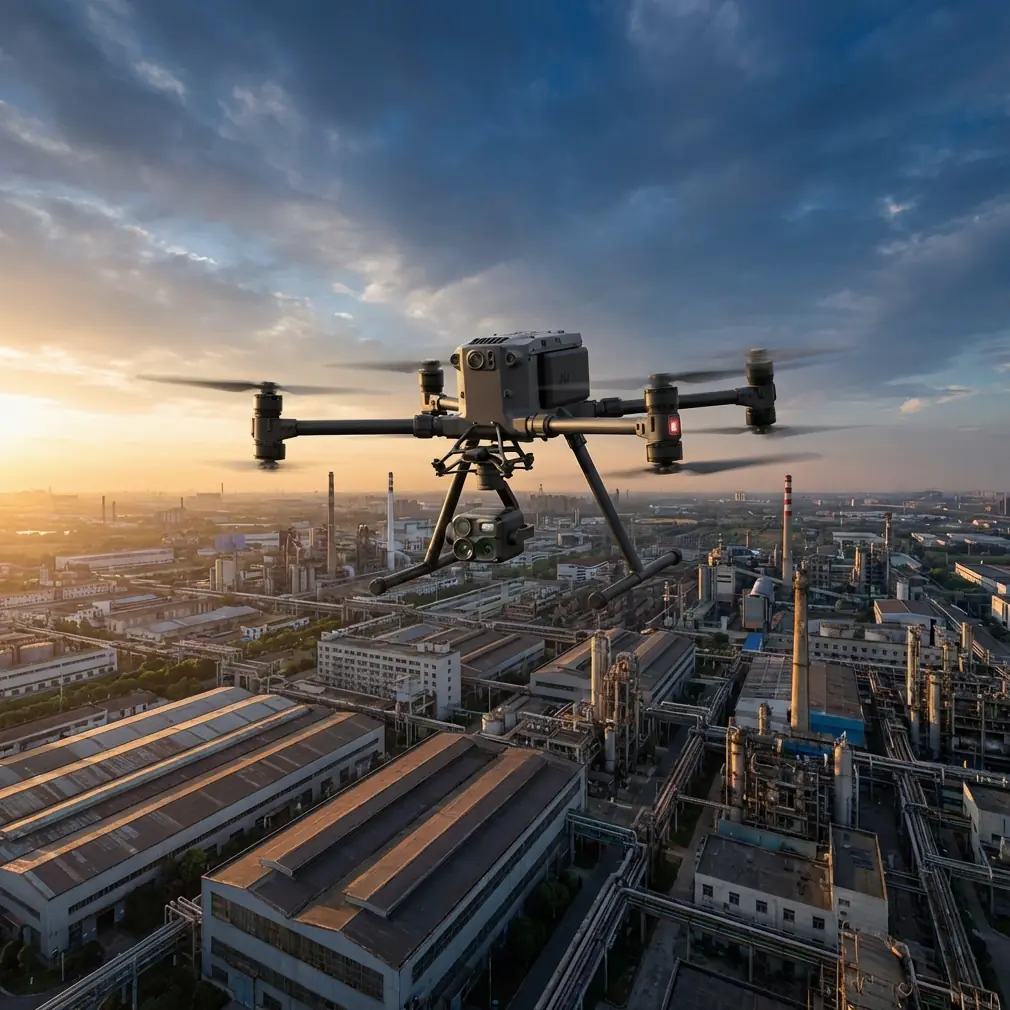
Matrice 4T Monitoring Tips for Mountain Highways: A Field Case Study
META: A practical case study on using the DJI Matrice 4T for mountain highway monitoring, with thermal imaging, O3 transmission, battery strategy, photogrammetry workflow, and field-tested operational tips.
Mountain highways punish weak workflows long before they expose weak aircraft.
That was the lesson behind a recent planning exercise I led for a civil infrastructure team evaluating the Matrice 4T for routine highway monitoring in steep terrain. The aircraft itself attracts attention because it brings thermal imaging, visible imaging, and modern transmission into one compact platform. But for mountain roads, the real question is not whether the drone can fly. It is whether the whole system can produce repeatable, defensible data when wind shifts, signal paths break around ridgelines, and access to launch points is inconsistent.
I approach the Matrice 4T less as a gadget and more as a field instrument. On highways cut into mountain corridors, that difference matters. A good sensor package can still fail operationally if battery rotation is sloppy, if thermal capture happens at the wrong time of day, or if mapping teams forget that slope and elevation change distort what looks simple on a flat mission plan.
This case study focuses on those practical issues.
Why the Matrice 4T makes sense for mountain highway monitoring
For this kind of job, teams rarely need a drone that does only one thing. Highway monitoring in mountainous areas usually blends several objectives into the same sortie:
- checking pavement condition along curved sections
- spotting rockfall or debris zones near cut slopes
- reviewing drainage paths after weather events
- documenting retaining structures and bridge approaches
- watching for heat anomalies in electrical cabinets, tunnel-side installations, or mechanical assets
- creating visual records that engineering teams can compare over time
The Matrice 4T fits that mixed workload because it combines thermal signature detection with standard visual inspection capability in a platform meant for professional operations. That matters on mountain roads because access windows are short. If a crew must hike or drive to a narrow turnout, they want one aircraft that can complete inspection capture and targeted thermal review without switching systems.
Thermal imaging is especially useful when the assignment goes beyond obvious surface damage. In mountain environments, a heat pattern can reveal things a daylight photo may understate: water intrusion affecting electrical enclosures, uneven heating in roadside equipment, or material differences on repaired sections after temperature swings. Thermal does not replace visual inspection. It narrows uncertainty. It tells the crew where to look harder.
The mountain highway problem is really a signal and logistics problem
A lot of drone discussions spend too much time on headline specs and too little on terrain behavior.
In mountains, radio performance is shaped by geometry. Signal quality that looks perfect over a clear line of sight can degrade quickly when the aircraft tracks behind a shoulder or moves along a bend with rock walls. That is why O3 transmission is not just a marketing detail. Its operational significance is simple: stronger, more stable live transmission improves decision-making in places where road alignment and terrain constantly threaten link quality.
For highway monitoring, that matters in two ways.
First, the pilot and visual observers can maintain better awareness of what the payload is seeing in real time. On a mountain route, conditions can change every few hundred meters. A live feed that remains usable helps the team identify fresh washout paths, slope cracks, or drainage blockages without needing repeated passes.
Second, more reliable transmission supports safer mission pacing. Crews can make conservative route decisions based on actual terrain masking rather than guesswork. Even if a project is being designed around future BVLOS workflows where regulations allow, mountain corridors still demand disciplined line-of-sight planning and route segmentation. The aircraft’s transmission system helps, but it does not erase terrain.
The best teams treat O3 as a risk reducer, not permission to stretch the envelope.
A real workflow change: separating thermal and photogrammetry into different windows
One of the most common mistakes I see is trying to collect every data type in one flight block.
That sounds efficient. It often is not.
If your goal includes photogrammetry for slope monitoring, drainage analysis, or change detection near retaining structures, you need image consistency. That means stable overlap, careful flight geometry, and a survey mindset. If your goal includes thermal interpretation, you also need timing discipline because surface heating can distort what you think you are seeing.
For mountain highways, I recommend splitting the mission into at least two capture windows when conditions allow:
1. Early thermal pass
Use the thermal payload when the temperature contrast is still meaningful and before sunlight starts creating misleading hot spots on rock faces, barriers, and dark pavement. This is where thermal signature analysis is strongest for identifying suspect areas rather than producing a pretty image.
2. Later visual mapping or inspection pass
When light improves, switch to a photogrammetry-oriented capture for engineering review. If the project requires measurable outputs, establish GCPs where safe and realistic. In steep roadside environments, GCP placement should prioritize clear visibility and crew safety over theoretical perfection. A few well-positioned control points often do more for usable mapping than a larger set placed in risky or partially obscured locations.
That distinction between thermal inspection and photogrammetry is not academic. It protects data quality. Thermal is about contrast and interpretation. Photogrammetry is about geometric consistency. Combining them carelessly usually weakens both.
The overlooked battery lesson from field experience
The battery issue on mountain highway jobs is rarely raw endurance. It is temperature management, turnaround discipline, and decision timing.
Here is the field tip I give every crew using hot-swap batteries: do not wait for the aircraft to “finish the job” on a mountain segment if the next leg includes a climb back to a safer return corridor.
Swap early.
That habit sounds conservative, but it solves several mountain-specific problems. Climbing out of a valley or clearing a ridge line for a cleaner return path costs more energy than the straight-line map suggests. Add headwind and cold air, and crews who push one more inspection point often create avoidable pressure near the end of the flight.
Hot-swap batteries are operationally significant because they reduce downtime between sorties. On a mountain highway assignment, that means the team can preserve mission rhythm without rushing the aircraft. A disciplined battery rotation lets you treat each road segment as a contained task instead of gambling that one extended flight will cover everything.
My preferred field rule is simple: if the drone has completed the primary inspection objective for that segment and the next waypoint moves deeper into terrain complexity, land and rotate. The battery you save is rarely worth the margin you lose.
There is another piece teams overlook. Keep battery pairs married to a usage log and monitor how they behave in cooler mountain mornings versus warmer afternoons. You do not need a complicated lab process. Just record cycle history, ambient conditions, and any unusual discharge behavior. Over a few weeks, patterns appear. Some pairs remain tightly matched under load. Others begin to drift. On routine infrastructure work, that knowledge is more useful than any generic endurance estimate.
Where AES-256 actually matters on a highway job
Security features often get mentioned and then forgotten. They should not be.
If your team is capturing inspection data around critical transport infrastructure, secure handling of flight and image data is part of professional practice. AES-256 matters because highway monitoring is not only about collecting images; it is also about protecting route-sensitive records, engineering observations, and maintenance documentation during transmission and storage workflows.
Its significance becomes clearer when multiple stakeholders are involved. A mountain highway project may involve asset owners, engineering consultants, maintenance contractors, and environmental reviewers. The stronger your data protection posture, the easier it is to build trust around digital inspection workflows.
This is not the glamorous part of drone operations, but it is one of the reasons mature infrastructure teams move from ad hoc flights to formal programs.
A practical mission design for mountain corridors
If I were structuring a Matrice 4T day for a mountain highway monitoring team, I would break it down like this:
Pre-launch planning
Identify turnout-based launch zones with clean sky views and enough room for setup away from active traffic. Segment the corridor into short operational blocks rather than one continuous route. Note terrain masking risks, not just distance.
First sortie: thermal screening
Fly targeted sections with known drainage issues, retaining walls, culvert approaches, and roadside equipment. Keep the route efficient. Thermal is most valuable when used to highlight anomalies for follow-up, not when crews try to blanket everything without a hypothesis.
Second sortie: visual inspection
Use the visible payload for close review of barriers, slope netting, signage structures, and pavement edge conditions. Where needed, capture oblique imagery that gives engineers context, not only top-down views.
Third sortie: mapping-grade capture
Where a measurable model is required, fly a more disciplined photogrammetry mission. If the terrain supports it, use GCPs to anchor the dataset. In mountain environments, even a limited set of well-surveyed points can significantly improve consistency for repeat visits.
Battery rotation and review
Use hot-swap batteries to keep the flow moving, but pause after each block for a brief data check. Do not discover back at the office that the critical retaining wall was captured with poor overlap or that a thermal anomaly was clipped at the edge of the frame.
That review step is where many projects are won. The aircraft can collect huge amounts of imagery. What saves time is confirming in the field that the right imagery was captured.
The role of BVLOS in future mountain highway programs
Many infrastructure teams ask whether BVLOS is the answer for long mountain roads.
The honest answer is that BVLOS can expand efficiency, but it does not remove the complexity of mountain operations. Terrain, weather channels, emergency landing planning, and communication architecture remain central. For mountain highways, BVLOS should be seen as a program design issue, not a shortcut.
The Matrice 4T becomes more valuable here because it supports the kind of multi-sensor mission set that makes extended corridor operations worthwhile. If regulations, waivers, and safety systems align, one aircraft can support thermal review, visual inspection, and broader asset awareness without sending separate crews for each task. But the operational standard must stay high. Good corridor work still comes from segmentation, route discipline, and conservative battery decisions.
What the Matrice 4T changes for engineering teams
The most useful thing about the Matrice 4T on mountain highways is not that it replaces people walking the corridor. It changes where human attention is spent.
Instead of sending staff to inspect every suspect slope feature or roadside asset with equal intensity, the drone helps triage the route. Thermal signature review points out areas that deserve closer examination. Visual and mapping outputs create a dated record that engineers can compare after storms, freeze-thaw cycles, or maintenance work. O3 transmission helps the field crew make better live judgments in terrain that constantly interrupts simple operations. Hot-swap batteries support a segmented workflow that is far better suited to mountain roads than the old habit of trying to finish everything in one push.
That is the larger value. Better decisions, earlier.
For teams building or refining a program, it helps to compare notes with operators who have already worked through mountain corridor planning, payload timing, and battery rotation strategy. If you need a practical discussion about route setup or sensor use, you can message a specialist here.
The Matrice 4T is a strong platform, but mountain highways expose every weakness in planning. Crews who respect the terrain, separate thermal from photogrammetry when necessary, use GCPs intelligently, and rotate batteries before margin gets thin will get much more from the aircraft than crews who simply trust the spec sheet.
That is the real lesson from field work. In steep road corridors, good drone operations are built from dozens of small decisions. The Matrice 4T gives you capable tools. The outcome depends on how carefully you use them.
Ready for your own Matrice 4T? Contact our team for expert consultation.