
Matrice 4T for Windy Highway Monitoring: A Field Tutorial
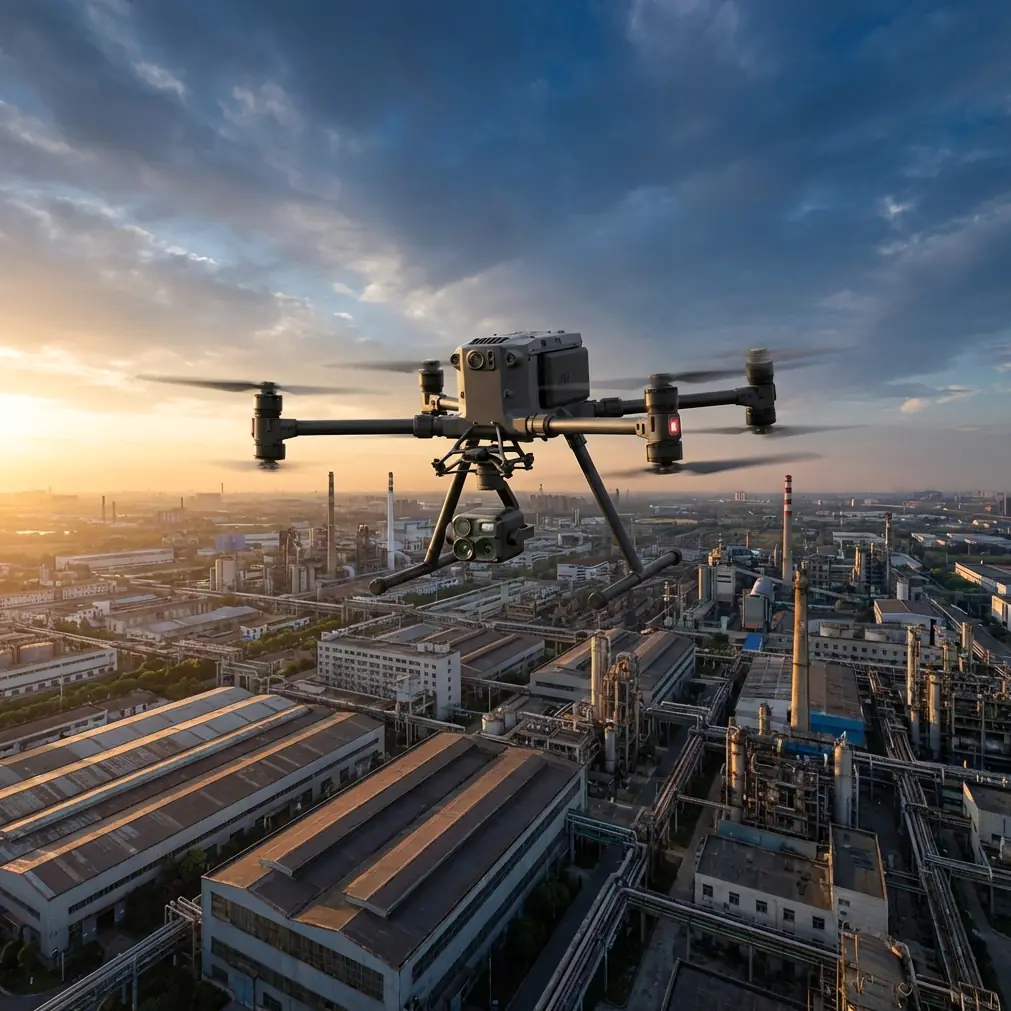
Matrice 4T for Windy Highway Monitoring: A Field Tutorial from the Operator’s Side
META: Practical Matrice 4T tutorial for windy highway monitoring, covering thermal workflows, O3 transmission, hot-swap battery planning, photogrammetry, and safe civilian inspection tactics.
Highway monitoring sounds simple until the wind picks up, heat shimmer rolls off the asphalt, and traffic never really gives you a quiet window. That is where the Matrice 4T stops being just another enterprise UAV and starts proving its value as a working tool.
I approach this from the standpoint of field operations, not brochure language. If your mission is to monitor road corridors in windy conditions, the real question is not whether the aircraft can fly. The real question is whether it can deliver usable imagery, stable thermal insight, and repeatable inspection data without turning every sortie into a battery race or a risk-management headache.
For that job, the Matrice 4T sits in an interesting place. It combines a thermal payload with visual intelligence, supports enterprise-grade transmission through O3, and fits the kind of repeat deployments that highway teams need. Wind changes how you plan every leg of the mission. It also changes what data matters. On a calm day, almost any competent platform can collect photos. In crosswinds over a live roadway, you need stable positioning, disciplined route design, and enough sensor flexibility to catch the things that standard RGB imagery misses.
This tutorial is built around that exact use case: monitoring highways in windy conditions with the Matrice 4T, using a workflow that balances thermal signature analysis, visual inspection, and mapping discipline.
Start with the mission, not the drone
A highway mission usually falls into one of three buckets.
First, there is corridor inspection: pavement distress, shoulder erosion, barrier condition, drainage issues, signage, and slope instability. Second, there is traffic-support observation: congestion patterns, stalled vehicles, debris, flooding, or weather impacts. Third, there is asset documentation: bridges, gantries, lighting poles, culverts, retaining structures, and roadside utilities.
Wind affects all three, but not in the same way.
For inspection, wind challenges image sharpness and hover precision near structures. For observation, it affects station-keeping and live video quality during prolonged overwatch. For documentation and photogrammetry, it threatens overlap consistency and can distort your capture pattern enough to degrade reconstruction quality unless your GCP strategy is solid.
That is why the Matrice 4T’s value is not only in one camera. It is in the ability to pivot between thermal interpretation and visual confirmation while maintaining a reliable video link through O3 transmission. On a highway corridor, signal reliability matters because your ground team is rarely standing in a neat open field. You may be working from service roads, embankments, overpasses, or temporary pull-off points with traffic infrastructure and terrain complicating the route.
Why thermal matters on highways when the wind is up
Many crews underuse the thermal side of the Matrice 4T. That is a mistake, especially in tough weather.
Thermal signature analysis can reveal what visual inspection misses. Water intrusion below pavement layers may alter temperature patterns. An overheating electrical cabinet near roadside systems can stand out before failure becomes obvious. Recently stressed brake components on stopped heavy vehicles can also appear distinctly in a thermal scene, helping teams quickly classify whether a roadside incident demands closer attention from the appropriate civilian response unit.
Wind changes thermal interpretation, though. Strong airflow cools exposed surfaces and can blur weak temperature differences. This means you should not treat thermal imagery as a magic answer. You use it comparatively. Scan across similar surfaces. Look for anomalies that persist across multiple viewing angles. Confirm with the visual sensor. Then document the exact location for the follow-up crew.
A practical example: on one windy afternoon corridor survey, a team noticed an irregular warm patch near a drainage outfall beneath a roadside slope. In standard visual imagery, it looked like a muddy shoulder. Thermal showed a persistent temperature contrast extending beyond the visible wet area. That mattered because subsurface moisture movement can signal erosion risk long before a visible washout develops.
The significance is operational, not academic. Thermal helps you prioritize where to stop ground crews, reducing unnecessary lane-adjacent exposure.
Wind planning changes battery planning
The phrase “hot-swap batteries” gets mentioned casually, but on a highway mission it is one of the most useful operational advantages you can have.
Wind eats endurance. Not always evenly, either. A tailwind on the outbound leg can fool crews into pushing farther down a corridor than they should. Then the return leg becomes the expensive one. If your operation requires repeated launches over an extended inspection window, hot-swap capability keeps the aircraft cycling efficiently without dragging the mission into long idle periods.
That has two concrete benefits.
One, your observation continuity improves. If you are checking a traffic bottleneck, shoulder collapse area, or drainage event developing over time, quick battery turnover means less data gap between sorties. Two, your team’s risk profile improves because rushed battery decisions become less tempting. The workflow stays structured.
In windy highway work, I recommend segmenting the route into smaller, pre-defined blocks rather than trying to complete a heroic continuous run. Battery swaps become part of the corridor rhythm: launch, inspect one segment thoroughly, recover, hot-swap, relaunch. The result is better data and fewer recovery surprises.
O3 transmission is more than a spec sheet talking point
A lot of drone discussions treat transmission systems as a line item. In actual infrastructure monitoring, it is one of the first things crews notice when conditions are bad.
O3 transmission matters because highway missions often involve long linear environments with intermittent visual clutter: signs, light poles, bridge structures, noise barriers, vegetation, and elevation changes. Add wind, and you may need to adjust position more often to keep the aircraft stable and the camera pointed correctly. A dependable link helps the pilot make those corrections without delayed feedback.
The significance is straightforward: cleaner, more stable situational awareness means smoother control inputs and more usable footage. That becomes critical when trying to inspect small details on moving days rather than waiting for perfect weather that never comes.
If your organization has heightened data security requirements for infrastructure imagery, AES-256 support also deserves attention. Highway surveys can include sensitive but civilian information such as utility corridors, control cabinets, or construction staging areas. Strong encryption is not a decorative feature. It is part of responsible data handling when your collected imagery feeds maintenance planning or contractor coordination.
A practical flight setup for windy corridor work
Let’s move from principles to workflow.
1. Define a narrow mission objective for each sortie
Do not launch with “monitor the highway” as your plan. That is too broad. Split sorties by purpose:
- thermal sweep for drainage or heat anomalies
- visual inspection of barriers, signs, and structures
- incident overwatch
- photogrammetry capture for a specific section
The Matrice 4T can handle multiple roles, but each flight should have one primary objective. Wind punishes indecision.
2. Walk the launch and recovery geometry
Before takeoff, assess gust channels. Overpasses, cut slopes, and passing trucks can produce unexpected turbulence. The best launch site is not always the nearest one. Choose a location with clear vertical space and a predictable recovery path.
3. Fly the upwind leg first
This is one of the oldest practical habits in UAV corridor work because it remains one of the smartest. If the aircraft works harder outbound, your return leg usually carries a margin advantage. You avoid the false confidence that comes from drifting downrange with the wind at your back.
4. Use thermal for triage, RGB for evidence
Start by identifying candidate anomalies in thermal view, then switch to visual confirmation. This sequence is efficient. It prevents the crew from spending too long examining every roadside irregularity in standard imagery.
5. Keep altitude disciplined
In wind, crews sometimes climb higher for comfort. That can help stability in some cases, but it also reduces detail and may complicate thermal interpretation if your target becomes too small. Set altitude based on the object you are trying to classify, not simply on what feels safer from the pilot’s perspective.
Where photogrammetry fits into a monitoring mission
The Matrice 4T is not only an observation platform. On highway work, it can support photogrammetry when you need measurable, shareable site records. This is especially useful after slope movement, shoulder damage, drainage failure, or temporary works installation.
But there is a catch. Wind can reduce overlap consistency and introduce image angle variation that degrades model quality. If you are building a deliverable that engineers or contractors will rely on, your field discipline needs to tighten.
This is where GCP placement matters. Good ground control points anchor the dataset when flight conditions are less than ideal. They help preserve mapping accuracy and give your reconstruction a defensible reference framework instead of relying entirely on onboard positioning.
Operationally, that means two things:
- do not skip GCPs just because the drone is advanced
- do not mix ad hoc monitoring flights with mapping flights and expect equally clean outputs
A windy inspection sortie can still collect useful context imagery. A windy photogrammetry mission, on the other hand, needs planned overlap, repeatable track spacing, and visible control on the ground.
A wildlife encounter that changed a flight path
Highway corridors are not just concrete and traffic. They cut through habitats, drainage channels, and edge environments where wildlife shows up at inconvenient moments.
One flight team I worked with during roadside monitoring encountered a deer emerging from brush near a culvert zone just as the aircraft began a low-altitude visual pass. The thermal sensor had already hinted at a moving heat source near the vegetation line, which gave the crew a few seconds of warning before visual confirmation. Instead of pressing the pass, they widened the orbit, held higher, and shifted the inspection sequence to avoid stressing the animal and to preserve safe situational control in gusty air.
That small moment says a lot about the Matrice 4T in real operations. The thermal channel was not being used for wildlife work. It was being used for infrastructure awareness. Yet it still added context that helped the crew adapt safely. On busy roadside missions, that kind of sensor awareness matters because your environment is never limited to the asset you came to inspect.
A word on BVLOS and corridor ambition
The term BVLOS often comes up quickly in highway monitoring because roads are linear and everyone wants more coverage per launch. The ambition makes sense. The operational reality is that expanded corridor reach only helps if your procedures, regulatory framework, crew roles, and risk controls are mature enough to support it.
For many teams, the smarter near-term improvement is not chasing maximum distance. It is refining mission segmentation, battery rotation, observer positioning, and data capture consistency. The Matrice 4T gives you enough capability that workflow quality often matters more than raw range.
If your team is designing a corridor program and wants to compare route architecture, battery staging, or payload workflow choices, it can help to speak with someone who has actually built these operations in the field. One practical way to start that conversation is through direct mission planning support.
Common mistakes crews make with the Matrice 4T on highways
Treating wind as a simple go/no-go factor
Wind is not binary. Direction, gust spread, terrain channeling, and traffic-induced turbulence all matter. A mission may be viable, but only after changing altitude bands, segment lengths, or camera priorities.
Using thermal without a comparison method
Thermal images need context. Compare similar materials, multiple angles, and repeated frames. One hot spot alone is only a clue.
Skipping data security planning
If your imagery includes infrastructure details, encrypted transmission and secure handling protocols should already be part of the operation. AES-256 is useful only if the organization respects the rest of the chain too.
Forgetting mapping discipline
Photogrammetry is not just “take many pictures.” In wind, poor overlap and weak GCP use produce disappointing outputs fast.
Overstretching a sortie
The availability of hot-swap batteries should encourage tighter mission segmentation, not reckless distance.
What makes the Matrice 4T especially suitable here
The strongest case for the Matrice 4T in highway monitoring is not a single feature. It is the combination.
Thermal signature analysis gives you a way to detect non-obvious anomalies. O3 transmission supports confident control and live assessment across awkward corridor environments. AES-256 aligns with infrastructure data stewardship. Hot-swap batteries make repeated segment work realistic instead of tedious. And when you need to shift from inspection into measured documentation, a structured photogrammetry workflow with GCP support extends the value of each deployment.
That combination matters most on bad-weather days, which is exactly when highway operators often need eyes in the air.
The drone does not eliminate the need for judgment. It rewards it. Plan around the wind. Separate triage flights from mapping flights. Use thermal as a decision aid, not a novelty. Respect wildlife and roadside complexity. Build every sortie around a defined objective.
That is how the Matrice 4T becomes more than a platform spec. It becomes a reliable part of a professional highway monitoring system.
Ready for your own Matrice 4T? Contact our team for expert consultation.