
Matrice 4T on Remote Highway Patrols: A Field Report
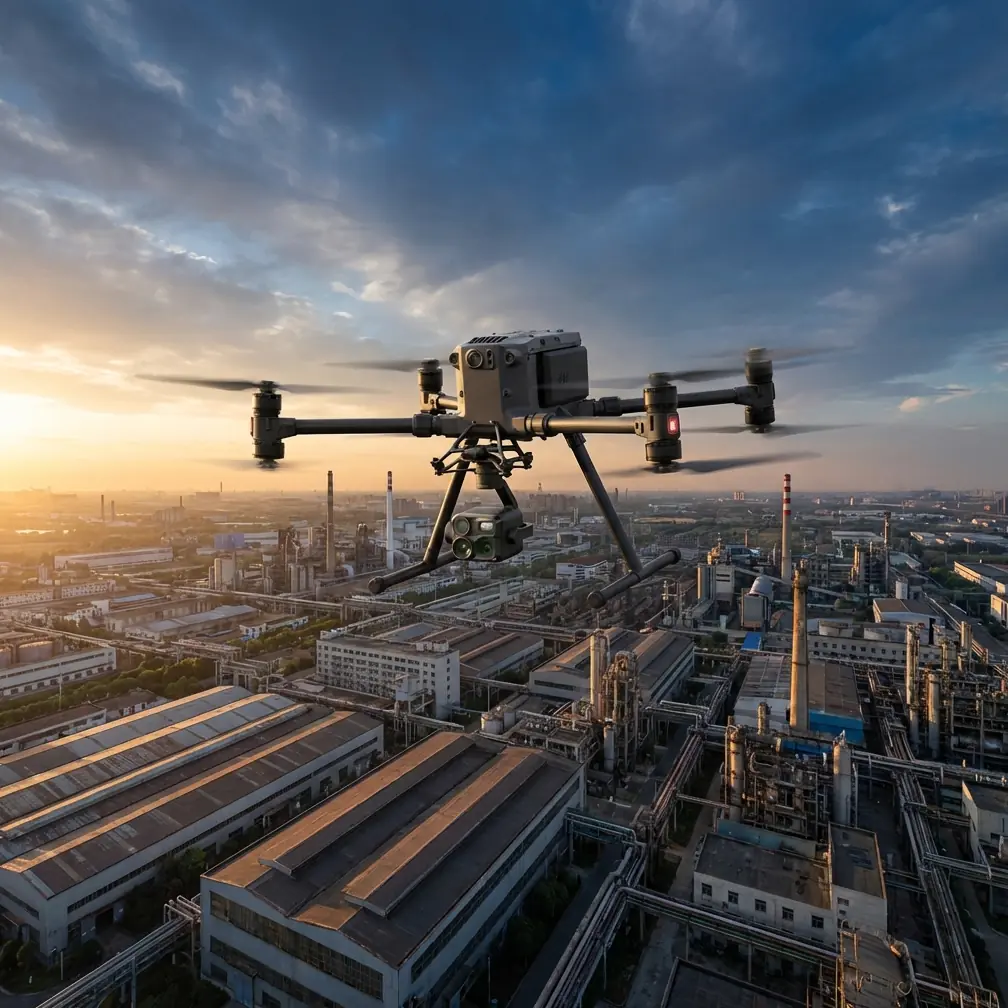
Matrice 4T on Remote Highway Patrols: A Field Report on What Actually Extends Useful Range
META: Expert field report on using the DJI Matrice 4T for remote highway monitoring, including antenna positioning, thermal workflow, transmission stability, sensor logic, and endurance planning.
Remote highway monitoring sounds straightforward until you try to do it across broken terrain, sparse infrastructure, and long stretches of asphalt that all look the same from altitude.
That is where the Matrice 4T becomes interesting.
Not because it promises abstract capability, but because remote road work punishes weak systems fast. If your link degrades behind a ridge, if your thermal pass is poorly timed, if your battery swap routine creates coverage gaps, or if your pilot treats antenna orientation like an afterthought, the mission suffers immediately. Highways do not stop being active because the drone team had a sloppy setup.
I’ve been thinking about the Matrice 4T through a lens that most product summaries miss: structural discipline. Oddly enough, two older aircraft design references make this clearer. One discusses vibration testing and sensor placement, with a blunt rule that sensors should be located at structural intersections. Another covers minimum bend radius in sheet-metal design, reminding us that geometry and mechanical restraint directly affect reliability. Those aren’t drone marketing ideas. They are engineering ideas. And they matter when a Matrice 4T is asked to monitor highways in remote areas day after day.
The real challenge is not flying. It’s preserving signal quality and decision quality.
A remote highway mission usually has a simple brief: inspect traffic flow, detect stoppages, check shoulders, spot heat anomalies from stalled vehicles or equipment, document pavement condition, and cover long linear corridors efficiently.
The hidden challenge is maintaining high-confidence observation while the aircraft moves through changing line-of-sight conditions.
This is why antenna positioning deserves more attention than it gets. If you are relying on O3 transmission in remote highway work, range is never just a specification. It is a geometry problem. The aircraft can be perfectly healthy while the control link becomes the weak point because the operator positioned the ground antennas poorly relative to the corridor.
The basic advice is simple but often ignored: point the broad face of the antennas toward the aircraft’s flight path rather than aiming their tips at it, maintain as clear a line of sight as possible above vehicles and roadside barriers, and avoid standing low behind embankments or guardrail-heavy cut sections where the signal has to fight terrain clutter. On long highway corridors, I prefer setting up from a slight rise offset from the roadway rather than directly beside it. That usually gives a cleaner Fresnel zone and reduces the number of moments when a truck, sign gantry, or median structure interrupts the path.
If the route bends, don’t wait until the signal indicator starts dropping. Reposition early. The Matrice 4T’s transmission system is only as good as the operator’s willingness to treat the ground station as part of the aircraft.
Thermal is useful on highways, but only if you stop using it like a spotlight
Remote road monitoring is one of the better civilian use cases for thermal signature analysis. Not because every problem is hot, but because some of the most operationally significant problems show up thermally before they are obvious in standard visual imagery.
A recently stopped vehicle often carries a distinct heat footprint. So does an engine bay that has been stressed. So can overheating roadside electrical enclosures, friction-heated mechanical parts on service equipment, or concentrated heat at unauthorized burn piles near transport corridors. In low-light or dawn conditions, thermal can separate real activity from visual clutter far faster than a wide visible-light scan.
But thermal should not be treated as a standalone answer. On the Matrice 4T, it is a prioritization tool. You use thermal to triage where attention should go, then confirm with the visual payload and, where needed, capture stills or route segments suitable for later photogrammetry.
That distinction matters. Highway managers do not just need “something looked warm.” They need evidence they can act on. A thermal anomaly on a shoulder might indicate a stranded vehicle, roadwork machinery left idling, or a harmless residual heat source from earlier activity. Pairing thermal with disciplined visual verification reduces false alarms and saves deployment time for maintenance crews.
The old aircraft-handbook lesson that fits Matrice 4T operations
One of the reference documents states that in structural vibration testing, sensors should be placed at structural intersections, and that for external loads there should be at least 4 vertical and 4 horizontal sensors along the axis. On full aircraft sections, test layouts can involve roughly 8 to 10 measured cross-sections.
At first glance, that seems far removed from drone highway work. It isn’t.
The operational significance is this: useful data comes from deliberate placement, not random coverage. In the handbook, the reason is modal fidelity. In highway monitoring, the equivalent is observation fidelity. If you want the Matrice 4T to generate decision-grade results, you need repeatable observation nodes along the route, not casual wandering.
For example, on a 20-kilometer remote highway segment, you should define fixed observation structures before launch: entry point, bridge deck, culvert cluster, steep cut section, lay-by, known congestion point, power crossing, and terminal checkpoint. Think of them as your “structural intersections” in an operational sense. Revisit them consistently. Record the same angles where possible. That gives your team comparison value across days and weeks.
This is especially important if you are building a condition history. Photogrammetry, even when not used for full mapping output on every mission, benefits from disciplined repeat geometry. If you intend to compare shoulder erosion, drainage buildup, or surface deformation over time, inconsistent capture angles and altitude profiles will weaken the dataset before processing even begins. Ground control points, where practical and safe to establish, improve alignment and confidence when corridor sections need more rigorous measurement.
Why mechanical discipline still matters in a smart drone workflow
The second reference source deals with minimum bend radius in sheet material and notes that when a bend angle falls between listed values, the safer approach is to choose the larger adjacent value. It also mentions reinforcement forms in aluminum and magnesium sheet components.
That sounds like pure manufacturing detail. For field drone teams, the lesson is broader: don’t force geometry beyond what preserves integrity.
I see an exact parallel in remote Matrice 4T deployment kits. Operators damage cables, antennas, mounts, and charging leads not because the drone is fragile, but because support equipment gets bent, packed, and strained beyond sensible limits. If you sharply kink antenna cables, crush RF connectors into hard cases, or repeatedly twist accessory leads into unnatural shapes, you are introducing small failures into a system where link stability is everything.
Choosing the “larger adjacent value” is a very good field mindset. Give cables a wider loop than you think they need. Use mounts that don’t preload the controller antennas at awkward angles. Secure battery charging setups so connectors are not hanging under tension in the back of a truck. These choices are unglamorous, but they directly affect whether the Matrice 4T behaves like a reliable inspection platform or a temperamental one.
On remote highways, you rarely get the luxury of a bench, a workshop, and a second attempt.
Hot-swap batteries are not just convenient; they change the patrol rhythm
Long corridors expose one of the biggest inefficiencies in drone work: the dead time between sorties.
If your operation involves repeated shutdowns, cold reboots, improvised battery staging, and missing notes between teams, your patrol rhythm breaks apart. Hot-swap batteries matter because they preserve continuity. The aircraft can return, exchange power quickly, and get back over the route with less drift between passes and less chance of missing the narrow windows when traffic, lighting, or weather are most revealing.
For remote highways, I structure battery use around segment logic, not percentage anxiety. Assign one battery pair to a planned corridor block with a fixed reserve margin for return and contingency. Do not squeeze every minute out of the pack just because the dashboard says you can. The value is in predictable cycles. This becomes even more critical if your team is trying to support near-BVLOS style corridor observation under a tightly managed operational framework. Even when the regulatory environment varies, the principle holds: stable planning beats opportunistic overreach.
A clean battery rotation also protects your data quality. Pilots who are worried about power tend to rush the final quarter of the mission. That is when they skip oblique angles, shorten thermal verification, or abandon re-checks of suspicious signatures.
Transmission security and highway infrastructure data
Highway monitoring often generates more sensitive information than people assume. Asset conditions, traffic disruptions, utility crossings, maintenance staging, and georeferenced imagery all have operational value. AES-256 matters here not as a buzzword but as part of a responsible data chain.
If you are capturing corridor imagery for transport authorities, contractors, or infrastructure managers, encrypted transmission helps reduce exposure during live operations. It does not replace proper storage and access control, but it strengthens the field leg of the workflow. For organizations deploying the Matrice 4T in remote areas where public networks are inconsistent or improvised communications are common, secure airborne-to-ground transmission is a meaningful baseline, not a luxury feature.
Practical antenna positioning advice for maximum useful range
This is the part many crews want condensed into one paragraph, but it deserves precision.
First, prioritize line of sight over theoretical distance. A shorter route with a clean radio path is operationally stronger than a longer route flown through rolling obstructions.
Second, keep the controller antennas oriented so their strongest radiation pattern faces the aircraft’s expected position. For most crews, the mistake is “pointing” the antenna ends at the drone as if they were laser pointers. That usually reduces performance.
Third, elevate the operator position if the highway sits in cut terrain, and avoid standing close to large metal objects, parked service trucks, or temporary site structures that can complicate the RF environment.
Fourth, when following a linear corridor, move the ground team before the link becomes marginal. Highway missions are predictable enough to justify leapfrogging your control point.
Fifth, watch the road itself. Traffic density can create intermittent visual and RF clutter near the setup area, especially beside service vehicles loaded with reflective equipment.
And finally, document your best-performing positions. Treat them like surveyed field points. If one overlook gives consistently stronger O3 performance on a given corridor segment, log it and reuse it.
If your team wants a practical review of route setup, relay placement logic, or antenna orientation for a specific highway environment, you can message our flight operations desk on WhatsApp.
Building a Matrice 4T workflow that produces usable records
The strongest Matrice 4T highway teams do three things well.
They standardize capture points.
They preserve link quality before it becomes a problem.
They collect imagery that remains useful after the flight.
That last point deserves emphasis. A highway patrol is not finished when the aircraft lands. The output has to support maintenance planning, contractor verification, incident review, and trend analysis. Thermal signature captures should be time-stamped and paired with visible-light confirmation. Photogrammetry-ready imagery should maintain sufficient overlap where surface assessment is needed. GCPs should be used when measurable repeatability matters. Notes about wind, sun angle, and traffic state should accompany the mission record.
This is the difference between flying a capable drone and operating a reliable monitoring program.
The Matrice 4T is well suited to remote highway work because it combines fast visual interpretation, thermal screening, secure transmission, and operational continuity features that reduce downtime. But none of that substitutes for fieldcraft. The teams that get the most from it are the ones that think like engineers: place things deliberately, preserve geometry, reduce interference, and build repeatable measurement habits.
That is the common thread between old aircraft handbook logic and modern drone operations. Good results come from disciplined setup. Not improvisation. Not feature-chasing. Setup.
Ready for your own Matrice 4T? Contact our team for expert consultation.