
Matrice 4T on a Cloudy Solar Farm Morning
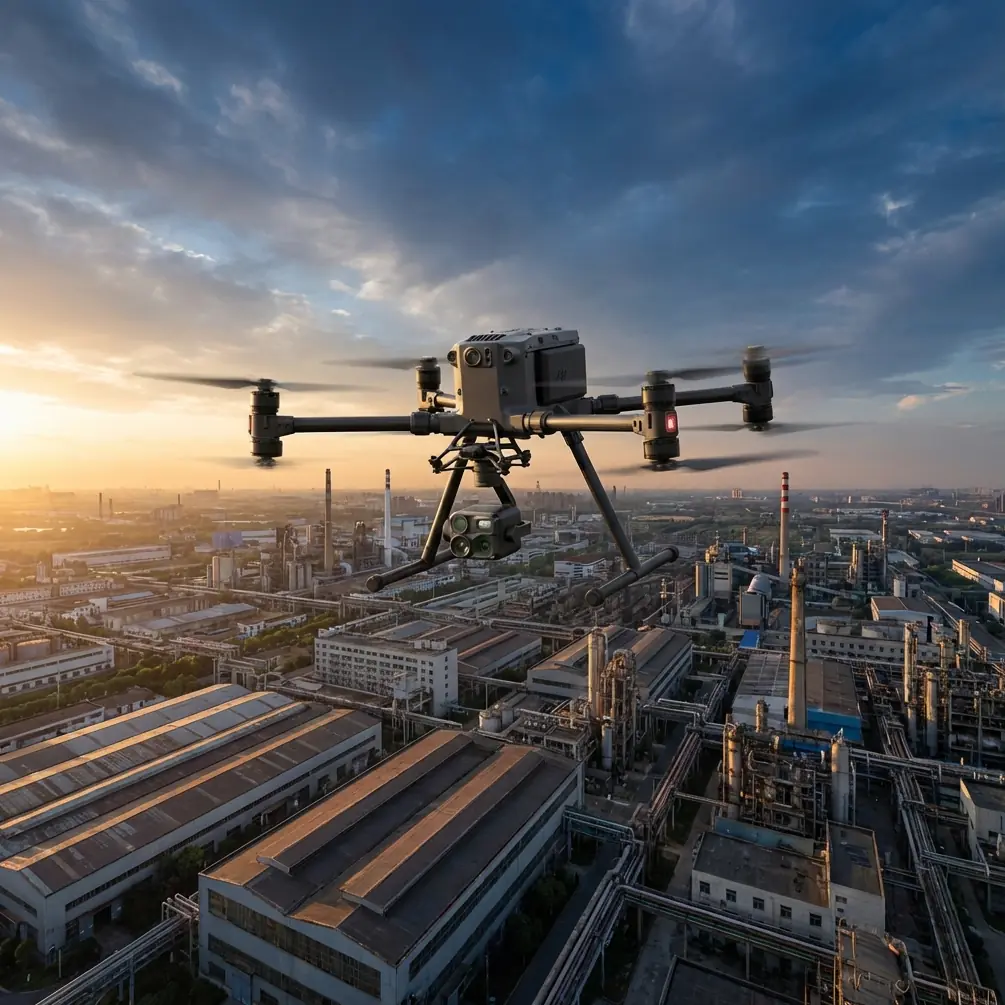
Matrice 4T on a Cloudy Solar Farm Morning: A Field Case Study in Low-Light Inspection
META: A practical Matrice 4T case study for low-light solar farm monitoring, covering thermal signature capture, O3 transmission, AES-256 data handling, hot-swap battery workflow, and why aviation-grade reliability thinking matters.
I’m Dr. Lisa Wang, and this is the kind of flight day that tells you more about a drone than any spec sheet ever will.
The site was a utility-scale solar farm, sprawling enough that walking crews would lose half a day just checking strings, combiner areas, fence lines, drainage edges, and inverter stations. The assignment sounded simple: inspect before full daylight, catch thermal irregularities while temperature contrast was still useful, and produce imagery that the operations team could actually use for maintenance planning. The complication arrived with the weather. We launched under dim, stable conditions, then watched cloud cover thicken and wind behavior shift midway through the mission.
That is exactly where the Matrice 4T becomes interesting.
A lot of discussions around this aircraft drift into general praise. That misses the point. For solar work in marginal light, the value of the Matrice 4T is not that it flies and sees. Plenty of systems do that. Its value is that it keeps an inspection coherent when the environment starts stripping away margin.
Why low-light solar work demands more than a good camera
Solar farms behave differently at dawn, dusk, and under broken cloud than they do under bright, uniform sunlight. For maintenance teams, low-light periods can be useful because thermal signature separation can reveal abnormal heating patterns without some of the visual confusion that comes later in the day. But those same conditions punish weak imaging pipelines. Visible imagery can lose definition. Perception changes. Pilots work harder to keep orientation and maintain confidence over repetitive rows that all look the same.
This is where a dual-output mindset matters: thermal data for fault detection, and structured imagery for location certainty.
On this mission, the thermal payload helped isolate suspect panel clusters and electrical hotspots that would have been inefficient to chase from the ground. At the same time, photogrammetry-style capture gave the asset team something equally valuable: context. A heat anomaly without position confidence creates another site visit. A heat anomaly tied to mapped rows, access paths, and reference points becomes a maintenance ticket.
That is why GCP planning still came up even on a thermal-first job. Ground control points are not glamorous, but on large solar sites they sharpen accountability. If your maintenance contractor is replacing modules in row set C-17, “close enough” mapping is usually not good enough.
What changed mid-flight, and why it mattered
About a third into the operation, the weather shifted from a calm overcast to fast-moving cloud with intermittent gusting. Anyone who has inspected a solar farm knows the issue isn’t only wind loading. Light changes can alter the readability of visible imagery from pass to pass, especially over reflective panel surfaces. Repetitive geometry already makes these sites visually fatiguing. Add changing sky conditions and your pilot workload rises quickly.
The Matrice 4T handled this phase well because mission continuity did not collapse when the environment changed.
The O3 transmission link was a bigger operational factor than many teams realize. On paper, transmission technology can seem like a background feature. In the field, especially over a large industrial site, stable downlink quality determines whether the pilot and observer can make immediate decisions with confidence. When clouds thickened and the aircraft moved across distant array sections, maintaining a clean situational picture meant we could continue targeted inspection instead of reverting to a conservative abort.
For solar farm operators, that matters because weather interruptions are expensive in subtle ways. You may not lose the whole mission, but you lose thermal comparability, route discipline, and crew rhythm. A drone that preserves control and image confidence under shifting conditions protects the real asset: usable inspection data.
Reliability thinking borrowed from aviation still applies
One of the most useful reference points for evaluating any professional UAV workflow does not come from a drone brochure. It comes from civil aviation system design philosophy.
In one of the reference materials behind this discussion, the civil aircraft design handbook describes safety and reliability planning through structured methods such as failure mode and effect analysis and analytical tools like fault tree programs. It also cites hard probability targets for certain degraded-control outcomes, including a figure of 1 x 10^-6 per flight hour for complete loss of a given function and 1 x 10^-3 per flight hour for reduced efficiency in another control-related context.
Those numbers belong to manned aircraft system thinking, not to a direct one-to-one certification claim about the Matrice 4T. But the operational lesson is highly relevant: serious flight work is built on the expectation that faults, partial degradations, and environmental changes will happen, and that the system should remain manageable when they do.
That mindset shaped how we flew the solar mission.
We did not assume ideal software behavior, perfect weather stability, or uninterrupted visibility. We built battery staging, route segmentation, observer positioning, and data capture priorities around resilience. That is exactly the kind of discipline reflected in aviation reliability practice: don’t plan around perfection. Plan around continuity after a disruption.
For drone teams moving toward more advanced utility inspection and eventual BVLOS-style operational maturity where regulations permit, this thinking is not optional. It is foundational.
The hidden relevance of air traffic data standards to a solar drone job
Another reference source might seem far removed from a photovoltaic site: the catalog of civil aviation air traffic management standards. Yet two entries in particular are revealing for professional drone operators. One is MH/T 4018.4-2007, a technical specification for GNSS integrity monitoring data interfaces. Another is MH/T 4022-2006, which addresses minimum safe altitude warnings and short-term flight conflict alert functions in air traffic control automation. The same source also lists MH/T 4026-2009 for integrated air traffic information display systems and MH/T 4027-2010 for voice communication exchange systems.
Again, these are not drone product specs. They matter because they point to the ecosystem that advanced UAV operations increasingly inhabit.
On a solar farm today, you may be flying under standard visual operations. Tomorrow, the same asset owner may want larger perimeter coverage, corridor inspection between substations, or multi-site workflows that edge toward more integrated airspace participation. GNSS integrity is not an abstract technical phrase in that future. It directly affects geotag confidence, route repeatability, and trust in mapped defect locations. Information display and communication standards also hint at where commercial drone operations are heading: more structured, more interoperable, less tolerant of ad hoc workflows.
For the Matrice 4T operator, the practical takeaway is simple. If you are collecting solar inspection data that may one day feed broader enterprise and airspace-managed systems, start acting like data integrity and positional integrity already matter. Because they do.
Thermal signatures only help if you can act on them
The strongest result from this mission was not a dramatic image. It was a list of actionable findings with location confidence.
We identified a small set of suspicious thermal signatures across multiple table groups during a low-light window that would have been easy to miss from the ground. Some appeared consistent with developing module-level issues; others suggested attention near electrical balance-of-system components. The visible imagery, captured with mapping discipline rather than casual photography, let the asset manager cross-reference findings with site plans and maintenance records.
That is the operational significance of pairing thermal capture with photogrammetry habits. Thermal points out the symptom. Structured imagery narrows the repair search area.
Without that second layer, maintenance teams often waste time rediscovering what the drone already saw.
How hot-swap batteries changed the outcome
Battery workflow sounds mundane until the weather begins to move.
Mid-mission cloud thickening forced a decision: land and suspend, or continue with a shortened turnaround and preserve the low-light inspection window before conditions degraded further. The Matrice 4T’s hot-swap battery capability was the reason we kept momentum. We landed, changed packs efficiently, verified priorities, and relaunched without turning a short weather interruption into a full mission reset.
On a solar farm, that matters more than it would on a compact roof inspection. Large sites punish delay. Every extra setup cycle costs not just time but comparability. Surface conditions change. Shadows move. Thermal contrast shifts. Teams forget which anomalies were confirmed and which were tentative.
Hot-swap support is not a convenience feature in this context. It is a data-preservation feature.
Data security is not a side issue anymore
Utility operators are much more careful now about where imagery goes, who accesses it, and how flight records are managed. That is one reason I pay attention to secure transmission and storage practices instead of treating them as IT fine print.
The Matrice 4T conversation often includes AES-256, and for good reason. Solar facilities are critical commercial infrastructure. Even when the mission is routine, the data may include layout details, equipment positions, perimeter conditions, and maintenance-sensitive findings. A secure handling posture is part of operational professionalism.
This links back, interestingly, to the civil aviation standards reference as well. That document includes MH/T 4018.7-2012, covering data security within an air traffic management information system framework. The environments are different, but the direction is the same: trusted operations require trusted data handling.
If your team is normalizing secure imagery workflows now, you are ahead of the curve.
The pilot’s job got easier because the mission architecture made sense
One of the mistakes I see in solar inspections is trying to make the drone compensate for a weak operational plan. No aircraft should have to rescue poor route logic.
For this case, we divided the farm into segments based on electrical grouping, access practicality, and expected thermal priority. We maintained disciplined overlap where mapping value justified it and reduced redundancy where it did not. GCP placement was limited but purposeful. The pilot focused on aircraft management and anomaly verification, not on improvising the structure of the mission in real time.
That matters when weather turns. A well-segmented mission can degrade gracefully. A loosely planned one usually falls apart.
The Matrice 4T supported that structure instead of fighting it. The aircraft’s role was not to create order from chaos. It was to preserve a good plan under pressure.
What this means for BVLOS-minded teams
I’ll stay within civilian commercial operations here, but the direction of travel is obvious. Energy infrastructure owners want more area coverage, more repeatability, and less downtime. As BVLOS frameworks mature in applicable regions, solar and utility operators will expect aircraft and workflows that fit into a more regulated, networked, and reliability-driven environment.
That is why references like GNSS integrity interfaces and automated safe-altitude alert concepts are worth paying attention to, even if your current mission is a contained site inspection. They represent the larger operational culture your drone program is moving toward.
The Matrice 4T fits best when used by teams willing to think that way now: disciplined route design, secure data handling, positional confidence, battery continuity, and communication reliability.
Not flashy. Effective.
My field verdict from this solar mission
The weather change gave us the answer more clearly than a perfect day could have.
For low-light solar farm monitoring, the Matrice 4T proved valuable not because it delivered one standout feature, but because several capabilities worked together when the mission got messy. Thermal sensing helped expose issues early. Photogrammetry discipline and GCP awareness kept findings mappable. O3 transmission maintained decision-grade situational awareness over a large site. Hot-swap batteries protected the inspection window. AES-256-level security aligned with the expectations of infrastructure operators. And the broader lens of aviation-style reliability thinking helped shape a workflow that did not depend on ideal conditions.
That combination is what serious operators should be looking for.
If you are planning a similar inspection program and want to compare mission design options, battery staging logic, or low-light capture strategy, you can message me here for a practical field discussion.
The Matrice 4T is not interesting because it can fly over a solar farm. Plenty of drones can do that.
It is interesting because, on a morning when the light was weak and the weather refused to cooperate, it still delivered inspection data the asset team could trust.
Ready for your own Matrice 4T? Contact our team for expert consultation.