
Matrice 4T in Mountain Venue Monitoring: What Actually
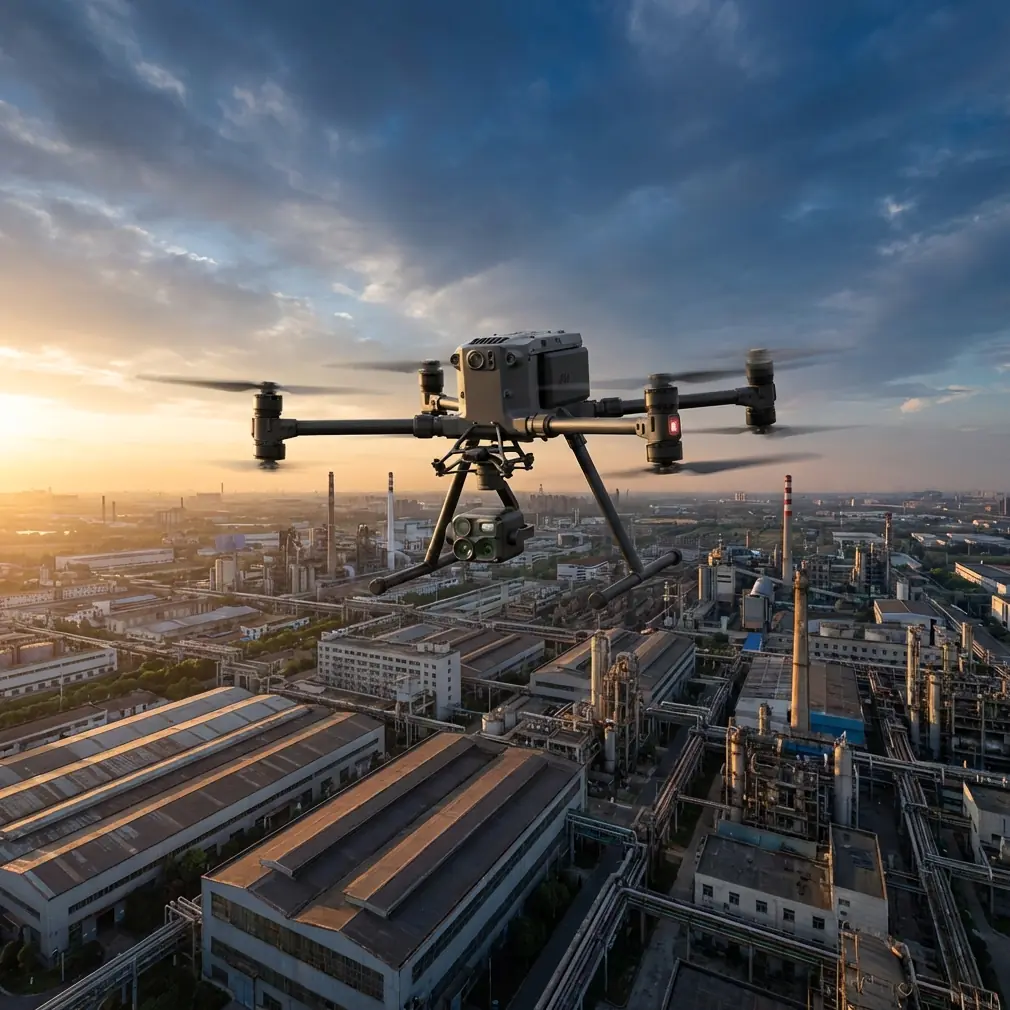
Matrice 4T in Mountain Venue Monitoring: What Actually Matters on the Ridge Line
META: A field-focused look at using Matrice 4T for mountain venue monitoring, with practical guidance on antenna positioning, maintenance logic, electrical reliability, and thermal workflow decisions.
Mountain venue monitoring looks simple on a map. It never is in the field.
A resort, outdoor event site, cable-car station, eco-park, or elevated construction venue can sit in a bowl of broken terrain where signal paths bend, wind shifts by the minute, and blind zones appear exactly where you most need visibility. The Matrice 4T is often discussed in broad terms—thermal payload, long-range transmission, enterprise positioning—but those headlines miss the real issue. In mountain operations, performance depends less on the spec sheet and more on how you build a repeatable workflow around reliability, inspection discipline, and radio awareness.
That is where the reference material becomes unexpectedly useful.
Two ideas stand out from the aircraft design sources. First, the maintenance logic behind important maintenance items, or CMSI, is based on whether a fault affects safety, hidden function, operational continuity, or economic impact. The standard is blunt: if even one of those answers is yes, the item should be treated as important. Second, the electrical design material puts unusual emphasis on installation drawings, wiring identification, continuity checks, and insulation resistance checks after aircraft wiring is installed. Those are not abstract airframe engineering topics. For a Matrice 4T team monitoring a mountain venue, they map directly to the difference between a stable mission and a lost window of visibility.
The mountain problem is not only terrain. It is layered failure.
When operators talk about mountain work, they usually start with line of sight. Fair enough. Slopes, trees, cliff faces, towers, and roofs all interfere with transmission. O3-class transmission systems help, and AES-256 matters when venue data needs protected links, but neither solves poor field setup. The weak point is often the human tendency to treat the aircraft as the whole system.
It is not.
The aircraft, remote controller, antennas, batteries, charging cycle, payload health, cable integrity, and pre-mission inspection routine all form one operating chain. In mountain venue monitoring, that chain is stressed harder than on flat ground because elevation change creates intermittent shielding. A signal may look strong from takeoff and then collapse after the aircraft slips behind a ridgeline shoulder by only a few meters.
That is why antenna positioning deserves more attention than it usually gets.
Antenna positioning advice for maximum range in mountain terrain
The mistake I see most often is operators pointing antennas at the drone like laser pointers. For most enterprise controllers, that reduces performance. The stronger transmission zone typically projects broadside from the antenna surfaces, not from the tips. In practical terms, you want the flat faces of the antennas oriented toward the aircraft’s expected flight corridor, not the ends aimed directly at it.
In mountain monitoring, that becomes even more specific:
- If the aircraft is operating across a valley, stand where the controller has the cleanest view into the corridor rather than the highest possible spot with obstructions behind you.
- Keep your own body, metal railings, vehicles, and temporary venue structures out of the direct path between controller and aircraft.
- If the mission includes climbing or descending along a slope, adjust antenna angle as the aircraft changes elevation. A fixed controller posture often works poorly once the drone moves far above or below the pilot.
- Avoid setting up beneath roof overhangs, near steel fencing, or beside generator trailers. Those are common at temporary mountain venues and can quietly degrade link quality.
- If one observation point cannot maintain clean geometry for the full route, split the mission into sectors instead of forcing a single launch location to do everything.
That last point matters for BVLOS planning too. Even where regulations permit extended enterprise operations, terrain still decides whether the link remains useful. A legal route is not automatically a practical route.
Why the old aircraft maintenance logic fits the Matrice 4T surprisingly well
The source material on CMSI—important maintenance items—describes a decision method that starts with consequences. Does a fault affect safety? Is it hidden? Will it disrupt normal use? Does it have a significant economic effect? If any one of those is true, the item gets elevated.
For a mountain venue monitoring program using Matrice 4T, that framework is better than a casual preflight checklist.
Take the following components and ask the CMSI question honestly:
1. Gimbal and thermal payload stability
A drifting or intermittently vibrating gimbal may not stop takeoff. It can still invalidate thermal signature interpretation, especially in search-style sweeps for overheating equipment, crowd-density heat anomalies, roof moisture patterns, or nighttime perimeter checks. A mission can be completed and still produce misleading thermal conclusions. That is a hidden-function problem, which is exactly the kind of issue the source document treats as important.
2. Battery interface and hot-swap discipline
Hot-swap batteries are valuable in mountain venue operations because the site often demands repeated short sorties rather than one long flight. But repeated battery changes introduce their own risk: incomplete seating, terminal contamination, temperature mismatch, and rushed turnaround. Under the CMSI logic, battery connection integrity belongs on the important list because failure here can affect safety and immediately disrupt operations.
3. Antenna hinges, controller ports, and cable strain
Teams often inspect props and arms carefully while ignoring the controller side of the link. Yet mountain terrain amplifies every weakness in transmission setup. A slightly loose antenna mount or stressed cable around a field monitor can create intermittent degradation that masquerades as “terrain issues.” Under a consequence-based framework, that is an important maintenance item because it can directly impair mission continuity.
4. Landing gear and airframe inspection after rough-site operations
The source text explicitly mentions checking whether operation is normal, movement is obstructed, installation is secure, and whether there is deformation, cracks, looseness, corrosion, or damage from foreign objects. That is extremely relevant after mountain venue launches from gravel pads, wet grass, improvised decking, or roadside pull-offs. Small impacts from stones or repeated uneven landings do not always produce immediate faults. They accumulate.
This is where a professional team separates itself from an enthusiastic one. Not by flying harder, but by deciding what deserves elevated scrutiny.
Electrical reliability is not glamorous, but it saves missions
The second reference document reads like dry engineering indexing until you apply it to field UAV work. It highlights several basics: wire type selection and marking, wiring harness grouping, equipment installation drawings, system diagrams, design review, and post-installation continuity and insulation resistance checks, with one key wiring verification item appearing on page 248.
That mindset matters for mountain venue monitoring because modern drone teams rarely operate with just a drone and a controller. They carry external displays, charging hubs, vehicle inverters, RTK or GCP support kits for photogrammetry work, mobile data devices, and sometimes tethered weather sensors or portable networking hardware at the base station.
Every added accessory introduces another failure path.
If your Matrice 4T mission package includes thermal survey one hour and photogrammetry support the next, electrical order matters more than people expect:
- Label every field cable clearly.
- Separate high-wear power leads from data lines.
- Inspect strain points where cables bend entering cases or monitors.
- Verify continuity on any custom lead after transport if behavior looks inconsistent.
- Keep connectors dry and clean; mountain dew and condensation are common culprits.
- Document the kit layout so that setup is reproducible across crews.
This is not bureaucracy. It is how you stop losing 25 minutes at sunrise because a monitor power lead was nicked in transit and the failure only appears when the cable is flexed.
The design manual’s insistence on drawings and marking also has a practical counterpart for enterprise UAV teams: standardize your mobile operations case. If a venue manager asks for recurring monitoring over several months, your field kit should be packed and wired the same way every time. Repeatability reduces error faster than improvisation ever will.
Thermal signature in mountain venues: where 4T earns its keep
The Matrice 4T becomes especially useful when visible-light observation is compromised by shadow bands, fog edges, mixed canopy, or low-angle afternoon light. Mountain venues create all of those. Thermal signature work can reveal human presence on hiking access routes, identify overheating electrical boxes at lift stations, locate generators running beyond expected temperature range, and flag roof or façade issues in hospitality buildings when the visual image is ambiguous.
But mountain thermal work has a trap: false confidence.
Rock faces warmed by afternoon sun, parked vehicles, metal roofs, and dark synthetic surfaces can create strong thermal contrast that looks meaningful until you cross-check the scene. That is why payload steadiness and controlled flight path matter so much. The thermal sensor is only as useful as the consistency of the acquisition geometry.
If the venue also needs documentation for terrain change, drainage, slope maintenance, or infrastructure planning, the same operation may branch into photogrammetry. That is where GCP use still matters. Even with modern positioning, ground control points can tighten accuracy in uneven terrain, especially when the site includes retaining walls, switchback roads, or partially forested boundaries. A team that understands both thermal monitoring and mapping discipline gets far more from the aircraft than one that treats every mission as a generic patrol.
A practical problem-solution workflow for mountain venue monitoring
Here is the structure I recommend for Matrice 4T deployment in this environment.
Problem: Signal quality degrades unpredictably across ridges and structures
Solution: Build launch locations around corridor visibility, not convenience. Conduct a short signal profiling pass before the first real mission. Watch link quality at different altitudes and lateral positions. Adjust antenna broadside orientation as the aircraft changes elevation.
Problem: Teams complete flights but miss hidden faults that compromise later missions
Solution: Create a CMSI-style inspection tier. If a component failure could affect safety, hide its own degradation, interrupt the mission, or cause outsized operational cost, inspect it every cycle. That includes battery seating, gimbal security, antennas, controller interfaces, prop condition, and landing surfaces.
Problem: Thermal imagery is collected, but interpretation is unreliable
Solution: Standardize flight geometry. Repeat altitude bands, overlap patterns where relevant, and hold a stable viewing angle on known inspection targets. Compare suspicious heat signatures against visible imagery and site context.
Problem: Accessory electronics create downtime in the field
Solution: Use documented cable layouts, identified power leads, protected harness routing, and a quick continuity-check process for suspect accessories. The source material’s electrical discipline translates directly here.
Problem: Venue managers want both monitoring and mapping from the same platform
Solution: Separate thermal reconnaissance sorties from photogrammetry sorties. For mapping outputs, plan around lighting, wind, and GCP placement rather than squeezing mapping into a thermal inspection window.
What operators often underestimate
They underestimate how much mountain operations punish inconsistency.
A Matrice 4T can handle complex commercial work, but the environment quickly exposes weak habits: casual antenna placement, unlabeled field electronics, uneven battery turnover, undocumented inspection findings, and overreliance on the aircraft’s onboard intelligence instead of disciplined mission design.
That is why the old-school aircraft references are useful here. One teaches you to identify what is genuinely critical through consequence-based maintenance logic. The other reminds you that electrical systems are managed through review, documentation, routing, marking, and verification—not guesswork.
Bring those two ideas into a mountain venue workflow and the aircraft starts performing like part of a system rather than a standalone gadget.
If I were setting up a Matrice 4T program for a mountain venue tomorrow
I would do five things first.
I would define the route sectors by terrain visibility, not by property lines.
I would train every pilot to reposition antenna angles throughout the sortie rather than locking into one controller stance.
I would designate a short CMSI inspection list based on consequence: gimbal, props, battery interfaces, antenna hardware, controller connectors, and landing-area contamination checks.
I would standardize all field electrical accessories with labels and a documented packing layout.
And I would split thermal monitoring from photogrammetry whenever the client needed both, using GCPs where terrain complexity justified better ground truth.
Those steps are not flashy. They produce better data, fewer interrupted sorties, and more confidence in what the Matrice 4T is actually telling you.
If you want to compare your site layout or discuss controller placement for a specific mountain venue, send the route sketch here: https://wa.me/85255379740
Ready for your own Matrice 4T? Contact our team for expert consultation.