
What a Drone Football Match in Weixian Reveals About Real
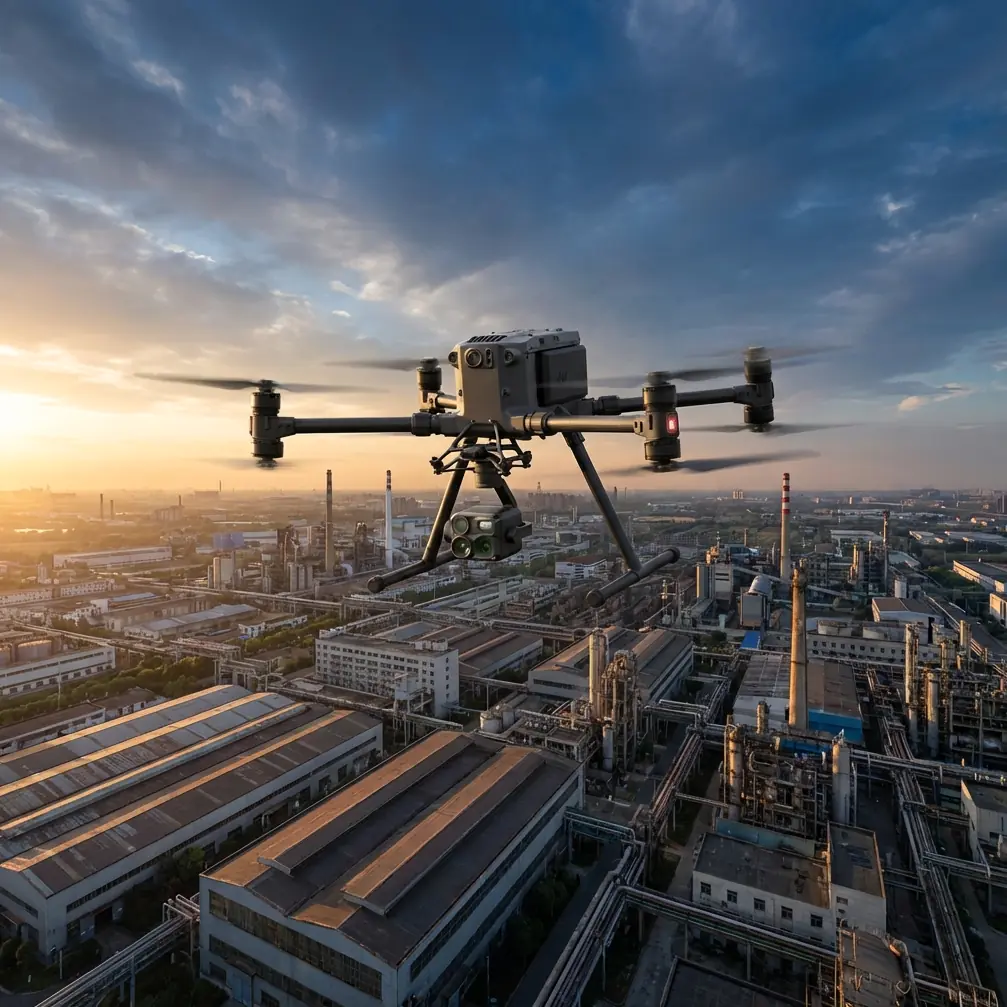
What a Drone Football Match in Weixian Reveals About Real-World Matrice 4T Wildlife Monitoring
META: A specialist case-study analysis of how recent drone football and large-scale lighting events reveal practical Matrice 4T lessons for urban wildlife monitoring, including thermal signature reading, O3 transmission, antenna positioning, and night operations.
A recent drone football event in Weixian, Handan might look far removed from urban wildlife monitoring. At first glance, it is sport. Fast, noisy, visual, competitive. Yet the details of that match offer a surprisingly useful lens for anyone planning to deploy the Matrice 4T in complex urban habitats where birds, small mammals, and human infrastructure all occupy the same airspace.
The Weixian competition took place at the Lixiang Shuicheng Sports Center and included both an adult division and a youth division. That matters more than it seems. When different skill levels can operate in the same structured environment and still execute rapid passes, interceptions, and precise scoring in three-dimensional space, you are looking at a live demonstration of something wildlife teams deal with every week: controlled decision-making under spatial pressure. Urban ecology work rarely happens in a clean, open field. It happens between streetlights, tree canopies, rooftops, reflective glass, moving vehicles, and curious crowds.
For Matrice 4T operators, that is the real story.
As a platform, the Matrice 4T is usually discussed in terms of payload flexibility, thermal imaging, mission intelligence, and public-safety utility. Those are valid talking points, but the deeper operational lesson is how it performs when the environment becomes layered and dynamic. The Weixian drone football match highlighted aggressive maneuvering, fast penetration through space, tactical blocking, and highly accurate “shots.” Replace “goal” with “line-of-sight confirmation of a thermal signature,” and the analogy becomes practical very quickly.
A case study hiding inside a sports event
I would frame this as a case study for urban wildlife monitoring teams using the Matrice 4T at dawn, dusk, and night.
In Weixian, pilots controlled drone football units in a true three-dimensional contest, not a flat race. That single detail is crucial. Urban wildlife does not move in two dimensions either. Pigeons roost on ledges, bats exit roof voids at height, feral cats cut through alley shadows, and raccoon-like urban scavengers often transition from ground cover to elevated structures. A platform used in this kind of setting must support quick perspective shifts without losing control discipline. The Matrice 4T is built for exactly that kind of layered observation.
The drone football footage described rapid penetration, clever interceptions, and accurate finishing. In monitoring terms, those same flight qualities translate into three benefits:
- quick repositioning to maintain visual or thermal contact with an animal moving behind obstacles
- precise hovering and framing when a target appears briefly between branches or structures
- controlled approach profiles that reduce unnecessary disturbance
This is where operators often underestimate skill transfer. Recreational drone agility and professional inspection or response flying are not the same thing, but they overlap in one meaningful area: spatial anticipation. The Weixian event showed pilots reading trajectories in real time. Wildlife teams using the Matrice 4T need that same anticipation to avoid overflying a roost, pushing birds into flight, or mistaking transient heat sources for animal presence.
Why the Chaozhou lantern display belongs in the same discussion
The second news item, from Chaozhou in Guangdong, adds another layer that urban wildlife professionals should not ignore. There, a 1400-meter light display zone extended from the ancient city wall, with multiple lantern groups illuminated at night. For most readers, that is a cultural story. For Matrice 4T operators, it is a near-perfect representation of a difficult nocturnal sensing environment.
Artificial lighting changes animal behavior. It also changes what your sensors “see.”
A large, brightly illuminated corridor introduces strong visual contrast, mixed-color light spill, reflective surfaces, and warm structures that can complicate target detection. In urban wildlife work, this matters when surveying birds around historic districts, checking bat emergence routes near lit facades, or monitoring mammals moving along canals, walls, and park edges after dark. The Chaozhou example is especially useful because it gives us one concrete operating scale: 1400 meters. That is not a tiny plaza. It is a long, visually busy corridor where maintaining orientation, target continuity, and link stability becomes a serious operational issue.
The Matrice 4T’s value in that setting is not just that it has thermal capability. It is that thermal data can help separate living targets from decorative light clutter when visible imaging becomes misleading. But thermal alone is not magic. Lantern installations, stone walls that hold daytime warmth, rooftop equipment, parked vehicles, and HVAC outlets all produce their own heat behavior. An experienced operator has to read thermal signature patterns, not simply bright spots.
A bird perched on masonry after sunset may appear differently from a mammal moving through a service lane. A warm lantern frame may bloom in the image yet remain structurally fixed. A genuine animal target tends to show shape shift, directional intent, and a thermal profile that changes with movement and occlusion. The Matrice 4T gives you the sensing tools. Interpretation still depends on field craft.
What this means for monitoring wildlife in urban environments
Urban wildlife operations are rarely about finding a single animal in an empty park. More often, they involve assessing patterns:
- Where are birds roosting around public venues?
- Are bats avoiding newly lit heritage corridors?
- Which pathways do nocturnal mammals use once pedestrian traffic drops?
- How does event lighting alter movement around water, trees, and old structures?
The Weixian match and the Chaozhou lantern display point to two operational truths. First, the aircraft must be managed confidently in congested three-dimensional space. Second, night sensing must be interpreted within an environment full of visual and thermal distractions.
That is why the Matrice 4T is relevant here. Its role is not merely to “look from above.” It supports layered observation that combines visible imagery, thermal signature assessment, route planning, and secure transmission. In urban wildlife projects, especially those edging toward BVLOS frameworks where regulation allows, reliability and data handling matter as much as image quality. O3 transmission helps preserve usable situational awareness across complex city geometry, while AES-256 matters when footage includes sensitive sites, protected species locations, or municipal infrastructure.
If a city ecology unit is mapping roost patterns near public buildings, it may not want those georeferenced observations drifting into unsecured channels. Protected species data is operationally sensitive. Nesting locations, den sites, and migration congregation points can all become vulnerable if poorly handled. Security is not an abstract checkbox. It is part of responsible wildlife management.
The antenna positioning advice most teams overlook
The brief here asked for antenna positioning advice for maximum range, and it deserves direct treatment because many field teams still get this wrong.
With the Matrice 4T, the goal is not to point the antenna tips directly at the aircraft. That common instinct reduces signal efficiency. The broad face of the antenna pattern should be oriented toward the drone’s operating area. In practical field terms, keep the controller antennas angled so their sides, not their narrow ends, present toward the aircraft’s route. If the mission path runs along a corridor such as a river edge, city wall, or green belt, align your body position and controller orientation before takeoff so the strongest part of the antenna pattern covers the expected working sector.
A few practical rules help:
- avoid standing directly against metal fences, vehicles, or reinforced walls that can disrupt signal behavior
- elevate your own position slightly when possible to improve the line between controller and aircraft
- if the drone is operating at offset elevation around tall buildings or tree belts, rotate with the aircraft rather than locking your stance
- do not let your tablet, vest hardware, or body block the antennas during lateral tracking
- in long corridor missions like the 1400-meter lantern zone described in Chaozhou, pre-plan pilot stations instead of assuming one static point is ideal
O3 transmission can provide strong performance, but urban geometry is unforgiving. Glass, steel, masonry, signage, lighting rigs, and vehicles all affect link quality. The best range setup is not simply “higher and farther.” It is cleaner line-of-sight, better antenna geometry, and fewer reflective obstacles between controller and aircraft.
Thermal signature reading in festival-like city conditions
Night monitoring during festivals, sports events, or seasonal lighting periods creates one of the hardest interpretation environments for any thermal-capable UAV. Operators using the Matrice 4T should approach these missions with a disciplined scan method.
Start wide. Identify heat anchors that are clearly non-biological: lighting transformers, rooftop vents, road traffic clusters, recently sun-warmed walls, and generator zones. Then shift to edge environments where animals actually move. In cities, those are often transitions rather than open spaces: wall-to-tree junctions, canal margins, roofline gaps, drainage corridors, and dark setbacks behind public gathering areas.
The Chaozhou lighting story is useful because it reminds us that visible brilliance and biological relevance are not the same thing. A lantern-filled corridor may dominate the eye, but wildlife may be concentrating in the dim spillover margins beside it. The Matrice 4T is especially effective when the operator resists the obvious focal point and instead studies the thermal ecology around it.
That is also where photogrammetry and GCP-based mapping can add value after the immediate flight. While thermal sorties are often treated as pure detection missions, repeatable urban wildlife projects benefit from layered documentation. Build a georeferenced base map, anchor it with GCPs where appropriate, and compare repeated flights over time. You may find that roost occupancy shifts not because habitat disappeared, but because a lighting installation, sports activity, or seasonal public event changed the usable dark corridors.
Hot-swap batteries and why continuity changes the data
Short interruptions can distort wildlife observations. Anyone who has monitored bat emergence or bird dispersal knows that activity peaks are often brief and highly time-sensitive. This is where hot-swap batteries become operationally meaningful.
The value is not convenience. It is continuity.
If a team is watching how animals react to a sports venue, a lantern route, or an evening surge in pedestrian traffic, a long break between flights can erase the very behavior they were trying to capture. The Matrice 4T’s battery workflow helps teams maintain surveillance windows with less downtime, reducing gaps in the timeline. For urban ecology, that translates into better behavioral interpretation, not just more airtime.
Imagine a sequence like this: first, animals hold position before crowd build-up; second, lighting intensifies; third, movement shifts to side corridors; fourth, activity resumes after foot traffic thins. If your sortie breaks between steps two and three, the data story becomes fragmented. With efficient battery turnover, you retain the narrative.
What the Weixian event says about pilot development
I also would not ignore the adult and youth split in the Weixian competition. That detail points toward a broader operational lesson: structured drone environments can develop valuable piloting instincts early, provided those instincts are later formalized into professional procedures.
For wildlife teams, that means training should not focus only on checklist compliance. It should also include spatial drills, obstacle anticipation, altitude discipline, and target reacquisition. The Weixian match showcased concentrated pilot attention and rapid tactical response in confined airspace. Those are exactly the qualities that help an Matrice 4T operator keep a safe buffer around birds while still collecting usable observation data.
Urban wildlife monitoring is not a speed contest, but it does reward pilots who can think ahead of the aircraft. A fox crossing from a park edge into an underpass gives you seconds, not minutes. A roost flush near a lit stadium can scatter targets vertically and laterally at once. A good pilot does not chase blindly. They reposition, widen context, preserve line-of-sight, and let the sensor package do its work.
A stronger way to think about the Matrice 4T
Too many discussions reduce the Matrice 4T to a spec sheet. That misses the real value.
What the recent news from Weixian and Chaozhou shows is that drone operations are becoming culturally embedded in environments that are dense, public, illuminated, and highly dynamic. Sport in one case. Tradition in another. For urban wildlife professionals, that is familiar territory. Animals live in those same blended spaces. Monitoring them requires more than airborne access. It requires sensor judgment, airspace discipline, secure data handling, and a pilot who understands how movement unfolds in three dimensions.
If your team is building an urban wildlife workflow around the Matrice 4T, use these stories as practical prompts. Study maneuvering in constrained space. Study thermal interpretation in bright nightscapes. Plan controller orientation as carefully as flight altitude. Use mapping methods that let you compare habitats over time. Treat secure transmission and encrypted storage as part of conservation practice, not paperwork.
And when you brief your crew, remember the simplest lesson from that drone football match in Weixian: precision under pressure is learned, not assumed.
If you are refining a city wildlife monitoring program and want to compare mission setups, flight profiles, or antenna placement strategies, you can message here for a field-ops discussion.
Ready for your own Matrice 4T? Contact our team for expert consultation.