
Matrice 4T in Dusty Wildlife Monitoring: A Technical Review
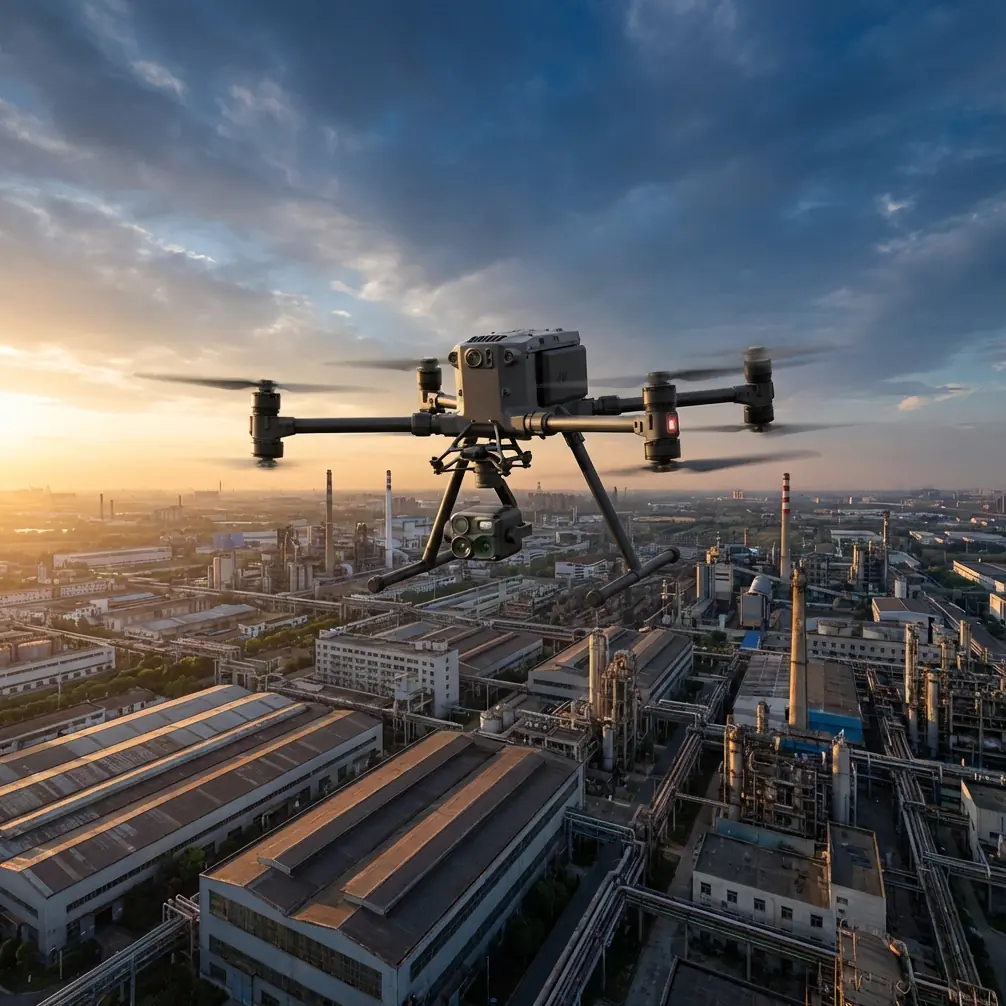
Matrice 4T in Dusty Wildlife Monitoring: A Technical Review from the Field
META: A field-driven technical review of the Matrice 4T for dusty wildlife monitoring, with operational insights on stability, redundancy, hover efficiency, thermal work, transmission, and mission reliability.
Dust changes everything.
It gets into gimbals, settles on lenses, softens contrast, hides tracks, and turns a clean morning survey into a test of whether your aircraft can hold stable data quality when the environment stops cooperating. In wildlife monitoring, especially in dry reserves, scrubland corridors, and semi-arid conservation zones, that matters more than spec-sheet theater. You are not flying to admire the aircraft. You are flying to find heat, count movement, document habitat use, and come back with evidence sturdy enough for ecological decisions.
That is why the Matrice 4T deserves to be discussed from an engineering perspective, not just a payload perspective.
I learned this the hard way on a dust-heavy monitoring project where we were trying to identify nocturnal movement patterns near a watering route. The thermal signature was there, but airborne dust and unstable low-altitude airflow kept undermining repeatability. The challenge was not simply “can the drone see heat?” Almost any modern thermal platform can see a heat source. The harder question was whether the aircraft could maintain stable hover behavior, consistent sensing, and trustworthy control response in a messy environment where rotor wash and suspended particles were working against us.
That is the right lens for evaluating the Matrice 4T.
Why platform stability matters more in dust than many teams realize
When operators think about wildlife work, they often jump straight to the thermal camera. Fair enough. Thermal is the decisive sensor in dawn, dusk, and night operations. But thermal usefulness depends on aircraft behavior. If the platform cannot hold a disciplined hover, recover cleanly from gusts, and avoid abrupt power-driven attitude changes, your thermal footage becomes harder to interpret and your manual identification workload rises.
One of the most useful reference points here comes from classic aircraft design doctrine around propulsive stability and protective mechanisms. Even though those texts were written around manned aircraft and rotorcraft principles rather than a specific enterprise drone, the design logic still translates. For example, one source emphasizes that when an aircraft is in a stable operating condition, propeller speed variation must remain tightly controlled, and that overspeed protection should intervene automatically once rotational speed exceeds 103%. Another key point is the need for pitch-lock or fault-containment behavior so that a malfunction does not cascade into a dangerous or unstable flight state.
Why does that matter to a Matrice 4T operator watching wildlife in dusty conditions?
Because dust often arrives with turbulence, temperature gradients, and visual ambiguity. In those moments, stable thrust management and fault-tolerant control are not abstract engineering virtues. They are what keeps your thermal image interpretable and your aircraft predictable. A drone working over a dry plain at low speed while tracking animal movement needs powertrain discipline. If the aircraft responds to variable airflow with erratic thrust behavior, that instability shows up as sensor jitter, framing drift, and reduced confidence in your observations.
The practical takeaway: a serious wildlife platform is not just a camera carrier. It must behave like a stable observation instrument.
The hidden relevance of multi-rotor independence
Another detail from the propulsion reference is easy to overlook but surprisingly relevant: in multi-propeller aircraft, control mechanisms for each propulsor should be independent and non-interfering. That principle was originally framed around ensuring accurate, reliable operation when multiple propellers are installed. For a modern enterprise UAV, the spirit of the requirement is obvious. Distributed propulsion only helps if each motor-prop system can be managed cleanly without cross-coupled confusion.
For dusty wildlife operations, this matters in two ways.
First, contamination risk is rarely uniform. One rotor arc may be ingesting more fine dust than another depending on wind angle and terrain geometry. You want a platform whose control architecture can absorb small asymmetries without producing visible instability.
Second, survey crews often work from improvised launch areas: hard-packed roads, dry river margins, temporary field camps. These are exactly the places where loose particulate load can complicate takeoff and landing. The more robust the aircraft’s motor-level control behavior, the less likely small disturbances are to become mission-level problems.
The Matrice 4T’s appeal, then, is not just that it is advanced. It is that it sits in a category where system-level integration is expected. For conservation teams, that integration is what turns a difficult site into a workable one.
Hover efficiency is not a theoretical metric in wildlife work
The second reference source, focused on helicopter design, offers a detail that deserves more attention in drone operations: coaxial rotorcraft can achieve hover efficiency roughly 17% to 30% higher than comparable single-rotor arrangements. The explanation is aerodynamic. Interaction between the upper and lower rotors can improve the effective wake pattern during hover, expanding the useful downwash region and reducing certain losses associated with tail structures.
Now, the Matrice 4T is not a coaxial helicopter, and pretending otherwise would be sloppy. But the operational lesson still matters. Hover efficiency and compactness are not side notes. They directly shape what happens when you are trying to hold station over a skittish herd at sunrise or inspect a denning area without flying lower than you would like.
The same helicopter text also notes that eliminating a tail rotor can significantly reduce overall longitudinal dimensions, with rotor diameter in some coaxial designs falling to around 70% to 80% of a comparable single-rotor machine at the same gross weight. That reduction in footprint is especially meaningful in constrained environments.
Again, the point is not to force an apples-to-apples comparison. The point is to understand what good aircraft design values: compact geometry, efficient hover, and reduced vulnerability to protruding structures or complex transmission elements.
For operators in dusty habitats, those values show up in a very practical form. You want an aircraft that can launch from tighter clearings, operate near scrub without unnecessary spatial awkwardness, and maintain useful hover endurance while the pilot focuses on target behavior rather than constant aircraft correction.
That is where the Matrice 4T fits the mission profile well. It is the kind of platform that lets the team spend more cognitive bandwidth on wildlife interpretation and less on fighting the aircraft.
Dust, thermal signature, and what “usable data” actually means
A thermal signature is only as useful as the context around it.
In dry habitats, rocks hold heat, vehicle tracks radiate differently after sunset, and airborne dust can slightly complicate contrast in ways that newcomers do not anticipate. The Matrice 4T becomes valuable when it lets you work across sensors instead of treating thermal as an isolated feed. Thermal helps you detect. Visual and zoom perspectives help you verify. Mission repeatability helps you compare. And if you are conducting habitat modeling or boundary updates, photogrammetry layers and GCP-backed control points help tie observations to map products you can revisit later.
That combination matters when the mission is not “spot an animal once,” but “document recurring movement across a season.”
This is where many teams misjudge their equipment needs. They think the problem is range. Often the problem is confidence. Can the aircraft hold a stable enough position to let you compare thermal patterns over time? Can it operate cleanly enough in dust that your visual confirmation does not degrade halfway through the sortie? Can the workflow support a shift from live observation to georeferenced reporting without juggling incompatible systems?
On that front, the Matrice 4T aligns with real field demands better than hobby-adjacent platforms ever will.
Transmission and trust in wide-area monitoring
Dusty reserves are rarely ideal RF environments. You may be dealing with tree belts, rocky outcrops, service roads, and long sightlines interrupted by terrain. That makes transmission quality more than a convenience. It is part of mission safety and data continuity.
This is where O3 transmission becomes meaningful in the reader scenario. Reliable link performance gives the pilot more confidence when working broader transects or observing animals from standoff distances that reduce disturbance. If your program is moving toward BVLOS workflows under the right regulatory framework, then link reliability and system encryption become even more central. AES-256 is not just a cybersecurity footnote; it matters when the location data, imagery, and movement patterns you are collecting could be sensitive from a conservation standpoint. Some wildlife datasets should not circulate casually, especially around high-value species or fragile habitats.
A mature conservation operation should treat airframe reliability and data security as part of the same chain of custody.
Battery workflow is where good missions are won or lost
Ask field crews what breaks momentum in wildlife monitoring and they usually do not say “camera limitations.” They say battery swaps, transport logistics, heat stress on gear, or losing the best movement window because the aircraft is grounded at the wrong moment.
That is why hot-swap batteries matter so much. In a dusty monitoring environment, every unnecessary power-down, every extra handling cycle, and every delay at the launch point increases friction. Wildlife movement windows are narrow. Predawn thermal work, evening crossing activity, and opportunistic tracking after water access can all punish slow reset cycles.
The Matrice 4T is easier to live with when the battery architecture respects the field reality. That is not glamorous, but it is the difference between completing a clean survey block and missing the only ten-minute interval when the target animals actually moved.
A better way to think about the Matrice 4T for conservation teams
The strongest case for the Matrice 4T is not that it does one thing dramatically. It is that it reduces operational compromise across several things at once.
It supports thermal-led detection while preserving enough platform discipline for verification. It supports broad-area observation without forcing you into fragile workflows. It supports mapping-adjacent tasks when wildlife monitoring overlaps with habitat documentation. It supports serious transmission and security practices rather than treating them as afterthoughts. And perhaps most importantly, it is well suited to the kind of dusty, repetitive, evidence-driven fieldwork where crews need consistency more than novelty.
That consistency is worth more than a flashy feature.
The historical design references above help explain why. Across both propeller aircraft and rotorcraft, the recurring themes are stability, independent control, overspeed protection, compactness, and hover efficiency. One source calls for automatic recovery behavior when rotational speed exceeds 103%, while another points to a 17% to 30% hover-efficiency advantage in coaxial arrangements. Different aircraft categories, different mechanisms, same underlying truth: aerial work becomes more effective when the platform protects stability and uses energy intelligently.
That is exactly the sort of thinking that separates a usable wildlife drone from a merely capable one.
My field view
If I were building a Matrice 4T workflow specifically for dusty wildlife monitoring today, I would not begin with a brochure. I would begin with the mission failure points we used to face: unstable hover during identification, data gaps caused by battery delays, uncertainty around thermal interpretation, and communication drop anxiety at the edge of the survey area.
Then I would choose the aircraft that most cleanly removes those pain points.
That is where the Matrice 4T earns its place.
Not because dust disappears. Not because wildlife becomes easier. But because the aircraft gives the crew a steadier platform for making difficult observations under imperfect conditions. In ecological monitoring, that is what professionalism looks like: better control, cleaner data, fewer interruptions, and decisions grounded in repeatable evidence.
If you are designing a field workflow around thermal signature capture, photogrammetry support, GCP-referenced habitat mapping, and secure long-range observation, the Matrice 4T is a logical tool to evaluate seriously. And if you need to talk through a site-specific setup for dusty conservation work, you can message a field specialist directly.
Ready for your own Matrice 4T? Contact our team for expert consultation.