
How to Scout Construction Sites at Altitude with M4T
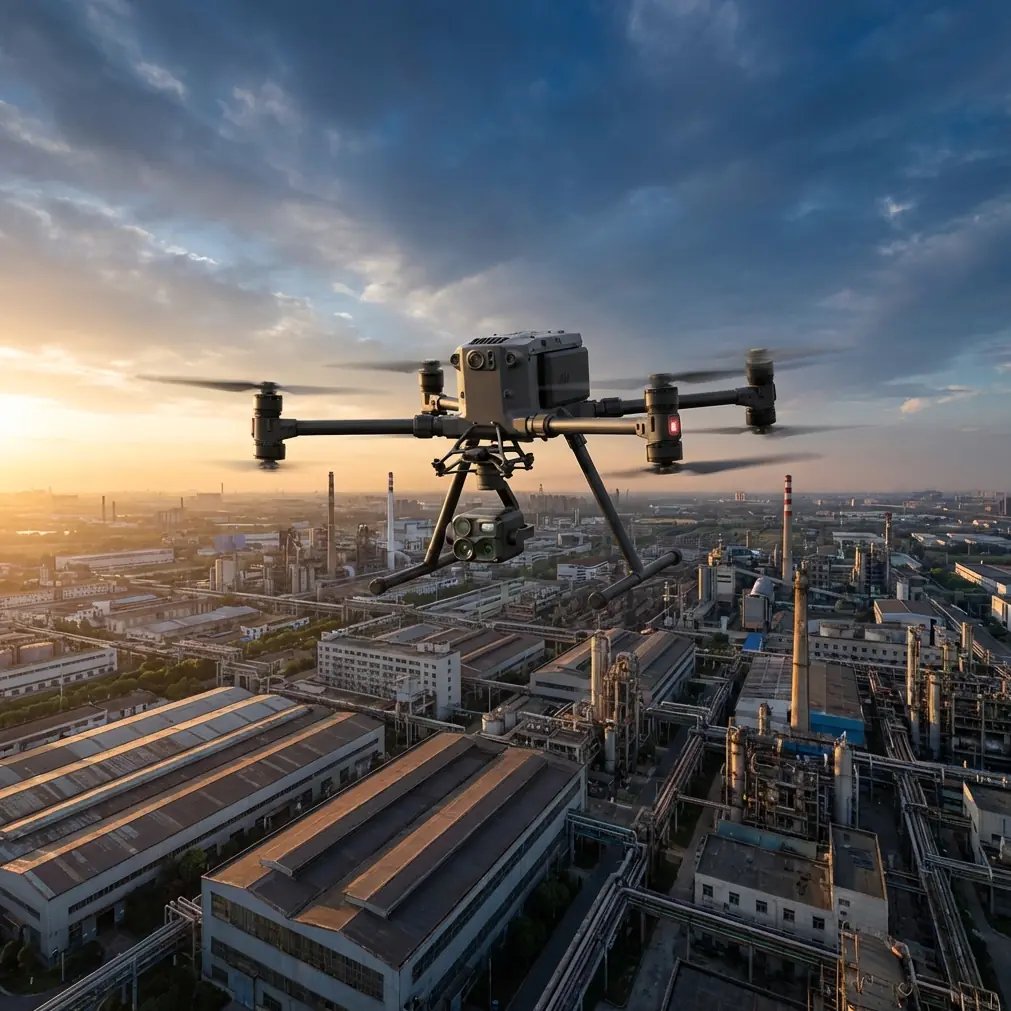
How to Scout Construction Sites at Altitude with M4T
META: Learn how the DJI Matrice 4T enables high-altitude construction site scouting with thermal imaging, photogrammetry, and BVLOS capability for faster surveys.
By James Mitchell, Commercial Drone Operations Expert
TL;DR
- The Matrice 4T's wide-angle thermal sensor and photogrammetry capabilities make it the ideal platform for scouting construction sites above 3,000 meters elevation.
- O3 transmission and AES-256 encryption ensure reliable, secure data links even in electromagnetically noisy environments common at remote construction zones.
- Hot-swap batteries and BVLOS-ready features cut multi-day site surveys down to single-session operations.
- Proper GCP placement and antenna orientation are critical to overcoming the unique challenges of high-altitude terrain mapping.
Why High-Altitude Construction Scouting Demands a Purpose-Built Drone
Construction projects at elevation—mountain highways, ski resort expansions, hydroelectric dam sites, telecommunications towers—present a unique convergence of challenges. Thin air reduces rotor efficiency. Unpredictable thermals destabilize flight paths. Electromagnetic interference from nearby heavy machinery and geological formations disrupts data links. Standard consumer drones simply cannot operate reliably under these conditions.
The DJI Matrice 4T was engineered for exactly this kind of operational complexity. With a maximum service ceiling of 7,000 meters, a multi-sensor payload combining visible light, thermal, and laser rangefinding, and an enterprise-grade communication system, it transforms high-altitude site scouting from a logistical nightmare into a structured, repeatable workflow.
This guide walks you through the complete process—from pre-flight planning to deliverable generation—so you can deploy the M4T confidently on your next elevated construction project.
Step 1: Pre-Mission Planning for Elevated Terrain
Understanding Density Altitude
Density altitude is the single most important variable at elevation. At 3,500 meters, air density drops roughly 30% compared to sea level. This directly impacts propulsion efficiency, battery performance, and maximum payload capacity.
Before launching the Matrice 4T at altitude, calculate density altitude using current temperature, pressure, and humidity readings. The M4T's intelligent flight controller compensates automatically, but understanding the physics helps you plan realistic flight times.
Key planning considerations:
- Reduce expected flight time by 15–25% compared to sea-level operations
- Account for higher ground speeds needed to maintain lift in thin air
- Plan overlap at 80% frontal and 70% side minimum for photogrammetry accuracy
- Identify GCP placement locations accessible on foot before the flight window opens
- Check electromagnetic interference sources such as generators, welding equipment, and steel rebar stockpiles on site
Setting Ground Control Points (GCPs) at Altitude
Accurate photogrammetry depends on well-placed GCPs. At high-altitude construction sites, terrain is often steep, uneven, and partially inaccessible. Place a minimum of 5 GCPs distributed across the survey area, with at least 1 GCP per significant elevation change.
Use a survey-grade GNSS receiver to record each GCP's coordinates. The M4T's onboard RTK module provides centimeter-level positioning during flight, but GCPs remain essential for validating and correcting photogrammetric outputs, especially on sloped terrain where vertical accuracy matters most.
Pro Tip: Paint GCP targets on flat rock surfaces or use weighted fabric markers rather than plastic panels. At altitude, wind gusts regularly exceed 40 km/h and will displace lightweight markers between placement and flight time.
Step 2: Configuring the Matrice 4T for High-Altitude Operations
Sensor Selection and Settings
The M4T carries a quad-sensor payload. For construction site scouting at elevation, you'll use three of these sensors in a coordinated workflow:
- Wide-angle visible camera — for overall site documentation and orthomosaic generation
- Zoom camera (up to 56× hybrid) — for inspecting specific features like rock faces, existing structures, and access roads
- Thermal infrared sensor — for detecting subsurface water flow, assessing thermal signature patterns in soil stability analysis, and identifying equipment heat signatures that indicate operational status
Set the thermal sensor to a color palette optimized for temperature differentiation (ironbow or rainbow) rather than white-hot or black-hot. Construction sites at altitude often present narrow temperature ranges, and high-contrast palettes make subtle thermal signature variations far easier to identify in post-processing.
Handling Electromagnetic Interference with Antenna Adjustment
Here's where field experience separates successful operations from failed ones. During a recent dam construction survey at 4,200 meters in the Andes, our team encountered severe electromagnetic interference from three diesel generators powering the site's temporary facilities. The M4T's O3 transmission link dropped to 40% signal strength at just 800 meters from the controller.
The solution was methodical antenna adjustment. The DJI RC Plus controller's antennas are directional. By angling both antennas perpendicular to the drone's position—not pointed directly at it, as many operators instinctively do—we restored signal strength to 92% and maintained a stable 1080p live feed throughout the 2.3 km survey corridor.
The O3 transmission system operates on dual-frequency bands and automatically selects the cleaner channel, but physical antenna orientation remains the operator's responsibility. In electromagnetically noisy environments:
- Keep the controller elevated above surrounding metal objects (use a tripod or elevated platform)
- Orient antenna flat faces toward the aircraft, not the antenna tips
- Move at least 15 meters from generators, welding rigs, and steel stockpiles
- Monitor signal strength continuously on the RC Plus display and adjust position if values drop below 60%
Expert Insight: The Matrice 4T's AES-256 encryption doesn't just protect your data—it also provides error correction that improves link stability in high-interference environments. Always ensure encryption is enabled, even on private sites where security seems unnecessary. The signal integrity benefit alone justifies it.
Step 3: Executing the Survey Flight
Flight Pattern and Altitude Strategy
For construction site scouting, use a combination of two flight patterns:
- Grid pattern at fixed AGL altitude — for photogrammetry data collection (orthomosaics and 3D models)
- Manual free-flight with POI orbit — for detailed inspection of specific geological features, access routes, or existing structures
Maintain a consistent 80–100 meters AGL for grid flights. At altitude, this means your true MSL altitude may be 3,600+ meters, well within the M4T's operational envelope but demanding respect for reduced battery performance.
Using Hot-Swap Batteries to Maintain Momentum
High-altitude surveys punish battery life. Expect 28–32 minutes of effective flight time per battery at 3,500 meters, compared to the rated 38 minutes at sea level.
The Matrice 4T's hot-swap battery system eliminates the need to power down and reboot between battery changes. This preserves your mission plan, sensor calibration, and RTK fix. On a typical construction site survey covering 0.5 square kilometers of mountainous terrain, you'll need 3–4 battery sets for complete coverage.
Keep spare batteries insulated. Lithium polymer cells lose capacity rapidly in cold temperatures common at altitude. Store them in an insulated case at 20–25°C until immediately before use.
Step 4: Post-Processing and Deliverable Generation
After data collection, process visible-light imagery through photogrammetry software to generate:
- Orthomosaic maps with GCP-validated accuracy of ±2–3 cm horizontal
- Digital Surface Models (DSMs) for volumetric analysis and grading plans
- 3D point clouds for stakeholder visualization and clash detection with planned structures
- Thermal overlay maps showing ground moisture patterns, subsurface drainage, and equipment thermal signature documentation
Matrice 4T vs. Alternative Platforms for High-Altitude Scouting
| Feature | Matrice 4T | Matrice 350 RTK | Typical Consumer Drone |
|---|---|---|---|
| Max Service Ceiling | 7,000 m | 7,000 m | 4,000–5,000 m |
| Integrated Thermal Sensor | Yes (built-in) | Requires separate payload | No |
| Hot-Swap Batteries | Yes | Yes | No |
| O3 Transmission Range | Up to 20 km | Up to 20 km (O3) | 8–12 km |
| AES-256 Encryption | Yes | Yes | No |
| BVLOS-Ready Features | Yes | Yes | Limited |
| Onboard RTK | Yes | Yes | Rare |
| Weight (with batteries) | Under 3 kg (approx.) | ~6.5 kg | ~0.8 kg |
| Photogrammetry-Grade Camera | Yes (mechanical shutter) | Payload dependent | Limited |
| Wind Resistance | Up to 12 m/s | Up to 15 m/s | 8–10 m/s |
The M4T occupies a distinct position: it integrates the multi-sensor capability of heavier enterprise platforms into a smaller, lighter airframe that performs better in the thin air of high-altitude environments.
Common Mistakes to Avoid
1. Ignoring density altitude calculations. Flying at sea-level power settings at 4,000 meters will result in sluggish controls, reduced hover stability, and dramatically shorter flight times. Always recalculate expected performance before each session.
2. Placing too few GCPs on sloped terrain. Flat sites can sometimes get away with minimal ground control. Mountain construction sites cannot. Vertical accuracy degrades rapidly without sufficient GCP distribution across elevation changes.
3. Pointing antenna tips at the drone. This is the most common O3 transmission mistake. The signal radiates from the flat face of each antenna, not the tip. Incorrect orientation can cut effective range by more than 50%.
4. Neglecting thermal calibration at altitude. Ambient temperatures at 3,500+ meters differ significantly from lowland conditions. Perform a flat-field calibration on the thermal sensor before each flight to ensure accurate thermal signature readings.
5. Skipping BVLOS regulatory review. Many high-altitude construction sites require flight paths beyond visual line of sight. The M4T supports BVLOS operations technically, but you must secure appropriate waivers or approvals from your national aviation authority before operating beyond VLOS limits.
6. Storing batteries in cold conditions. Even a 10-minute exposure to near-freezing temperatures can reduce usable capacity by 15–20%. Keep batteries warm until the moment of insertion.
Frequently Asked Questions
Can the Matrice 4T operate reliably above 4,000 meters elevation?
Yes. The M4T has a rated maximum service ceiling of 7,000 meters MSL. However, operators should expect reduced flight times (15–25% shorter than sea-level performance), plan additional battery sets, and account for stronger winds typical at these elevations. The flight controller automatically adjusts motor output to compensate for reduced air density.
How does the M4T handle electromagnetic interference from construction equipment on site?
The O3 transmission system uses dual-frequency band hopping and automatic channel selection to mitigate interference. Combined with AES-256 encryption for signal integrity, the system is highly resilient. The operator's primary responsibility is proper antenna orientation—keeping antenna flat faces toward the aircraft and maintaining distance from interference sources like generators, welders, and large steel structures. In our field experience, proper antenna adjustment alone recovered signal strength from 40% to over 90% in heavily congested RF environments.
Is the Matrice 4T suitable for generating survey-grade photogrammetry deliverables at altitude?
The M4T's mechanical shutter camera eliminates rolling shutter distortion, and its onboard RTK module provides centimeter-level geotagging accuracy. When combined with properly placed GCPs and standard photogrammetry processing workflows, operators consistently achieve ±2–3 cm horizontal accuracy and ±5 cm vertical accuracy on photogrammetric outputs. This meets or exceeds the requirements for most construction site survey and grading applications.
Ready for your own Matrice 4T? Contact our team for expert consultation.