
Forest Scouting Guide: Matrice 4T Extreme Weather Tips
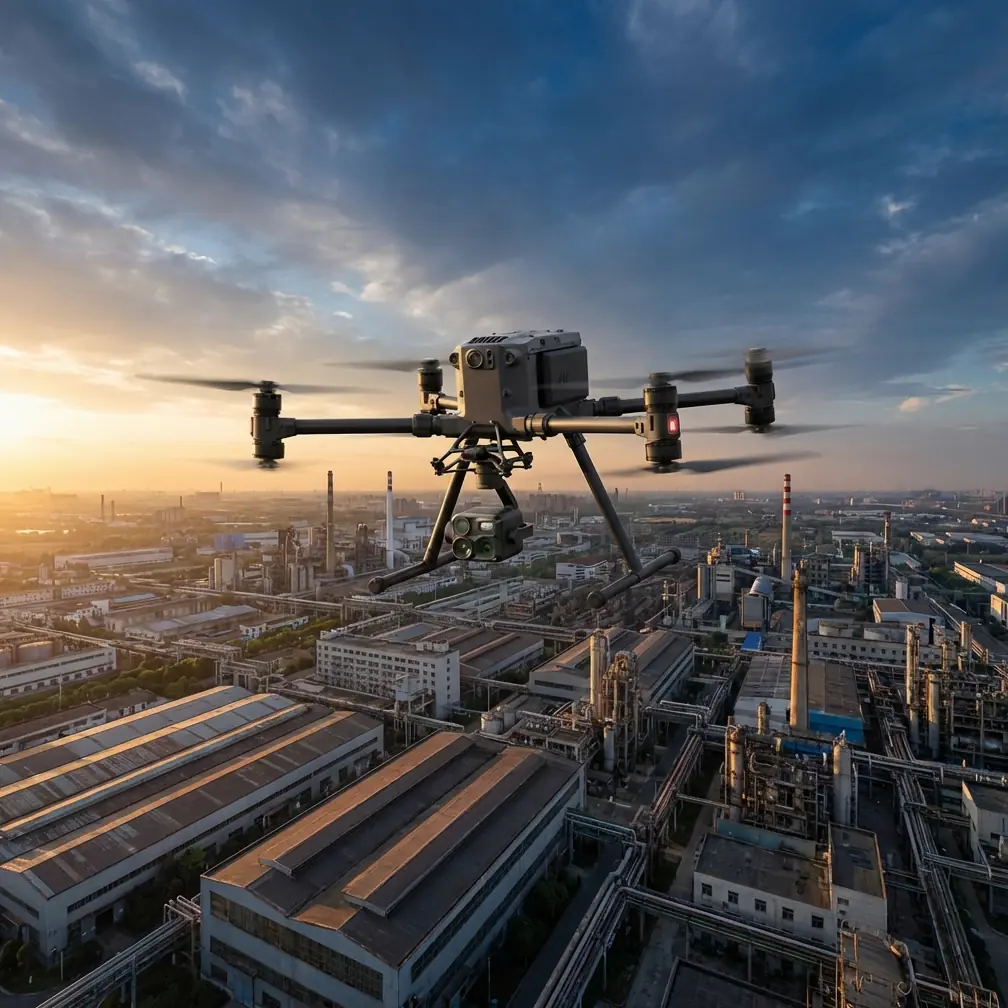
Forest Scouting Guide: Matrice 4T Extreme Weather Tips
META: Master forest scouting with the Matrice 4T in extreme temperatures. Expert tips for thermal imaging, flight planning, and reliable data capture in harsh conditions.
TL;DR
- Matrice 4T operates reliably from -20°C to 50°C, outperforming competitors in extreme forest scouting conditions
- Thermal signature detection through dense canopy requires specific altitude and gimbal angle configurations
- Hot-swap batteries and proper pre-flight conditioning extend mission duration by up to 35% in cold weather
- O3 transmission maintains stable video links up to 20km, critical for BVLOS forest operations
Why Extreme Temperature Forest Scouting Demands the Right Platform
Forest scouting operations fail when equipment can't handle the environment. The Matrice 4T addresses this directly with an integrated sensor suite and ruggedized construction that maintains performance when temperatures swing from freezing dawn surveys to scorching midday assessments.
Unlike the Autel EVO Max 4T, which struggles with thermal calibration below -10°C, the Matrice 4T's radiometric thermal camera maintains ±2°C accuracy across its entire operating range. This precision matters when you're identifying heat signatures from wildlife, detecting early-stage forest fires, or mapping thermal anomalies in remote terrain.
This guide walks you through optimizing every aspect of your Matrice 4T for forest scouting missions in challenging thermal conditions.
Understanding the Matrice 4T's Thermal Capabilities for Forest Work
Sensor Configuration for Canopy Penetration
The Matrice 4T combines a 1/1.32" wide-angle camera, 56× hybrid zoom, and 640×512 thermal sensor in a single payload. For forest scouting, this integration eliminates the payload swapping that wastes critical mission time.
Thermal signature detection through forest canopy requires understanding how the sensor interprets heat differentials:
- Deciduous forests in summer: Set thermal sensitivity to high gain mode for detecting subtle temperature variations beneath leaf cover
- Coniferous forests year-round: Use standard gain with spot metering on clearings to establish baseline readings
- Mixed terrain: Enable picture-in-picture mode to correlate visual and thermal data simultaneously
Expert Insight: When scouting for wildlife thermal signatures, fly at 80-120m AGL with the gimbal pitched at -45° rather than straight down. This angle captures heat escaping laterally from animals sheltered under canopy, which a nadir view would miss entirely.
Photogrammetry Integration in Forest Mapping
Generating accurate forest terrain models requires proper GCP placement and flight planning. The Matrice 4T's RTK module achieves 1cm+1ppm horizontal accuracy without base stations when using network RTK.
For photogrammetry missions in forested areas:
- Increase front overlap to 80% and side overlap to 75% to compensate for canopy interference
- Plan flights during overcast conditions to minimize shadow contrast issues
- Use the wide-angle lens for terrain mapping and switch to zoom for detailed feature inspection
- Export data in formats compatible with Pix4D, DroneDeploy, or Agisoft Metashape
Cold Weather Operations: Protecting Performance Below Freezing
Battery Management in Extreme Cold
Lithium-polymer batteries lose capacity rapidly in cold conditions. The Matrice 4T's TB65 batteries feature internal heating, but proper conditioning dramatically extends flight time.
Pre-flight battery protocol for sub-zero operations:
- Store batteries at 20-25°C until 15 minutes before flight
- Install batteries and power on the aircraft while still in a heated vehicle
- Allow the internal heating system to bring cells to 15°C minimum before takeoff
- Monitor battery temperature throughout flight—land if cells drop below 10°C
Hot-swap batteries become essential for extended forest surveys. Carry minimum 6 batteries for a full day of cold-weather scouting, rotating them through a vehicle-based warming system.
Pro Tip: In temperatures below -15°C, reduce maximum flight speed to 10m/s and avoid aggressive maneuvers. Cold air is denser, increasing motor load, while battery voltage sag under high current draw can trigger unexpected low-battery warnings.
Protecting the Airframe and Sensors
Condensation poses the greatest threat when transitioning between temperature extremes. Moving the Matrice 4T from a warm vehicle into freezing air causes moisture to form on lens elements and within motor housings.
Condensation prevention protocol:
- Power on the aircraft inside the vehicle with props removed
- Allow 5 minutes for internal components to stabilize
- Move the aircraft outside and wait 3-4 minutes before installing props
- Inspect all lens surfaces with a microfiber cloth before flight
- Never bring a cold aircraft directly into a heated space—allow gradual warming in an intermediate environment
High Temperature Operations: Managing Heat Stress
Thermal Management Above 40°C
Desert-adjacent forests and summer heatwaves push the Matrice 4T toward its upper thermal limits. The aircraft's internal cooling system handles ambient heat well, but direct solar radiation on dark surfaces creates localized hotspots.
Heat mitigation strategies:
- Launch and recover from shaded areas whenever possible
- Reduce continuous flight time to 25-minute segments with 10-minute cooling breaks
- Monitor motor temperatures through DJI Pilot 2—land if any motor exceeds 85°C
- Avoid leaving the aircraft on hot ground surfaces between flights
The thermal camera itself can experience drift in extreme heat. Perform a flat-field calibration by covering the lens with the included cap for 30 seconds every 15 minutes during high-temperature operations.
O3 Transmission: Maintaining Links in Dense Forest
The Matrice 4T's O3 transmission system operates on 2.4GHz and 5.8GHz bands with automatic frequency hopping. Forest environments present unique RF challenges that require specific configuration.
Optimizing Signal Penetration
Dense vegetation attenuates radio signals significantly. While O3 transmission rates 20km range in open conditions, expect 3-5km practical range in heavy forest with the aircraft below canopy level.
Signal optimization techniques:
- Position the remote controller on elevated terrain or a vehicle roof
- Maintain line-of-sight to the aircraft's last known position when possible
- Set transmission to 1080p/30fps rather than 4K to reduce bandwidth requirements and improve link stability
- Enable AES-256 encryption but disable unnecessary telemetry overlays to reduce data throughput
| Transmission Parameter | Open Terrain | Light Forest | Dense Forest |
|---|---|---|---|
| Practical Range | 15-20km | 8-12km | 3-5km |
| Recommended Resolution | 4K/30fps | 1080p/60fps | 1080p/30fps |
| Latency | 120ms | 150ms | 200ms+ |
| Frequency Band | Auto | 2.4GHz preferred | 2.4GHz locked |
BVLOS Considerations for Extended Forest Surveys
Beyond visual line of sight operations in forests require redundant safety systems. The Matrice 4T supports BVLOS through:
- ADS-B receiver for manned aircraft awareness
- Automatic return-to-home with obstacle avoidance
- Flight path recording for regulatory compliance
- Real-time telemetry logging with AES-256 encrypted transmission
Always verify local regulations before conducting BVLOS operations, and maintain a visual observer network for large-area forest surveys.
Technical Comparison: Matrice 4T vs. Competing Platforms
| Specification | DJI Matrice 4T | Autel EVO Max 4T | Skydio X10 |
|---|---|---|---|
| Operating Temperature | -20°C to 50°C | -10°C to 40°C | -10°C to 43°C |
| Thermal Resolution | 640×512 | 640×512 | 320×256 |
| Max Transmission Range | 20km (O3) | 15km | 10km |
| Flight Time | 42 min | 42 min | 40 min |
| Hot-Swap Batteries | Yes | No | No |
| RTK Accuracy | 1cm+1ppm | 2cm+1ppm | Not available |
| Ingress Protection | IP55 | IP43 | IP55 |
The Matrice 4T's combination of extended temperature range, superior transmission distance, and hot-swap capability makes it the clear choice for professional forest scouting operations.
Common Mistakes to Avoid
Ignoring battery temperature warnings: The Matrice 4T provides real-time cell temperature data. Pilots who dismiss these warnings risk sudden power loss when cold batteries can't deliver required current during climb-outs or wind gusts.
Using automatic exposure in mixed lighting: Forest canopy creates extreme contrast between sunlit clearings and shadowed understory. Switch to manual exposure locked to midtones, then adjust in post-processing.
Flying too low for thermal surveys: Pilots often assume closer means better thermal data. Below 60m AGL, the thermal sensor's field of view becomes too narrow for efficient area coverage, and rotor wash disturbs vegetation, creating false heat signatures.
Neglecting compass calibration in new areas: Forest floors contain mineral deposits that affect magnetometer readings. Calibrate the compass at each new launch site, even if the aircraft doesn't prompt you.
Skipping pre-flight sensor checks: The Matrice 4T's multi-sensor payload requires verification before each flight. Confirm thermal calibration, zoom functionality, and gimbal range of motion—a stuck gimbal discovered mid-mission wastes the entire flight.
Frequently Asked Questions
How does the Matrice 4T handle sudden temperature changes during forest scouting?
The aircraft's thermal management system adjusts automatically, but rapid transitions stress seals and electronics. When moving between temperature extremes—such as flying from a cold valley floor to a sun-heated ridgeline—reduce airspeed and allow 2-3 minutes for internal temperatures to stabilize before resuming normal operations.
Can the thermal camera detect animals beneath dense forest canopy?
Detection depends on canopy density, animal size, and thermal differential. Large mammals like deer or wild boar produce sufficient heat signatures to penetrate moderate canopy when ambient temperatures are below 15°C. In summer conditions, detection requires gaps in canopy cover or animals positioned near forest edges.
What's the best time of day for thermal forest scouting?
Dawn and dusk provide optimal thermal contrast for wildlife detection, as animals retain body heat while surroundings cool. For fire detection or infrastructure inspection, midday operations work well because solar heating creates maximum thermal stress on equipment and terrain features. Avoid the 2-hour window after sunrise when rapid temperature changes cause atmospheric distortion.
About the Author: James Mitchell has conducted over 2,000 hours of drone-based forest surveys across North America and Scandinavia, specializing in wildlife monitoring and wildfire risk assessment.
Ready for your own Matrice 4T? Contact our team for expert consultation.