
Matrice 4T in Coastal Forest Recon: What a Mid
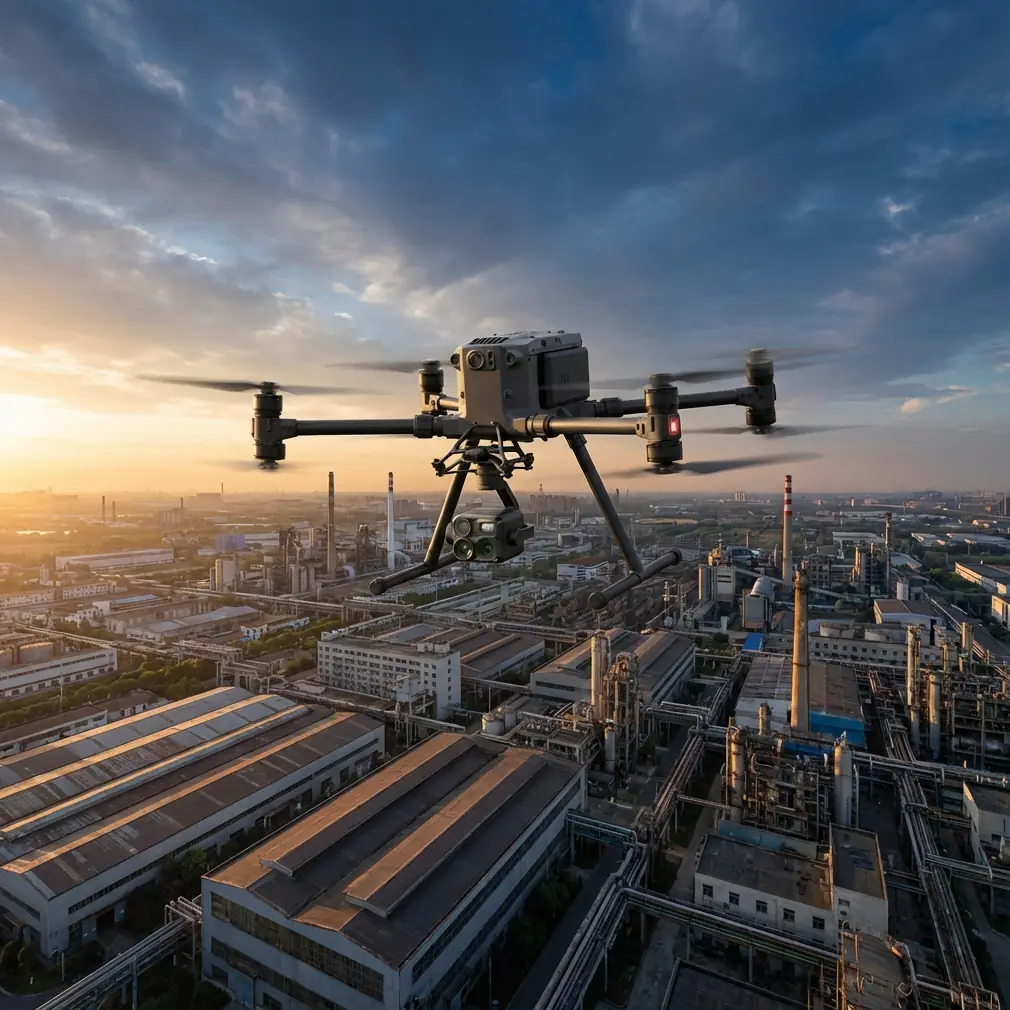
Matrice 4T in Coastal Forest Recon: What a Mid-Flight Weather Shift Revealed
META: A field-based Matrice 4T case study on scouting coastal forests, with practical lessons on electrical resilience, cockpit-style layout logic, thermal signature capture, transmission stability, and safe mission planning.
I’ve spent enough time around aircraft systems to distrust smooth demos. The real test comes when conditions change, loads spike, visibility drops, and a machine has to keep delivering useful data without turning the operator’s job into guesswork.
That is exactly why the Matrice 4T becomes interesting in coastal forest scouting.
Not because it flies. Plenty of drones fly well on calm mornings. The question is what happens when a forest mission near the coast starts simple, then wind and moisture roll in, the light shifts, canopy contrast changes, and the aircraft has to keep producing reliable intelligence for a civilian field team. In one recent scouting scenario, that transition told me more about the platform than any spec sheet could.
This article is built around that kind of mission: a Matrice 4T working a coastal forest corridor where thermal signature detection, route verification, and terrain awareness mattered more than pretty footage. What stood out was not one isolated feature, but how system design choices echoed principles that have been standard in crewed aircraft engineering for years: ground validation, fault thinking, layout discipline, and safety-driven maintainability.
The mission setup: coastal forest, unstable air, and mixed sensor priorities
Coastal woodland is awkward terrain for UAV work. The tree line breaks wind in one direction and funnels it in another. Humidity hangs low, then moves fast. Salt-laden air can reduce clarity. Sun angle bounces off wet foliage and water margins. If your job is scouting rather than filmmaking, all of that matters because the mission output has to remain usable after conditions deteriorate.
For this flight, the Matrice 4T was tasked with three civilian objectives:
- identify thermal anomalies under patchy canopy,
- document access routes and vegetation boundaries for later photogrammetry review,
- maintain stable links from a position where line of sight was good at launch but less forgiving deeper into the stand.
The operator preplanned the route with enough overlap to support later mapping analysis, and a few control checkpoints were selected for GCP alignment in post-processing. That may sound like routine workflow, but in forests it creates a bridge between live reconnaissance and survey-grade follow-up. The thermal feed helps you notice what the eye misses; the photogrammetry pass gives you a measurable record after the team gets back to the desk.
Why aircraft system thinking still matters for a modern drone
One of the more useful reference points here comes from classical aircraft electrical-system engineering. In the source material, Chapter 10 of Electrical System Design centers on “electrical system testing,” beginning with ground model testing on page 270 and then moving into fault-oriented verification such as main feeder short-circuit testing on page 276 and load fault testing on page 280. Those are not drone marketing ideas. They are engineering habits.
Why does that matter to someone flying a Matrice 4T over a coastal forest?
Because field trust is built on the assumption that a platform has been designed with abnormal conditions in mind, not just nominal ones. In practical UAV terms, that shows up as predictable behavior when payload demand, transmission load, environmental stress, and onboard power management all intersect. A scouting crew in wet coastal air does not need to know every internal bus architecture detail. But they absolutely benefit from the design culture behind robust power-system validation.
That culture matters even more when you are running a multisensor mission. Thermal imaging, navigation, stabilized visual observation, encrypted communications, and controller display load all place demands on the platform. A drone used in environmental assessment or forestry work needs to keep those systems coordinated when the mission gets messy.
The Matrice 4T feels strongest when approached that way: not as a camera with propellers, but as a compact airborne system whose value depends on how gracefully it handles stress.
Mid-flight, the weather turned
The first half of the flight was straightforward. We launched in stable morning air, with acceptable visibility and moderate surface moisture from the night before. Thermal signature separation was decent around clearings and along a narrow track near the edge of denser trees. O3 transmission remained solid, giving the remote pilot confidence to hold a clean inspection rhythm rather than rushing through waypoints.
Then the weather shifted.
A bank of damp coastal air moved inland faster than expected. Wind direction changed across the upper canopy. The visual scene flattened. Contrast in the RGB feed dropped, and exposed branches started moving inconsistently enough to complicate visual interpretation. This is the point where lesser workflows begin to fracture. Pilots start second-guessing route continuation. Spotters lose confidence in what they’re seeing. Data capture becomes uneven.
What mattered in that moment was not dramatic flying. It was system composure.
The Matrice 4T’s thermal view retained operational value after the visible scene became less trustworthy. That is the advantage of building a forest scouting plan around thermal signature logic rather than relying solely on conventional optics. In coastal terrain, moisture and changing light can degrade the usefulness of standard imagery very quickly. Thermal does not replace visual data, but it can preserve detection continuity when the scene turns visually ambiguous.
At the same time, stable transmission is not a luxury in conditions like these. It is the spine of decision-making. When the weather changes mid-flight, every delay or interruption increases operator workload. With O3 transmission holding up, the team could continue evaluating the scene in real time rather than making blind assumptions about the last few seconds of imagery.
That stability also supports safer decision points for any BVLOS-compliant workflow planning, where authorized operations depend heavily on confidence in aircraft state, link quality, and structured risk management. I am not suggesting casual distance expansion. I am saying that transmission reliability directly affects whether a forest mission remains disciplined when conditions deteriorate.
The hidden lesson from cockpit layout principles
The second source document, Avionics Systems and Instruments, may seem far removed from a field drone, but one detail is especially relevant. It highlights cockpit instrument panel and control console layout design on page 77, then continues with example layout design around page 90 and antenna layout verification at page 107. Those topics sound rooted in manned aviation, yet they map surprisingly well onto professional drone operations.
A good UAV mission lives or dies by interface logic.
When weather shifted during this forest sortie, the crew did not have time to hunt through menus or mentally reassemble the display. Sensor switching, map awareness, aircraft state, and route interpretation had to remain visually coherent. That is what mature control layout is really about. Not aesthetics. Cognitive economy.
This is where aviation thinking remains relevant: arrange information so the human can make fewer avoidable mistakes under load.
For the Matrice 4T operator, that meant keeping thermal, map position, flight telemetry, and route context in a workflow that behaved more like a disciplined instrument scan than casual screen tapping. It is a small operational detail, but small details are what separate clean data acquisition from confused post-flight reconstruction.
Antenna placement logic is another underappreciated parallel. The source material’s attention to antenna layout and verification reflects a simple truth: communication performance is designed, not wished into existence. In forest margins with uneven terrain and moisture-heavy air, link behavior depends on more than power. Orientation, path planning, and environmental interference all matter. O3 performance is strongest when the crew understands that transmission is part of mission design, not just a spec line.
Power management in the real world
Hot-swap batteries deserve mention here, not as a convenience feature, but as a continuity tool. Coastal forest scouting often benefits from segmented flight planning: a thermal-first sweep, a visual follow-up pass, and then a focused revisit of anomalies. If battery exchange introduces friction or long downtime, teams are tempted to stretch a sortie too far or defer valuable rechecks.
That is bad discipline.
A workflow supported by hot-swap batteries encourages cleaner mission boundaries. Fly one block. Land. Rotate power. Relaunch with the next objective. It reduces the temptation to compress incompatible tasks into one overextended flight. In environments where weather can turn quickly, this approach is especially useful. The mission can be broken into evidence-based chunks rather than treated as one continuous gamble.
Again, the connection to the aircraft electrical reference is not superficial. A system culture that values fault testing and maintainability tends to produce better field behavior. The source text explicitly references measures to improve maintainability on page 298 and safety design criteria on page 300. Those are not abstract textbook headings. In drone operations, they translate into fewer awkward workarounds, cleaner turnaround, and better operator judgment because the platform supports disciplined use.
Thermal plus mapping: better together than separately
One mistake I still see in forest scouting is treating thermal and mapping as separate departments. In practice, they should inform each other.
The Matrice 4T can flag heat patterns that deserve a second look, but without spatially consistent documentation, those observations can become hard to revisit accurately. That is where photogrammetry planning and GCP discipline matter. Even if the mission’s primary goal is not a full survey deliverable, capturing enough overlapping imagery to georeference findings makes the operation much more useful later.
In our coastal scenario, that meant using live thermal cues to mark zones of interest, then preserving those locations within a structured visual dataset. A thermal anomaly near a drainage edge is more valuable when it can later be tied to terrain shape, canopy density, and access constraints. The drone is not just spotting. It is building a layered record.
That layered record becomes essential when the weather interrupts the ideal sequence. If the visible pass loses clarity late in the mission, previously captured structured imagery and checkpoints can still support a reliable interpretation. Good planning gives the team more than one path to usable results.
Security and coordination matter more than people admit
Forestry and land-management missions increasingly involve shared stakeholders: ecologists, site managers, contractors, and remote analysts. In that environment, secure data handling is not paranoia. It is professionalism. AES-256 support matters because a scouting mission may include location-sensitive findings, infrastructure context, or proprietary land-use information. The more field teams rely on connected workflows, the more they should care that transmissions and stored mission data are treated seriously.
And if you’re coordinating a field operation where timing matters, a simple direct channel helps. I usually suggest teams establish one before launch for logistics and post-flight handoff; if you need that kind of coordination, this field contact line is a practical example of how to keep communication simple without cluttering the flight workflow.
What the flight actually proved
By the time the Matrice 4T returned, the lesson was not that it conquered bad weather. That kind of phrasing hides the real issue. The useful lesson was narrower and more credible.
It remained operationally coherent when conditions became less cooperative.
That is a stronger claim, and a more relevant one for civilian drone teams.
The aircraft kept producing interpretable thermal data after the visible scene degraded. The transmission link stayed stable enough to support measured decision-making. The mission architecture allowed the team to preserve scouting value even after the atmosphere changed. And the overall workflow rewarded aviation-style discipline: test assumptions early, structure information well, and never rely on perfect conditions.
The old aircraft references back this up in a way that modern operators sometimes forget. Page 270’s emphasis on ground-model testing, page 276’s fault scenario work, page 280’s load fault testing, and page 77’s cockpit layout design all point to the same operational truth: reliability is not one feature. It is the result of systems thinking.
That is why the Matrice 4T deserves serious attention in coastal forest scouting. Not because it promises flawless flying, but because it fits the kind of fieldwork where multiple subsystems have to stay useful at once. In this case, that meant thermal awareness, controlled mapping workflow, secure communications, stable link management, and power handling that supported good judgment instead of undermining it.
For forestry teams, habitat survey crews, environmental consultants, and infrastructure planners working near coastal woodland, that combination matters. The job is rarely to collect one perfect image. The job is to come back with a dependable picture of what changed, where it changed, and what needs a closer look next.
Ready for your own Matrice 4T? Contact our team for expert consultation.