
Matrice 4T scouting tips for mountain forests when condition
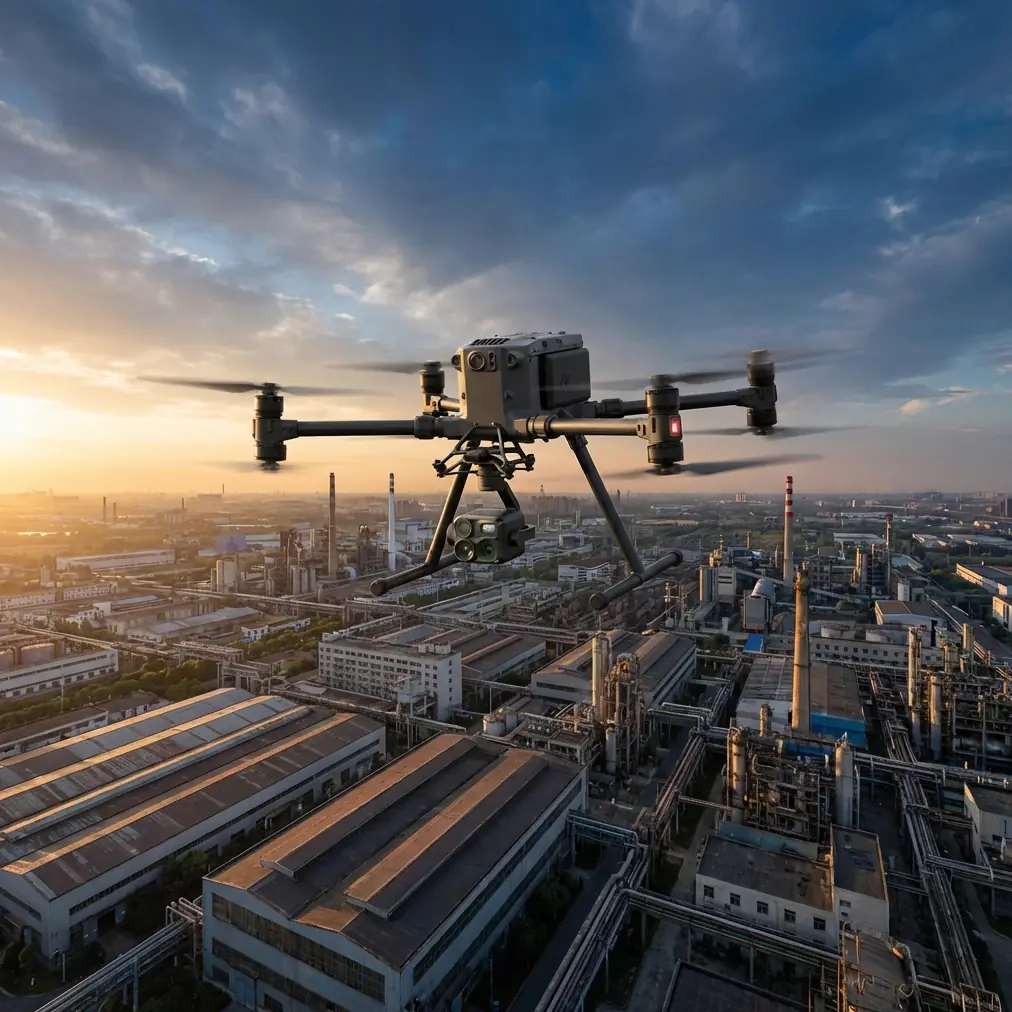
Matrice 4T scouting tips for mountain forests when conditions refuse to stay stable
META: Practical Matrice 4T guidance for mountain forest scouting, with expert workflow tips on thermal search, photogrammetry, transmission reliability, battery planning, and how changing weather affects mission decisions.
Mountain forest scouting looks simple on a screen. Launch, climb, scan canopy, collect thermal views, map the slope, head home.
Reality is rougher.
Ridges bend wind in strange directions. Tree cover blocks lines of sight. Temperature shifts can flatten a thermal signature just when you need separation between ground, foliage, and a warm object. If you are planning to use a Matrice 4T in this environment, the real question is not whether the aircraft can fly the mission. The better question is how to structure the mission so the data still holds value when the mountain changes the rules halfway through.
That is where disciplined workflow matters more than brochure-level specs.
I approach mountain forest scouting with the Matrice 4T as a two-part job. First, I need detection: finding anomalies, heat sources, terrain breaks, damaged tree clusters, blocked access routes, or drainage problems. Second, I need verification: converting what I saw into defensible imagery and repeatable location data that a field team can use without guessing.
Those two layers—detection and verification—are where thermal payload use, photogrammetry planning, transmission discipline, and battery strategy all start to connect.
Start with the mountain, not the aircraft
A forest mission in steep terrain should begin with three questions:
- What are you trying to detect from above?
- What resolution is actually needed for the decision on the ground?
- What happens if visibility, wind, or light changes during the sortie?
That third question gets ignored too often. In mountains, weather rarely changes politely. It arrives in pieces. A gust channel forms along a saddle. A cooler bank moves through the canopy. Moisture thickens in one valley while the next ridge remains clear. You can launch in stable air and lose consistency before your first grid is finished.
The Matrice 4T is well suited to this kind of mission because it lets you pivot between wide-area scanning and closer confirmation without swapping platforms. That flexibility matters more in forests than in open land. The terrain compresses your decision window.
Thermal first, but only when thermal contrast is working for you
A lot of operators talk about thermal as if it automatically reveals the truth. It does not. Thermal only shows useful contrast when the environment supports it.
In mountain forests, that usually means working during periods when the target you care about separates clearly from the background. Early morning can be excellent for some missions. Late afternoon can be better for others. Dense canopy, wet foliage, exposed rock, and cooling shadows all affect what the sensor sees.
If you are scouting trails, washouts, wildlife-safe perimeter zones, smoldering vegetation risk, or inaccessible asset corridors, thermal should be your fast-filter layer. Use it to identify areas that deserve a second look. Then verify those points with visual detail and positional context.
This is one of the most practical lessons that links back to older rotorcraft design thinking. Helicopter researchers spent decades studying unsteady aerodynamic behavior and dynamic stall because changing airflow near lifting surfaces can alter stability and performance unexpectedly. One reference in the helicopter design literature points to work presented in June 1986 on generalized unsteady airfoil behavior, while another from June 1988 explored nonlinear unsteady aerodynamic modeling for rotorcraft. For a Matrice 4T operator, the operational significance is straightforward: mountain wind is not static, and aircraft behavior in broken airflow should be anticipated, not treated as a surprise. You do not need to be running a helicopter model to benefit from that mindset. You need to fly with the assumption that local air can shift from predictable to messy within a single leg of the route.
That matters when you are trying to hold a thermal inspection angle over a treeline gap or a slope face. If the aircraft begins making stronger corrections due to turbulent airflow, your imagery quality and interpretability can drop before you notice it in the live feed.
Build a dual-pass route instead of one perfect route
For mountain forests, I prefer a dual-pass structure over one ambitious all-in mission.
Pass one: broad scan
Use a higher altitude profile to establish terrain awareness, canopy continuity, access lines, stream channels, and thermal anomalies. This is your fast situational layer. Keep it efficient.
Pass two: targeted verification
Drop into selected sectors for higher-detail visual confirmation, lower-angle observations, or image sets intended for photogrammetry.
Why split the mission?
Because weather changes punish complexity. If cloud, wind, or moisture cuts your mission short, you still come home with a usable scan layer instead of an incomplete high-detail dataset that cannot support field action.
This is also where O3 transmission becomes meaningful in practice. In mountain terrain, transmission is not just about range. It is about maintaining confidence in feed continuity as terrain and vegetation compete with your path. A stable link lets you judge whether a heat source is real, whether a stump line is masking a route, or whether a shadowed drainage feature needs another angle. If your team is operating in a workflow that involves sensitive site data or infrastructure coordinates, AES-256 adds another layer of operational confidence during transmission and data handling.
Neither feature replaces good line-of-sight planning. But both support better decisions when the terrain is visually and electromagnetically unfriendly.
When weather changes mid-flight, stop trying to rescue the original plan
Here is a common mountain scenario.
You launch in cool, relatively clean air. Thermal contrast looks strong across the upper forest edge. Ten minutes in, wind starts feeding across the ridge from your left. The aircraft remains controllable, but canopy motion increases, and the thermal picture begins to soften in shaded sections as a moisture layer moves into the valley.
That is not the moment to stubbornly complete your original mapping box.
It is the moment to re-prioritize.
I would usually do three things:
- Finish the nearest high-value observation leg
- Mark any unresolved anomaly for a later revisit
- Shift to terrain-safe return logic with one or two short verification holds only if image quality still justifies it
This is where experienced crews separate from hopeful ones. A shortened mission with clean observations beats a longer mission that produces ambiguous data.
Again, there is a useful design lesson hidden in the reference material. One of the landing system engineering excerpts emphasizes that computational methods are powerful only when the model assumptions are correct. It states that finite element analysis is effective, but only if the structural model and load assumptions are properly built. It also notes that when three methods—finite element calculation, photoelastic testing, and physical electrical measurement—show similar stress distribution patterns with maximum stress values within about 10% of each other, the combined analysis method can be considered valid.
For drone scouting, the direct operational significance is this: one data source is rarely enough in a complex environment. A thermal indication should be checked against visual imagery. A photogrammetry output should be checked against terrain logic and, where possible, GCP-supported control. Validation is not academic. It is what prevents bad field decisions.
Use photogrammetry selectively in forest terrain
Forests are not forgiving photogrammetry subjects.
Dense canopy limits ground visibility. Shadow contrast shifts quickly in valleys. Repetitive textures can reduce tie-point reliability. If your mission goal is broad topographic intelligence under trees, expectations need to stay realistic.
That said, the Matrice 4T can still contribute strong photogrammetry results in mountain forests if you use the method where it actually fits:
- access roads
- landslide margins
- clearings
- ridge-top utility corridors
- exposed drainage cuts
- staging zones
- perimeter boundaries
If the map output matters beyond quick visual reference, add GCP strategy where feasible. Even a limited control layout can improve confidence in measurements around roads, work pads, or known checkpoints. In steep terrain, that matters because slope exaggerates the cost of small horizontal errors.
I would not treat photogrammetry here as a full-forest cure-all. I would treat it as a precision layer for the open or semi-open sections that guide people and equipment on the ground.
Battery discipline is more than endurance math
Mountain operators often talk about battery planning as a simple distance calculation. That is not enough.
Elevation changes, wind exposure, hover time for verification, and route reshaping after weather shifts all affect usable energy. A mission that looks comfortable on paper can become tight when the aircraft spends extra time fighting cross-ridge airflow or repositioning after transmission-conscious route changes.
Hot-swap batteries matter in this context because they support tempo without forcing your team to rush preflight logic. In mountain scouting, speed is useful, but reset quality is more useful. If weather gives you a short clean window, you want the ability to relaunch quickly with a revised plan, not just hurry back into the air with the same flawed one.
My rule is simple: if the mountain gives you uncertainty, convert battery capacity into decision margin, not route ambition.
Treat the canopy as a false friend
A dense forest can make operators feel safer than they should. The scene looks soft. Stable. Protected.
It is none of those things.
Canopy hides rising terrain. It masks air behavior. It creates misleading thermal patches. It can also make a weak transmission path feel acceptable until one turn places the aircraft behind a terrain shoulder.
That is why BVLOS planning in mountain forests deserves real discipline. The legal and procedural framework will depend on jurisdiction and operational approval, but from a technical standpoint, the challenge is always the same: terrain changes faster than maps suggest. If your operation is being designed for advanced corridor scouting or large-area forestry work, route segmentation, observer placement, contingency landing logic, and communication hierarchy need to be built before launch day.
A practical mission workflow for Matrice 4T in mountain forests
Here is the field structure I recommend most often.
1. Define the primary detection target
Do not say “general scouting.” Say what matters:
- heat anomaly
- blocked route
- erosion line
- damaged stand
- asset corridor condition
- drainage obstruction
That single choice decides your sensor emphasis and flight timing.
2. Check thermal contrast conditions
Assess sun angle, recent precipitation, canopy moisture, ground temperature behavior, and shadow progression. If thermal separation is weak, do not force thermal to lead the mission.
3. Build a scan-first route
Get your broad awareness layer before chasing detail. In mountains, context prevents mistakes.
4. Assign verification triggers
Predetermine what causes a second-pass inspection:
- thermal hotspot above local baseline
- irregular canopy gap
- route discontinuity
- changed water flow pattern
- exposed soil movement
5. Reserve energy for adaptation
Do not consume your decision margin early. Hold capacity for wind, repositioning, and safe return.
6. Validate key observations with another data layer
Thermal plus visual. Visual plus map geometry. Map geometry plus GCP where applicable. This is your field version of cross-checking the model.
7. Debrief immediately after landing
Mountain conditions blur memory fast. Log where signal quality dropped, where wind changed, and which sectors need a cleaner revisit.
Why these details matter for real operators
The references behind this discussion come from manned aircraft and rotorcraft engineering, not from a drone checklist. That is exactly why they are useful.
The helicopter literature’s attention to unsteady aerodynamic behavior is a reminder that airflow around lifting systems becomes more complex when the environment is unstable. In mountain forests, you feel that in hold accuracy, image steadiness, and route reliability.
The landing gear design material offers another practical lesson. It highlights that more than 90% of wheel fatigue damage is concentrated in rolling load during taxi rather than in the dramatic moments operators tend to focus on. The significance for drone work is broader than wheels: repeated routine loading often matters more than the one dramatic event. For a Matrice 4T team, that means the ordinary stresses—repeated launches on uneven terrain, frequent short repositioning hops, rushed battery swaps, and constant micro-corrections in turbulent air—deserve more respect than a single headline-making maneuver. Reliability is built in the routine.
If you are organizing mountain forest scouting around the Matrice 4T, think like an engineer and a field operator at the same time. Expect shifting air. Validate what the sensor tells you. Separate detection from verification. Keep enough battery to absorb a changing plan. And when the weather turns halfway through, let the mission evolve instead of trying to force the original design to survive.
If you want to compare route ideas or payload workflow for a forestry or mountain inspection program, you can message our field team directly here.
Ready for your own Matrice 4T? Contact our team for expert consultation.