
Matrice 4T for Extreme-Temperature Venue Scouting
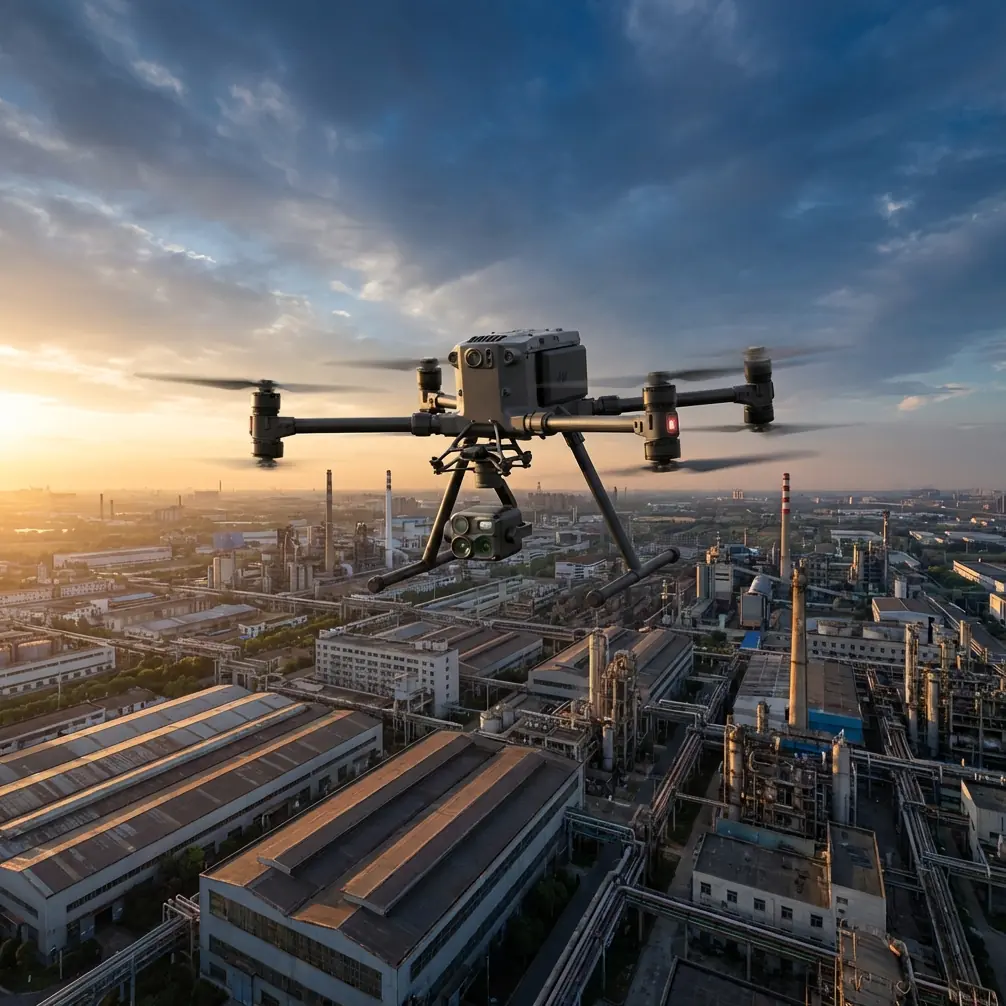
Matrice 4T for Extreme-Temperature Venue Scouting: What Actually Matters in the Field
META: Technical review of the DJI Matrice 4T for venue scouting in extreme heat and cold, covering thermal signature interpretation, O3 transmission, AES-256 security, hot-swap batteries, and practical field workflow.
By Dr. Lisa Wang, Specialist
Venue scouting sounds simple until weather turns the site into the main problem.
A location that looks manageable on a mild afternoon can behave very differently at dawn in freezing air or under late-day heat load. Roof membranes hold and release temperature unevenly. Metal truss work blooms on thermal imaging. Temporary structures shift, cables sag, access paths become unreliable, and long walking inspections slow everything down. When the job is to evaluate a site quickly and with enough detail to support planning, a drone stops being a camera in the sky and becomes a decision tool.
That is where the Matrice 4T deserves a closer look.
This is not a broad overview. It is a field-minded review of how the Matrice 4T fits the specific task of scouting venues in extreme temperatures, where thermal interpretation, image consistency, transmission reliability, and battery handling matter more than headline specs.
Why the 4T format suits venue scouting better than a standard visual-only workflow
Most venue teams begin with visible imagery. That makes sense. You need context, geometry, ingress and egress visibility, and a record of current site conditions. But extreme-temperature scouting changes the equation. Visual data alone misses the layer that often drives planning delays: heat.
A venue may appear structurally ready while still showing troubling thermal behavior. Sections of roofing can retain heat long after sunset. HVAC discharge points can create misleading hot zones around staging areas. Power distribution cabinets and generators may present elevated thermal signatures that affect where crews safely position assets. Cold weather creates the opposite problem: shaded access routes, frozen drainage, and low-temperature anomalies around temporary facilities can be difficult to interpret from RGB imagery alone.
The Matrice 4T matters here because it allows the scouting team to compare spatial context and thermal signature without changing platforms or disrupting workflow. In practical terms, that means less time re-flying the same route and fewer gaps between what operations sees and what engineering needs documented.
The first operational advantage: thermal signature is not just about “finding heat”
Too many reviews flatten thermal capability into a gimmick. For venue scouting, thermal is useful only when the operator understands what the image is saying.
In high-heat environments, surface temperature is not a direct proxy for risk. It is a clue. A blacktop service corridor at midday may saturate the scene and hide subtler issues around electrical cabinets or temporary cooling infrastructure. The value of the Matrice 4T is in giving teams the ability to isolate patterns, compare adjacent materials, and confirm whether a suspicious area is an equipment issue, solar loading, or normal material behavior.
In cold-weather scouting, the same principle applies in reverse. A warm patch near a temporary structure might be expected. A linear warm leak tracing away from it may indicate something worth a closer ground check. That distinction can save hours.
One field example stands out. During a winter venue assessment near a wooded perimeter, the thermal feed picked up movement along a service route before the visual camera made it obvious. It turned out to be a deer stepping across a planned utility access corridor. That might sound minor, but it changed the immediate flight path and prevented the team from pushing low over a live animal in reduced-light conditions. More importantly, it reminded everyone on site that thermal sensing is not only for infrastructure diagnostics. It can help operators navigate mixed environments responsibly, especially where venues border natural habitat.
That kind of awareness matters in civilian fieldwork. It keeps the operation efficient without treating the site as an empty map.
O3 transmission is not just a spec-sheet talking point
A venue scout often starts where line of sight is clean and ends where it is not.
Large stands, roof overhangs, steel framing, utility clutter, and temporary event infrastructure all challenge signal stability. Add extreme temperatures, and the tolerance for interruptions drops fast. You do not want to repeat a thermal pass because the feed became unreliable while checking a shaded structural transition.
This is where O3 transmission has real operational significance. The benefit is not the marketing shorthand of “long range.” For venue work, the better question is whether the pilot can maintain a confident live view while repositioning around interference-prone structures and while keeping enough standoff distance to work safely in heat or ice.
That stability reduces the temptation to fly closer than necessary. It also improves the quality of collaborative decision-making when a second person is reviewing the live feed on site. If the engineering lead, facilities manager, or event planner is watching the same pass in near real time, they can ask for a second look before the aircraft leaves that area. That saves battery cycles and improves capture discipline.
For teams planning future BVLOS-adjacent workflows where regulations and procedures permit, transmission robustness also points toward a more scalable operating model. Not a shortcut. Not a substitute for compliance. But a sign that the platform is built with professional continuity in mind.
AES-256 is easy to overlook until the venue is sensitive
Some venues are public-facing. Others are private industrial campuses, energy sites, research facilities, or mixed-use complexes with strict access rules. In those environments, image data is operational data.
AES-256 matters because scouting often captures more than the intended subject. A thermal sweep can reveal building patterns, occupancy clues, equipment hotspots, and infrastructure layouts that site owners do not want loosely handled. Secure transmission and data discipline are not abstract IT concerns; they are part of professional drone practice.
The Matrice 4T’s support for secure workflows is especially relevant when multiple stakeholders need access to the output. The cleaner the security framework, the easier it is to build confidence with property managers and technical teams who may already be cautious about aerial data collection.
When venue operators ask what separates a professional drone inspection from an improvised one, this is part of the answer. Not just image quality. Control of the data pipeline.
Hot-swap batteries change the tempo of field work
Extreme-temperature scouting exposes one of the oldest truths in drone operations: batteries decide how smooth the day goes.
Cold conditions can suppress performance and force more conservative planning. Heat brings its own battery management concerns, especially when the aircraft is cycling through repeated short missions around a complex venue. If every battery change requires a full shutdown and reset of workflow, the day becomes choppy. You lose momentum, the ground team waits, and continuity suffers.
Hot-swap batteries are more than convenience. They preserve operational rhythm.
For venue scouting, that means the pilot can maintain a disciplined sequence: overview orbit, structural sweep, thermal check of priority assets, route validation, then a final verification pass. Battery changes stop being disruptive events and become part of a predictable cadence. This matters when the site window is tight, weather is shifting, or several departments are waiting on the same output.
It also improves data consistency. When flights can be resumed cleanly, the operator is less likely to rush a pass or skip a re-check simply to avoid downtime.
Photogrammetry still has a place, even on a thermally focused mission
The Matrice 4T naturally draws attention for thermal work, but venue scouting often benefits from disciplined photogrammetry as well. If the site team needs updated spatial context for planning, staging, parking flow, roof access, or temporary infrastructure placement, a repeatable map product becomes valuable.
This is where GCP workflow enters the conversation.
Ground control points may feel excessive for a basic scout, but on larger or more complex venues they sharpen the usefulness of deliverables. A thermal anomaly is much easier to act on when it is tied to a reliable spatial reference. The same goes for planning temporary installations, identifying drainage concerns, or documenting pre-event conditions for later comparison.
The practical takeaway is simple: use the Matrice 4T for more than spot-checking hot and cold areas. Build a combined capture plan. Gather thermal intelligence where it matters, then support it with photogrammetric context where precision will improve the decisions that follow.
That is often the difference between “interesting drone footage” and documentation that becomes part of the venue workflow.
What extreme temperatures reveal about operator discipline
A drone does not magically solve bad scouting habits. In difficult weather, it exposes them.
With the Matrice 4T, the strongest results come from operators who think in layers:
- Start with broad visual context.
- Identify thermal outliers.
- Re-check from a second angle.
- Correlate with known materials or equipment.
- Log conditions at the time of capture.
- Decide whether the anomaly is actionable or merely environmental.
This approach becomes critical in heat. Many surfaces will radiate strongly. Without comparison and note-taking, thermal imagery can become a collection of bright shapes with little operational value. In the cold, the risk is overinterpreting small warm areas that are entirely normal. The aircraft gives you access. Judgment gives the data meaning.
Venue scouting also benefits from flying at multiple times when possible. A roofline at sunrise can tell a very different story than the same roofline in the late afternoon. Access lanes, temporary structures, and utilities all present differently as ambient conditions shift.
The Matrice 4T supports that style of work because it lets the crew carry one platform through several inspection modes rather than breaking the day into disconnected workflows.
Where the 4T stands out in real venue scenarios
The strongest case for this platform appears in mixed-condition sites where no single sensor is enough.
Think of an outdoor venue with partial roof coverage, backup power, temporary cooling, fenced utility zones, and wooded edges. Visual imaging alone gives you layout. Thermal alone gives you patterns. Together, they show how the site is likely to behave during setup and event operations.
That combination helps teams answer practical questions:
Is a staging corridor just hot, or is there localized equipment stress nearby?
Is that access route clear, or is wildlife activity changing where low-altitude passes should happen?
Is the roof section uniformly cooling, or is one area retaining heat in a way that deserves a closer inspection?
Can the team collect enough reliable live feed through structural clutter to make decisions on site, rather than revisiting the location later?
Those are not theoretical drone questions. They are the real friction points that slow venue preparation.
Final field judgment
The Matrice 4T makes the most sense for venue scouting when temperature is part of the story, not just the backdrop.
Its value shows up when thermal signature interpretation has to live alongside visual context, when O3 transmission helps the crew stay confident around difficult structures, when AES-256 supports site trust, and when hot-swap batteries keep the day moving. Add a photogrammetry workflow with GCPs where needed, and the platform becomes more than an inspection aircraft. It becomes a practical bridge between site observation and planning action.
If you are building an extreme-temperature scouting program, the key is not to ask whether the Matrice 4T can fly the site. It can. The better question is whether your workflow is set up to extract the right meaning from the data it collects.
That is where professionals separate themselves.
If you want to compare notes on thermal venue workflows or sensor setup choices, you can message our field team here.
Ready for your own Matrice 4T? Contact our team for expert consultation.