
Matrice 4T in Windy Construction-Site Spraying
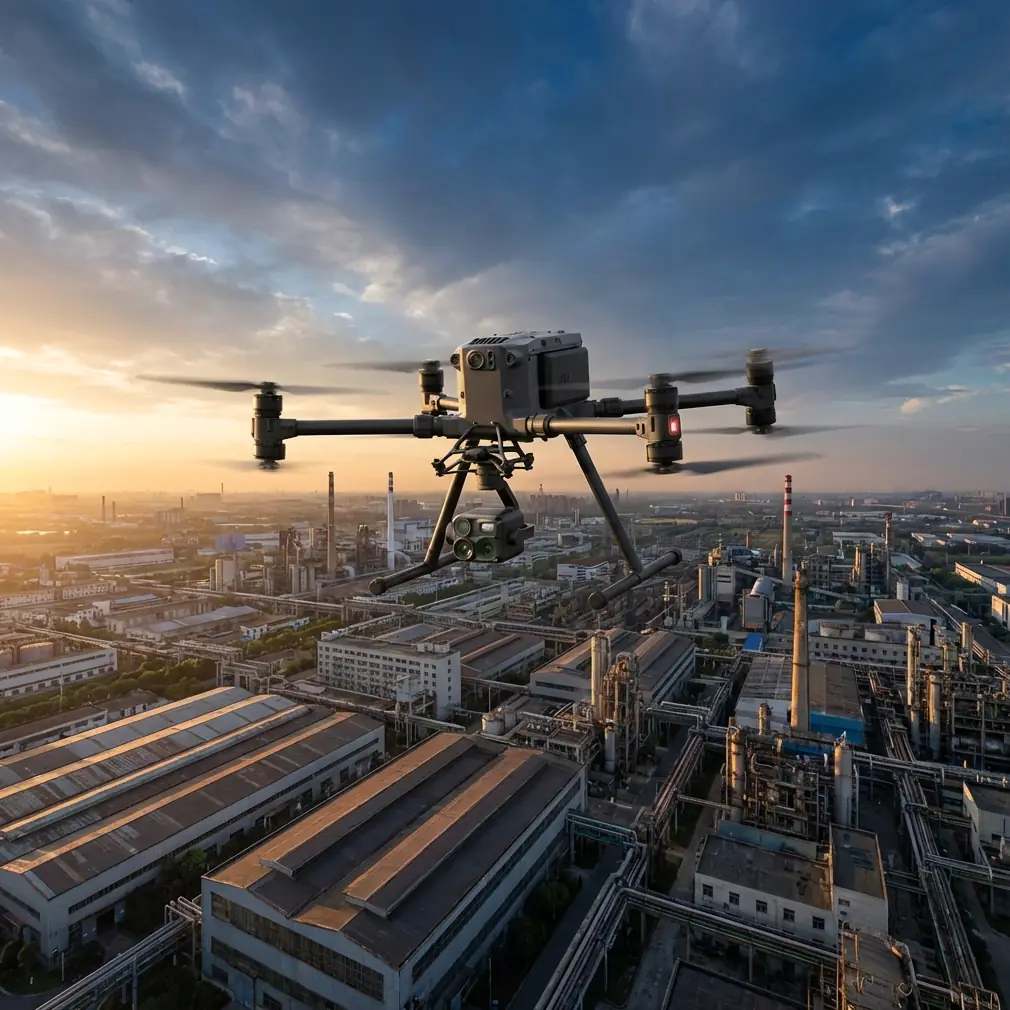
Matrice 4T in Windy Construction-Site Spraying: What Actually Matters in the Field
META: A technical review of the Matrice 4T for windy construction-site spraying, covering thermal workflow, O3 transmission, AES-256 security, battery management, photogrammetry, GCP use, and operational best practices.
Construction sites are messy by default. Add wind, dust, uneven terrain, temporary structures, moving crews, and the need to keep treatment patterns tight, and drone work stops being a brochure exercise very quickly.
That is why the Matrice 4T deserves a more practical discussion than the usual feature recap. For teams handling spraying-related tasks on construction sites in windy conditions—whether that means dust suppression support, surface treatment verification, drainage spot checks, or thermal assessment before and after application—the aircraft’s value is not just that it flies. It is that it gives operators a reliable way to see, document, and adapt in environments where conditions change every few minutes.
The Matrice 4T is not a dedicated agricultural spray platform, and that distinction matters. If your job is heavy-volume application over broad acreage, you would normally look elsewhere. But on construction projects, the mission is often different: inspect first, identify the exact treatment area, coordinate safe access, verify coverage, and document results. In that workflow, the 4T becomes useful because it combines thermal signature analysis, visual situational awareness, and stable mission execution in a compact enterprise package.
Why the Matrice 4T fits construction-site spraying support better than people expect
Wind changes the whole equation on site. A treatment plan that looked straightforward at ground level can break apart once gusts move around scaffolding, retaining walls, excavations, or partially enclosed structures. In those moments, the drone is less about “flying a mission” and more about building a live operational picture.
That is where the thermal payload starts earning its place. On a construction site, thermal signature data can help teams identify moisture retention zones, uneven drying, heat buildup on treated surfaces, and drainage paths that are not obvious in standard RGB imagery. If you are applying material to suppress dust or manage a specific surface condition, thermal can reveal whether the problem area is really the one you thought you were treating. That saves repeat work and reduces wasted flights in marginal weather.
This is also why photogrammetry should not be dismissed just because the aircraft is known for its thermal capability. A current orthomosaic or site model gives the spray-support team a common reference: haul roads, stockpiles, active work zones, temporary barriers, roof penetrations, runoff edges. When wind is pushing treatment drift or affecting where surface materials settle, a fresh map with properly marked GCPs can be the difference between “close enough” and a workflow the site manager will trust.
Ground control points still matter, even on projects that move fast. A lot of teams skip them because they want speed. That usually creates more work later. If your objective includes documenting exactly where surface treatment was needed, where it was applied, and whether the condition spread after weather exposure, GCP-backed mapping gives your record some discipline. It is not glamorous, but it is the kind of detail that prevents arguments in project reviews.
Wind does not just affect spray. It affects decision quality
On windy sites, the most dangerous mistake is thinking of wind as only a flight-control issue. It is also a sensing issue and a planning issue.
Thermal images can become harder to interpret when surfaces are cooling unevenly under moving airflow. Dust plumes can obscure visual cues. Reflective materials on site can confuse quick visual judgments. The Matrice 4T helps because it lets the operator cross-check. One sensor view says one thing; another view either confirms it or raises a flag.
That matters operationally. Suppose a section of compacted fill appears visually dry and ready for treatment, but thermal shows a cooler band near the edge of a trench line. That cooler band may indicate retained moisture or a drainage path that changes how your application should be staged. Instead of sending the crew straight into an area that will need rework, you adjust first. The aircraft is not replacing experience. It is making experienced judgment less guess-based.
The O3 transmission system is part of that story too. Strong transmission is often talked about like a headline spec, but on a construction site its real value is steadier decision-making. In wind, the aircraft may need to work around cranes, steel framing, concrete shells, containers, and partially completed structures that can complicate signal quality. A robust O3 link helps keep video and telemetry usable when site geometry is working against you. That means fewer blind moments when the operator is trying to assess whether conditions are acceptable around a treatment area.
For teams planning more advanced workflows, that transmission reliability also supports cautious progress toward BVLOS-aligned operational thinking, where regulations and approvals allow it. Not because you should casually stretch range, but because inspection and treatment-support missions on linear or segmented construction projects often push teams toward broader site coverage. Even when operating strictly within visual line of sight, having a strong, resilient link creates more margin when the environment is cluttered and windy.
AES-256 is not just an IT checkbox
Construction spraying support often involves more than operational flying. It involves site data: infrastructure layouts, utility corridors, progress imagery, defect records, environmental management documentation, and sometimes sensitive project sequencing.
That is where AES-256 matters. People hear encryption and immediately think compliance. Fair enough. But in day-to-day field operations, secure transmission and data handling are also about confidence. If you are mapping active construction zones, collecting thermal imagery of installed systems, or sharing annotated inspection results with project stakeholders, you need to know the information chain is protected. On major projects, weak data hygiene can stall adoption faster than weak flight performance.
The Matrice 4T’s security posture is significant because it helps enterprise teams integrate drone workflows into real project controls rather than treating them as a side experiment. The drone becomes part of the site documentation process, not just a flying camera someone brings out when conditions look interesting.
The battery lesson most crews learn the hard way
Field experience changes how you think about batteries, especially in wind. Most operators start by watching percentage. That is necessary, but not enough.
On windy construction sites, battery management is really about voltage behavior under load. Gusts, repeated repositioning, hover holds near structures, and stop-start observation passes can create a very different discharge profile than a smooth mapping mission over open ground. The aircraft may still show a workable remaining percentage, but the pack is being asked to deliver power in short, demanding bursts. That is where planning can fall apart if you wait too long to rotate.
My rule from field work is simple: if the mission includes frequent braking, crosswind corrections, and repeated camera work over obstacle-dense areas, treat your battery swap threshold more conservatively than you would for a predictable grid. The exact number will vary by site, temperature, and flight style, but the discipline matters more than the number itself.
This is why hot-swap batteries are such a practical advantage. They do not just reduce downtime. They preserve mission quality. On a busy site, the difference between getting back in the air quickly and waiting through a long interruption can mean losing the same light, the same surface temperature profile, or the same wind pattern you needed for an apples-to-apples before-and-after comparison. If you are using thermal signature analysis to verify treatment effect, continuity matters.
A small tip that saves headaches: do not cycle all packs evenly just because it feels organized. Instead, assign batteries by mission type. Keep one set for shorter, aggressive inspection-and-positioning flights in wind, and another for smoother mapping runs. You will get a clearer sense of how each set behaves under its typical load pattern. That makes it easier to spot a pack that is aging out before it surprises you on a difficult day.
Building a usable workflow: map first, spray-support second, verify last
The best Matrice 4T construction workflow in wind usually follows three phases.
1. Establish a map with references you can trust
Start with a photogrammetry pass when conditions are stable enough to produce clean overlap and predictable image quality. If the project needs traceable measurements, use GCPs. That gives the team a baseline for treatment planning, restricted-zone marking, and communication with site supervisors.
A current map answers questions crews tend to waste time on later:
- Where are the actual boundaries of the problem zone?
- What structures create wind shear or turbulence?
- Which access routes keep personnel clear of active equipment?
- Where will runoff or overspray matter most?
If you try to answer those in the middle of a rushed operation, you usually get half-answers.
2. Use thermal and live visual data to refine the target area
Once the baseline is set, use the Matrice 4T’s thermal and visible imaging together. Thermal may show a hidden pattern. RGB may reveal whether that pattern is operationally relevant or just a material difference. On a construction site, false assumptions often come from relying on one view too long.
For example, a dark patch on the visual feed might suggest a simple wet area. Thermal can tell you whether it is actively retaining moisture, cooling differently because of shade, or sitting over a subsurface condition worth flagging. If treatment is being planned around that zone, the distinction matters.
3. Return for verification, not just pretty pictures
After the work, send the aircraft back with a clear verification objective. Did the treatment reduce the target issue? Did wind push conditions toward adjacent areas? Is the thermal pattern more uniform? Did the surface response match the expected result?
A verification flight turns the drone from a planning aid into a record-keeping tool. That is how enterprises justify repeat deployment.
Where operators get into trouble
The most common mistake is trying to use the Matrice 4T as if it were a dedicated sprayer. It is not. Its strength is intelligence around the task: assessing, documenting, checking, and guiding site decisions where environmental variability is high.
The second mistake is underestimating wind near structures. Open-area wind readings do not tell the whole story around stacked materials, concrete walls, framed buildings, or deep excavations. The aircraft may be fully capable, but your assumptions about local airflow may not be.
The third is neglecting data discipline. If you are already collecting thermal, visual, and map products, organize them by mission phase and treatment objective. Otherwise, your team ends up with footage but no usable site story.
If you need a quick field discussion on configuring that workflow for your project, this direct WhatsApp line for drone operations questions is a practical place to start.
What the Matrice 4T does best in this niche
For windy construction-site spraying support, the Matrice 4T is at its best when you ask it to solve the right problem.
It can help locate and characterize treatment areas using thermal signature data rather than surface appearance alone. It can improve planning through photogrammetry, especially when GCP-backed outputs are needed for traceable documentation. Its O3 transmission supports steadier operations in visually and structurally complex environments. AES-256 strengthens the case for using the drone inside enterprise project workflows, where sensitive site data cannot be treated casually. Hot-swap batteries keep mission continuity intact when timing matters and field conditions do not wait.
Those are not isolated features. Together, they shape a drone workflow that is better suited to construction reality: changing wind, shifting priorities, imperfect access, and the constant need to explain not just what the crew did, but why they did it.
That is the real reason the Matrice 4T remains relevant here. Not because it promises a frictionless mission. Construction sites never do. It earns its place because it helps experienced teams make tighter decisions under messy conditions, and because it creates documentation that stands up after the dust settles.
Ready for your own Matrice 4T? Contact our team for expert consultation.