
Expert Spraying With Matrice 4T in Mountain Terrain
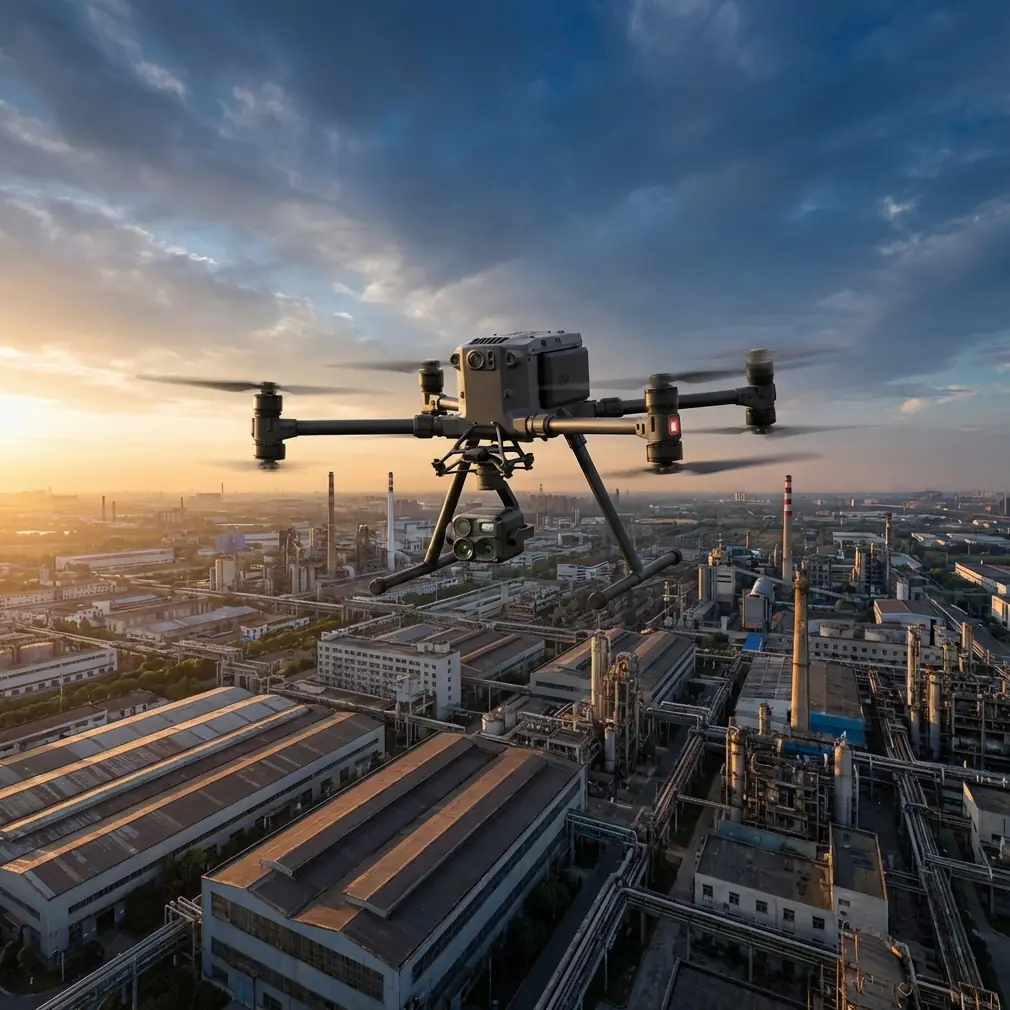
Expert Spraying With Matrice 4T in Mountain Terrain: A Field Tutorial From the Edge Cases
META: A practical Matrice 4T mountain spraying tutorial covering thermal scouting, O3 transmission, AES-256 security, battery workflow, wildlife avoidance, and terrain-aware mission planning.
Mountain spraying is where tidy brochure claims get tested.
Flat fields forgive weak planning. Terraced slopes, broken ridgelines, patchy tree cover, and unstable signal paths do not. If you are preparing to spray in mountain agriculture and you are considering the Matrice 4T as part of your workflow, the real question is not whether the aircraft is “advanced.” The question is whether its sensor stack and operational design actually reduce risk before a spraying platform ever lifts off.
I’m Dr. Lisa Wang, and this is the way I would approach a mountain spraying job when the Matrice 4T is used as the intelligence layer: to scout, map, identify thermal anomalies, validate access routes, and help the team decide how the spraying mission should be executed safely and precisely.
This matters because in steep terrain, spraying is rarely just an application problem. It is a reconnaissance problem first.
Why the Matrice 4T matters before spraying begins
The Matrice 4T is not the aircraft most operators picture when they think of agricultural application. That is exactly why it deserves serious attention. In mountain work, the best spraying result often starts with a separate aircraft that can see more, record more, and tell you where not to fly.
The 4T’s value in this scenario comes from combining visual and thermal sensing with a secure communications stack and field-friendly power management. Those details sound technical on paper, but in the mountains they become operational decisions.
Take thermal signature analysis. On a hillside plot, plant stress is not always visible in standard daylight imagery, especially when light angles change quickly across terraces. A thermal pass made early in the day can reveal irrigation inconsistencies, disease pockets, or edge zones drying faster than the rest of the block. That gives the spray team something better than a guess. It gives them boundaries that can shape dosage planning, route selection, and even the decision to postpone treatment on a specific strip.
Then there is transmission reliability. O3 transmission is not just a spec sheet phrase when you are flying around folds in the landscape. In mountain environments, maintaining command and video link quality can be the difference between a useful scouting sortie and a compromised one. When the aircraft is inspecting the next terrace beyond a stand of trees or skimming a contour line near a ridge, link stability affects how confidently the pilot can finish the inspection and recover safely.
That same logic applies to AES-256. Some operators treat encrypted transmission as a box to tick for enterprise procurement. In reality, if you are mapping high-value crops, private land, or regulated sites, secure image and telemetry transmission matters. Field data can reveal infrastructure layout, access roads, irrigation design, and crop condition. Protecting that information is part of professional operation, not a luxury feature.
Start with reconnaissance, not chemistry
The first mistake in mountain spraying is assuming the treatment plan should lead the mission. It should not.
Start by asking four questions:
- Where is the terrain most likely to distort spray consistency?
- Where are obstacles hiding in the slope profile?
- Which zones actually need treatment?
- What environmental or wildlife factors could force a route change?
The Matrice 4T helps answer all four.
I recommend beginning with a visual and thermal scouting flight before any spray platform is deployed. If the site supports it, collect imagery that can later support photogrammetry. Even when the terrain is too irregular for a perfect model on the first pass, a usable elevation-aware site map is far better than relying on memory and handheld observation.
If you need repeatable spatial accuracy across multiple visits, use GCP markers where practical. In mountain fields, GCP placement is less about textbook surveying perfection and more about anchoring the model in places that remain visible despite slope breaks, crop rows, and changing shadows. A few well-chosen points can improve confidence in terrain interpretation and help prevent route design errors when the spraying team builds follow-up missions.
That is especially relevant in orchards, tea terraces, and hillside specialty crops, where apparent line-of-sight from the takeoff zone can mislead the crew. A surface that looks smooth from one angle may hide abrupt drop-offs, retaining walls, cables, or irrigation hardware.
The wildlife problem nobody mentions enough
One of the most useful mountain flights I supervised changed because of a deer, not a crop issue.
We were scanning a terraced block shortly after sunrise, using thermal contrast to identify cold and warm zones across the slope. In the lower bands, one thermal signature moved in a way that clearly did not match irrigation lines, rocks, or machinery. On visual confirmation, it turned out to be a small deer that had bedded down near the edge of a spray zone, partially concealed by brush and shadow.
That moment is exactly why thermal reconnaissance has real operational value.
Without thermal awareness, the team might have launched a spraying operation on schedule, sending aircraft through a section that needed to be delayed or rerouted. Instead, the site lead marked the zone, adjusted the sequence, and resumed only after the animal had cleared the area. That is not just a wildlife protection story. It is a practical safety and compliance story. Surprising animals in mountain terrain can trigger unpredictable movement, including across roads, toward workers, or into adjacent treatment areas.
The Matrice 4T’s thermal signature capability gives crews a chance to identify these hidden variables before they become flight distractions or environmental incidents.
Building a mountain-ready workflow
A strong Matrice 4T workflow for spraying support should look like this:
1. Conduct an early thermal pass
Fly at a time when temperature contrast works in your favor. Early morning often provides the clearest separation between crop canopy, exposed soil, irrigation features, and living animals. The goal is not cinematic imagery. The goal is fast recognition.
Look for:
- Uneven canopy temperature across terraces
- Dry edges or heat-retaining banks
- Water pooling or saturated bands
- Hidden livestock or wildlife
- Human activity near field margins
This first pass can prevent wasted spraying on areas that either do not need treatment or should not be entered yet.
2. Capture visual data for terrain interpretation
The thermal layer tells you where to look. The visual layer tells you what you are looking at.
Use the Matrice 4T to capture overlapping imagery that supports route planning and, where needed, photogrammetry. On mountain sites, visual reconstruction is not just useful for 3D presentation. It helps define safe staging positions, likely RF shadow zones, and sections where the spray aircraft may face unstable altitude behavior if the terrain-following assumptions are weak.
If the site is large or segmented, divide it into operational blocks rather than trying to treat the whole mountain as one mission. This reduces pilot workload and makes it easier to adapt when conditions change.
3. Mark signal trouble spots before the spray team launches
O3 transmission is valuable, but no transmission system is immune to topography. Ridge shoulders, tree lines, and rock faces can still degrade link quality.
Use the reconnaissance flight to identify where signal confidence drops. That allows the team to reposition personnel, choose better takeoff points, or split missions into shorter sectors. This is particularly useful when planning for operations that may eventually support BVLOS frameworks, where route discipline and communication predictability become even more critical.
BVLOS in mountain agriculture is never just a paperwork issue. The terrain itself becomes part of the risk model. A reconnaissance aircraft that helps define those terrain-driven communication limits gives the operation a more realistic basis for future scale.
4. Secure your data properly
If you are working with commercial growers, cooperatives, or sensitive sites, enable and maintain secure data handling practices. AES-256 matters because field data has business value. Crop stress maps, access roads, and timing patterns can reveal more than operators sometimes realize.
Mountain farms are often spread across parcels with different ownership or management structures. That increases the need for disciplined handling of imagery, annotations, and exported mission files.
5. Use hot-swap batteries to preserve field rhythm
Mountain jobs lose time in hidden ways. Walking between staging points. Relocating vehicles. Waiting for weather windows to reopen. Rebuilding momentum after a battery cycle.
Hot-swap batteries are operationally significant because they help crews keep continuity during reconnaissance. When the scouting aircraft can return, exchange power quickly, and relaunch without a long reset process, the team retains context. That matters when conditions are changing by the minute—wind drifting upslope, shadows moving across terraces, or workers shifting between blocks.
In practice, this means you can complete one section, confirm the next, and hand cleaner intelligence to the spray team without letting the site picture go stale.
How to translate Matrice 4T data into better spraying decisions
A good reconnaissance mission should end with decisions, not just files.
After the Matrice 4T sortie, I recommend sorting the site into four action categories:
- Spray as planned
- Spray with route adjustment
- Delay and reassess
- Exclude from current operation
This is where expert judgment matters. A thermal hotspot may reflect actual crop stress, but it may also indicate exposed rock, metal infrastructure, or a recently warmed retaining wall. A cool patch may suggest better moisture retention, or it may simply be shadow. That is why thermal and visual review should be paired, not separated.
When the interpretation is sound, the operational payoff is substantial:
- Fewer unnecessary passes
- Better route sequencing on steep slopes
- Lower likelihood of mid-mission surprises
- Less disturbance to wildlife and workers
- More confidence in treatment uniformity
If your team needs help shaping that workflow for a real site, you can message a field specialist here and discuss how reconnaissance and spraying can be integrated more intelligently.
Practical cautions specific to mountain spraying support
There are a few points that deserve blunt wording.
Do not assume a reconnaissance map made in one set of conditions remains reliable all day. Mountain light changes quickly. Wind direction can reverse along slopes. Human and animal activity shifts. If the site is complex, refresh critical sections before the spraying mission starts.
Do not treat thermal imagery as self-explanatory. It is powerful, but it can mislead inexperienced crews. Thermal interpretation improves when operators compare signatures against actual site knowledge, irrigation records, and visual imagery.
Do not overextend one launch point. A convenient takeoff zone is not always the best command position. In mountains, moving the team 100 meters to gain better geometry can produce a safer and more efficient mission.
And do not neglect documentation. If you are operating in regulated or scrutinized environments, the ability to show that you identified terrain hazards, protected data with AES-256, evaluated communication limitations under O3 transmission conditions, and adjusted for wildlife presence can become as valuable as the mission result itself.
The real role of the Matrice 4T on a mountain farm
The Matrice 4T is not just another aircraft in the trailer. In mountain spraying operations, its strongest role is as a decision engine.
It sees hidden heat patterns before the eye catches them. It helps build spatial understanding where slope and vegetation distort judgment. It keeps data moving securely. It supports a tighter battery workflow in the field. And it gives crews a way to detect things that should change the mission—like a deer bedded in brush at the edge of a treatment terrace before rotors and spray pressure turn a routine job into an avoidable incident.
For mountain agriculture, that is the difference between flying a mission and managing an operation.
The teams that perform best in this environment are not the ones that rush to chemical application. They are the ones that scout first, interpret carefully, and treat the terrain as an active variable. Used that way, the Matrice 4T becomes one of the most useful tools in the chain, even when its job is done before the first drop is ever sprayed.
Ready for your own Matrice 4T? Contact our team for expert consultation.