
Matrice 4T in Coastal Field Work: A Technical Review
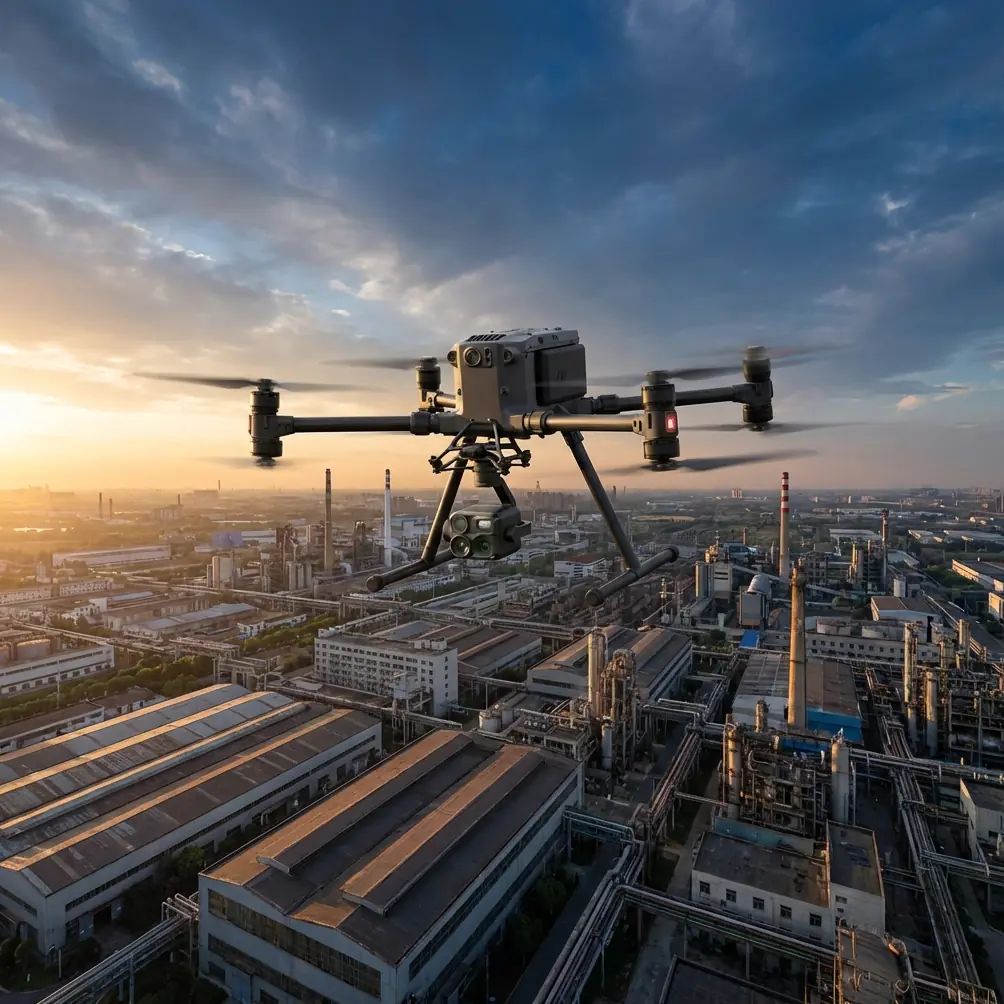
Matrice 4T in Coastal Field Work: A Technical Review from the Crop Edge
META: Expert review of the DJI Matrice 4T for coastal field operations, covering thermal imaging, O3 transmission, AES-256 security, hot-swap batteries, mapping workflow, and why it solves real problems in windy, humid farmland.
I’ve spent enough time around coastal farmland to know that the drone itself is rarely the only problem. Salt air creeps into connectors. Wind shifts by the minute. Light changes fast when sea haze rolls in. Wet ground limits where crews can safely stand. And when a grower says a field needs attention, they usually mean now, not after a perfect weather window appears.
That is the lens I’m using for this review of the Matrice 4T.
This is not a generic overview of a new airframe. It’s a field-first look at how the Matrice 4T fits into coastal agricultural operations, especially when the job is less about pretty imagery and more about making reliable decisions under imperfect conditions. If you spray fields near the coast, manage crop stress in saline environments, or build drone workflows for farms where distance and humidity complicate every task, the 4T deserves a serious look.
One clarification at the start: the Matrice 4T is not a spraying platform. It is the aircraft you send ahead of spraying, alongside spraying, and after spraying to reduce guesswork. That distinction matters. In coastal agriculture, the money is rarely lost during the actual application pass. It is lost earlier, when stress zones are misread, drainage failures go unseen, and treatment areas are drawn too broadly because the operator lacks confidence in what’s really happening on the ground.
The challenge I remember most
A few seasons ago, I worked with an operator supporting fields near tidal influence. The issue wasn’t simply crop vigor. It was pattern recognition. The field looked uneven from the edge, but not in a way that justified a full-block treatment. One area was underperforming because of salt intrusion. Another was holding water. A third looked weak from above at midday but recovered by evening. The team had RGB images, some rough maps, and experience. What they didn’t have was clean, timely confirmation.
That’s the kind of gap the Matrice 4T is built to close.
What changes with the 4T is not just image quality. It’s the speed at which you can shift between visual inspection, thermal signature analysis, and site-wide documentation without changing aircraft or reworking the mission plan from scratch. For coastal field work, that speed matters because the environment rarely stays stable long enough for a slow workflow.
Why thermal actually matters in fields near the coast
A lot of people hear “thermal” and immediately think of search work or industrial inspection. In agriculture, and especially coastal agriculture, thermal earns its keep differently.
Fields near the coast often present mixed stress signals. Salinity, irrigation irregularity, compaction, standing moisture, and disease pressure can all create similar-looking symptoms from the ground. A thermal signature does not replace agronomy, but it gives you a fast way to separate the field into meaningful zones. That is operationally significant. If one section is consistently warmer than adjacent crop under similar light and wind exposure, you may be looking at water stress. If cooler signatures persist in low spots, drainage or standing moisture may be part of the story. That helps direct the agronomist or farm manager to the right problem first instead of treating the whole field as if every weak patch has the same cause.
On the Matrice 4T, the value is not just having a thermal sensor on board. The value is having it integrated into a platform that can also capture standard visual context in the same sortie. In practical terms, you can identify an anomaly thermally, then verify its physical character with the visual payload before sending a ground crew through wet rows or unstable field edges. In coastal environments, cutting unnecessary foot traffic is not a small advantage. It saves time, preserves field condition, and reduces the chance of missing the issue because the field team arrived after conditions changed.
O3 transmission is more important than the spec sheet makes it sound
Transmission quality can sound like a brochure detail until you’re operating near tree lines, irrigation equipment, coastal structures, or rolling terrain that interrupts signal consistency. The Matrice 4T’s O3 transmission matters because coastal work often involves distance, glare, and interference all at once.
For crop assessment, stable downlink is not just about pilot comfort. It affects decision quality. If the live feed breaks up when you’re trying to verify a stress line, a blocked ditch, or the edge of a target treatment zone, the team tends to either overfly the site repeatedly or make a conservative call that expands the treatment area. Both outcomes cost time. In some operations, they also delay the spray platform waiting behind the scout aircraft.
That is why O3 is more than a connectivity bullet point. It shortens the loop between observation and action. A cleaner feed means the operator, agronomist, and farm manager can interpret the same scene with more confidence while the aircraft is still on station. In a coastal setting where weather can shut down a second flight attempt, that reliability has direct operational value.
AES-256: not flashy, but very relevant for commercial operators
Security features rarely get center stage in field reviews, yet AES-256 encryption is one of those details that serious commercial teams should care about. If you’re flying contracted surveys, documenting crop health over leased land, or collecting data tied to yield decisions, your imagery is business-sensitive.
The practical significance of AES-256 is straightforward: it helps protect transmitted and stored operational data in environments where multiple stakeholders may be involved. Coastal agriculture often includes landowners, farm managers, chemical advisors, and service providers spread across several sites. Data moves fast, and not all of it should move loosely. Secure transmission is especially useful when you’re sharing live observations remotely or integrating collected imagery into formal reporting.
No, encryption doesn’t make the drone fly better. But it does make the platform more suitable for professional use where documentation and confidentiality matter as much as the flight itself.
Hot-swap batteries solve a very real field problem
If you’ve worked long blocks in humid conditions, you already know the battery change is often where momentum dies. You land in a soft area, move gear to a drier patch, power down, restart, recheck, and lose the rhythm of the job. Hot-swap batteries change that rhythm.
This feature has real significance in coastal field operations because mission continuity is often the difference between a coherent data set and a patchwork of partial observations. When conditions are changing quickly, you want the next sortie airborne with minimal interruption. Hot-swapping reduces dead time between flights, which helps preserve consistency in lighting, surface temperature, and wind conditions during a survey sequence.
That matters even more when thermal data is part of the workflow. Surface heat patterns can shift quickly with cloud cover and breeze off the water. If your battery exchange takes too long, the field you’re comparing at the end of the mission may not behave like the field you saw at the beginning. Faster turnaround helps keep those comparisons meaningful.
Where the 4T fits in a spraying workflow
Again, this is not the aircraft you use to spray. It is the aircraft that improves how spraying is planned and verified.
A sensible coastal workflow with the Matrice 4T looks something like this:
First, scout the field and identify stress zones using visual and thermal cues. Next, generate a usable map of the areas that actually need intervention. Then, send the spray platform to the right blocks instead of treating broad acreage based on uncertain assumptions. Afterward, use the 4T to check coverage patterns, drainage response, or whether the target problem appears spatially consistent with the action taken.
That process becomes even more effective when photogrammetry is handled properly. The Matrice 4T can support mapping-style missions that give agricultural teams cleaner positional understanding of where anomalies begin and end. If the farm is large or boundaries are irregular, adding GCPs—ground control points—can improve map alignment and make the resulting data far more useful for repeat comparison over time. In plain terms, GCPs reduce the drift between “where the issue looked like it was” and “where the sprayer actually needs to work.” For farms with narrow margins, that is not a technical luxury. It’s how you avoid wasted application in non-target sections.
Photogrammetry also helps when the field problem is structural rather than biological. In coastal areas, subtle elevation changes can determine where water collects after rain or irrigation. A good surface model can reveal why one end of a field repeatedly underperforms. Thermal may show the symptom. Mapping helps explain the geometry behind it.
BVLOS conversations need discipline
BVLOS is one of those terms people bring up quickly whenever field size enters the discussion. For agriculture, the appeal is obvious. Coastal farms can stretch well beyond easy visual coverage, and moving crews repeatedly along muddy edges is inefficient. The Matrice 4T sits in the class of aircraft that naturally enters that conversation because it supports serious enterprise-style operations.
Still, the real value here is not the acronym itself. It is workflow readiness. If your region and approvals support extended operational structures, the 4T is better aligned with that professional environment than lighter, simpler aircraft built mainly for casual imaging. It has the transmission, data handling, and mission logic to fit structured commercial operations. That doesn’t mean every farm should immediately build a BVLOS program. It means the aircraft won’t become the limiting factor if your operation matures in that direction.
What I like most about the Matrice 4T for coastal agriculture
The strongest trait of the 4T is that it reduces friction between detection and decision.
That sounds abstract until you compare it to older field workflows. Previously, you might send one drone for imagery, another team for handheld thermal checks, and a separate visit for mapping-grade documentation. By the time all that was stitched together, the field had changed. Wind had shifted. Surface moisture had normalized. The urgency that started the mission was gone, replaced by uncertainty.
The Matrice 4T compresses that process. It lets one crew gather actionable thermal context, visual verification, and mission-ready site information in a tighter time frame. In coastal farming, where environmental variability is constant, that compression is the whole advantage.
I also like that the platform encourages discipline. It’s not a toy and it doesn’t reward casual operation. That is a good thing for commercial users. Aircraft that invite structured planning, battery management, georeferenced workflow, and secure data handling tend to produce better outcomes because the operator treats the mission seriously from the start.
Where operators still need to be careful
The 4T does not remove the need for agronomic judgment. Thermal signatures can be misread if you ignore time of day, recent irrigation, cloud transitions, and plant growth stage. Photogrammetry can mislead if overlap, altitude, or GCP placement are poor. A stable O3 link does not excuse weak route planning in difficult field geometry. And no amount of onboard capability solves basic maintenance negligence in salty air.
That last point deserves emphasis. Coastal work punishes equipment. If the Matrice 4T is going to live in that environment, post-flight cleaning and storage discipline are not optional. Salt residue and humidity don’t care how advanced the aircraft is.
Final verdict from the field
If your work revolves around coastal fields, the Matrice 4T makes sense as a decision-support aircraft, not as a generic camera drone. Its thermal capability helps separate stress patterns that would otherwise blur together. O3 transmission improves confidence when distance and interference complicate live review. AES-256 supports the kind of data security commercial operators increasingly need. Hot-swap batteries preserve mission continuity when environmental conditions shift fast. Add a disciplined photogrammetry workflow with GCPs, and the aircraft becomes far more than a scouting tool.
It becomes the system that helps you spray less blindly.
That is the real story here. Not novelty. Not hype. Just fewer wasted passes, better-targeted field checks, and faster understanding in places where the environment rarely gives you time to think twice.
If you’re building that kind of workflow and want to talk through a practical setup, message us here: https://wa.me/85255379740
Ready for your own Matrice 4T? Contact our team for expert consultation.