
Matrice 4T in Dusty Fields: A Specialist Case Study
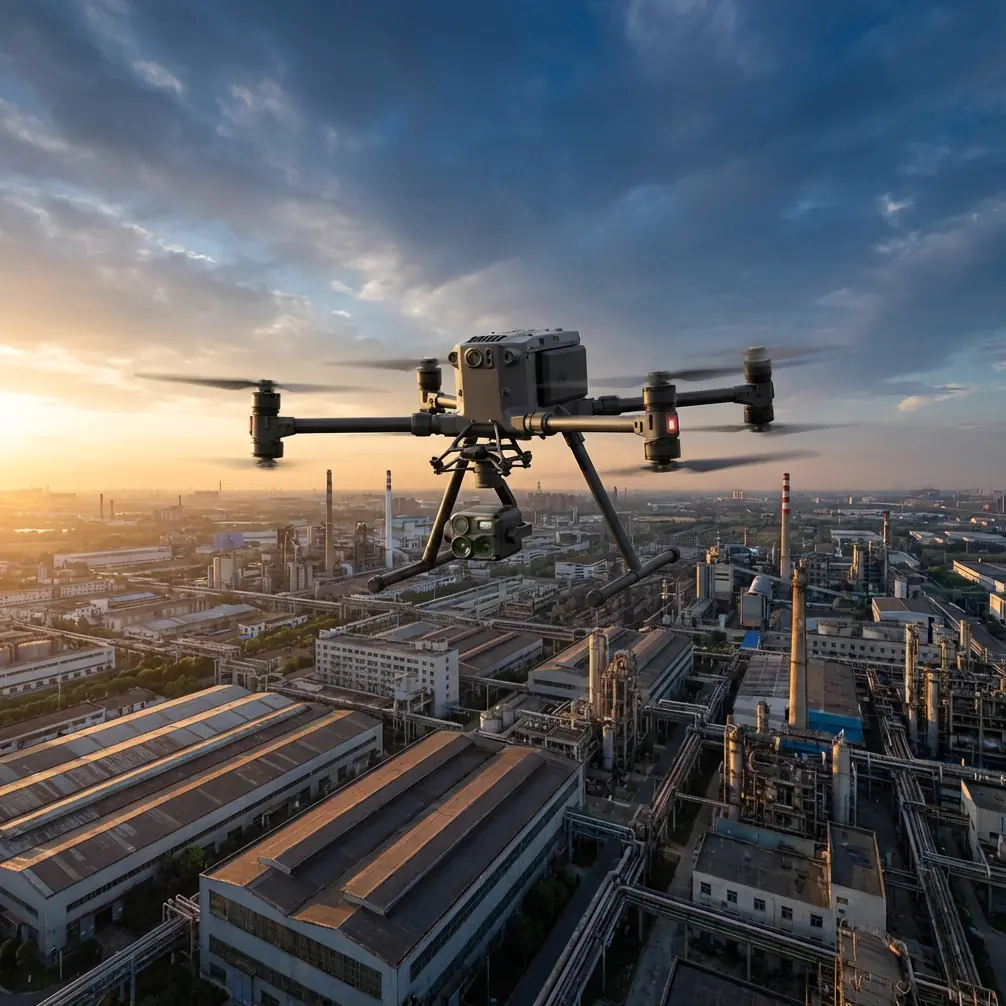
Matrice 4T in Dusty Fields: A Specialist Case Study on Wiring Limits, Tolerance Discipline, and Real-World Crop Flight Decisions
META: A field-focused Matrice 4T case study for dusty agricultural operations, connecting aircraft material data, tolerance standards, thermal sensing, and mission reliability in practical spraying support work.
I’m Dr. Lisa Wang, and when operators ask whether the Matrice 4T is suitable around dusty fields, I usually answer with a caution before I offer reassurance: the question is not really about whether the aircraft can fly there. It is about whether the whole operation—from sensor trust to cable durability to assembly quality—has enough margin to keep delivering useful data when visibility drops, residue builds up, and the mission has to continue without guesswork.
That distinction matters.
The Matrice 4T attracts attention for its multi-sensor payload and its utility in difficult environments. In agriculture, though, the interesting story is not the brochure headline. It is what happens in a working field where spray drift, dry soil, heat shimmer, plant moisture variation, and repeated battery changes all push the aircraft away from lab conditions. Dusty operations expose every shortcut in maintenance culture. They also reward teams that understand the small engineering details behind flight reliability.
This case study comes from a crop-support mission profile rather than a generic overview. The task was not direct spraying by the aircraft itself, but pre- and post-application field observation over dry acreage where crews needed thermal signature data, visible imaging, and consistent positioning to support treatment decisions. The environment was abrasive. Fine particulate hung low over the rows. Midday heating made contrast unstable. The crew also had to work around livestock fencing and a surprise wildlife encounter: a roe deer emerged from the field edge and crossed into the flight corridor just as the aircraft was moving into a lower-altitude pass. That moment ended up proving more about the value of the Matrice 4T sensor stack than any spec sheet ever could.
Dust changes the mission before takeoff
Operators usually think first about prop wash and lens contamination. Fair enough. But dusty field work begins as a systems question, not a housekeeping issue. When the aircraft is repeatedly exposed to suspended particles, weak points tend to show up in cable routing, connector sealing habits, and subassembly consistency long before a pilot notices obvious image degradation.
That is where the reference material behind this discussion becomes more useful than it might appear at first glance.
One source is a material table for aircraft electrical cable and non-metallic components. Buried in that data is a practical reminder: cable construction and cross-section are not abstract manufacturing trivia. For example, the table lists nominal cross-sectional entries such as 0.2, 0.3, 0.5, 0.75, 1, 1.2, 1.5, 2, and 2.5 mm², alongside corresponding outside-dimension and weight calculations. Another section shows an FF.-3Q type wire specification with values like 7 × 0.08 mm strand construction and a computed weight around 0.72 for the smallest listed format, then higher as size increases.
Why bring that into a Matrice 4T discussion for agriculture? Because repeated dust-field missions are punishing on harnesses and cable interfaces. On a modern UAV, vibration, thermal cycling, and frequent payload handling all concentrate stress at transition points: where flexible conductors meet rigid connectors, where gimbal cabling sees repeated motion, and where contaminated surfaces encourage abrasion during cleaning. Knowing that wire geometry, shielding choice, and sheath material are fundamental design variables helps explain why some aircraft keep delivering stable sensor performance in dirty conditions while others slowly accumulate intermittent faults.
The same source references extruded fluoropolymer protective layers and silver-plated braided shielding. Operationally, those details matter because dusty fields are often electrically noisy environments in a practical sense—not because the field itself emits interference, but because crews work around pumps, generators, radios, vehicles, and charging stations. A well-shielded cable architecture helps preserve image and telemetry integrity when the mission depends on thermal interpretation and long downlink stability. If you are relying on O3 transmission to maintain clean situational awareness near the far edge of the block, cable and shielding quality stop being invisible engineering and start becoming flight confidence.
Precision standards are not only for factories
The second reference is a table of geometric tolerance grades. At first glance, it looks far removed from agriculture: a dense set of dimensional bands and micrometer-level values for roundness, cylindricity, parallelism, perpendicularity, and inclination. But that would be the wrong reading.
One line shows that for a principal parameter under 3 mm, tolerance values can begin at 0.1 µm and step upward through 0.2, 0.3, 0.5, 0.8, 1.2, 2, 3, and beyond depending on grade. Another range, >400 to 500 mm, carries substantially larger allowable values such as 1.5, 2.5, 4, 6, 8, 10, 15, 20, 27, 40, 63, 97, and 155 µm.
Those numbers are not there to impress machinists. They explain a field truth: UAV reliability in rough, dusty service is cumulative. Tiny geometric deviations in mounts, rotating assemblies, sealing surfaces, or bracket alignment may not ground an aircraft on day one. But under repeated mission cycles, they can alter vibration behavior, sensor boresight consistency, and wear patterns. In a multi-sensor aircraft like the Matrice 4T, that directly affects whether thermal observations line up with visual context the way the operator expects.
For agriculture teams using the aircraft to assess irrigation stress, canopy uniformity, blocked nozzles on separate spray rigs, or missed coverage patterns, trust in alignment is not optional. If the thermal signature suggests one thing and the visible frame suggests another because the system has accumulated subtle mechanical inconsistency, the problem is not the field. It is the build discipline behind the aircraft and the handling discipline around it.
That is why I often tell operators that precision standards belong in field conversations. A drone working over crops is still an aircraft, and aircraft logic always wins in the long run.
The dusty-field case: where the Matrice 4T earned its keep
On this assignment, the mission sequence was straightforward on paper. The crew needed to map stress variation over a dry section of field, identify uneven application zones after treatment, and document margins near a tree line where runoff patterns had been inconsistent. They planned visible imaging runs, selective thermal passes, and a short photogrammetry segment tied to GCPs so the agronomy team could compare thermal anomalies against spatially accurate field layers.
The complication was airborne dust. Tractor movement on an adjacent lane had turned the air column unstable. Visibility near the lower rows varied by the minute. In these conditions, a lesser workflow often collapses into one of two mistakes: flying too low to chase detail, or staying too high and pretending the data is still diagnostic. The Matrice 4T’s practical strength is that its sensor mix gives crews room to adapt without losing the mission.
That became obvious during the wildlife event. As the aircraft transitioned toward a lower observation line, the thermal feed picked up movement before the visual operator had a clear read. The animal—a roe deer moving fast from the shaded edge into warmer ground—presented a transient heat shape that stood out against the field background despite the dust and broken visual contrast. That early cue prompted the crew to pause the pass and widen the route. No drama. No forced descent. Just a sensible sensor-led adjustment.
This is where thermal signature capability matters in agriculture beyond crop stress analysis. Fields are not sterile workspaces. Wildlife, pets from nearby farms, and people on foot can appear unexpectedly. A sensor set that can identify motion through weak visual conditions gives the pilot another layer of judgment. For a Matrice 4T operator, that means safer route management and fewer rushed decisions when the environment stops cooperating.
Why hot-swap discipline changes output quality
Dusty field work often means compressed timelines. The temptation is to treat battery changes as a race. I would argue the opposite. Hot-swap batteries are valuable not because they make missions feel faster, but because they allow continuity without forcing hurried shutdown-restart cycles that break concentration and data consistency.
In this case, the crew used hot-swap capability to preserve the rhythm of the survey while still taking time to inspect exposed surfaces between sorties. That matters. Every battery exchange becomes an inspection window: lens check, vent check, landing gear contamination review, payload connection glance, and a quick look at any dust accumulation around moving interfaces. When teams use hot-swap batteries correctly, they extend operational continuity while reducing the odds of carrying a small contamination problem into the next leg.
There is another benefit. Agricultural missions often generate edge-case decisions in the field. You may need one extra pass to confirm whether a cool patch is irrigation-related, canopy-density-related, or simply shadow-driven. Battery flexibility makes those decisions data-driven rather than schedule-driven.
Transmission integrity and secure workflows
The field edge is rarely quiet from a signal perspective. Vehicles, handheld radios, local Wi-Fi near farm structures, and ad hoc team devices all compete for attention. O3 transmission matters here less as a marketing phrase and more as a practical buffer against losing confidence in your live feed at the exact moment you need to interpret a marginal thermal reading.
For teams working with agronomy maps, customer boundaries, or proprietary crop trial data, workflow security also matters. AES-256 is relevant because field imaging is not always casual documentation. Many agricultural clients regard treatment maps, growth anomalies, and trial comparisons as commercially sensitive. Secure transmission and storage discipline should be normal operating practice, especially if flights support decision-making across multiple stakeholders.
That same discipline supports BVLOS planning conversations, even if many teams remain under visual-line constraints in day-to-day work. The point is not to encourage beyond-rule operations. The point is that the more structured your communication integrity, aircraft condition control, and mission logging become, the more credible your operation is when scaling to larger fields and more demanding regulatory frameworks.
Photogrammetry in a place where dust seems to rule out accuracy
A common mistake in dusty agricultural work is assuming photogrammetry is not worth attempting unless conditions are pristine. That is too simplistic. The better approach is to be selective.
In the case above, the crew did not try to force full-site modeling during the worst airborne dust interval. Instead, they used GCP-backed capture on the most decision-critical area after the dust plume shifted. This gave the agronomy team a spatially defensible layer for comparing visible and thermal observations. The result was not just prettier mapping. It reduced ambiguity around whether a problematic zone followed field topology, machine path, or moisture pattern.
The Matrice 4T is not only valuable when used as a pure thermal observer. In mixed workflows, it becomes a bridge between fast field interpretation and more structured geospatial analysis. That is why agricultural operators should think beyond “see hot spots, then go home.” If you can tie observations to accurate ground reference, your recommendations improve.
What dusty-field operators should really take from the engineering references
The two source documents here may look old-school and disconnected from a current UAV platform. They are not. Together, they point to a discipline that separates dependable drone operations from casual gadget use.
First, material and cable specification matter because dust punishes weak protective layers, poor shielding, and undersized conductor choices over time. The fact that the reference tables distinguish cable constructions down to strand formats like 7 × 0.08 mm and cross sections from 0.2 to 2.5 mm² is a reminder that reliability starts below the surface. If your Matrice 4T is expected to deliver consistent payload performance in abrasive conditions, respect every maintenance action that preserves that hidden infrastructure.
Second, geometric tolerance control matters because precision compounds. A tolerance table ranging from 0.1 µm for very small parameters to values above 100 µm in larger ranges illustrates how engineering accepts different limits depending on scale and function. For field operators, the lesson is simple: alignment, fit, and inspection are not theoretical concerns. They shape vibration behavior, sensor consistency, and long-term mission repeatability.
Together, those references support a larger truth about the Matrice 4T in agriculture: performance in dusty fields is earned through systems thinking. The aircraft’s sensors are only as useful as the platform stability, cable integrity, transmission cleanliness, and operational patience behind them.
My field recommendation
If you are deploying the Matrice 4T around crop work in dusty conditions, treat each sortie as a technical inspection opportunity, not just a data collection run. Build your workflow around three habits:
- Use thermal and visual sensing together, especially near field edges and variable terrain.
- Make battery changes deliberate, using hot-swap windows for contamination checks.
- Tie key findings to spatial control with GCPs when the result will affect treatment or reporting.
And if you want to compare mission planning notes for a similar field setup, I’m happy to share a practical checklist here: message my field team directly.
The best agricultural drone operations are rarely the flashiest. They are the ones that keep producing credible information when the field is dry, the air is dirty, and something unexpected runs across the rows.
Ready for your own Matrice 4T? Contact our team for expert consultation.