
Matrice 4T in Dusty Forest Spraying Support: Altitude
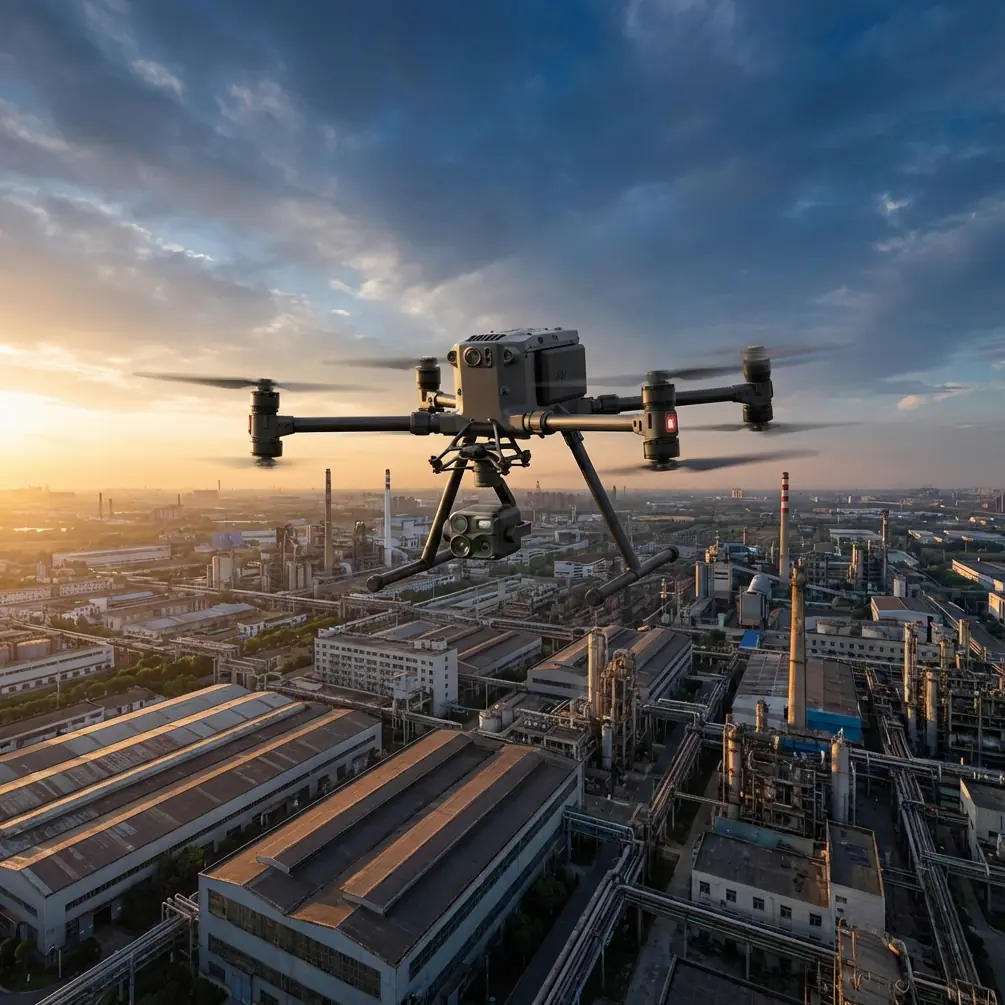
Matrice 4T in Dusty Forest Spraying Support: Altitude, Reliability, and What Actually Matters in the Field
META: A technical review of DJI Matrice 4T use around dusty forest spraying operations, with practical flight altitude insight, reliability thinking, thermal relevance, inspection logic, and mission planning considerations.
Forest spraying work has a way of exposing weak assumptions fast. Dust hangs in the air longer than most crews expect. Tree canopies break line of sight, confuse depth judgment, and create pockets of uneven airflow. Add the need to document coverage, watch for hotspots, verify safe operating corridors, and keep crews moving, and a support drone stops being a nice extra. It becomes part of the workflow.
That is where the Matrice 4T deserves a more careful look.
This is not really a story about headline specs. It is about whether the aircraft can be used intelligently in a dusty forestry spraying environment, where the job is part observation, part verification, and part risk reduction. If you approach the M4T only as a camera platform, you miss the bigger value. In this setting, it functions more like an aerial decision tool: checking canopy conditions, identifying thermal anomalies, confirming access routes, documenting treatment zones, and helping the team avoid wasted sorties.
The most useful question is not “Can it fly here?” It usually can. The real question is “At what altitude, in what pattern, and under what inspection discipline does it stay dependable and useful over repeated field days?”
The altitude question: how high should the Matrice 4T fly over dusty forest spraying zones?
For this scenario, the optimal working altitude is usually not one fixed number. It depends on what the aircraft is doing in that moment.
If the mission is broad situational awareness before or after spraying, a moderate altitude often works best. In many forest blocks, roughly 50 to 80 meters above canopy gives a practical balance: high enough to stay out of the worst dust plume and rotor wash interaction near the trees, but low enough to preserve meaningful thermal and visual detail. That range is often where the aircraft can read the site as a system rather than as disconnected patches.
Drop lower only when the mission objective truly requires it. Near-canopy flights can sharpen detail, but they also put the aircraft into the least forgiving air. In dusty forest operations, lower altitude means more suspended particulates, more visual clutter, and more risk of temporary obscuration when light angles are poor. It also increases the odds of degraded situational awareness around protruding branches and uneven terrain margins.
Go much higher, on the other hand, and you start trading away the point of using a thermal-capable platform in the first place. Thermal signature interpretation becomes less actionable when the target area is too compressed, especially if you are trying to identify uneven spray progress, heat stress pockets, equipment staging activity, or residual hotspots around support infrastructure and vehicle areas.
So the practical answer is this:
- 50 to 80 meters above canopy for general overwatch and route confirmation
- lower, carefully, for targeted inspection passes
- higher only when terrain, dust spread, or obstacle separation demands it
That altitude logic matters because forestry support flights are rarely about cinematic imagery. They are about readable data. A technically “safe” altitude that produces ambiguous thermal or visual information is not operationally efficient.
Why dusty forest work changes how you should judge the M4T
A lot of drone reviews treat field reliability as a vague quality. In forestry support, reliability has a more concrete meaning. It is about whether the platform continues to perform predictably after repeated exposure to vibration, dust, temperature shifts, transport, battery swaps, and long inspection days.
The reference material behind this article comes from civil aircraft design and reliability engineering, and while it was written for a broader aviation context, the discipline translates surprisingly well to professional UAV operations.
One key point from the civil aircraft handbook is that structural evaluation is not just about whether something is strong on day one. It must show that, over the entire service life, the aircraft avoids catastrophic failure caused by fatigue, corrosion, or accidental damage, a requirement discussed under CCAR-25.571. That matters in a forestry spraying support workflow because dusty deployments create exactly the kind of cumulative exposure that encourages operators to focus only on obvious damage while missing long-term degradation.
On a drone like the Matrice 4T, that principle becomes operationally significant in three ways.
First, dust is not just a cleanliness issue. Fine particulates accelerate wear around joints, mounting points, cooling paths, connectors, and protective surfaces. A crew that flies often in dry forest corridors should think less like casual drone users and more like aircraft maintainers. Inspection intervals should not be based only on flight hours. They should also reflect environmental severity.
Second, accidental damage in this context is often subtle. It is not always a crash. It might be a hard case transport impact, branch contact during a low inspection run, or repeated rough landings on uneven forest roads. The handbook’s emphasis on damage tolerance is a reminder that not every serious defect announces itself immediately. The aircraft may keep flying while margins quietly shrink.
Third, maintenance planning should be preventive, not reactive. The source specifically stresses the need for preventive inspection procedures and corresponding maintenance measures, with approved limits incorporated into scheduled inspection programs. For a Matrice 4T forestry team, that translates into a disciplined preflight and post-flight routine: lens and thermal window checks, gimbal smoothness, arm and hinge inspection, battery interface cleanliness, landing gear condition, payload mounting verification, and a documented trend log for any recurring anomaly.
That kind of routine sounds basic until you compare crews that use it with crews that do not. One group catches issues before a field day is lost. The other discovers them after driving hours into a worksite.
The software side is just as real as the hardware side
The second reference source, focused on reliability and maintainability design, deals with software reliability models. The text is fragmented in extraction, but one idea comes through clearly: reliability depends on testing assumptions, defect behavior, and how closely the test environment resembles the actual use environment.
That has direct relevance for the Matrice 4T in forest spraying support.
A drone that behaves perfectly in open-field demo flights can expose edge-case problems under real forest conditions: cluttered backgrounds, uneven lighting, dust haze, intermittent signal geometry, frequent task switching between thermal and visible payload views, and repeated battery changes under pressure. The software-reliability point about the similarity between testing and actual use is not academic. It is a warning against trusting polished trial conditions too much.
In practical terms, if you plan to use the M4T around dusty forest spraying work, you should validate your workflows where they will actually be used:
- in the same kind of canopy density
- under the same dust load
- with the same tablet brightness constraints
- at the same expected mission tempo
- with the same communications and handoff process between pilot and field team
That is how you discover whether your map overlays remain readable, whether your thermal interpretation process is consistent, and whether your team can maintain safe pacing during battery rotations.
The reference also touches on concepts linked to MTTF, or mean time to failure. You do not need to turn your drone program into a statistics lab to benefit from that thinking. A simple defect-and-anomaly log can already improve reliability. Record battery warnings, transmission drops, overheating messages, gimbal recalibration events, unusual landing behavior, and sensor cleaning frequency. Patterns matter. If one issue appears every few days, the aircraft is telling you something before it tells you dramatically.
Transmission and data security are not side issues in forest operations
The contextual hints around O3 transmission and AES-256 are worth treating seriously here, not as brochure material.
In forest work, transmission stability is inseparable from mission quality. Trees, terrain, and distance all work against clean links. A robust digital transmission system matters because your real bottleneck is often not flight endurance but confidence in the live feed. If the image stream is inconsistent, your thermal interpretation slows down and your inspection passes become less decisive. You end up flying extra lines just to confirm what should have been obvious on the first pass.
As for AES-256, secure transmission is operationally relevant whenever treatment maps, land-use boundaries, or contractor documentation are involved. Forestry operations often include sensitive location data, infrastructure references, and commercial planning details. Strong encryption does not make the drone fly better, but it helps protect the integrity of the workflow around it.
Thermal is useful here, but only if you know what you are trying to see
The thermal side of the Matrice 4T is especially relevant in forest spraying support because visible imagery alone can lie to you. Dust can wash out contrast. Shadows can make healthy vegetation look stressed. Dense cover can obscure where operational heat sources or environmental irregularities are developing.
Thermal signature analysis helps in several practical ways:
- spotting heat differences in staging zones or support equipment areas
- identifying stressed patches that deserve closer agronomic or forestry review
- checking whether operational activity is producing unexpected heat buildup
- helping separate dust-obscured visual ambiguity from actual terrain or canopy issues
That said, thermal is not magic. If you fly too high, the image becomes broad but less diagnostic. If you fly too low in a dense dust layer, you may gain detail but lose consistency. That is another reason the 50 to 80 meter above-canopy envelope often makes sense as a first-pass operating band.
Photogrammetry, GCPs, and post-mission proof
For teams that need records rather than just live observation, the M4T becomes more useful when paired with disciplined photogrammetry practice. Even if the mission is not a pure mapping job, georeferenced imagery can support treatment documentation, road access review, stand condition analysis, and change detection after operations.
If you intend to produce measurements or compare treatment blocks over time, GCPs still matter. Ground control points tighten spatial confidence and reduce the temptation to overtrust rough positioning. In forest environments, where canopy can interfere with direct visual interpretation and terrain can slope unpredictably, that added positional discipline helps turn images into evidence rather than impressions.
Not every spraying support flight needs a mapping workflow. But when a client, forestry manager, or operations lead asks whether a block boundary, service route, or observed anomaly was exactly where the pilot said it was, better geospatial grounding pays for itself.
Battery strategy in real field tempo
The mention of hot-swap batteries in the contextual hints may seem small, but in dusty forestry work, battery handling is part of mission reliability. Every landing is an opportunity for dust ingress, rushed checks, and procedural shortcuts. A platform and workflow that minimize downtime between sorties help preserve concentration and reduce avoidable mistakes.
Fast battery turnover is not just about speed. It supports continuity. The less time the team spends improvising between flights, the easier it is to maintain a consistent altitude profile, route logic, image review standard, and observation record.
That consistency becomes even more valuable if you are operating under a BVLOS framework where local regulations, procedures, and approvals permit it. In such cases, the quality of your planning, telemetry confidence, and maintenance discipline matters even more than raw aircraft capability.
A better way to think about the Matrice 4T for this job
The Matrice 4T should not be judged in this scenario by asking whether it is powerful enough. That is too shallow. The better test is whether it can support repeatable decisions in a difficult environment.
Can it give a stable enough view to assess dusty forest blocks without forcing unnecessarily low passes?
Can it preserve thermal usefulness at a practical altitude?
Can the crew maintain inspection discipline so that small issues do not become field failures?
Can software, transmission, and mission planning be validated in the same environment where the aircraft will actually work?
Those are the questions that separate productive drone deployment from expensive improvisation.
For most forestry spraying support work, the M4T’s sweet spot is not heroic flying. It is controlled, repeatable operation with altitude discipline, inspection rigor, and a clear sensing objective. Stay around 50 to 80 meters above canopy for general overwatch, descend only when the task justifies the added exposure, and build your maintenance logic around cumulative dust and handling stress rather than visible damage alone.
That is also the mindset behind civil airworthiness practice reflected in the references: assess the structure for fatigue and damage tolerance, define preventive inspections, and align system confidence with real operating conditions. Those ideas were written on page 721 of one aircraft design source and page 405 of the reliability source, but they map neatly onto modern enterprise UAV work. Different scale. Same discipline.
If you are planning a forestry workflow and want to compare altitude profiles, thermal setup, or inspection checklists around the Matrice 4T, you can message James directly here.
Ready for your own Matrice 4T? Contact our team for expert consultation.