
Matrice 4T spraying tips for remote forests
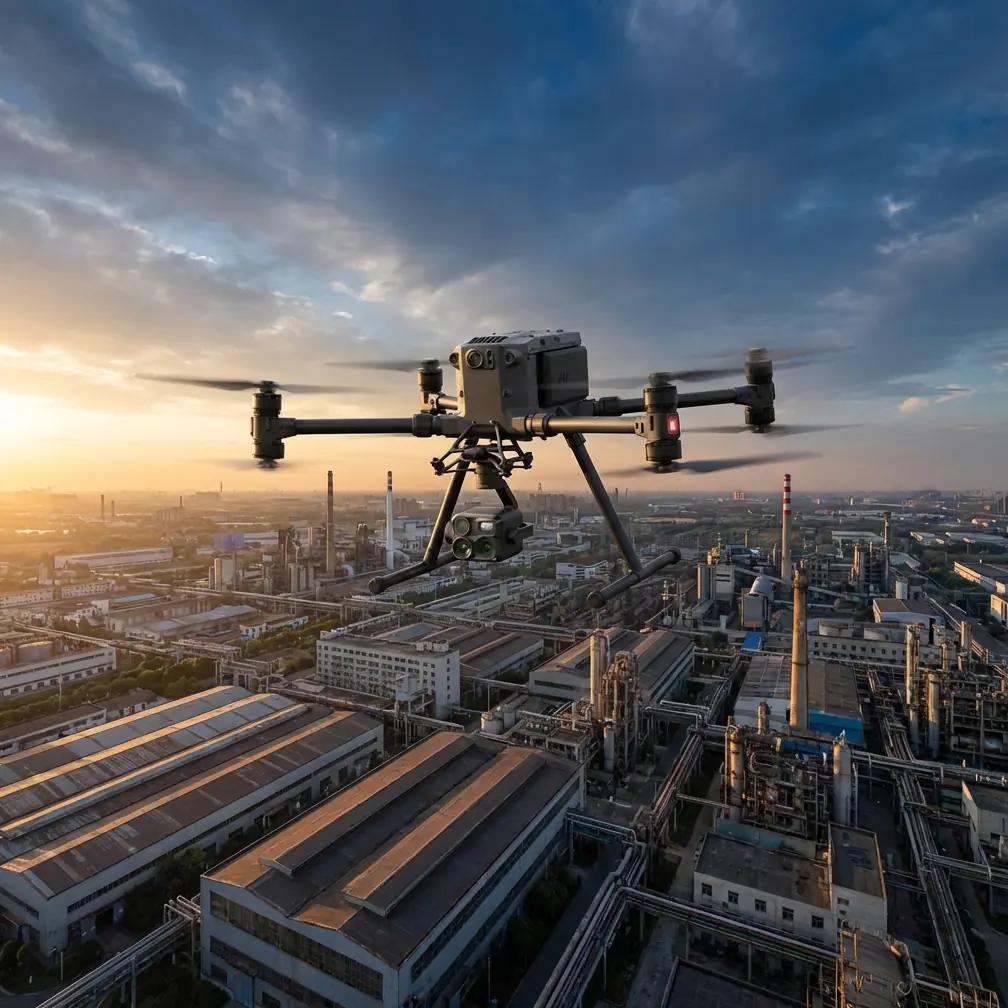
Matrice 4T spraying tips for remote forests: battery discipline, thermal scouting, and cleaner mission planning
META: Practical Matrice 4T guidance for remote forest spraying support, covering thermal scouting, O3 transmission, AES-256 security, battery handling, GCP-aware mapping, and field workflow decisions.
Remote forest spraying is unforgiving. Distances stretch. Canopy hides problems until you are over them. Landing spots are poor, communications fluctuate, and a small planning mistake can cascade into wasted sorties and depleted packs before the real work begins.
That is why the Matrice 4T earns attention in forestry operations even when the actual spray aircraft is a different platform. In many crews, the 4T is not the machine applying liquid. It is the aircraft that makes the spray mission smarter: scouting access corridors, checking canopy stress, spotting thermal anomalies, validating treatment boundaries, and keeping operators from sending heavy assets into the wrong section of forest.
I’ve seen the same pattern repeatedly in remote work. Teams focus on payload first and intelligence second. In forest environments, that order should often flip. A Matrice 4T can reduce uncertainty before the spraying phase starts, and that changes everything: route timing, battery usage across the day, refill staging, crew placement, and whether a treatment block should even be flown at all.
Start with the terrain, not the treatment block
Forests rarely behave like neat polygons on a planning screen. Edges are irregular, elevation changes are hidden by tree cover, and moist zones can create distinct thermal and vegetation responses inside what looks like one uniform compartment.
For that reason, my preferred sequence begins with a reconnaissance pass using the Matrice 4T before any spray platform launches. The objective is simple: verify what the map says against what the site actually is.
This is where thermal signature matters. A standard visible image can show access roads, canopy density, and open clearings. Thermal adds another layer. In forest operations, it helps identify cooler wet pockets, stressed patches that may be reacting differently to disease or pest pressure, and in some cases unexpected heat sources around equipment staging areas. That does not replace agronomic judgment, but it gives the field team a faster way to sort the forest into “needs action now,” “verify on foot,” and “leave for later review.”
Operationally, that saves battery cycles on every aircraft in the workflow. Instead of flying a full treatment pattern over a questionable zone, you focus resources where the evidence is strongest.
Why O3 transmission matters more in forests than in open farmland
Open agricultural blocks are one thing. Forested valleys and ridgelines are another. Tree mass, uneven elevation, and remote crew positioning all conspire against stable command links.
That is why O3 transmission is not just a specification-sheet talking point in this type of work. In remote woodland operations, link quality affects decision quality. If your scouting aircraft can maintain more reliable transmission while working around broken terrain, the pilot can make cleaner judgments about canopy openings, drift-sensitive edges, and safe approach lines for subsequent aircraft.
This is especially relevant for BVLOS-oriented workflows, where the broader mission design may involve extended corridor review, distributed crew observation points, or staged handoffs between field teams. Even when the local regulatory framework requires conservative line-of-sight procedures, crews still benefit from a system built for stronger transmission performance in difficult environments.
The practical takeaway is straightforward: do not treat transmission as a background feature. In forests, it directly shapes how much of the site you can evaluate with confidence before committing the rest of your operation.
AES-256 is not abstract when your maps define treatment decisions
Remote forestry projects often involve sensitive location data: plantation boundaries, disease zones, environmental setbacks, road access points, and treatment history. If the Matrice 4T is being used to generate inspection imagery, thermal review layers, or route-planning intelligence, data protection is not optional.
That is where AES-256 becomes operationally relevant. People tend to hear “encryption” and mentally file it under IT compliance. In the field, it is more practical than that. Protected links and secured mission data reduce the risk that your survey outputs, treatment areas, or client-sensitive operational maps are casually exposed during transfer or team sharing.
For forestry contractors working across multiple landowners or public-private management zones, that matters. Your drone is not only capturing pretty overheads. It is collecting decision-grade information that can influence spraying boundaries and crew deployment.
A battery tip from the field: never chase the last 10 percent in remote forest work
Here is the habit I teach new crews using the Matrice 4T in woodland support roles: if your return route crosses canopy, uneven terrain, or a marginal link zone, stop planning around the pack’s final 10 percent.
On paper, that reserve looks usable. In reality, forest operations punish optimistic battery assumptions. Wind shifts above the canopy are often stronger than expected. Terrain can force a wider return. A landing zone that looked open may prove unsuitable when you arrive overhead. Add one hover to confirm a thermal target, and your margin evaporates.
The better method is to build an internal “hard turn” threshold before the system forces the decision. In my own field notes, I usually tie that threshold to mission profile, distance from the landing zone, and whether the aircraft will need to climb back over canopy on return. The exact percentage will vary by team SOP, but the principle should not: your safest battery is the one you never had to argue with.
This is also where hot-swap batteries become a workflow advantage rather than a convenience. In remote forests, turnaround speed matters because weather windows can be short and the best light for photogrammetry can disappear quickly. A disciplined hot-swap routine keeps the aircraft cycling while reducing the temptation to squeeze one more sector out of a tired battery pair.
My rule for crews is simple:
- designate one person to track pack pairing and temperature,
- log which batteries were used on high-draw climbs,
- and never mix “probably okay” batteries into the afternoon’s longest reconnaissance leg.
That sounds basic until you are 40 minutes into a mountain-side block and someone cannot remember which pair just came off the cold morning sortie.
Use the 4T to support spraying, not imitate a spray drone
The Matrice 4T is most effective in forestry spraying programs when it is used for what it does best: intelligence, verification, and oversight.
That means several specific jobs:
1. Pre-treatment scouting
Use visible and thermal imaging to check access roads, identify staging areas, and verify that the planned treatment block is actually reachable and worth flying.
2. Boundary confirmation
Before the spray platform lifts off, the 4T can help verify irregular forest edges, drainage buffers, and no-treatment strips. In remote work, a few minutes spent confirming edges can prevent an entire re-fly.
3. Spotting variable conditions under one canopy class
A block labeled as one forest type on a map may contain multiple treatment realities. Thermal review can help the team isolate zones that deserve separate handling.
4. Post-treatment verification
After application, the 4T can document conditions, access integrity, and observable canopy response indicators for reporting and later comparison.
This is the difference between using a drone as a flying camera and using it as an operational instrument.
Photogrammetry still has a role, even in dense forest workflows
People sometimes assume photogrammetry is only useful in open terrain because canopy blocks ground visibility. That is too narrow a view. In forest spraying support, photogrammetry can still be valuable for road networks, clearings, landing zones, nursery edges, infrastructure corridors, and treatment-adjacent open strips.
When the team needs accurate spatial context, especially around access and staging, a clean photogrammetric output reduces guesswork. If you are building repeatable maps for multi-visit treatment programs, bring GCP discipline into the process whenever the terrain and access allow it.
GCPs matter because forestry projects often accumulate small mapping errors over time. One survey references a road bend differently. Another shifts a block edge. Another is collected under different canopy shadow conditions. Ground control points help anchor your dataset so your spraying support maps remain consistent from one operation to the next.
That consistency becomes valuable when multiple crews share the same treatment library across a season.
Borrow a lesson from manned aircraft engineering: build for control, not improvisation
One thing I appreciate from classical aircraft design literature is the obsession with controlled response under changing conditions.
A propeller control unit in manned aircraft, for example, exists to hold a balanced speed state instead of letting the system wander with every disturbance. In one reference example, a constant-speed mechanism uses a spring, flyweights, and an oil-distribution piston to adjust blade pitch as rotational speed rises, increasing aerodynamic resistance until the system settles back to its set point. The point is not the propeller itself. The point is discipline: stable systems beat reactive improvisation.
That mindset transfers directly to Matrice 4T forest work. You want mission plans, battery thresholds, transmission checks, and crew roles that self-correct early rather than relying on heroic last-minute decisions.
Another design lesson from traditional aviation comes from fatigue reliability. One handbook reference describes a structural detail reliability target of 95%, meaning no more than 5% may show observable damage within the stated life. That is not a drone operating rule, but it is an excellent mental model for field practice. Remote forestry work should never be run on wishful assumptions. Reliability has to be designed in—through inspection, maintenance discipline, and conservative decision gates.
For drone crews, that means:
- inspect landing gear and folding points with routine rigor,
- check propellers after rough field transport,
- monitor any recurring vibration signatures in flight logs,
- and treat repeated hard climbs over canopy as a wear factor worth tracking.
The crews that stay productive through a long season are rarely the ones flying most aggressively. They are the ones removing uncertainty before it grows teeth.
A practical workflow for remote forest spraying support with Matrice 4T
Here is the sequence I recommend for most crews:
Step 1: Build a reconnaissance-first mission
Plan the first sortie around visibility, thermal review, and communications behavior—not around total area coverage. Learn the block before you try to finish the block.
Step 2: Identify safe battery geometry
Mark where climbs occur, where canopy blocks emergency landing options, and where the aircraft must maintain stronger reserve for return. This is more useful than thinking only in minutes.
Step 3: Confirm transmission quality in the hardest segment
Do not assume the rest of the forest will behave like the launch point. Test the section most likely to degrade the link first.
Step 4: Use thermal selectively
Thermal is at its best when you are asking a specific question: Which drainage pocket holds moisture? Which stand is showing abnormal stress? Which area may need a second look before treatment?
Step 5: Produce usable maps, not just imagery
If the output will guide repeated operations, structure your photogrammetry with repeatability in mind. Where feasible, include GCPs so later comparisons are meaningful.
Step 6: Standardize battery swaps
Use hot-swap discipline to keep tempo without losing battery history. Pair tracking and cooling awareness are not admin tasks; they are mission continuity tasks.
Step 7: Debrief immediately after each block
Forestry conditions change fast. Capture observations while the site is still fresh: thermal anomalies, dead zones in transmission, blocked access, and sectors that should be split on the next visit.
If your team is setting up this kind of forest support workflow and wants a practical field checklist, you can message me directly here: forest mission planning chat
What makes the Matrice 4T especially useful in this niche
The 4T fits remote forest spraying support because it bridges sensing and deployment realities. It can help crews see what is hidden, document what matters, and avoid wasting operational energy where conditions do not justify a full treatment push.
That may sound less glamorous than talking about raw aircraft capability. It is also closer to how good forestry teams actually work.
The best drone in a remote forest is not the one with the loudest spec sheet. It is the one that helps the crew make fewer bad decisions.
For Matrice 4T users supporting spraying programs in forests, that means focusing on four things above all else: thermal interpretation with a purpose, robust transmission planning, secure data handling, and battery discipline that respects distance and canopy. Get those right, and the aircraft becomes more than a scout. It becomes the quiet control layer that keeps the whole operation efficient.
Ready for your own Matrice 4T? Contact our team for expert consultation.