
Matrice 4T for Urban Forest Spraying: A Technical Review
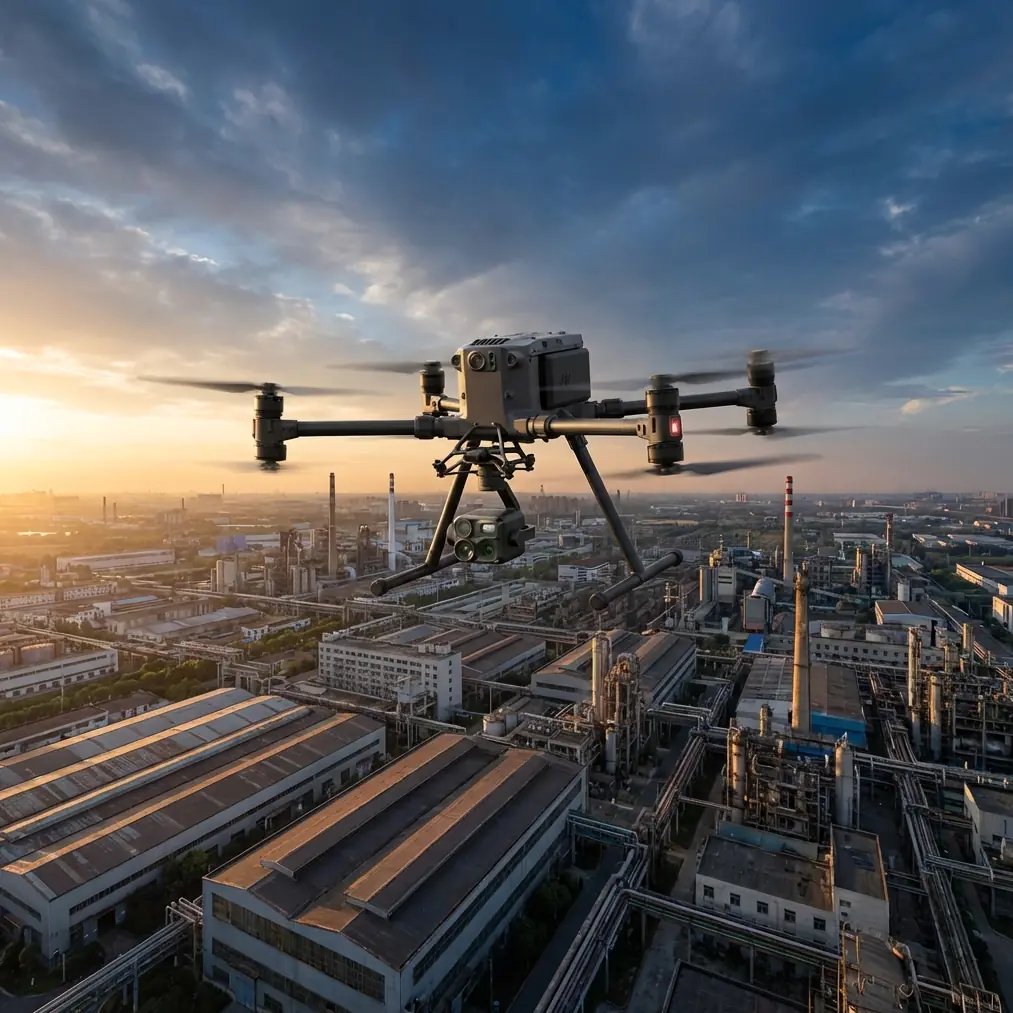
Matrice 4T for Urban Forest Spraying: A Technical Review of What Actually Matters
META: Expert review of Matrice 4T for urban forest spraying, covering payload logic, thermal workflow, transmission reliability, accessory integration, and operational planning.
Urban forest spraying is one of those jobs that looks simple only from a distance. Once you are inside the canopy line, dealing with mixed tree heights, narrow buffers near roads or buildings, and pressure to document every pass, the aircraft itself becomes only one part of the system. The real question is whether the platform can support a workflow that is stable, observable, and repeatable.
That is where the Matrice 4T becomes interesting.
This is not a pure spraying aircraft in the conventional sense. It is better understood as an intelligence and coordination platform that can elevate spraying operations around city forests, managed greenbelts, campuses, roadside corridors, and landscaped public land. In practice, that means pre-spray assessment, thermal anomaly identification, route verification, post-application documentation, and coordination with a dedicated spraying setup or third-party dispensing module where regulations and payload integration permit.
The difference sounds subtle. Operationally, it is not.
Why the Matrice 4T fits the urban forest problem
Urban spraying is constrained by obstacles, public exposure, fragmented work zones, and the need to reduce over-application. In this environment, a platform with thermal signature analysis, high-resolution visual awareness, stable transmission, and encrypted data handling can be more valuable than a machine built only to move liquid.
The Matrice 4T’s relevance starts before any chemical is loaded. Tree stress rarely presents uniformly across a city site. One line of trees may be heat-stressed from irrigation failures. Another patch may show pest pressure only on one side of the canopy because of reflected heat from nearby paving or walls. Thermal imaging helps distinguish where intervention is justified and where it would be wasteful. That matters for both environmental stewardship and crew efficiency.
Photogrammetry also plays a bigger role here than many operators admit. In dense municipal landscapes, a map that is even slightly off can push a spray route too close to pedestrian space, parked vehicles, or structures. When tied to GCP-based control, a survey-grade map lets teams define treatment corridors precisely rather than treating “the whole area” because it is faster. Precision reduces drift exposure, reduces product waste, and shortens the number of repeat visits.
The hidden engineering lesson: capability without weight discipline is a trap
One reason many urban forestry teams struggle with drone-based spraying is not flight skill. It is system design. Add too many devices, too much cabling, or poorly chosen accessories, and the aircraft stops being a field tool and starts becoming a compromise.
This is where one of the reference facts from traditional aircraft design becomes surprisingly relevant. In the civil aircraft design handbook, the electrical system weight can be “significantly improved” when advanced technology is used, including multiplex systems and high-speed generators. That principle translates cleanly to modern UAV field builds: integrated electronics and efficient power architecture matter because every unnecessary component affects endurance, stability, and maintenance burden.
For a Matrice 4T deployment in urban forest work, this has practical consequences. If you attach a third-party accessory for marking, variable dispensing, or multisensor environmental logging, the best result usually comes from accessories that minimize separate power conversion, reduce wiring sprawl, and communicate cleanly with the core system. A cleaner electrical integration does not just save weight. It reduces failure points during repetitive stop-start missions in cluttered environments.
A second reference fact reinforces the point from another angle. The handbook notes a threshold around a cabin volume of 227 m³ in one auxiliary-power-related estimation method. While the number belongs to manned aircraft sizing, the operational idea is timeless: once a platform grows in mission complexity, support power strategy stops being secondary. For a drone crew, the equivalent question is simple: are your batteries, accessory draw, charging logistics, and hot-swap rhythm designed around the mission, or are they improvised in the field?
Urban forest work punishes improvisation. A thermal pass, a mapping pass, and a treatment-support pass can happen in one deployment window. Hot-swap batteries are not just convenient in that sequence. They keep the site moving without forcing rushed reboots or incomplete records between sorties.
Thermal signature is not a gimmick in tree work
There is a tendency to talk about thermal as if it were a niche sensor reserved for emergencies. In vegetation management, especially around urban trees, it is often the fastest way to detect patterns that RGB imagery can miss.
A canopy under physiological stress often changes its heat behavior before leaf color shifts enough to trigger action from ground teams. With the Matrice 4T, thermal review can be used to flag suspect sections for closer agronomic or arborist evaluation before treatment. That does not mean spraying based on heat alone. It means thermal becomes a triage layer.
This is especially useful in urban forests where the problem is rarely uniform. You may find:
- edge trees overheating along asphalt boundaries,
- irrigation inconsistencies around newly landscaped sections,
- pest concentration in sheltered clusters,
- canopy moisture differences after partial shade exposure.
Each of those patterns affects whether spraying is needed, how broad the treatment zone should be, and how urgently a crew needs to respond.
For readers focused specifically on spraying, this is the larger advantage: the Matrice 4T helps shrink the treatment footprint to the area that deserves intervention.
Transmission and encryption are more than spec-sheet filler
When you are operating near buildings, utility corridors, and public infrastructure, transmission reliability becomes operational safety. O3 transmission is valuable not because it sounds advanced, but because urban environments are RF-hostile. Tree lines, reflective surfaces, and intermittent obstructions can degrade situational awareness if the link is unstable.
For urban forest spraying support, a strong downlink affects three things directly:
- route confidence around obstacles,
- real-time confirmation of canopy condition,
- coordination between pilot, visual observers, and ground crew.
AES-256 matters too, though in a different way. Municipal projects, campus contracts, and managed estates increasingly treat geospatial and inspection data as sensitive operational information. Encrypted transmission and protected data handling are not abstract IT concerns. They are part of winning trust from asset owners who do not want site imagery casually exposed or mishandled.
If your operation includes pre-treatment thermal scans and post-treatment mapping, data governance becomes part of the service quality.
What wing-design theory teaches us about urban UAV mission planning
At first glance, the aerodynamics reference appears remote from a multirotor platform. It discusses NACA 6-series and 6A-series airfoils, including the fact that modified profiles are often used when relative thickness exceeds 12%, and that the 6A family straightens the contour from roughly 80% of chord to the trailing edge, replacing a sharp trailing point with finite thickness.
Why should a Matrice 4T operator care?
Because the design logic is a reminder that aerodynamic efficiency is never detached from manufacturability and mission practicality. In fixed-wing terms, the 6A modification accepts a shape change near the aft section to improve usable characteristics. In UAV operations, the same mindset applies to accessory choice and route design. The best urban forest workflow is not the one that chases theoretical maximums. It is the one modified for real service conditions: gusts around buildings, frequent hover checks, confined launch points, and the need for predictable handling with add-ons attached.
That is why some of the most successful Matrice 4T field setups are not the most elaborate. They are the ones adapted intelligently. A modest third-party accessory that improves canopy marking or spot-application traceability can be more useful than a heavier, more ambitious attachment that degrades flight time and complicates balance.
A third-party accessory that actually improved the workflow
One of the better configurations I have seen paired the Matrice 4T with a third-party quick-mount visible marking module used to tag confirmed treatment trees after thermal review. Not glamorous. Very effective.
The old process relied on ground crews interpreting screenshots or rough map pins. The upgraded process let the air team identify suspect trees thermally, verify them visually, and then mark exact canopy positions for the spraying crew working with a separate application system. The result was less confusion at street level, fewer duplicate passes, and a cleaner audit trail.
This setup worked because it respected the platform’s strengths. Instead of forcing the Matrice 4T to become a heavy sprayer, it turned the aircraft into a precise airborne coordinator. That distinction is where many procurement decisions go wrong.
If you are evaluating accessory compatibility for urban forestry workflows and want a practical integration discussion rather than a catalog dump, you can message a drone integration specialist here.
BVLOS interest is understandable, but urban forests demand discipline
Many teams ask about BVLOS because urban green corridors can stretch far beyond a single visual bubble. The attraction is obvious: fewer repositionings, faster area coverage, and better continuity across fragmented sites.
But urban forest spraying support is a domain where BVLOS has to be treated as a regulated operational framework, not a checkbox. Even when the platform can support longer-range missions from a technical standpoint, site geometry, local airspace constraints, public exposure, and obstruction density all shape what is realistic.
The Matrice 4T is strongest here when used as part of a layered method:
- initial photogrammetric or visual mapping,
- thermal anomaly identification,
- GCP-based verification where positional confidence matters,
- segmented mission planning,
- tightly documented treatment support.
That sequence may look slower on paper than simply launching and covering ground. In practice, it produces fewer mistakes. And in urban work, avoiding one mistaken treatment zone can save more time than any aggressive flight plan ever will.
The role of balance, center of gravity, and “small” payload decisions
Spraying support often invites attachment creep. A light module here, a beacon there, a separate logger, another mounting bracket, and suddenly the aircraft no longer behaves like the baseline machine your crew trained on.
Weight and balance principles from traditional aircraft design remain useful discipline, even if the platform is a multirotor. Every accessory changes endurance, control feel, and the margin available for gust response. In tree corridors bordered by roads or buildings, those margins matter.
This is also why advanced integrated systems are preferable to loosely assembled field hacks. The design-handbook point about multiplex systems reducing electrical-system weight is not just an engineering footnote. It is a field lesson: integrated architecture beats improvised wiring when uptime, repeatability, and maintenance are on the line.
For Matrice 4T operators, that means asking harder questions before adding anything:
- Does this accessory replace multiple components or merely add one more?
- Is the power draw documented?
- Does it preserve quick battery rotation?
- Does it interfere with thermal or optical line of sight?
- Does it create balance issues during low-speed maneuvering near canopy edges?
Those are not glamorous questions. They are the ones that separate useful modifications from expensive distractions.
What a high-performing urban forest workflow looks like
The most effective Matrice 4T operations I have seen in this category follow a disciplined chain rather than a single heroic flight.
First, build a reliable site model. Use photogrammetry where terrain, tree spacing, and nearby structures justify it. If the site requires higher positional trust, bring in GCPs instead of pretending consumer-grade map alignment is “close enough.”
Second, run a thermal assessment at the right time of day. Thermal interpretation in tree work is only as good as the environmental context behind it.
Third, segment the treatment plan. Urban tree populations are rarely homogeneous, and forcing them into one blanket mission introduces avoidable risk.
Fourth, keep the aircraft configured for observation quality and flight consistency. If a third-party accessory is added, it should support the mission without turning the platform into a payload experiment.
Fifth, document post-treatment results. This is where the Matrice 4T justifies itself repeatedly. Clients managing public landscapes, institutions, or commercial estates increasingly expect evidence, not assumptions.
Final assessment
The Matrice 4T earns its place in urban forest spraying not by pretending to be a dedicated agricultural sprayer, but by making the entire treatment cycle smarter. Thermal signature analysis helps identify where intervention is justified. Photogrammetry and GCP-backed mapping tighten route accuracy in constrained city landscapes. O3 transmission supports stable oversight in cluttered RF conditions. AES-256 helps protect sensitive site data. Hot-swap battery workflow keeps multi-phase missions moving.
And the deeper lesson from the reference materials still applies: advanced system integration beats brute-force complexity. The old aircraft design literature says better electrical architecture can significantly improve system weight, and that modified aerodynamic forms exist for practical performance reasons, not purity. That same engineering mindset is exactly what urban UAV teams need now.
Use the Matrice 4T as a precision sensor, mission coordinator, and documentation platform. Pair it with well-chosen accessories and a disciplined spray workflow. In urban forestry, that approach usually outperforms trying to make one aircraft do everything badly.
Ready for your own Matrice 4T? Contact our team for expert consultation.